Julia Paternain returns to her roots

The next stop on the surprise Tokyo 2025 bronze medallist's marathon journey sees the former British international who now competes for Uruguay come full circle.
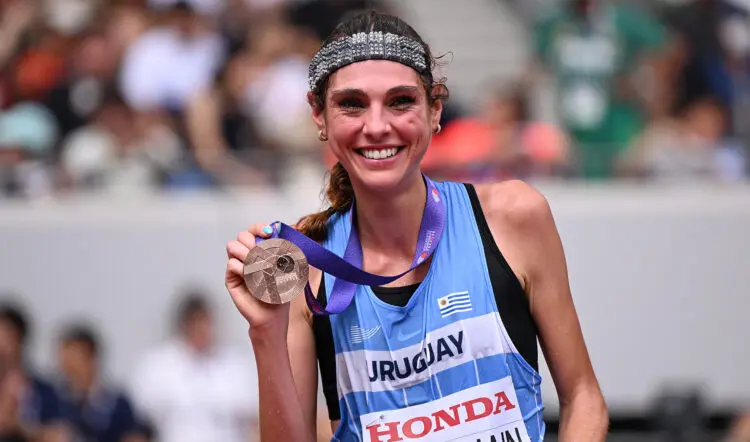
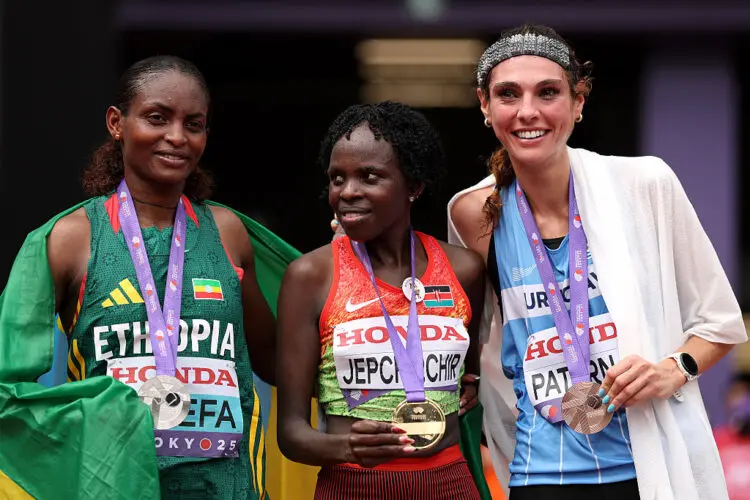
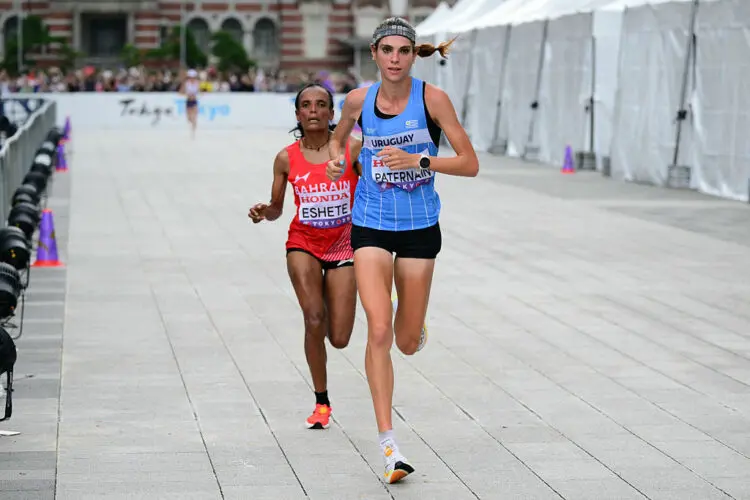
The sight of Julia Paternain’s jaw dropping in shock when she was informed of having secured third place in the women’s marathon was one of the enduring images of last summer’s World Championships in Tokyo. Her careful management of the hot and humid conditions took her to a spot on a global podium behind Kenyan winner Peres Jepchirchir and Ethiopia’s Tigist Assefa that has changed her life and opened doors to a new level of recognition, as well as competition.
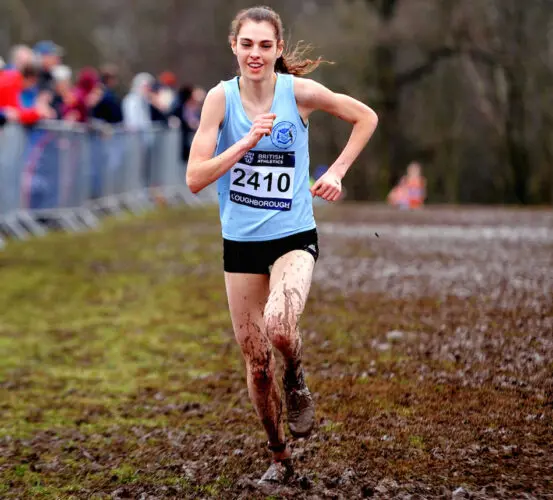
The 26-year-old admits it has taken some getting used to but one of the welcome developments it has brought is the chance to race at this month’s London Marathon. For the woman who was born in Mexico, now competes for Uruguay (where her parents are from) but grew up in England and ran for Cambridge & Coleridge in her youth, it will represent a full circle moment and a journey back to where it all began.
The two-time English Schools 3000m winner and former British international finished second in the U17 race at the 2017 Mini London Marathon and will be fulfilling a teenage ambition by stepping up to the full event.
Paternain also ran for Penn State and Arkansas University in the US, and spoke to AW from her base in Flagstaff, where she is coached by Jack Polerecky of the McKirdy Trained team and was making her final preparations for that return to British soil.
How are your preparations for London going?
I am excited for London. After Japan, it was difficult to readjust to life, I guess. I had the experience of my life, which was really, really cool, but also completely new territory that I've never had to manage before so dealing with the mental aspect of that has been a new challenge, but I think things are going well now. My long run workouts are starting to click and it's also starting to feel more real. Now it's like: “Okay, I'm actually doing this”.
How much of an impact did Tokyo have on you? Was it difficult to get back into a routine and pick up your running again?
I took a two-week break and then I was really eager to get back into it, because everything felt so unusual that I just wanted some form of normality. After all the interviews and the travel, the jet lag, everything, I was like: “I just want to run and go to practice and do what I'm used to doing”. At first it was really easy to get back into things, which I think was almost a blessing and a curse, because then I went a little too hard too early and ended up picking up an injury around January.
That was difficult just dealing with: “I now have a little bit more pressure on me, but now I'm dealing with the first injury I've had in a little while”, and figuring that out. Then I had the very humbling return to fitness. I seem to have finally turned a corner in terms of training and getting used to the new kind of lifestyle I'm in. There have been a lot of new things to navigate.
What doors did the world championships open for you?
I’d never been asked to do a podcast before, for example! I'm also now able to get into a lot of different races, which changes the calendar and the schedule, what I prepare for and what goals I have. The other thing that changed was that now I can go for a run or go to a pro meet, and people know who I am, which wasn't the case before, which is kind of weird, because I'm just me. The same person.
Do you like that or would you rather just be a face in the crowd?
I am not someone that loves to have the camera on me. I would never be able to be a YouTuber or anything like that. I have so much respect for them, but that could not be me. But, at the same time, I'm a big nerd of the sport and I do really enjoy being able to talk about it and sharing my experience.
I think transparency in this sport is something that is missing a little bit with some of the pros. I feel like you get a very vanilla background of their life and it's not that inspiring all the time, so I think that it's nice to be able to share my story and hopefully show that it's not always just a super linear progression.
One of the doors that has been opened to you is the London Marathon. How much of a full circle moment is that for you and how are you feeling about going back?
That has been one of my main motivating factors in the last few months. I'm excited to go back and just reminisce on my whole running journey. In 2017 I did the mini marathon and it was probably one of my best races as a junior. I want to say it was my first road race, too, so being able to have that full circle moment is really exciting. I haven't been back since around 2021, so I'm just excited I’ll get to see all my close friends.
What are your memories of that mini marathon?
I remember just being so honoured that I had even been selected. Those big competitions do feel really big, so I was just really excited to be there. The whole experience felt so professional – the way that they transported us to the race, and where they would hold us before the race, everything just felt very professional, which was really cool at that age.
The winner of the race was Erin Wallace [now a member of the M11 Track Club] and I think she passed me with around a kilometre to go. She was running for Scotland and I remember everyone in the crowd yelling: “Let's go Scotland!”. It was such a cool experience. It was such a big race. I don't think I'd ever had so many people watch me run, either, so I absolutely loved it. I had a great time. And I remember thinking: “When I'm older, I want to do the full marathon”.
In terms of regular running memories in England, I spent so much time growing as an athlete. I feel like so much of my development happened back in the UK.
What would represent success for you in London?
My main goal is just to run as fast as I can. I've run 2:27 twice now, and I think I was in much better shape than that when I ran it in Japan – it was just the heat and conditions. It has taken me a while to reach that form again but, by the time London comes around, I'm hoping I'll be ready and I think that PB is well within my reach.
But, really, I just want to get some more experience. I'm still relatively young to the marathon, after Japan it was: “Let's just take a little bit of a step back and not get too ahead of ourselves here”, because that was when the pressure was kind of getting to me. So it’s [about]: “Let's get some more experience and try and build a long career”, rather than just trying to go for something monumental every time I step on a start line.
You’ll be on the start line again with Peres Jepchirchir and Tigist Assefa. How are you feeling about stepping into that environment again?
It is an honour to stand on the start line with these women. Even racing Eilish McColgan – I have looked up to her for years. She has been phenomenal and so consistent for so many years, so getting to stand on the start line with her is an honour in itself.
But I will go into this the same way I did with Japan in that I can't control what anyone else is doing. I can only control what I do and the effort that I give. They are some phenomenal athletes and if I'm even able to be close to them, then I will be over the moon.
Running is your job now but are you an athlete who also uses it for their wellbeing? Is it a part of who you are?
Yes, and I attribute a lot of that to my upbringing in Great Britain, because I know a lot of athletes that come to the NCAA, and then they finish in the NCAA, and they're like: “I never want to run again”. For them, running is very much a means to go to university or get a scholarship or whatever. I've always thought: “I want to run, and this is really cool that it opens these doors for me but, regardless, I'm still going to run”. And I got that from the club system in the UK.
I would go down to the track on a Tuesday night, it was all sorts of different ages. People that just wanted to run for the fun of it, and just run for the enjoyment of the sport. I go insane if I can't run. I definitely am someone that does it for my wellbeing, too.