Sub-two: Testing times for Sabastian Sawe

Given Kenya’s ongoing issues with doping, was the world record too good to be true? Matt Majendie looks at the lengthy measures taken by the marathon star to show he is clean.
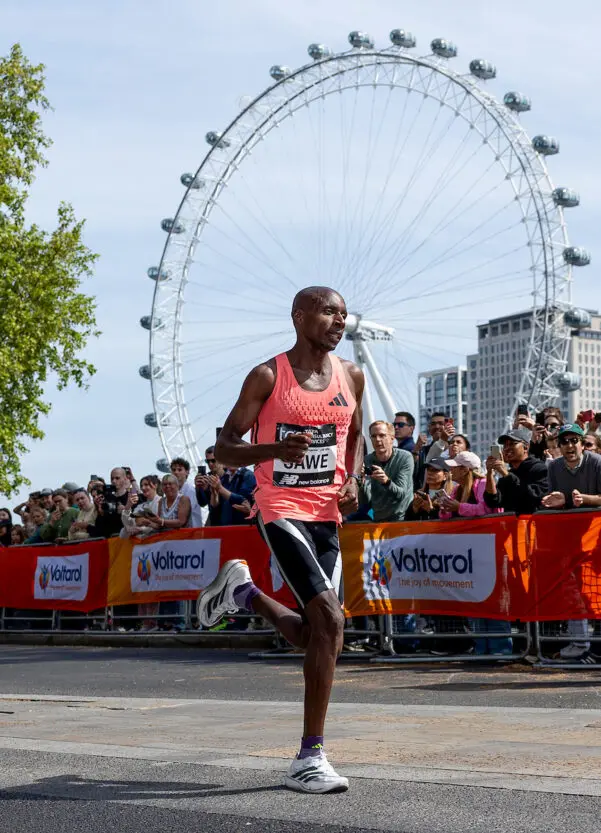
When the clock stopped at 1:59.30 on the Mall for Sabastian Sawe, the doubters were not as cynical of his superhuman achievements as they might ordinarily have been.
The Kenyan may hail from a nation whose athletes have been culpable for more than a third of all positive doping tests since the Athletics Integrity Unit (AIU) was set up a decade ago but, despite that and the extraordinary effort required to dip below the hallowed two-hour mark, there was belief it might have been achieved without resorting to foul means. Already last year, Sawe knew he was encroaching on the world record, a feat he might have achieved in Berlin last September had the climate not been so surprisingly hot for the autumnal road race.
Knowing the scepticism that might greet such a performance, he decided to undergo as much scrutiny as possible so, via his agent Eric Lilot, made contact with the AIU to ask if they might be interested in setting up a testing programme specifically for him to effectively make him the most tested athlete on the planet. The problem is that such testing is expensive so Sawe’s sponsor, Adidas, stepped in to meet the £50,000 required.
In a statement, the company said: “We believe that sport should be fair and we support efforts made by the AIU and other testing bodies to ensure a level playing field through enhanced testing. We have supported Sabastian’s choice for enhanced testing and, along with other sports brands, we contribute to the work of the AIU in enabling access to industry-leading testing for athletes.”
What followed was Sawe undertaking 25 tests in the space of two months leading up to Berlin – effectively two or three times a week, on one particular day twice – both urine and blood, and not just the standard anti-doping tests. From each sample, examinations could be done for EPO, testosterone, human growth hormone and much more besides.
There were no anomalies thrown up, and the testing was not simply a one-off. This year, the testing has been less intensive but is spread over the whole season, equating to another 25 tests – nearly one a fortnight – but with Sawe having no prior knowledge of when such a test might take place.
It makes this athlete a trailblazer not just as a superhuman runner but as a strong anti-doping advocate at a time when the spotlight remains on the validity of marathon runners and, in particular, Kenyan marathon runners.
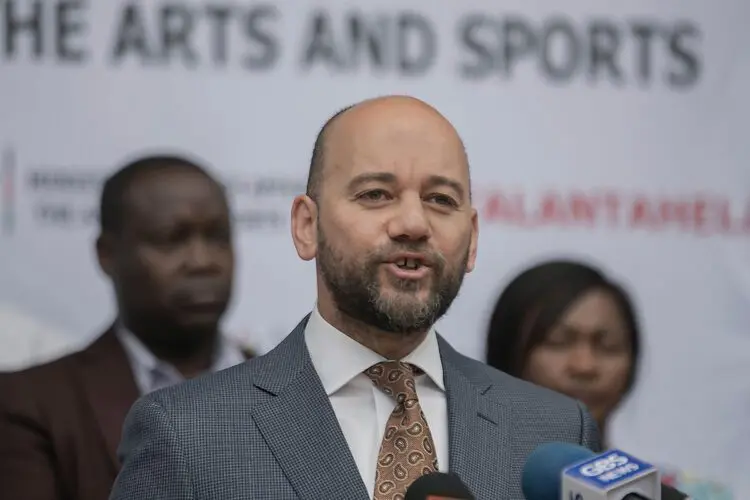
Brett Clothier, the CEO of the AIU, says trailblazer is the apt word to sum up Sawe’s undertaking. He says: “This was his initiative I’m told, he was proactively wanting to place himself under a lot of scrutiny. But we’re not in the trust business, we’re in the verification business, and he’s subject to the highest level of verification of any athlete in the world.”
What Clothier is effectively saying is that while he cannot steadfastly confirm the world record holder is a clean athlete, Sawe is giving more proof than any athlete ever has before to try to send the message that the quickest times ever run can be done without doping.
The AIU was clear that Sawe and his team could have no knowledge during this relationship of what the testing might entail.
“It’s very clear through agreement to do this that the testing programme is run completely independently with no notice, no knowledge of when we’re coming to test him and what we’re testing for,” adds Clothier. “There will always be cynics about these things and we're the biggest cynics of all but we also do know exactly what’s involved in the process. This is a very, very high level of assurance in this programme based on our knowledge of anti-doping.”
Clothier describes Sawe’s testing regimen as the “maximum artillery” for anti-doping with the “max menu for tests and samples taken at each test”. And the testing won’t simply end in 2026, his samples will be stored for 10 years with the understanding that officials can again revisit those samples as testing improves for certain banned substances in the intervening years.
The AIU has long had a history of working in partnership with others in their quest to catch the cheats. Back in 2019, they launched their anti-doping programme where all the major road races came together with subsequent backing from shoe brands to pool their resources.
That partnership raised $3 million for a special anti-doping fund. It created a far bigger testing pool of the 150 top men and women in marathon running and, unsurprisingly, the positive tests ramped up as a result. Clothier is not about to suggest the battle against the dopers is already won.
With 300 athletes to test and funding not unlimited it is still difficult to catch athletes microdosing for example out of competition. Sometimes, such microdosing means substances will only stay in a person’s body for a maximum of just 24 hours, giving a very small window to successfully detect doping.
“When the systems are good, we can catch high-level dopers but we’d like to do so more quickly,” admits Clothier. “And we can get athletes off the board to protect the credibility of achievements at major races.”
Prior to the wider partnership with marathons and shoe brands, 75 per cent of podium finishers in the leading marathons were not even tested in the 12 months prior to that particular race. There has been a marked change since then. It is, though, what the Australian still calls “a work in progress”.
He adds: “I tell people all the time that we have a lot more positive cases but a lot less doping happening.
“That’s just the reality. Before the AIU came into existence, the IAAF registered one case against a Kenyan athlete, now we have 30 a year against Kenyans on our side.
“Anyone on the ground out there can really see the changes. It was a total wild west before. There’s still a lot of doping but it’s much better than before and the most important thing is that clean athletes have the chance to compete and win races.”
Clothier is not about to get bombastic about the AIU and accepts there is still plenty of work to be done, partnerships to improve, funding to increase and so on in this constant fight.
“I can’t give guarantees about anything,” he concludes about Sawe and other elite marathon runners. “That’s not our line of work. Obviously there’s been enough surprise in the history of anti-doping with untraceable substances that I never make outlandish statements. But, based on our extensive experience in marathon running and catching dopers, this is a really high assurance programme. We can leave it up to others to judge.”
This article also appears in the Sub-two special edition of AW magazine, out now