A short but strong season for Jake Wightman

Jake Wightman’s 2020 season lasted 36 days but involved seven races in six countries.
While accepting that it was the strangest year ever, he feels very positive about it.
"It was a year when you appreciated being able to travel more," he reflects. "Normally it’s a slog getting up early, getting a flight, staying at a hotel for a few nights and coming home. It gets a bit draining and tiresome after a bit. But this year I loved the idea of getting on a plane and going to a meet - leaving the UK. And going to a meet hotel and seeing people you hadn’t seen all year because normally you’d have seen them at training camps or at races earlier in the year.
"Because of all that, I appreciated the whole environment around races a lot more than usual. Also because this season didn’t have as much significance, people were in a better mindset like ‘it’s fun racing because it doesn’t really matter how we do’."
He also feels that he did better than many athletes, having got away during lockdown as he travelled to America the day before Trump closed the borders.
"I managed to get away and do my altitude stint as I had planned," he says. "The main problem was not having access to a gym but I still could get on the track or go out and run. While I lost a bit of gym stuff, I think I compensated for it by doing extra drills so I kept my speed up that way, rather than it coming from gym work."
READ MORE: Speed is of the essence for Jake Wightman
With the Olympics postponed and the European Championships cancelled, Wightman and his coach – dad Geoff – decided to concentrate on improving his top-end speed. As a result, six of the seven races were over 800m, including winning the Ostrava Golden Spike in 1:44.18.
A season like 2020 needed an adjustment in mindset. "My season was just six weeks but it was a long six weeks because I raced seven times," he explains. "I would not normally race with that intensity within such a short period of time.
"The first race was difficult because even though it was my first race of the season you still had to treat it as at that point in the year because the season was going to end at the same time as usual. You had to be ready to open up as you would run in August in a normal year."
2020 was a learning experience, he adds: "I learned how to race 800s better and how I race 800s. I learned how I can win an 800m myself. Ostrava was my first big meet 800m win, my first international 800m win. That is important for me because I want to be as good at racing 800m as 1500m.
"The most important thing for me is I want to be able to go into a 1500m at a major championship, knowing that I am one of the fastest 800m runners there."
"I want to be able to go into a 1500m at a major championship, knowing that I am one of the fastest 800m runners there"
Believing that would give him great confidence in his own speed and ability.
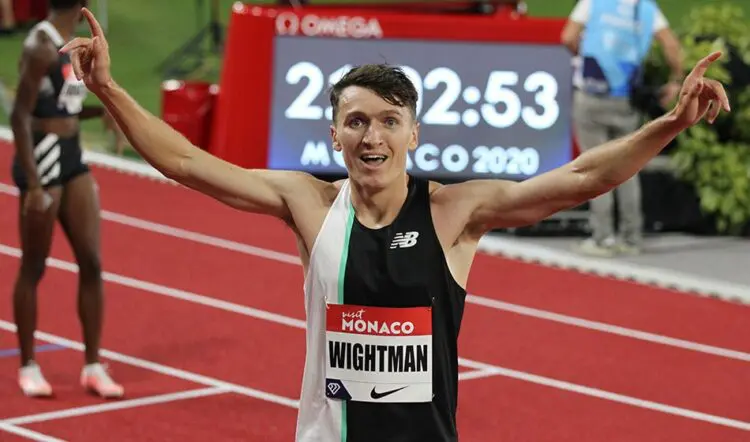
The only 1500m race in his 2020 programme was at the Herculis Diamond League in Monaco where he finished third in 3:29.47 – faster than Coe, Cram or Ovett ever ran. He had deliberately chosen Monaco for his one 1500m race, knowing that it would be fast.
"Cheruiyot went off stupid but the Ingebrigtsens are people I think I can always be competitive with, whatever pace they go - so to latch on to them made it easy," he recalls. "I felt good all the way round and for once I ran in lane one all the way round, so I only ran 1500m and pretty much at an even pace. I felt good even at the end but just didn’t have enough in the last 150m."
While thrilled with his performance, there was also a hint of disappointment.
"I don’t think much could have gone better in Monaco and I think I needed that race to show me that if I get the opportunity again in the next few years I was ready to run quicker," he says. "One thing I take away from that race is a little regret that I didn’t try to go around everyone. I went past Filip Ingebrigtsen with about 200m to go and I should have committed to trying to pass the other two. But I backed off it thinking that I would fade in the home straight, which I did anyway.
"I wish I had been a bit more brave and made that move anyway."
Wightman’s approach to this strangest of years was to be creative, trying different things and taking the long view.
Click here for more in a series of 2020 reflection interviews.
(Photo by JP Durand)
» For more on the latest athletics news, athletics events coverage and athletics updates, check out the AW homepage and our social media channels on Twitter, Facebook and Instagram