Decathlon's unfinished business

Gabby Pieraccini explores the growing momentum behind the development of women’s decathlon and the work being done to establish equal opportunities when it comes to competing over 10 events.
In 2001, World Athletics – formerly the International Association of Athletics Federations (IAAF) – signalled that women’s combined events would progress from heptathlon to decathlon, and full parity with men.
While men’s decathlon has been in the Olympics for over 100 years, the pentathlon for women was only introduced to the programme in 1964. Once it was demonstrated that calamity would not befall the delicate womenfolk who were running, jumping and throwing, the event evolved into the heptathlon at the Los Angeles Games in 1984.
Events previously reserved solely for men followed: the marathon, also in 1984, triple jump in 1996, pole vault and hammer in 2000 and steeplechase in 2008. Yet combined events remained stuck at seven.
“Back in 2004, we hoped that heptathlon would naturally evolve into decathlon,” recalls Marie Collonvillé, the French inaugural decathlon world record-holder who scored 8150 in Talence in 2004.
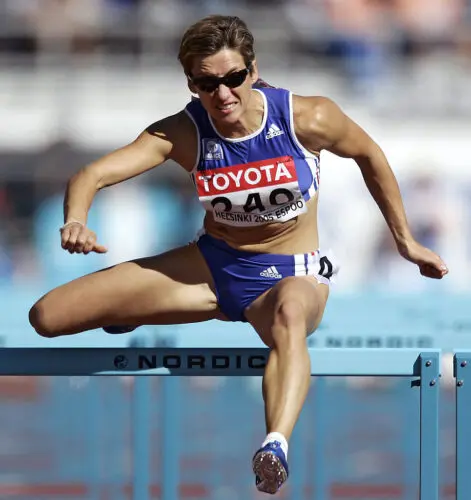
“That’s why I took part in one after finishing seventh at the Athens Olympics – to demonstrate that an international level heptathlete could put up a strong performance in decathlon. I simply needed to prove that women were capable of competing in the decathlon.”
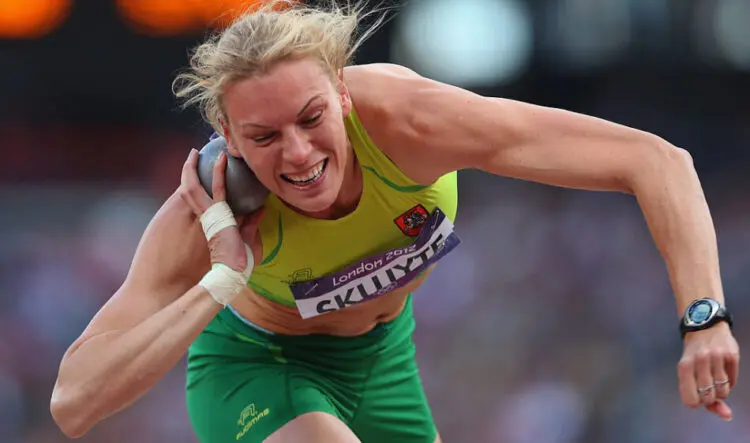
The point was proved and, a year later, Lithuania’s 2004 Olympic silver medallist Austra Skujyte improved the record to 8358 points.
Decathlon is not simply the heptathlon with three additional events tagged on. It demands a different blend of speed, strength and endurance.
“In the heptathlon, you have a really big advantage if you’re really fast. I’m not very fast,” said Skujyte in an interview in 2022. “In decathlon, you can be an all-round athlete. There are more equal opportunities.”
Collonvillé adds: “Austra had the profile of a thrower, whereas I was a jumper.”
The IAAF did not implement its 2001 decision, parking the progression to decathlon indefinitely. Without momentum from the global governing body, the women’s decathlon community took up the cause, particularly in the USA and France.
In 2021, US decathlete Jordan Gray scored 8246 points, splitting Skujyte’s and Collonvillé’s marks. A US championships followed in 2023, with legitimate scores but without official federation recognition.
The first world championships were organised in Ohio in 2024, won by Allison Halverson of Armenia, formerly of the USA. France’s Roseva Bidois was second and the USA’s Jordyn Bruce third. In 2025, Dutch athlete Nikki Boon won, with 2023 US champion Katie Straus second and Bruce third. Again, while the results were legitimate, World Athletics did not recognise the status of the championships.
Meanwhile, in France, an official decathlon national championships was established in 2024, won by Noémie Desailly with 7793 points.
There was evidence of further evolution at this year’s edition of the world championships – taking place in Oberlin, Ohio – where established decathletes including Desailly, Bidois, Straus, Bruce and Adeline Audigier would for the first time face current elite heptathletes: Australian Olympian Camryn Newton-Smith and Esther Condé-Turpin, who represented France at the 2023 World Championships.
After day one Desailly was third and on course to become only the fourth woman to break 8000 points. Although the points are not directly comparable between men’s and women’s decathlon, the 8000-point barrier serves as a common gateway to the top tier of the event.
Newton-Smith was also going brilliantly, leading thanks to her world-class heptathlon events. But day two of a decathlon was uncharted territory. With Holly Bradshaw watching from the sidelines – providing analysis and trackside interviews as part of the All Women’s Sports Network coverage – it would be the British Olympic pole vault medallist’s event that proved decisive in the final five events. Newton-Smith added 25cm to her 2017 pole vault best, clearing 3.50m. Boon surged into contention, also clearing 3.50m in the eighth event, a 50cm improvement.
As Desailly dropped off the trajectory of her previous day, Newton-Smith held on to take the title with a debut score of 7900 points. Desailly took silver with a PB of 7805 and Boon bronze with a PB of 7714. Condé-Turpin scored 7704 in fourth. “I’m so grateful to be a tiny part of this movement,” Newton-Smith said afterwards, “and so excited to watch this event grow.”
“This year really felt like an inflection point,” observes Lauren Kuntz, the event organiser and a decathlete herself. “People know what we’re doing. The athletes were coming to us, to ask to compete. The progress year on year is unbelievable. The winning mark from year one wouldn’t have made the podium in year two, and the same between years two and three. Existing decathletes are improving, but new athletes are also coming in and raising the bar.”
With the question of whether women could do the event long settled, new barriers have been put in front of those who have been pursuing decathlon over the last decade. The cost of training for decathlon, and the logistics of competing at the same two-day meet as men, were used as arguments against the development.
Both were legitimate challenges for clubs short of funds, but no-one suggested that male athletes should switch to the cheaper seven-event option to save time and cost. Decathlon’s position as the ultimate all-round event was acknowledged and its opportunities protected – but only for men.
World Athletics only relatively recently amended a rule which switched the field events between days for women, originally introduced because “problems would appear when these two events should be organised at the same stadium at the same time”. “No-one wants to do a high jump at the end of day two,” Skujyte has noted ruefully.
The next objection was that elite heptathletes would not want to switch to decathlon mid-career, an entirely reasonable argument except that it was not, and is still not, the proposition. When Collonvillé and Skujyte showed what was possible, the assumption was that full championships status was still up to a decade away.
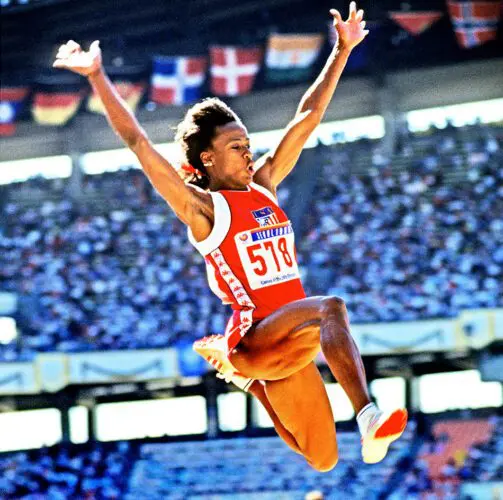
Heritage is also an emotional barrier, with fears that the legacies of great heptathletes would be lost. Yet Mary Peters’ legacy survived the evolution from pentathlon to heptathlon and Jackie Joyner-Kersee’s legacy – as well as a seemingly untouchable world record – is alive and well among athletes not yet born when she was competing. It is also not the responsibility of female athletes simply to protect a legacy and proceed no further than seven events.
“I competed in the heptathlon to start with,” says Bradshaw. “When I started pole vault, heptathlon dropped away because it didn’t have the one event I really loved. Had the decathlon been an option, I 100 per cent would have wanted to do it. If I’d started vaulting and my event wasn’t in the Olympics I would be gutted. I guess that’s exactly what a lot of these women are feeling.”
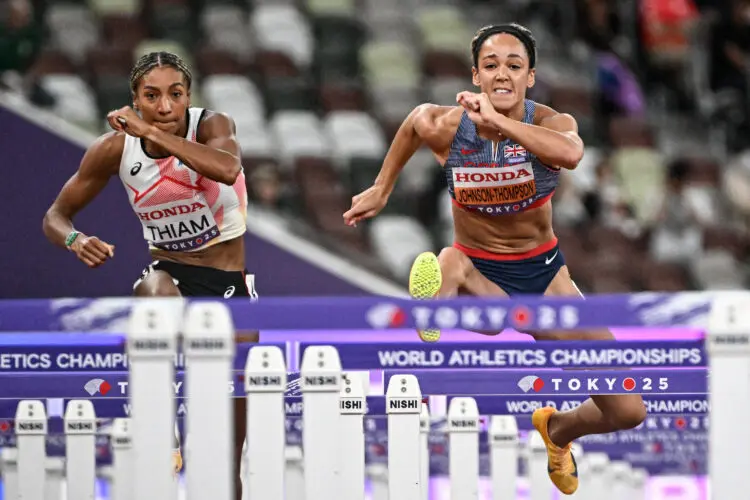
“I would love to see World Athletics facilitate a conversation among all stakeholders – elite heptathletes and decathletes and up and coming combined eventers – to figure out how we can get more international opportunities for women’s decathlon,” insists Kuntz. “Just telling women they can’t do the event is not an option.”
In France, the federation is supportive of the movement.
“The decision to allow women to compete in pole vault led to the French Federation supporting the transition from heptathlon to decathlon,” points out Collonvillé. “So when Adeline Audigier spearheaded an initiative to advance women’s decathlon, the federation responded positively. We sought ways to organise a French championships by slotting it into an existing championships.
“From 2024, the federation has required each regional league to host a decathlon. The goal was to demonstrate to other nations that viable solutions exist for establishing an official decathlon circuit alongside the standard competition schedule.”
In the US, sponsorship and coverage play a bigger role.
“The ‘barrier-breaker’ side of women’s decathlon is something that our sponsors are excited about,” Kuntz adds. “Hettas [a Canadian women’s performance footwear brand] has been one of our biggest supporters. We also want to pioneer how you take a two-day competition and condense it into an amazing product that converts viewers into fans.”
Switzerland is being considered as a potential world championships host in 2027, which would bring the event to the European heart of combined events. “I hope the French athletes soon break the 8000-point barrier, and go after my former world record, now the French record,” says Collonvillé.
And competitors aren’t the only ones feeling inspired.
“When I was there [in Oberlin], I sent a text to one of my mates saying: ‘When I’ve had this second baby, I’m going to train for a decathlon because I really, really want to do this’. I was very inspired watching these women,” recounts Bradshaw.
So what does Kuntz expect from women’s decathlon in 2027?
“We are nowhere close to the ceiling and I fully expect the world record to fall in the next year or two. It’s truly amazing what can happen when you give women the chance to compete in decathlon.”
Gabby Pieraccini is a decathlon writer and the founder of “Decathletes of Europe”. For more, visit: decathletesofeurope.co.uk