Skullduggery, speed and secrecy: the 157-year story of the New Year Sprint

Ahead of the 158th running of the New Year Sprint at Musselburgh Racecourse on January 1, organiser James Cunningham tells AW about the mining towns, secret training camps and synchronised betting coups that built Scotland's most colourful athletics tradition — and his plan to bring it back to its glory days.
Few athletics events can boast a heritage as rich as the New Year Sprint in Scotland. The race dates back to 1870 and is steeped in history.
The 2027 meeting is set to take place on New Year's Day at Musselburgh Racecourse near Edinburgh, with heats on New Year's Eve at Dalkeith High School – and the organiser James Cunningham is determined to return the event to its glory days.
For Scottish athletes it has long been an important fixture on the calendar – impressively this will be the 158th running of the event – but Cunningham hopes to attract more entries from England and beyond.
Its long history aside, the New Year Sprint is a handicap race, which means the fastest runner doesn't necessarily win. Over the years it has attracted plenty of betting as well, plus handsome prize money for the winner, all of which adds to the intrigue and fun.
"Back in the day miners liked to gamble," says Cunningham, as he reflects on the history, "and a lot of the reason the New Year Sprint existed is that at Powderhall was a dog track and they used to bet on dogs. But they thought if we could introduce some runners to this, we could maybe make some more money."
He adds: "Most of the people were from mining towns — you had people from Barrow-in-Furness and Cockermouth up on the west coast, Cramlington, your Whitley Bay and Newcastle on the east coast and then in Scotland you had Wishaw and Lanarkshire, Fife and East Lothian."
With money flying around in bets, athletes and coaches would try anything to win.
"You had 16 and 17-year-old lads taken out of the pits and put in a preparation where they were taken away and trained in secret... and given chicken, steak, eggs, trained twice a day, their legs massaged every day," says Cunningham. "They were trained like a king and they'd come out on the day a completely transformed runner — it was almost like they'd been on drugs – and of course they beat the handicapper.
"They'd all synchronise their watches and they would all go up to a bookie at different areas around the whole track and all put their bets on at 11 o'clock on the dot — so it just looked like a £100 bet, but that bet was actually a £2000 bet.
"Runners had false names to try and get money on — you'd put money on the runner with a pseudonym and that would bring the odds down on him, but push the odds up on someone else and then they'd put the real money on the actual runner."
One old newspaper report of the New Year Sprint claims: "If the turf accountants told you to lose, you'd do it. Their heavy features and dead eyes carried the promise of a fractured skull."
However, Cunningham says the days of "skullduggery" are over and buried in the event's colourful past.
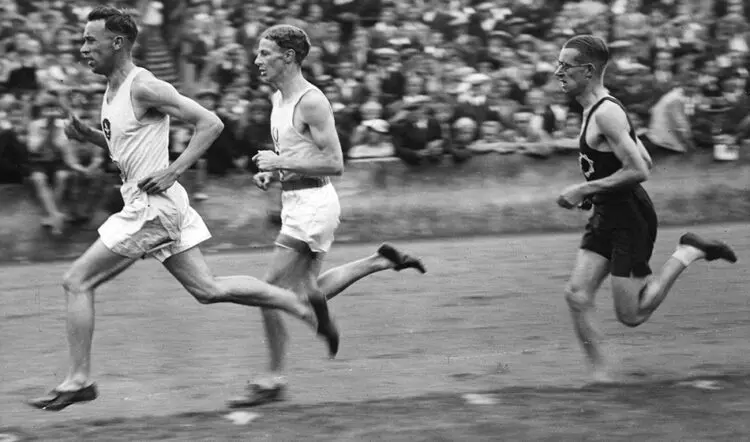
Skullduggery aside, handicap races were once all the rage. It didn't just happen in sprinting either. Sydney Wooderson, for example, set a world mile record of 4:06.4 in a handicap race in Motspur Park in south-west London. Earlier this year Josh Kerr followed pacemakers and wave lights to become the latest Brit to break the mile record, but Wooderson did it chasing slightly slower runners who started ahead of him.
It is not just Scotland and northern England where handicap races were popular either. Australia has a rich tradition with the Stawell Gift still going strong today and handicap sprint races being immortalised in Hollywood movies such as Gallipoli with Mel Gibson.
Famous winners of the New Year Sprint include Willie McFarlane in the 1930s, George McNeill in 1970, Kipper Bell in 1984 and Doug Walker in 1995, while Jazmine Tomlinson became the first female winner in 2016.
Cunningham says: "George McNeill won the New Year Sprint in 1970 and the following year he ran 11 seconds for 110 metres off the scratch mark, which is 10 seconds for 100 metres. I think he's the first man to ever run that.
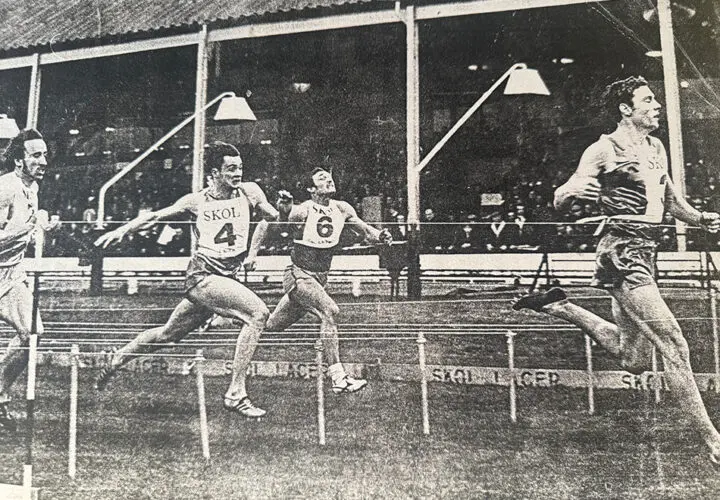
"He was never allowed to compete for his country because he'd competed as a schoolboy for Hibernian... he could have won the Olympics, absolutely no question, if he'd been allowed to compete — but he wasn't."
Due to the nature of the handicap system, some great athletes didn't manage to win the New Year Sprint, though. They include Harry Hutchens, a professional sprinter who many regard as one of the fastest men of the 19th century, who ran off scratch from 1880 to 1895.
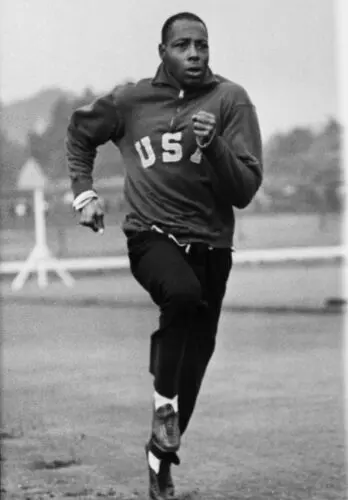
The great American Olympian Barney Ewell – winner of gold and two silvers at the 1948 Games – also competed at Powderhall, in a special invitation handicap race in 1950, narrowly losing from scratch.
Cunningham, who took over from long-time organiser Frank Hanlon in 2023, is among the illustrious hall of fame as a winner himself in 1998. On that occasion his coach won £20,000 thanks to his victory.
"In the summer of '97 I was doing trials and my coach said, 'You can't go to meetings because you're going to get pulled — you're just going to win by too much'," Cunningham remembers. "So I was kept under wraps until the day and that's why he was able to make big money on me.
"The following summer he said, 'You can go and compete wherever you want.' I travelled the length and breadth of Scotland doing Highland Games... and made about £6,000 of prize money."
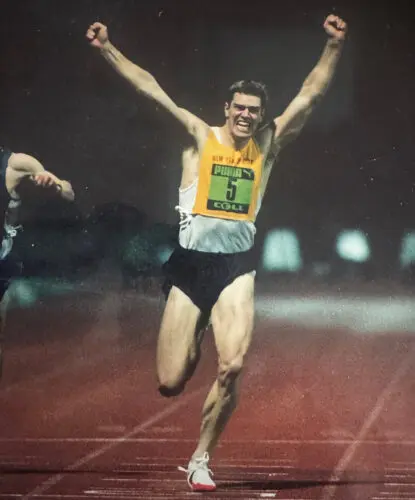
How does the handicap work? "Your handicap is given to you based on your sex, your ability and your age — that all comes together, and you take a lot of that information from Power of 10," says Cunningham.
"If you win the sprint and win the prize money, you will get pulled about three or four metres so you can never win it again... there's always a wave of people coming through. You always have to do a bit of an apprenticeship to get to the point where you win it.
"It took me six attempts before I won it — through injuries and learning and getting better starts, having two bad coaches and then finding the right one.
"The handicapper doesn't want to look daft. If he's gone and given someone a mark and they just rock up on the day and romp home by a few metres clear of everyone else — that looks bad on him. So they tend to play safe."
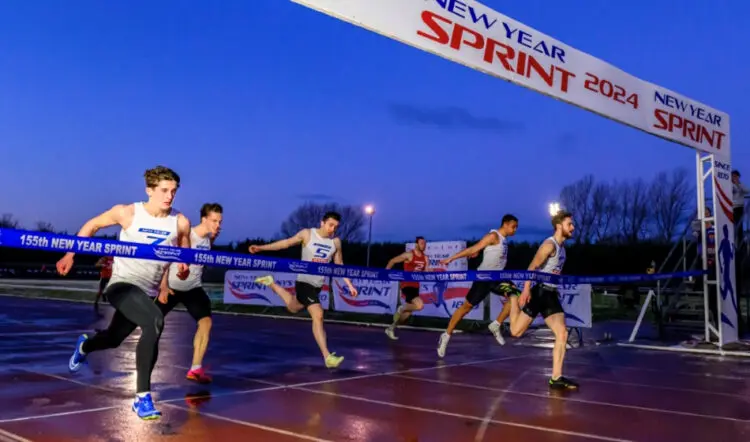
This is what makes handicap racing brilliantly unpredictable and entertaining.
"The beauty about handicap running is you have no idea who's going to win that race when the gun goes, whereas at an amateur meeting you pretty much know from people's form where they stand," says Cunningham.
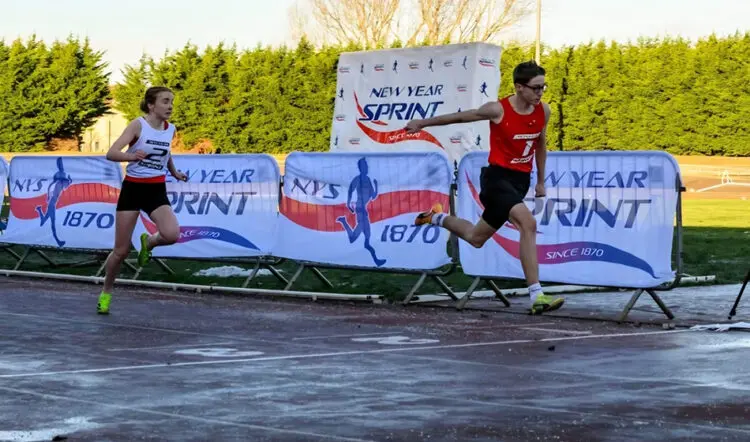
"Runners are funny — runners can bottle it. You've got a hot favourite, fastest by a metre, definitely going to win it on the day and nerves get to him and he just chokes."
The event has moved around a little over the years as well – from Powderhall to Musselburgh, Edinburgh and Grangemouth.
The event has been in Grangemouth in the last three years but when it takes place at Musselburgh in a few months' time it will be part of a horse racing programme and will benefit from live coverage on ITV.
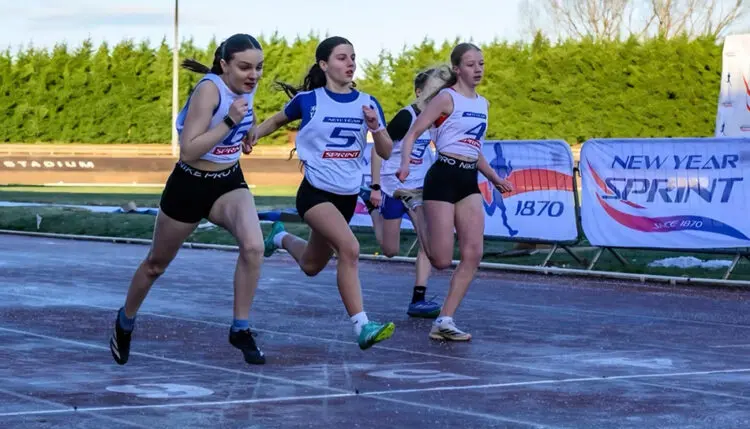
"The first prize is going to be £8000 – with £100 for heat winners – and I'm hoping that will entice some of the runners from the south to come up and have a go at it," says Cunningham.
"Three-quarters of a million people watch ITV1 on New Year's Day to watch the horses, so hopefully it will help attract some sponsorship."
The New Year Sprint might be all about speed, but it clearly has stamina too. Since 1870 it has stood the test of time and in the early hours of 2027 is set to start a new chapter.
To enter the New Year Sprint, CLICK HERE
New Year Sprint winners – 1870 to 2026
1870 – D. Wight (Jedburgh), Powderhall, 160yds, - (h'cap 12yds)
1871 – T. Angus (Darlington) & J. Dickie (Leith), Powderhall, 150yds, - (h'cap 4.5yds/11.5yds) [dead heat]
1872 – G. Alexander (Edinburgh), Powderhall, 150yds, - (h'cap 11.5yds)
1873 – A. McKenzie (Edinburgh), Powderhall, 150yds, - (h'cap 13yds)
1874 – J. Grierson (Edinburgh), Powderhall, 150yds, - (h'cap 12yds)
1875 – J. Aitken (Johnston), Powderhall, 150yds, - (h'cap 15.5yds)
1876 – F. Kilgour (Edinburgh), Powderhall, 150yds, 14.0 (h'cap 18.75yds)
1877 – F. Kilgour (Edinburgh) & D. Wight (Jedburgh), Powderhall, 150yds, 14¼ (h'cap 13.5yds/scr.) [dead heat]
1878 – K. Edwards (Edinburgh), Powderhall, 130yds, - (h'cap 16.25yds)
1879 – J. Hill (Kelso), Powderhall, 130yds, - (h'cap 14.5yds)
1880 – J. Change (Edinburgh), Powderhall, 130yds, - (h'cap 19yds)
1881 – T.P. Williamson (Hawick), Powderhall, 130yds, 12¼ (h'cap 16yds)
1882 – R. Muir (Edinburgh), Royal Patent Gymnasium, 125yds, 12¼ (h'cap 11.5yds)
1883 – W. Davies (Edinburgh), Powderhall, 130yds, 12 (h'cap 10.5yds)
1884 – W. Clark (Jarrow), Powderhall, 130yds, 12¼ (h'cap 12.5yds)
1885 – T. Elliot (Sunderland), Powderhall, 130yds, 11¾ (h'cap 13.5yds)
1886 – T. Hendry (Newcastle), Powderhall, 130yds, 12¼ (h'cap 14.5yds)
1887 – J. Hamilton (S. Queensferry), Powderhall, 130yds, 12¼ (h'cap 13yds)
1888 – G. Grant (Edinburgh), Powderhall, 130yds, 12 (h'cap 13yds)
1889 – W. Watson (York), Powderhall, 130yds, 12½ (h'cap 13yds)
1890 – J. Jackson (Hawick), Powderhall, 130yds, 12⅗ (h'cap 10yds)
1891 – J. Jack (Leith), Powderhall, 130yds, 12¼ (h'cap 18yds)
1892 – W. Hunter (Shettleston), Powderhall, 130yds, 13½ (h'cap 9yds)
1893 – A. Douglas (Edinburgh), Powderhall, 130yds, 12 (h'cap 15yds)
1894 – E. Gordon (Edinburgh), Powderhall, 130yds, 12 (h'cap 16yds)
1895 – S. Boustead (Byker), Powderhall, 130yds, 12⅗ (h'cap 9yds)
1896 – J. Cowan (Jamestown), Powderhall, 130yds, 12½ (h'cap 12.5yds)
1897 – W. Russell (Biggar), Powderhall, 130yds, 12⅗ (h'cap 13.5yds)
1898 – G. Duncan (Langholm), Powderhall, 130yds, 12³⁄₁₀ (h'cap 10.5yds)
1899 – D. Roberts (Leith), Powderhall, 130yds, 12⅕ (h'cap 16yds)
1900 – E. Nener (Wavertree), Powderhall, 130yds, 12⅖ (h'cap 6.5yds)
1901 – D. Roberts (Leith), Powderhall, 130yds, 12⅗ (h'cap 6.5yds)
1902 – B.R. Day (Glasgow), Powderhall, 130yds, 12⅖ (h'cap 10yds)
1903 – A. Garside (Edinburgh), Powderhall, 130yds, - (h'cap 13.5yds)
1904 – J. Muir (Leith), Powderhall, 130yds, 12⅒ (h'cap 14yds)
1905 – J. Innes (Portsoy), Powderhall, 130yds, 12¼ (h'cap 12.5yds)
1906 – W. Maguire (Edinburgh), Powderhall, 130yds, 12⅕ (h'cap 15.5yds)
1907 – R. Raisbeck (Edinburgh), Powderhall, 130yds, 12½ (h'cap 12.5yds)
1908 – G. Walker (Cupar), Powderhall, 130yds, 12³⁄₁₀ (h'cap 11yds)
1909 – S. Stewart (Leith), Powderhall, 130yds, 12⁹⁄₁₆ (h'cap 15yds)
1910 – R. Riach (Ratho), Powderhall, 130yds, 12¹⁴⁄₁₆ (h'cap 13.5yds)
1911 – J. Paris (Edinburgh), Powderhall, 130yds, 12⅖ (h'cap 15yds)
1912 – F. Donaldson (Broughton), Powderhall, 130yds, 12²⁄₁₆ (h'cap 15yds)
1913 – M. Henry (Jedburgh), Powderhall, 130yds, 11¹³⁄₁₆ (h'cap 11yds)
1914 – W. Haddock (Stockton), Powderhall, 130yds, 12¹⁴⁄₁₆ (h'cap 10.5yds)
1915 – W.R. Stevens (Glasgow), Powderhall, 130yds, 12⅖ (h'cap 12.5yds)
1916 – R. Thompson (Ferryhill), Powderhall, 130yds, 12²⁄₁₆ (h'cap 11.5yds)
1917 – R. Brunton (Edinburgh), Powderhall, 130yds, 12½ (h'cap 15yds)
1918 – T. Brandon (Edinburgh), Powderhall, 100yds, 9¹⁵·⁵⁄₁₆ (h'cap 12.5yds)
1919 – J. Edwards (Edinburgh), Powderhall, 100yds, 10²⁄₁₆ (h'cap 7.5yds)
1920 – T. Eatock (Ince), Powderhall, 130yds, 12³⁄₁₆ (h'cap 10yds)
1921 – J. Pentland (Edinburgh), Powderhall, 130yds, 12¹⁄₁₆ (h'cap 11.5yds)
1922 – D. Bell (Donibristle), Powderhall, 130yds, 12¹¹⁄₁₆ (h'cap 11yds)
1923 – J. Riach (Ratho), Powderhall, 130yds, 11¹⁴·⁵⁄₁₆ (h'cap 15yds)
1924 – F. Best (Jarrow), Powderhall, 130yds, 11¹⁵⁄₁₆ (h'cap 14.5yds)
1925 – N. Thompson (Chathill), Powderhall, 130yds, 13²⁄₁₆ (h'cap 10yds)
1926 – C.J. Britee (Portobello), Powderhall, 130yds, 12⁵⁄₁₆ (h'cap 7.5yds)
1927 – G. Howard (Bury), Powderhall, 130yds, 12⁹⁄₁₆ (h'cap 9yds)
1928 – J. Duffy (Broxburn), Powderhall, 130yds, 12⁴⁄₁₆ (h'cap 11.5yds)
1929 – J. Henshaw (Newarthill), Powderhall, 130yds, 12 (h'cap 14yds)
1930 – A. Morgan (Llangewydd), Powderhall, 130yds, 12⁹⁄₁₆ (h'cap 8.5yds)
1931 – T. Tait (Prestonpans), Powderhall, 130yds, 12⁷⁄₁₆ (h'cap 9yds)
1932 – J. Carl (Elswick), Powderhall, 130yds, 12¹⁴⁄₁₆ (h'cap 8.5yds)
1933 – W. McFarlane (Glasgow), Powderhall, 130yds, 12²⁄₁₆ (h'cap 7yds)
1934 – W. McFarlane (Glasgow), Powderhall, 130yds, 12¹⁰·⁵⁄₁₆ (h'cap scr.)
1935 – J.F. McPhilips (Edinburgh), Powderhall, 130yds, 12⁸⁄₁₆ (h'cap 8.5yds)
1936 – J.H. Mitchell (Letham), Powderhall, 130yds, 12⁶⁄₁₆ (h'cap 9yds)
1937 – W.M. Scott (Galashiels), Powderhall, 130yds, 13¹⁄₁₆ (h'cap 7.5yds)
1938 – E.J. Saxon (London), Powderhall, 130yds, 12⁷⁄₁₆ (h'cap 15yds)
1939 – C. James (Bebside), Powderhall, 130yds, 12⁷⁄₁₆ (h'cap 9.5yds)
1940 – J. Gillespie (Leith), Powderhall, 130yds, 12⁹⁄₁₆ (h'cap 19yds)
1941 – G. Taylor (Douglas), Powderhall, 100yds, 10¹¹⁄₁₆ (h'cap 5.5yds)
1942 – C. Chatburn (Chatburn), Powderhall, 100yds, 10⁵⁄₁₆ (h'cap 3.5yds)
1943 – N. Taylor (Blyth), Powderhall, 100yds, 9¹⁵⁄₁₆ (h'cap 6yds)
1944 – J. Urquhart (Edinburgh), Powderhall, 100yds, 10⅒ (h'cap unknown)
1945 – R. Gordon (Edinburgh), Powderhall, 100yds, 10¹⁰⁄₁₆ (h'cap 5.5yds)
1946 – A. Mitchell (Ashington), Powderhall, 130yds, 12¹³⁄₁₆ (h'cap 5yds)
1947 – W. Spence (Blyth), Powderhall, 130yds, 13¹⁴·⁵⁄₁₆ (h'cap 5.5yds)
1948 – J.S. Wilson (Musselburgh), Powderhall, 130yds, 13⁶⁄₁₆ (h'cap 9.5yds)
1949 – A. McLagan (Methven), Powderhall, 130yds, 13¹⁄₁₆ (h'cap 9.5yds)
1950 – H. Short (Ashington), Powderhall, 130yds, 12⁹⁄₁₆ (h'cap 7yds)
1951 – G. Harrington (Brownhills), Powderhall, 130yds, 11.95 (h'cap 7.5yds)
1952 – E. Cumming (Australia), Powderhall, 130yds, 12.19 (h'cap 2yds)
1953 – F. Wilson (Kirkintilloch), Meadowbank, 100yds, 9.87 (h'cap 6.5yds)
1954 – F. Scott (Falkirk), Powderhall, 130yds, 12.50 (h'cap 11yds)
1955 – N. Robertson (Perth), Powderhall, 130yds, 11.80 (h'cap 11yds)
1956 – J. Bryce (Alva), Powderhall, 130yds, 12.90 (h'cap 9yds)
1957 – J. Ball (Blyth), Powderhall, 130yds, 12.45 (h'cap 7yds)
1958 – W.N. Atkinson (Brampton), Buccleuch Park, 120yds, 11.89 (h'cap 6.5yds)
1959 – F. Loss (Ashington), Tranent, 110yds, 11.40 (h'cap 6yds)
1960 – A.A. Pow (Innerleithen), Victoria Park, 120yds, 11.60 (h'cap 10.5yds)
1961 – J. Lothian (Walkerburn), Victoria Park, 120yds, 11.61 (h'cap 7.5yds)
1962 – C. Harrison (Bedlington), Victoria Park, 120yds, 11.58 (h'cap 7yds)
1963 – R.F. Dunbar (Edinburgh), Victoria Park, 120yds, 11.39 (h'cap 4.5yds)
1964 – W. McLellan (East Wemyss), Victoria Park, 120yds, 11.59 (h'cap 7yds)
1965 – T. Dickson (Hawick), Powderhall, 120yds, 11.62 (h'cap 6.5yds)
1966 – M. Murray (Barrow), Powderhall, 120yds, 11.42 (h'cap 4.5yds)
1967 – E. Cain (Carlisle), Powderhall, 120yds, 11.28 (h'cap 7.5yds)
1968 – R. Swann (Cardenden), Powderhall, 120yds, 11.37 (h'cap 8.5yds)
1969 – D. Deas (Buckhaven), Powderhall, 120yds, 11.50 (h'cap 5yds)
1970 – G. McNeill (Tranent), Powderhall, 120yds, 11.61 (h'cap 5.5yds)
1971 – W. Young (Elphinstone), Meadowbank, 110m, 11.10 (h'cap 6m)
1972 – R. Oliver (Cowdenbeath), Meadowbank, 110m, 10.94 (h'cap 8m)
1973 – J. Kirk (Lochgelly), Meadowbank, 110m, 10.80 (h'cap 10m)
1974 – P. Mulgrew (Edinburgh), Meadowbank, 110m, 10.86 (h'cap 11m)
1975 – J. Connor (Sunderland), Meadowbank, 110m, 10.94 (h'cap 10m)
1976 – D. Burgess (Edinburgh), Meadowbank, 110m, 11.04 (h'cap 7.5m)
1977 – J. Stirling (Ormiston), Meadowbank, 110m, 10.98 (h'cap 8.5m)
1978 – R. Herron (Symington), Meadowbank, 110m, 10.78 (h'cap 8.5m)
1979 – A. Forster (Prestonpans), Meadowbank, 110m, 10.80 (h'cap 7.75m)
1980 – D. Valentine (Edinburgh), Meadowbank, 110m, 11.00 (h'cap 6m)
1981 – A. McQuaig (Dumbarton), Meadowbank, 110m, 10.55 (h'cap 7.5m)
1982 – A. Walker (Hawick), Meadowbank, 110m, 11.17 (h'cap 7m)
1983 – N. Turnbull (Peebles), Meadowbank, 110m, 10.78 (h'cap 6.5m)
1984 – K. Bell (San Diego, USA), Meadowbank, 110m, 10.97 (h'cap 2.25m)
1985 – W. Fraser (Bonnyrigg), Meadowbank, 110m, 11.05 (h'cap 6.25m)
1986 – B. Mulgrew (Edinburgh), Meadowbank, 110m, 11.41 (h'cap 6.75m)
1987 – W. Snoddy (San Diego, USA), Meadowbank, 110m, 11.14 (h'cap 2.5m)
1988 – E. Smart (Whitley Bay), Meadowbank, 110m, 10.83 (h'cap 8m)
1989 – T. Finkle (Jedburgh), Meadowbank, 110m, 11.00 (h'cap 8.75m)
1990 – J. Mallin (Hawick), Meadowbank, 110m, 11.33 (h'cap 6m)
1991 – D. Donald (Oakham), Meadowbank, 110m, 11.01 (h'cap 9.5m)
1992 – M. Elliot (Hawick), Meadowbank, 110m, 11.09 (h'cap 8.25m)
1993 – N. Sneddon (Edinburgh), Meadowbank, 110m, 11.20 (h'cap 6m)
1994 – D. Barbour (Peebles), Meadowbank, 110m, 11.35 (h'cap 10.5m)
1995 – D. Walker (Edinburgh AC), Meadowbank, 110m, 11.07 (h'cap 2.25m)
1996 – K. Campbell (Edinburgh SH), Meadowbank, 110m, 11.30 (h'cap 5.25m)
1997 – Josephus Thomas (Woodford Green AC), Meadowbank, 110m, 11.35 (h'cap 3.25m)
1998 – James Cunningham (Haddington), Meadowbank, 110m, 10.90 (h'cap 11.75m)
1999 – Joselyn Thomas (Woodford Green AC), Meadowbank, 110m, 11.19 (h'cap 3.75m)
2000 – R. Pitt (City of Edinburgh AC), Musselburgh, 110m, 11.30 (h'cap 9m)
2001 – N. Smith (Dunfermline & W Fife AC), Musselburgh, 110m, 11.10 (h'cap 10.5m)
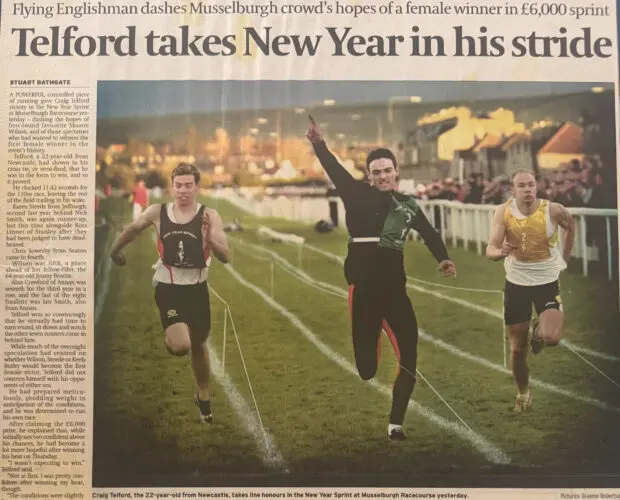
2002 – C. Telford (Newcastle), Musselburgh, 110m, 11.42 (h'cap 6.75m)
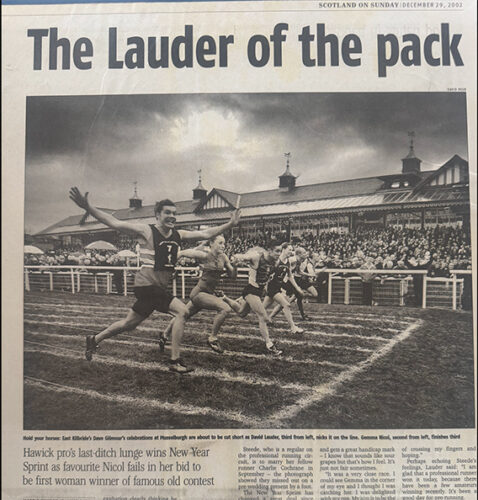
2003 – D. Lauder (Hawick), Musselburgh, 110m, 11.67 (h'cap 11.75m)
2004 – G. Charlton (North Shields), Musselburgh, 110m, 11.28 (h'cap 15.5m)
2005 – P. Swan (City of Edinburgh AC), Musselburgh, 110m, 11.69 (h'cap 9m)
2006 – C. Bowers (Glenrothes), Musselburgh, 110m, 11.24 (h'cap 7.5m)
2007 – T. Bowman (Leeds City AC), Musselburgh, 110m, 12.12 (h'cap 28.5m)
2008 – C. Robertson (Gala), Musselburgh, 110m, 12.00 (h'cap 9.5m)
2009 – L. Marshall (Hawick), Musselburgh, 110m, 11.84 (h'cap 8m)
2010 – D. Paxton (Hawick), Musselburgh, 110m, 11.95 (h'cap 9.5m)
2011 – M. Paterson (Clackmannan), Musselburgh, 110m, 11.91 (h'cap 6.5m)
2012 – G. Lister (Kirkcaldy), Musselburgh, 110m, 11.62 (h'cap 12.5m)
2013 – B. Robbins (Edinburgh AC), Musselburgh, 110m, 12.14 (h'cap 7.5m)
2014 – D. Ali (Hawick), Musselburgh, 110m, 11.59 (h'cap 7.5m)
2015 – C. Tindle (Edinburgh AC), Musselburgh, 110m, 11.97 (h'cap 5m)
2016 – Jaz. Tomlinson (TLJT), Musselburgh, 110m, 11.38 (h'cap 20.5m)
2017 – Greg Kelly (East Kilbride AC), Musselburgh, 110m, 11.54 (h'cap 8.25m)
2018 – Calum McWilliam (East Kilbride AC), Musselburgh, 110m, 11.80 (h'cap 9.75m)
2019 – Greg Kelly (East Kilbride AC), Musselburgh, 110m, 11.50 (h'cap 5.5m)
2020 – Ian Horsburgh (Central AC), Musselburgh, 110m, 11.81 (h'cap 10.25m)
2021 – Molly Reville (Edinburgh AC), East Lothian, 110m, 10.83 (h'cap 26.0m)
2022 – Stacey Downie (Edinburgh AC), Meadowbank, 110m, 11.15 (h'cap 17.0m)
2023 – Scott Tindle (TLJT), Musselburgh, 110m, 12.03 (h'cap 6.5m)
2024 – Ryan McMichan (Hawick), Grangemouth, 110m, 11.35 (h'cap 8.5m)
2025 – Craig Bruce (Selkirk), Grangemouth, 110m, 11.74 (h'cap 10m)
2026 – Daniel Bruce (Kilbarchan AAC), Grangemouth, 110m, 11.41 (h'cap 9m)