Meet the coach: Gavin Pavey

Katy Barden talks to a coach who honed his approach through helping his wife, Jo Pavey, and now mentors one of Britain’s brightest distance running talents.
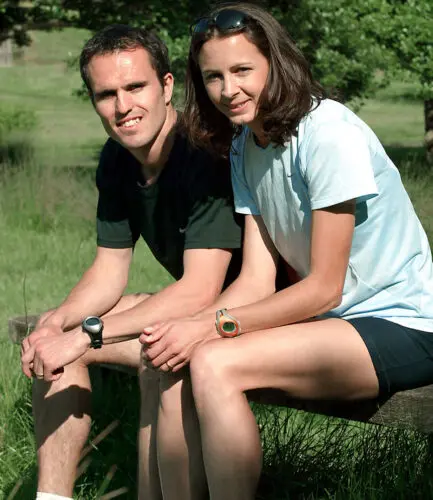
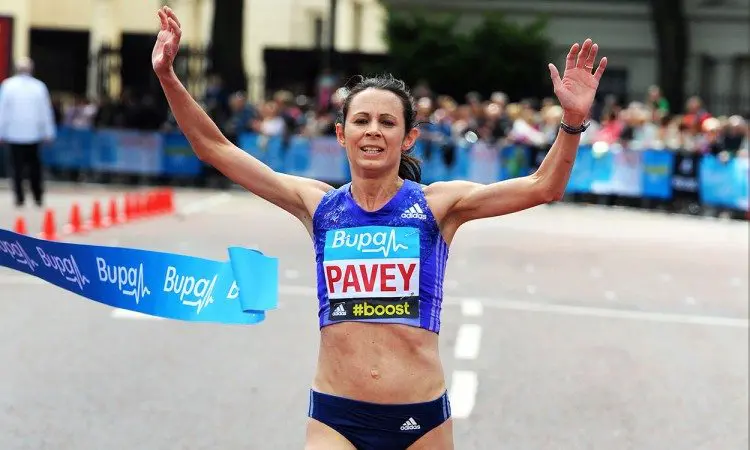
Gavin Pavey is best known as coach and husband to five-time Olympian Jo Pavey, a world, European and Commonwealth medallist in the 5000m and 10,000m who memorably won the 2014 European 10,000m title at the age of 40.
Based in Devon, Pavey – who started out as a runner at Newton Abbot AC before joining Exeter Harriers – currently works with a group of athletes under the banner of ‘ISCA Endurance’ including reigning European under-20 3000m and 5000m champion and national age-group record holder Innes FitzGerald, as well as Great Britain and Northern Ireland senior internationalists Jake Smith and Hannah Irwin. He also coaches at Exeter Harriers and works with athletes further afield.
How did you first get into coaching?
It started when I was about 13 with a copy of the AAA ”Runner’s Guide”. I turned to the page on interval training and immediately began self-coaching, running 10 × 300m off a strict 60-second recovery.
When I joined Exeter Harriers at 17 I was in the same group as Jo. I’d seen her running before – I was there when she won the English Schools 1500m title (and broke the British record) in 1988 and also the AAA’s U15 800m and 1500m the same year – and she just had this raw talent. All of that got me interested in the coaching side of things.
My own competitive running career was derailed in 1993 when I contracted Epstein-Barr virus. Chronic fatigue stopped me training but I’d still turn up at sessions to pace and time other athletes. I wasn’t “coaching” at that point but I realised how much I loved being part of the track environment and helping others.
My coaching career officially began when I started working with Jo in October 1996. We were going travelling so she didn’t really have much of a choice – I was the only available coach.
Jo had been plagued by recurring injuries and surgeries in her late teens and early twenties. Looking back now it was a classic case of too much, too soon which caused her young body to break down, so my priority was to get her back running.
What was your training approach and how did you turn things around?
I ripped apart everything Jo had been doing. We removed the long runs, significantly reduced the overall training volume, reduced the volume within individual sessions and focused on quality over quantity. We shifted towards more high-end aerobic work, emphasised freshness and health, and slightly reduced the pace of many sessions so they became more aerobic in nature. Her body could handle that type of training much better and it seemed to work remarkably well.
In spite of that, I lacked confidence in my ability. Jo looked like she was going to qualify for the 1997 World Champs so I handed her over to another coach that May. I would later hand her to yet another coach.
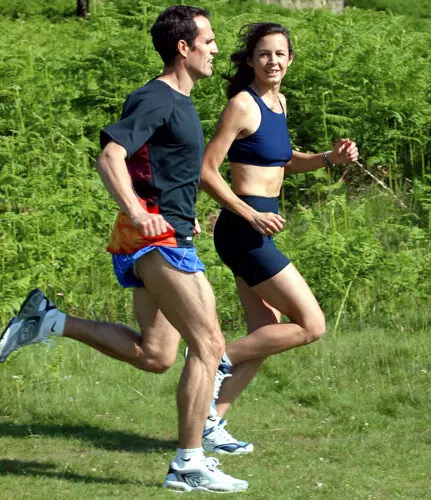
In 2001 I finally started to coach Jo myself. The decision wasn’t based on my own coaching achievements – I definitely didn’t have any kind of ego – but being solely focused on Jo performing at her best. When we worked together it seemed to click. I think I was just more in tune with her body and my mindset had moved from forcing performance to protecting her longer-term ability. She made the final at every major outdoor champs after that, until we had our son [Jacob] in 2009.
Jo was very special to coach as her early setbacks meant she was highly driven not to make unnecessary mistakes; she locked into the training schedules and was extremely professional. She understood restraint – when to push and when to hold back – and that enabled her to take consistency to another level.
Who has been your greatest coaching influence?
All of the coaches that ever worked with Jo and me had quite a big influence on me, whether it was good or bad. Outside of those people I'm quite a nerd and coaches like Percy Cerutty, Arthur Lydiard and Peter Coe have also had an influence on what I do. I’d say Peter Coe is probably the biggest influence. I still lean heavily towards a lot of his stuff.
What would you say are the characteristics of a good coach?
Caring about the person behind the performance more than the performance itself is important. It's giving care and attention to the person and their well-being and ensuring that their identity isn’t overly attached to their outcomes.
If things didn’t go well for Jo in a race she could be upset with it for a couple of days, then we would just try and move on and learn from it. We became very good at switching on and off. I valued having a normal life away from running, and Jo was exactly the same. We discussed athletics when we needed to, focused fully when it mattered, but much of the time we were simply living a normal family life.
I take the same approach with athletes now. I let them sit with it for a little bit and then we talk about it. It’s all just learning, isn't it? The ups and downs are part of the process. It's more just trying to get a really nice balance – that life balance outside of running – and trying to drive the whole process from that health and wellbeing starting point.
How do you balance health and wellbeing with maximal performance?
It’s about guiding your athletes. It’s gaining your athlete’s trust when they might need to do things differently and helping them understand how long that's going to take. I guess it’s focusing them more on the process than the outcomes. Just getting them locked into doing the right things every day.
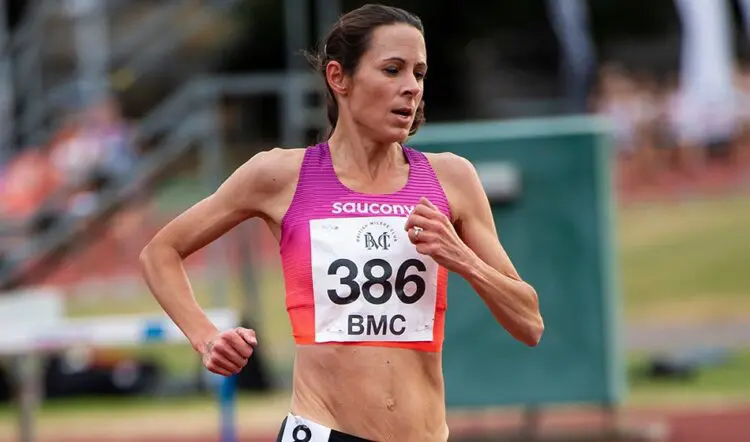
Hannah has spoken openly about overcoming problems with disordered eating when she was younger, but she didn't have RED-S or anything when she came to me, it was more just getting her into a situation where her body would permit what it was being asked to do.
People seem to think that when you recover from stuff like that you just bounce back and carry on as you were. That isn’t the case at all, it can take quite a long time.
Jake, for instance, is still emerging [Jake has openly discussed his experience with RED-S]. It takes quite a while to get to where you want to be because you’ve got to show the body safety. If you’ve over-stressed the body for a long time – whether that's by overtraining or by not giving it the resources it needs – it needs a lot of reassurance before it will allow you to do all of the things you need to do.
Jake’s obviously back running marathons and he's running quite high volume, but we’re keeping the training intensity in check. What we're doing has no guarantees, we're just trying to take it one day at a time and to do the right things every day, stuff that their bodies will permit so we're not taking them beyond what they can tolerate.
A lot of coaches focus on performance, but how the body perceives and processes the training is the more important bit in my opinion. When someone's had RED-S or they've over-trained or under-fuelled, that's the bit that falls apart. You’ve got to get your athletes into a sweet spot where there are consistently good patterns emerging in what they're doing and that they're coping with it. That’s when things start to improve and injury rates drop.
How do you manage expectations with talented young athletes such as Innes FitzGerald?
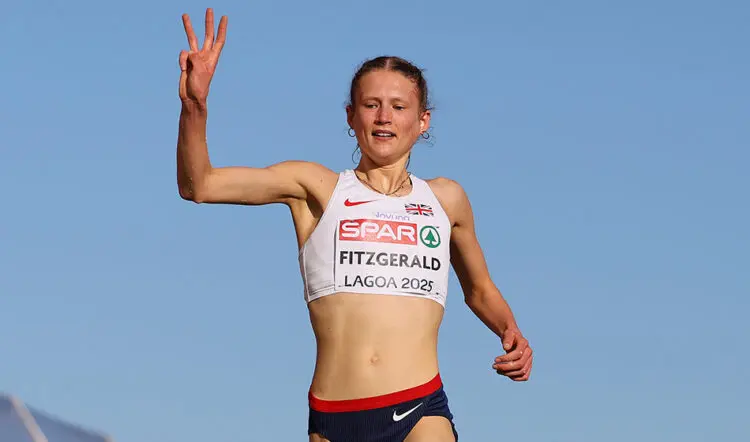
Innes is well aware of the expectations and pressure on her. It’s something we've had to manage quite carefully due to her early success. She knows that she's on a journey and that things are going to take time. She also knows that there’s a lot we're not doing within her training. I think there’s an assumption that she's doing loads of volume, but she’s not. Her training is quite constrained.
I focus a junior's training towards slightly faster running and movement mechanics, so we're more orientated towards slightly faster running at the moment but, as she develops, we'll fill in the gaps.
We don't really focus on outcome. She's got her own goals and aspirations, but we focus on what we're doing, getting that right, and letting the outcome take care of itself.
How would you describe your coaching philosophy?
My baseline belief is that how an athlete feels when they succeed matters far more than the success itself. If an achievement comes at a psychological cost, then the system is broken.
I focus heavily on the person behind the performance and trying to bridge psychology and physiology. The art of coaching drives my intuition and decision-making, while science helps refine and validate that process.
Performance focus is often centred on the cardiovascular, neuromuscular or metabolic systems. My primary focus is slightly different. I concentrate on the systems that regulate adaptation itself. I care about how the body perceives and responds to external load, whether that load comes from training or from life outside the sport. That means considering an athlete's overall load, the cumulative wear and tear created by training, poor sleep, emotional stress, anxiety, work, study and energy availability.
A huge part of my role is to protect the athlete's adaptive capacity, so they are responsive to training rather than becoming chronically overwhelmed.
Ultimately, true coaching isn't about imposing stuff on a rigid calendar timeline, it's about honouring the athlete's individual journey at a pace dictated by their own body. High performance is a natural byproduct of long-term health, properly resourcing the body and protecting an athlete's adaptive capacity while helping them to stay eager, responsive and resilient for years to come.
Coaching is an art and a science and I enjoy every part of that process. If you respect the process, bridge the art with the science, and most importantly keep it fun, the performances will take care of themselves.
What advice would you give to an aspiring coach?
Show up in a positive mood, listen to your athletes, notice how they are doing, allow them to contribute and protect their autonomy. As a coach you’re there to guide athletes, not to order them around. Give them the space to make mistakes, learn and grow. Try to ensure that you’re a stable, reliable anchor who has their back through all the ups and downs.
For me, the joy of coaching isn't all about ability or performance, it's about seeing the enjoyment and sense of achievement that running brings. No matter an athlete’s ability, my goal is to develop a lifelong love of running or being active.