Relentless Vainio heads to Berlin after seven marathons in the past year

Finland's European champion Alisa Vainio lines up on Sunday having turned the rules of marathon racing upside down, while Tigist Assefa chases the world record and Sabastian Sawe watches from the sidelines.
Tigst Assefa's bid to regain the marathon world record will dominate the build-up to the BMW Berlin Marathon on Sunday (Sept 27), but one of the most remarkable stories in the women's field belongs to a 28-year-old Finn who seems unable to stop racing over 26.2 miles.
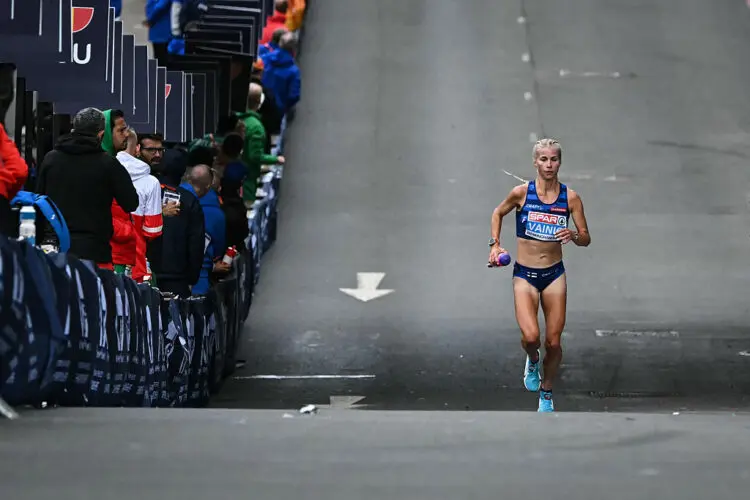
Alisa Vainio arrives in the German capital as European champion, Finnish record-holder and the busiest elite marathon runner in the world. Berlin will be her eighth marathon in just over 12 months, starting with the World Championships in Tokyo last September. Most leading marathon runners race two, perhaps three, times a year and space them at least three months apart.
She has no plans to ease off either. Six weeks after winning the European title in Birmingham and only 15 days after cruising to the Finnish title in Jyväskylä, she lines up in Berlin with the Valencia Marathon on December 6 already in her diary.
"My aim is to improve my personal best and hopefully run under 2:20," said Vainio, whose national record stands at 2:20:39 from Seville in February.
If she manages it, she will become the first Nordic woman to break 2:20.
A year like no other
Vainio's run of races since last September reads like this:
The transformation is extraordinary. Vainio ran her first marathon as a 17-year-old in 2015, clocking 2:33:24 for a European under-20 best, but in 12 marathons over the next decade she never ran faster than 2:25:36. That time came in Berlin in 2024, where she finished 14th.
Her 2025 season did not look promising at first. She spent much of the spring recovering from a prolonged mycoplasma infection and did not race properly until August. A month later she placed fifth in the humid conditions of Tokyo as the leading European, equalling the best Finnish placing in a women's marathon at a global championship.
The records then came thick and fast. Three weeks after Tokyo, she took Camilla Richardsson's Finnish record of 2:24:38 apart with 2:23:06 in Vantaa. In Valencia she lowered it again to 2:20:48, which also took down Ingrid Kristiansen's Nordic record of 2:21:06. That mark had stood since 1985.
Seville in February brought the biggest win of her career. Despite what she described afterwards as a chaotic start, she beat a strong East African field to win in 2:20:39. She became the first European woman to win the race since 2017. Paris followed eight weeks later, where she ran 2:21:35 for sixth in a race won by Ethiopia's Shure Demise in a course record 2:18:34.

Out on her own in Birmingham
Then came Birmingham. Four years after failing to finish the European Championships marathon in Munich, Vainio produced one of the most dominant runs in the championships' history.
She went to the front almost from the gun and was clear of the field inside the first 500 metres. She reached halfway in 1:10:40 with a lead of about three minutes and ran alone on the undulating city-centre laps for the rest of the race.
Her winning time of 2:22:26 cut almost three minutes off the championship record of 2:25:20. Her margin of 4:55 over Hungary's Lili Anna Vindics-Tóth (2:27:21) was the biggest in the event's history, beating the 4:14 by which Rosa Mota won in 1986. Britain's Abbie Donnelly took bronze in 2:27:33 and led the hosts to team gold.
Vainio became Finland's first European marathon champion since Janne Holmén won the men's title in Munich in 2002.
She did not stop there. At the end of August she lowered her 10,000m track PB to 32:30.71 at the Finland v Sweden match in Helsinki. Two weeks ago she added the Finnish marathon title in Jyväskylä, winning by more than seven minutes in a course record.
Coach Jarmo Viskari explained that Jyväskylä was simply the long run already scheduled for that weekend once Berlin had been confirmed. Vainio ran at 3:30-3:35 per kilometre, reached halfway in 1:14:36 and wound the pace down to about 3:19 per kilometre over the final lap. It was still the eighth-fastest marathon of her career.
"For me this was just like a training run and it felt fine," she said.
She is realistic about what she has left, though. "I'm running Berlin a little on what's left of my form from the European Championships," she said. "There hasn't really been time for a proper recovery and training block. But I still expect a good run."
Assefa targets world record
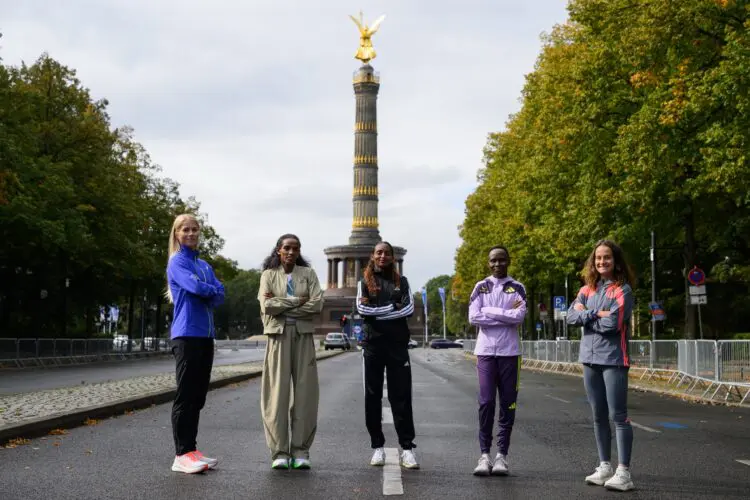
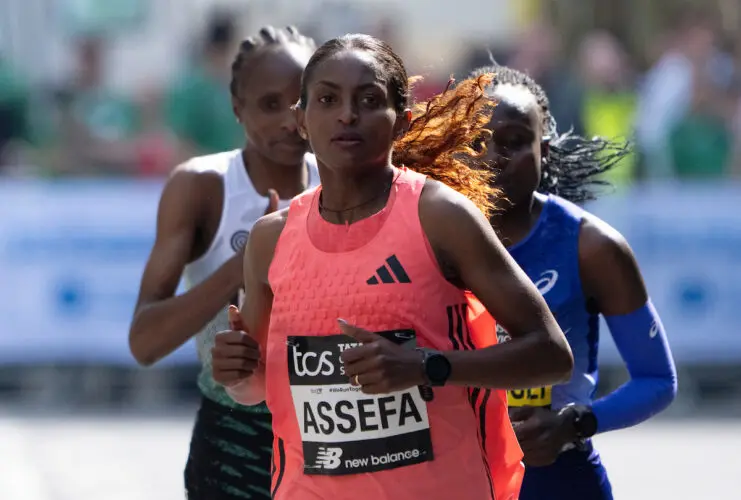
At the front of the race, Assefa returns to the scene of her 2023 triumph, when her 2:11:53 took more than two minutes off the world record. That time remains her PB and the Berlin course record. The mixed-race world record now stands at 2:09:56, set by Ruth Chepngetich in Chicago in 2024 before later receiving a doping ban.
Assefa, who won Berlin in 2022 and 2023, is targeting the 2:10 barrier. The 29-year-old Ethiopian already holds the women-only world record. She lowered it to 2:15:41 when she successfully defended her London title in April. Berlin has now staged 13 world records, more than any other marathon.
"I am really looking forward to running on the fast course in Berlin again and hope that I can continue my success story here on Sunday," said Assefa. "I am very well prepared and want to run a personal best."
With her 2:11:53 PB, Assefa would have won each of the first 11 editions of the Berlin men's and women's races combined.
Kenya's Rosemary Wanjiru is the defending champion after winning in unseasonably warm conditions last year in 2:21:05. She will not follow Assefa's pace and is instead targeting sub-2:15 from her PB of 2:16:14.
Ethiopia's Dera Dida, runner-up to Wanjiru last year, is in a group aiming for a similar time. She is the wife of Olympic marathon champion Tamirat Tola and a training partner of Assefa.
"We know each other very well of course and I expect us to produce strong performances," she said.
Bedatu Hirpa (2:18:27) won in Dubai and Paris last year and was second in Osaka this year in 2:19:54. Zeineba Yimer (2:18:47) also runs, as does Misgane Alemayehu (2:19:08), who set her PB when finishing second in Paris in April, two places ahead of Vainio.
The depth is unprecedented for Berlin. Seven women on the start list have PBs under 2:20, more than ever before in the race. A record 13 have run faster than 2:22.
Vainio, ninth on the entry list by PB, is expected to run in the third group, set to go through at sub-2:20 pace. Germany's Esther Pfeiffer will also be in that group, chasing Irina Mikitenko's German record of 2:19:19. Mikitenko set that mark when winning in Berlin in 2008.
That would be a huge leap for the 29-year-old. Her only marathon is 2:37:00 from winning in Cologne in 2023, when she also took the German title. Since then she has run 67:25 at the Generali Berlin Half Marathon in March and 30:45 for 10km. Her husband Hendrik Pfeiffer, who ran 2:06:46 in Valencia last December, will pace her.
"I plan to run a pace that will lead to the German record," she said. "This is my big goal and my chase begins on Sunday."
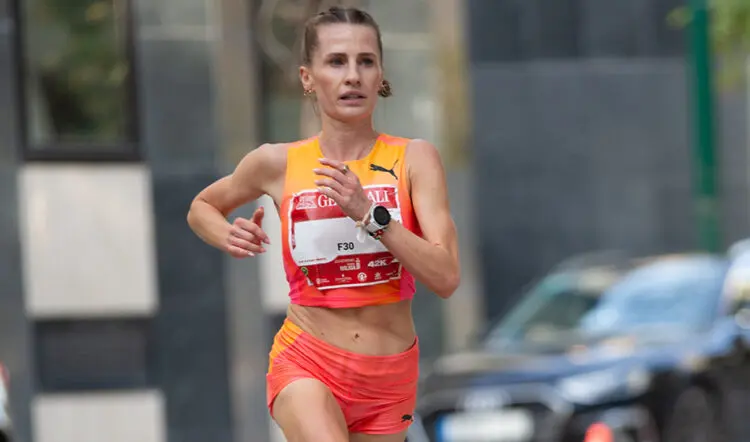
Laura Hottenrott (2:24:32), Kristina Hendel (2:27:29) and Anna Langerwisch (2:32:13) add further German interest. Lucy Reid, fourth in Malaga in 2024 with a PB of 2:26:37, is the leading British woman in the entries although Berlin is a popular race for British marathon runners to visit.
Sawe and Bekele withdraw
The men's race has lost its two biggest names. World record-holder and defending champion Sabastian Sawe withdrew injured at the end of August.
Sawe won in Berlin last year in 2:02:16 despite temperatures of about 25C. In April he became the first man to break two hours in a record-eligible marathon, winning in London in 1:59:30.
"It is with a heavy heart that I must inform you I am forced to withdraw," said the Kenyan. "I had been looking forward to achieving something special on the streets of Berlin."
There was also bad news this week for two-time Berlin winner Kenenisa Bekele. The 44-year-old Ethiopian injured his left Achilles tendon in one of his final sessions before travelling.
Their absence leaves the race wide open. Tanzania's Gabriel Geay is the fastest in the field with 2:03:00 from his runner-up finish in Valencia in 2022. He was also second in Boston in 2023.
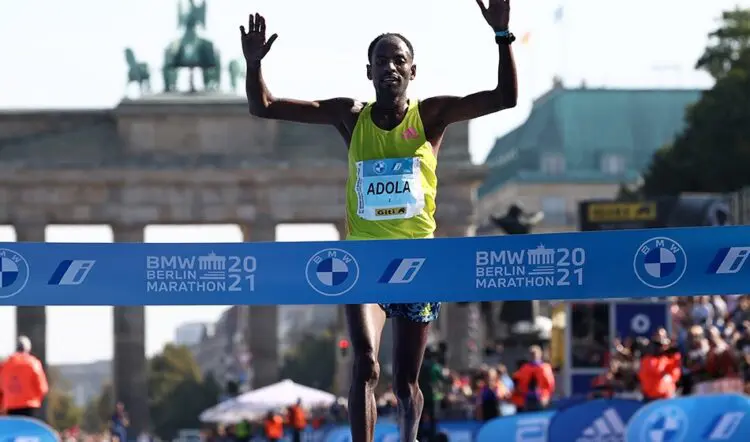
Guye Adola has a strong Berlin record. He ran 2:03:46 on his debut here in 2017, finishing just behind Eliud Kipchoge, and won the race in 2021. After years of injury problems he won in Rotterdam this spring in 2:03:54.
Shura Kitata won the same Seville race as Vainio in February, edging compatriot Asrar Abderehman in a photo finish as both clocked 2:03:59. Dejene Hailu, third in Seville in 2:04:15, also runs.
Getaneh Molla (2:03:34), Erick Sang (2:04:30) and Taresa Tolosa (2:05:17) add depth. Former Olympic 10,000m champion Selemon Barega brings a PB of 2:05:00 from finishing seventh in Tokyo this year. Japan's Kenya Sonota (2:05:59) is also in the field.
Aaron Bienenfeld leads a strong German challenge after running 2:08:47 in Hamburg in April, the fastest marathon debut by a German. Haftom Welday (2:08:13), Sebastian Hendel (2:07:33) and Johannes Motschmann also race.
Jake Smith, with a PB of 2:11:00, is the leading British man in the entries.