Amazfit Helio Strap review: all you need to know about the tracker on Josh Kerr's arm

We tested the smart wearable black armband that helped Kerr achieve a world mile record and Commonwealth Games victory in Glasgow this summer.
When Josh Kerr tore around the London Stadium last month on his way to a world mile record of 3:42.66, then followed it up with Commonwealth gold in Glasgow, there was a small black band wrapped around his upper arm. It wasn't a GPS watch and it had no screen at all. It was Amazfit's Helio Strap — and having worn one myself for the past few weeks, I can see exactly why an athlete chasing marginal gains at the very top of the sport would want one.
The Helio Strap is Amazfit's first screen-free fitness tracker. There's no display to glance at mid-session, no notifications buzzing for your attention, nothing to fiddle with. You put it on your arm, forget about it, and let it quietly get on with the job: continuous heart rate, heart rate variability, sleep tracking, stress and blood oxygen, measured around the clock rather than just during a workout.

That data feeds into what Amazfit calls a BioCharge Energy Score — essentially a daily readiness number that translates all those overnight and background readings into a simple "how recovered are you really" figure.
It's the kind of metric elite training groups have used informally for years through blood tests and subjective wellness questionnaires, now condensed into something you can check on your phone before deciding whether today's the day to push hard or back off.
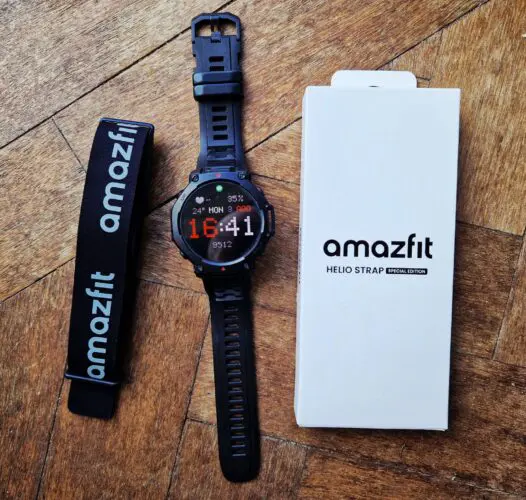
For Kerr, wearing this alongside his GPS watch rather than instead of it, the appeal is fairly obvious: more reliable arm-based heart rate data during sessions, plus everything the watch doesn't capture in the hours between them. Recovery, after all, happens off the track as much as on it and an athlete's ability to train hard depends heavily on what's happening while they sleep.
What struck me most, testing it myself, is how little it asks of you. At 20 grams, with an estimated 10-day battery life that's held up well in my own use, it's easy to forget you're wearing it — which is precisely the appeal for anyone who's found a smartwatch's constant notifications and glowing screen more of a distraction than a help, whether they're chasing a world record or a parkrun time. Even when asleep, I found it doesn't move around easily.
Last year we spoke to Grant Fisher about Amazfit and how its smart wearables were helping him train and race, while Kerr says: “Amazfit is a brand that truly understands what elite performance requires. It feels like a real partnership, not just a sponsorship."

It isn't perfect. The "readiness" insight doesn't yet have quite the depth of pricier subscription rivals like Whoop. But Whoop's cheapest tier alone costs more per year than the Helio Strap does outright, with no subscription required at all here.
For those in search of an accurate heart rate monitor without wearing a chest strap, it is an ideal option, though, as it is comfortable to wear and delivers a more accurate reading than a wrist watch.
READ MORE: Amazfit Active 3 Premium review
Screen-free wearables feel like a genuine emerging category rather than a gimmick and the Helio Strap makes a strong case for why: sometimes the most useful piece of technology is the one you stop noticing you're wearing. If it's good enough to sit on the arm of a world record-holder, it's certainly good enough for the rest of us.
£99.90 | uk.amazfit.com