Meet the coach: Paula Dunn

Katy Barden speaks to UK Athletics’ Performance Director about her life in the sport and the journey from athlete to mentor and leader.
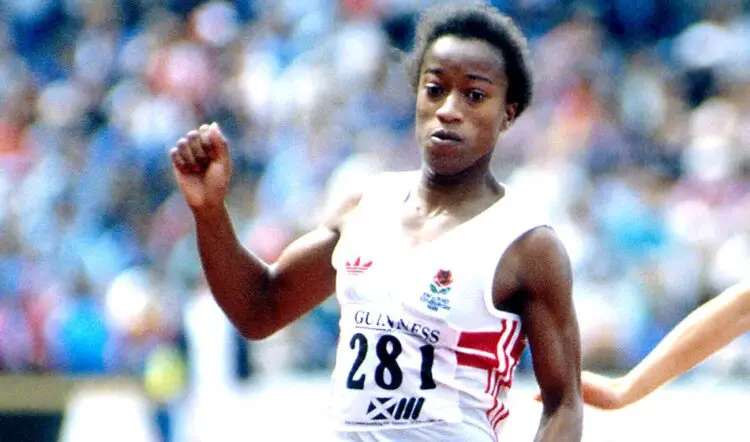
UK Athletics’ (UKA) performance director Paula Dunn is a former international sprinter who represented Team GB at the Olympic Games in Seoul, 1988. She first joined UKA as a national talent identification manager in Manchester in 2001 and supported athletes including two-time world heptathlon champion and Olympic silver medallist Katarina Johnson-Thompson and Olympic hammer bronze medallist Sophie Hitchon during their junior careers.
A multiple European and Commonwealth medallist in the 100m and 4x100m relay, Dunn was appointed Paralympic performance manager in 2009 and became UKA’s first female head coach when she was named Paralympic head coach post-London 2012. She subsequently oversaw one of the most successful periods ever for para track and field in the UK.
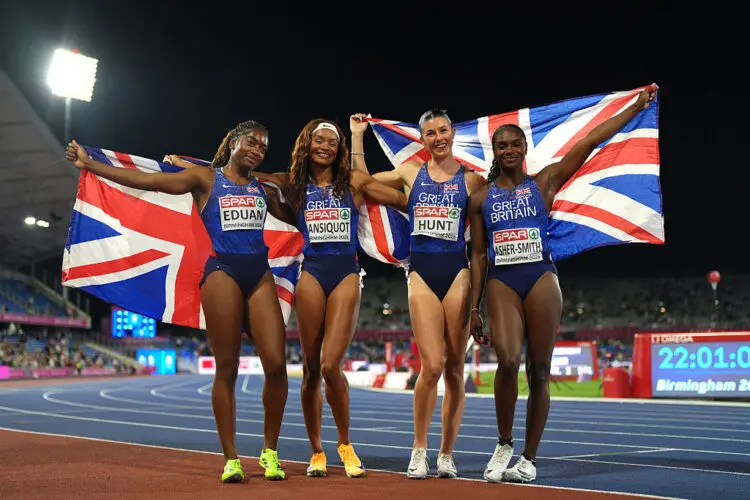
Dunn took on the role of Olympic programme team leader during 2022 and was appointed UKA’s interim performance director (Olympic and Paralympic programmes) in 2023, a role that was later made permanent. She most recently led the Great Britain & Northern Ireland team to second place on the medal table at the Birmingham 2026 European Athletics Championships.
How did you first get into coaching?
I worked as a sports development officer for Manchester City Council while I was an athlete. I had real balance in my life. Sport doesn't always go according to plan so working two or three days a week gave me something else to focus on and that was really good for me. There was no lottery funding back then, so it also meant that I was getting some money in.
I finished competing at the back end of 1996 and I gave all my kit away to the club (Stretford AC, later renamed Trafford AC). They’d helped me out with kit and my first spikes when I started, so I thought it was the right thing to do. I said to my coach Jim [Harris]: “That’s it. It’s been really good, but I’m done.”
I kept going down to the club because I wanted to keep fit. A year later Jim asked me to look after a group of girls while their coach was unwell. The girls were 15/16 years old and probably quite similar to me – quite feisty, you know? He obviously thought I could coach. I literally didn’t know if I could do it, but I agreed.
Like most ex-athletes I didn't think I wanted to coach – and I never thought I'd work for the governing body – but I realised I'd been coaching for years without even knowing it. With my skillset and the need to be clear and consistent working with children aged 7-16, I kind of slipped into it by default.

Who has been your greatest coaching influence?
There are so many. My own coach [Harris] taught me the principle of being really organised. He also taught me the importance of being clear about what you expect from your athletes and what they should expect from you.
Jim went to every course. I’d ask him “why?” and he’d say if he could learn one thing then it was worth attending. Now I try to speak to as many people as I can, because you don't know what you don't know.
Jim was good friends with Malcolm Arnold who was the regional manager for the English Institute of Sport (EIS) in Bath at the time [and also coached British athletes including former world champions Colin Jackson and Dai Greene and Uganda’s 1972 Olympic champion John Akii-Bua].
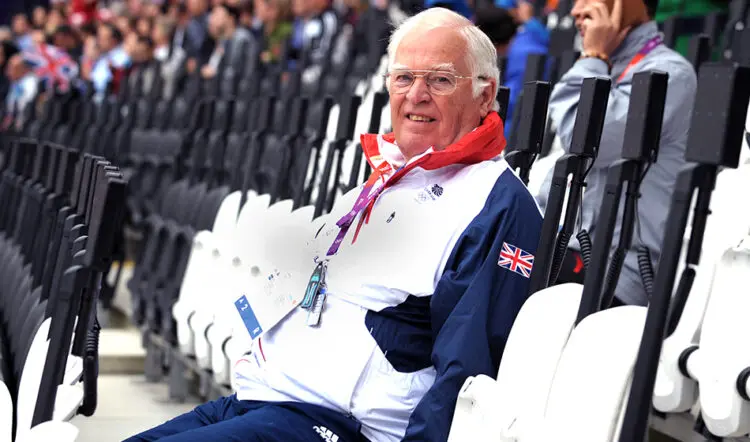
I remember going to see Malcolm for some advice when I started working at UKA. We were watching a kids’ sports day or something and he asked me: “What do you see?”. I was like: “Oh, there are kids running around…,” and he said: “No, but what do you see? Look really carefully.”
He told me to trust my coaching eye and gut because it would tell me about people's characteristics and their ability to work hard and to keep bouncing back after a setback. It’s something I’ve relied upon ever since. Athletics is a hard sport but having the ability to be really robust, physically and mentally, is absolutely what you need if you aspire to be world-class.
Then there was Graham Knight, a former GB national hurdles coach and technical director for speed who was also a great friend of Jim. He always used to say to me: “Just trust yourself, Paula.” I’d often have to remind myself that, even if I lacked technical knowledge, I knew people and that was key to them opening up, trusting me and allowing me into their circle. If I knew them, they knew I cared about them as an athlete and as a person.
Peter Eriksson [former head coach of Olympic and Paralympic Programmes for British Athletics] is still my mentor. I learned from Peter how to build a great team and the positive impact of creating a relaxed but purposeful environment that’s athlete-first and athlete-centred.
He also showed me the importance of being really focused on your task, being clear about your responsibilities, being accountable, and making sure that athletes are accountable. Also, if you make a mistake, don't ever be worried about being vulnerable, because everybody makes mistakes.
Then there was my old performance director Neil Black. Neil trusted me implicitly and he would always have my back. He wouldn’t necessarily give me the answers, but he’d help me work out what the answers should be.
What do you think the characteristics of a good coach are?
It’s their ability to be humble; it’s their ability to say they haven't got all the answers and to reach out and get advice when necessary, but also being confident in what they do know. As a coach, you've got to have a clear philosophy. That philosophy might differ from mine but, as long as you've got a clear rationale, I'm going to support you.
People often ask: “What do you think your super strength is?”. Mine is the ability to work really hard, and to work hard consistently, something I learned from my own coach. I learn quickly and I can pivot and adapt. Those are skill sets that have definitely stood me in good stead since.
How would you describe your coaching philosophy?
It hasn't really changed, although it's probably still evolving. It’s about keeping things athlete-centred. This is the athlete’s journey, not mine. As someone once said to me, a coach has got to be selfless, an athlete has got to be selfish.
You also need to coach the person in front of you because sometimes the manual doesn't fit. For me, it's about helping an athlete reach their true potential, whatever that is. If that doesn't happen, then I've not done what I'm supposed to have done.
As head coach, how do you ensure that athletes peak for a major championship?
It’s all about trust; you've got to trust the athlete and their coach and aim to build good, strong relationships. I always start with the fact that the coach and I want the same thing – we want the athlete to reach their potential – and if that’s the case, we should never be too far apart in how we actually do that.
If you haven't got trust or relationships, you can't influence, so I want people to judge me for what I do too. If I do something wrong, I want coaches to pick up the phone and talk to me. If I feel I've done something wrong, I’ll be the first to admit it.
Do I think we got it all right from Commonwealths to Europeans? No. We always knew two championships 10 days apart was going to be tricky. We knew the athletes would be physically tired, but I think for the athletes who did the Commonwealths first, they were really surprised at how mentally tired they were coming into the Europeans. Whether you have a good performance or a not-so-good performance, you still have to bounce back.
But, hand on heart, there was nobody I was disappointed in. If an athlete came in and they tried their best – and sometimes we have to accept that your best on certain days is not good enough – then I was still proud of them, because that's all you can do.

You have to make some tough decisions. A recent example is the change of personnel overseeing the GB & NI relay programme. What influenced that decision and how did you manage the change?
That was tough, especially when we’d won five relay medals in Paris [at the 2024 Olympic Games] – the only nation to achieve that – then to come back the following year with none [at the Tokyo 2025 World Championships].
Did we think we were going to get five in Tokyo? No, that's the honest truth, but we were disappointed with our performance and we had to acknowledge that what we did wasn't good enough.
Some of it was down to athlete fatigue. That’s normal a year after a Games and we accepted that, but some things were within our control. The team, led by Darren Campbell and with my support, agreed it was necessary to do a deep dive debrief and ask ourselves what we could do to ensure that athletes, when they came to us, had a really good experience and thrived in our environment.
There were a lot of honest conversations. We made some big changes around athlete buy-in and accountability. We decided what was and wasn’t negotiable and asked athletes what they thought they were capable of doing. Getting buy-in from the athletes and an admission that something wasn’t right was definitely tricky. That’s the “not nice” side to the job but you have to do it.
We listened to feedback and based on that feedback we knew we had to make some changes to evolve the programme, including looking at a different set-up. Sometimes the right people going forward are not the right people that have taken you so far. The team we had did an amazing job through to ’24 and we’ll always be grateful for that, but now we're focused on success in ‘28 and what's needed to keep momentum in a sport that is constantly improving.
We were really clear that we were going to [the European Championships in] Birmingham to get six medals. I said: “Let's just go there and give ourselves a really good foundation to build on for ‘27, ultimately to ‘28”. It was an approach that everyone agreed with and we achieved what we set out to achieve.
What would be the best piece of advice you'd give to an aspiring coach?
Be really open to listening to people. I’ve always said you've got two ears and one mouth for a reason. You’re supposed to listen twice as much as you talk. And just be comfortable in silence and learning. Learn your craft, observe, then keep learning and adapting.
Also, know who you are as a person and be really authentic, because it's really, really tiring not to be true to yourself.