Sub-two: How London puts on a show

Spencer Barden, Head of Elite Athletes at London Marathon, outlines the work that goes into setting the perfect stage for the world’s best to perform.
By the time an elite athlete steps forward to the start line at the London Marathon, a great deal of work has gone into delivering them there, ready to go. It’s not just the mileage done by the athlete themselves or the careful preparations put in place by their coaching team, but also the efforts of the event organisers who have a reputation to uphold.
London is viewed as the most prestigious marathon in the world with good reason, but that in turn creates a performance pressure of its own for those striving behind the scenes to make sure they put on a show.
Spencer Barden is a former British international who is Head of Elite Athletes at London Marathon Events. His brief from CEO Hugh Brasher every year is a simple one: “I want the world’s best fields,” and work is already underway to meet that expectation for 2027.
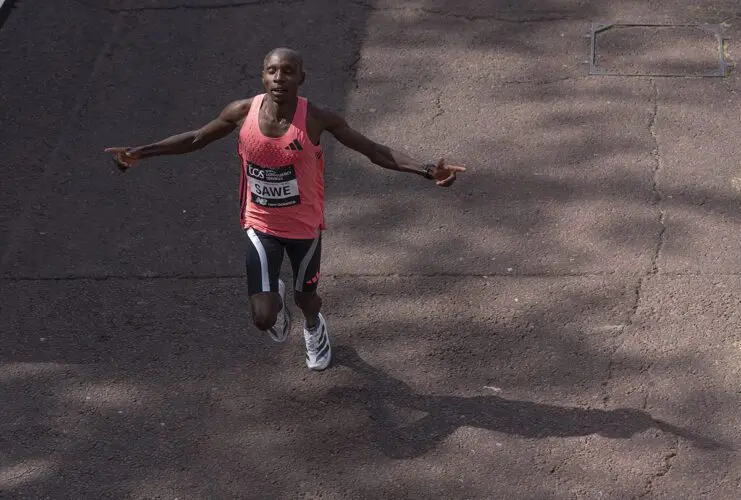
Barden is no stranger to working with the very best. He was key to assembling the line-ups for the INEOS 1:59 project in 2019 and also recruits the athletes for the London and Doha Diamond League meetings. But rarely has the satisfaction of a job well done been sweeter than when Sabastian Sawe flew to 1:59:30.
That performance was the end result of countless conversations and careful considerations over how to best set the stage. Here, Barden offers his insight into what happens before the starting gun is fired.
The prestige of London
“The athlete managers always say: ‘London is going to be like winning the Olympics’. It’s such a prestigious thing to win in London. It really elevates the status of the athlete because they know they’re going to have to run fast, and also it's the best field. It's almost like a World Championships or Olympics, which you don't get in the other marathon majors, because they focus on a much smaller number of athletes. We have a strong budget because we have some great sponsors behind us, and that allows us to be able to bring in the depth of the fields, as well as the quality.”
Assembling the fields
“There is an art to it. A lot of the work is built from relationships I’ve developed with managers and contacts over many years. Many of those managers are linked with athletes who are running on the track as well, so I'm in contact with them 12 months of the year because of my track work.
“I'm always thinking ahead about what we can do better year on year. When Jacob Kiplimo was thinking of coming to the marathon, I knew two or three years before he made his debut in London [in 2025] that he was going to do that because I had already had that discussion with his manager. I've already got others for the future – some track athletes who, when they start to think about making their marathon debuts, it will be in London.
“We always want our defending champions back and that conversation starts relatively early, and you can't have everybody, so you have to be quite selective in terms of what works well for the race and what is needed. One of the things I learned quickly is that the relationship with the managers is crucial.”
It’s all about the pace
“The focus from now until December is putting the fields together and that process has already started for next year. August, September is when the real discussions start and by the time we've come out of the New York and Valencia marathons we're not too far away from the fields being done.
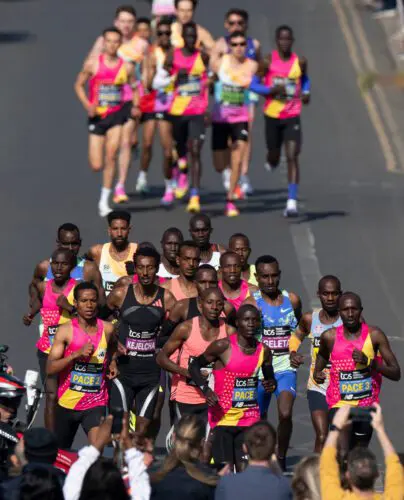
“Once I’ve got the fields, I start to plot out the various pacing groups and then I start those active discussions with the front group. What are we looking at and what pacers have we got available? It's very much about supporting the group rather than an individual, but at the same time I'm happy to have a discussion, whether it’s with a Sabastian Sawe or a Jacob Kiplimo, with their management if they've got somebody that they'd like me to consider as a pacer. This year Andrea Kiptoo was one of the pacers linked to Sabastian and another – Oscar Chelimo – is Jacob’s brother and that worked out really well. We do the same thing on the women’s side.
“Then it's a case of trying to get the right level of athlete to go a minimum of halfway, and ideally we want 25m or 30km. If we've got a leading group, then obviously they're working off each other as well.
“Once I've got an idea of the athletes available to pace for each of the groups, then we can start to fine tune what the times are. This year we had the lead group at 2:01, then Amanal Petros was looking at 2:03:30 for the European record and then a British group, which was Phil Sesemann, Patrick Dever and Mahamed Mahamed at 2:06:30 pace.
“It's never really finalised until race week but there are lots of active conversations in the four or six weeks before about who's in what group.We've got pacers I bring back year on year, and one of the good things that we've done in recent years is use some of the British athletes in the pacing groups.
“Communication is the most important thing in the pacing groups, because the last thing we need is a group to go off too fast and for there to be a big gap between that group and the athletes. What normally happens, certainly for the East Africans, is that they panic because if they're contracted to a certain pace, they feel they have to go at that pace, otherwise they think they're going to lose their pacing fee.
“On the Saturday morning, we have women's and men's pacer meetings where we talk about the pace groups, they get pace charts and I always say to them: ‘I'm not here to take away your pacing fee. I want you to support the athletes as best as you can’. It's a bit of an education around pacing, especially with the marathon, where there's no wave light technology like there is on the track, so there's no guide.
“The world marathon majors regulations are to have a maximum of three pacers per group. It looks better on TV. If we've just got a wall of five or six pacers, you can't see the athletes, so that's why the quality of the pacers is really important. In our pacing contracts, everyone gets a different base fee based on which group they're in. They're all contracted to a minimum of halfway, then there's a bonus if they get to 25km and a bonus if they get to 30km.”
The athlete experience
“It comes down to the athletes on the day so, for me, it’s all about the athlete experience. London is considered the world's best marathon, so it's important that we make it the world's best experience for the athletes.
“That means we book the plane tickets, we meet the athletes off the plane, we escort them through the airport, we take them through a fast track area through immigration, and then our meet and greet team will get them to the hotel.Little things are really important. We have exclusive athlete dining and we work with the hotel chef to design the menus. I talk to the managers, get some feedback from athletes in terms of what they need, their diet and everything else. We’re also five minutes away from Hyde Park and the athletes love it for their training runs in the build-up to the event.
“What's satisfying is seeing that we've done a great job in terms of getting the athletes to the start line in the best possible shape and then it's for them to perform on the day. We've got to have the pace set up right, we need to have the elite athlete drinks set up in the correct way. We ask the key athletes where they would prefer their bottles positioned and on what table. Do they like to be on table one, position one, or a later table? All of those little bits of detail make a big difference.
“There are a lot of things that we picked up on when we were involved in the INEOS 1:59. As an event organiser, there was lots of good learning in terms of how you prepare in detail, no stone unturned, and a number of the London Marathon staff were involved in that project. That allowed us to make some adjustments to some of the things that we were doing around our own event. People don't realise how much detail goes on behind the scenes. The athletes don’t just turn up and race.”
Playing a part in history
“Shortly after the finish of the men's race, Hugh Brasher called me and said: ‘I can't believe what's just happened,’ and I said: ‘I think we're all in a bit of a shock here’. It’s such a great bit of history.
“I'm sure athletes will run quicker, but what they can't take away from London is it's the first time it ever happened in an official marathon, and that will always be there. People will always remember that. And it's a memorable date, too – April 26, 2026. It's 26/26 and it felt like it was meant to be.
“It's such a prestigious role to have with the London Marathon. Having been involved in 1:59 and now doing what we've done this year in London it's just a privilege to be part of that and to have been able to sort of play a part in history. It has to be a big team effort, and you play your own key part in that, but when you reflect on that now you think: ‘That's always going to be remembered, and you were part of putting that together. If we hadn’t done our part and done it well, then it wouldn't have happened’.”
This article also appears in the Sub-two special edition of AW magazine, out now