Jake Heyward: “I feel like an athlete again”

The Welsh miler was one of Britain’s brightest running talents, but double Achilles surgery forced him to step away from the track completely. Now healed and raring to go, he talks about the long road back, the value of travel and making up for lost time.
Cobb Track and Angell Field at Stanford University in California might not be one of sport’s great cathedrals but, for Jake Heyward, it was a sight for sore eyes. It was here that he began the resurrection of an athletics career.
A time of 3:37.75 to win Section One of the men’s 1500m at the Payton Jordan Invitational on May 1 didn’t threaten his personal best of 3:31.08 from the 2022 Commonwealth Games, but the Welshman didn’t care one bit. He loved every step. The road to get there had been a long and arduous one.
“It was just amazing, honestly, to be able to stand on that start line again. To feel like an athlete again,” he says.
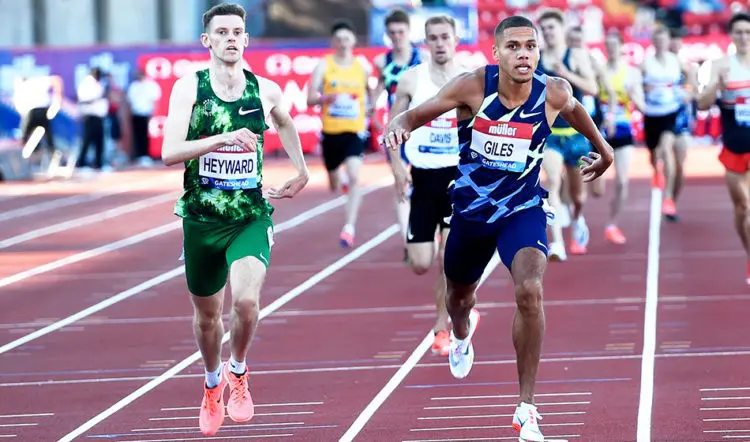
Five years ago, Heyward had realised a childhood dream by reaching the Olympic 1500m final in Tokyo. But, as he made his final preparations for the biggest race of his life in Japan, there was no time to enjoy the occasion. Instead, his mind was consumed with something other than his positioning on the track or the tactics he was about to employ.
“I remember lacing up my spikes,” he says. “The other athletes were obviously worried about things like the splits and how the race was going to unfold, but I was thinking: ‘When can I put my spikes on? The pain in my heel is so much that I can't even push off the start line properly’. That's where I was at.”
At that time, Heyward was one of Britain’s most exciting middle distance talents. After breaking age group records and winning European U18 and U20 1500m titles, from the outside his progress on the senior international scene seemed entirely natural. And yet, behind the scenes, the athlete himself knew that all was not well. He remembers first experiencing an Achilles injury in 2016 but it was after competing at the European Cross Country Championships of 2018 that he “started getting serious problems” in both of his heels.

“I didn't get a proper diagnosis on it,” he says. “The medical team just said: ‘You’ve got an Achilles issue’, and I was following the programme they had set but nothing was really happening.”
As this was going on, Heyward also made the transatlantic move from working with coach James Thie in Cardiff to Eugene and the Nike-sponsored Oregon Track Club that was then led by Mark Rowland. But there was little chance to settle Stateside.
“It got to a point where I couldn't even walk downstairs,” says the now 27-year-old. “It wasn't the kind of morning stiffness that other athletes talk about. It was this throbbing pain in my heel. The bone itself had overgrown, and that’s when I got the diagnosis of Haglund’s deformity.”
An online search of the condition throws up a definition of: “A bony enlargement on the back of the heel bone, where the Achilles tendon attaches. The resulting bump rubs against rigid shoe backs, which can cause painful inflammation of the Achilles tendon and fluid-filled sacs.” Heyward had another big decision to make.
“This was nine months out from the Tokyo Olympics, and the doctor said: ‘You’re going to have to get surgery at some point in your career, but we can give you PRP injections to try and help you through it’.
“I’d heard all of these horror stories about Achilles reconstruction, there were so many people that had had the same thing and it was like: ‘If you get this surgery it's no guarantee. You're probably going to be done’. So that was always in the back of my mind. I was so young [21], I was like: ‘Let's do the injection. My dream is to go to the Olympics. Let's just see what we can do and manage it’. I was able to do some training. I properly started running in March time of that year and managed to make the Olympic team.”
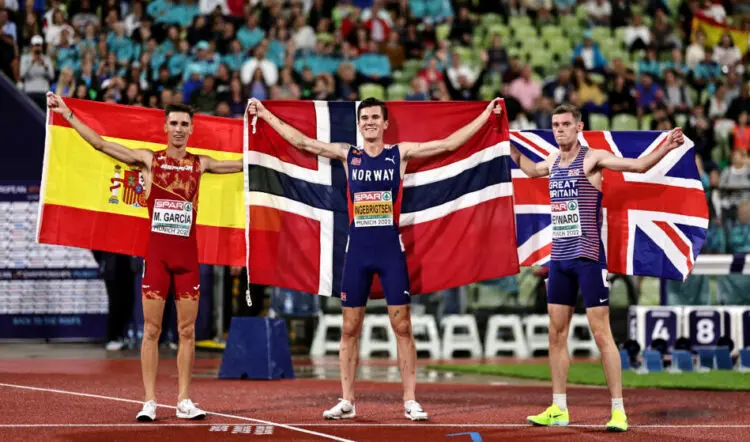
On he struggled after finishing ninth in Tokyo and, with the calendar having been turned upside down by Covid, the following year of 2022 offered three major opportunities – the World Championships, Commonwealth Games and European Championships. Heyward competed in the latter two events and won the first major senior medal of his career by coming second to Jakob Ingebrigtsen in Munich. Again, to the watching world it appeared that his career trajectory was only going one way, when in reality it had reached a critical fork in the road.
“In the 2022 season, I was able to still sort of manage it, but then it broke down and it was the European race, when people were like: ‘Jake's so sad about coming second’, but a lot of it was just the fact that I was in so much pain,” says Heyward.
Another Olympic Games, in Paris, was on the horizon but had never seemed so far away.
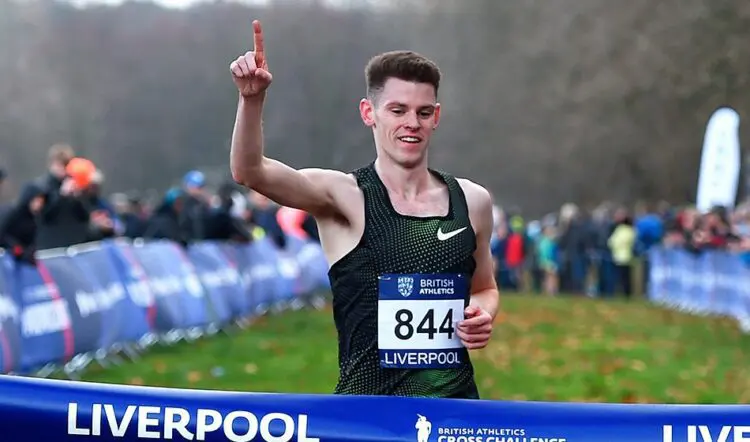
“I tried everything to get to Paris but I spoke to Dr Brown at British Athletics, and he said to me: ‘You have to get the surgery’ and that's when I made the decision. Honestly, out of that whole time, the happiest day – apart from my comeback race – was the day that I made the decision to get the surgery. It felt like a weight had been lifted off my shoulders.
“On the left side it was a fairly simple procedure, but on the right side they had to do quite a lot of reconstruction on my heel, slice down the middle of the Achilles, then use all these anchors and so on. The right one took a lot longer to recover and, when I spoke to the surgeon, he had a very different timescale to what British Athletics originally had. I thought: ‘If I'm going to do it, I'm going to do it properly and I'm going to take my time’. I stepped away from the sport.
“I always knew that I was coming back. It was like: ‘I know I have the God-given talent to be the best runner in the world, but I can't do anything right now when my Achilles is not fully healed’. I didn't run for 20 months. Not a single step.”
Instead, he went travelling – to Lake Como in Italy, to Lake Annecy in France, to Switzerland. Miami, too.
“I thought: ‘You can either sit here and feel sorry for yourself, or you can take the time to do all of these amazing things that you've never had the opportunity to do’. So I went to all these places that I've always wanted to go to. I've met some amazing people, I've made so many new friends, and I have people in my life now that I never would have met otherwise. And I think I've grown as a person. It's taught me what I'm capable of and how strong I am.
“I think it takes a lot of confidence in your own ability to be able to take a step back and go: ‘[Athletics is] not going anywhere, but what I need right now is to heal’.”
During that time, Heyward also worked with businesses “shadowing people on how they do things and operate” but he is now back to focusing on the job he feels he was meant to do.
“I did my first jog in October and the Achilles felt fine,” he says. “Walking around pain-free day to day was such a blessing, and it was something that I'd taken for granted. Honestly, just being able to do that brought so much joy in my life and everything in my body was able to relax. I properly started training again this January and I knew at that point that it was ready. Everything since then has been fantastic.”
That 3:37 comeback in California was swiftly followed by a run of 3:34.18 a few days later, before a return to the Diamond League circuit in Stockholm last month brought 3:35.53 and the UK Championships saw him finish X???
Chatting to AW in the lobby of the athlete hotel in the Swedish capital, he is clearly relishing being back in the old routine – but he is also learning all the time. Based in Cardiff, Heyward is currently self-coached and has thrown himself into the search for the movement patterns that suit him best. He is finding it a fascinating puzzle to try to solve.
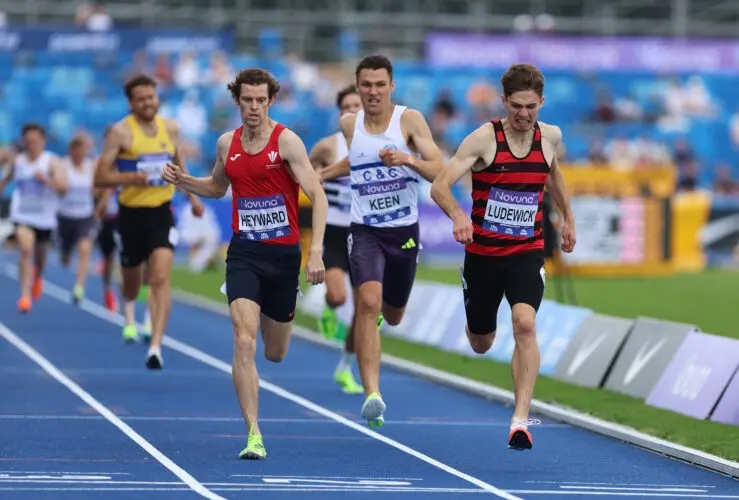
“The hardest part coming back to running wasn't necessarily the Achilles, it was all the little compensations and stuff in the body that I'd been running around,” he explains. “That was the most difficult thing to unravel. I'm still trying to get through that as well, teaching the body how to be able to relax again and run like I did when I was a kid – to get that enjoyment and freedom back.
“I worked a lot on my running mechanics, did a lot of exploring running technique and how I can become more efficient. I believe that's been a huge part in how I've been able to come back so quickly. When I ran 3:34 I'd only really done about 12 weeks of running. That's not much at all in the grand scheme of things after being out for that long.”
It hasn’t taken long for Heyward to realise that, in his absence, his event has moved on significantly.
“First of all, they're running a lot faster!” he smiles. “I got sent some new spikes the other day, put them on, and I couldn't believe the difference that it made. People are now taking bicarb, and there are all of these things that are moving performances on, and it's only amazing for the sport – it makes it way more competitive – but it's definitely a bit of a shock.”
Yet he expects to adjust quickly. His expectations are high and already there is an international comeback to look forward to in Glasgow this month.
“I truly believe that, because I've gone through this experience, and I've had to ask myself certain questions, I actually understand the sport more,” he says. “In terms of expectations and times, I'm super excited. I think there's no limit on what I can achieve.
“[Running the mile at] The Commonwealth Games for Wales is such a huge motivation for me. That's going to be one of my main focuses this summer. I'd love to also race the European Championships. I think we have some unfinished business and then, hopefully, qualify for the Ultimate Championship in Budapest. But I think I’ll just take it as it comes this year, run as fast as I can, win as many races as I can, and win as many medals as I can.”