Athletics through the ages – the history of cross-country running

Ahead of the World Cross Country Champs in Tallahassee Dave Holmes looks at a part of the sport with a rich and lengthy background.
Of all forms of running, cross country arguably remains the most elemental. Away from the roads and synthetic tracks, it’s a return to nature. While running itself stretches back to antiquity, cross-country competitions only emerged in early 19th century England.
Their origins lie in the Victorian public school system. In 1819, students at Shrewsbury School, barred from forming a fox-hunting club, created their own alternative: a running club that mimicked the chase on foot. Two boys acted as “hares” or “foxes”, setting off ahead and dropping paper scraps as a trail, while the rest – the “hounds” – gave chase across the countryside. Andrew Hutchinson, author of the definitive history of cross-country, described it as a sport born “out of imitation” – boys imitating their fathers hunting.
By the mid-19th century, these “hare-and-hound” races had spread across schools and universities and the first national schools cross-country championships were held on December 7, 1867. Notwithstanding, the famous cross-country event at Rugby School (“The Crick Run”), described in Thomas Hughes’s immensely popular Tom Brown’s Schooldays (1857), is thought to date to the late 1830s.

Cross country also found a home within London’s rowing community. During the winter months, members of the Thames Rowing Club began running on Wimbledon Common to stay fit. These events became formalised in 1868, and the club’s founder, Walter Rye, later became the first president of the English Cross Country Union in 1883. After the run, members enjoyed beer and “sing-song”, a tradition upheld by many running clubs today.
The first national cross-country championship was held in 1876 at Buckhurst Hill in Epping Forest in north London. This event proved so chaotic that, according to reports, everyone got lost in the cold depths of the forest. When one wretched individual finally made it back to headquarters, his body was rubbed with brandy in an attempt to warm him. “But personally,” he admitted, “I thought internal application would be better and I snatched the glass.”
A year later, at Roehampton, a properly marked course brought order, and this is generally recognised as the true starting point of the championships, since the previous race had been declared void. In 1883, the National Cross Country Union was formed, staging its first official National the following year at Sutton Coldfield, with hosting duties rotating between the northern, midlands and southern associations.
Cross country soon spread beyond Britain. It reached the United States by 1878 and developed formal structures there by the 1890s through national and collegiate championships. The first international cross-country championship took place in France in 1898, followed by the founding of the International Cross-Country Union (ICCU) in 1903.
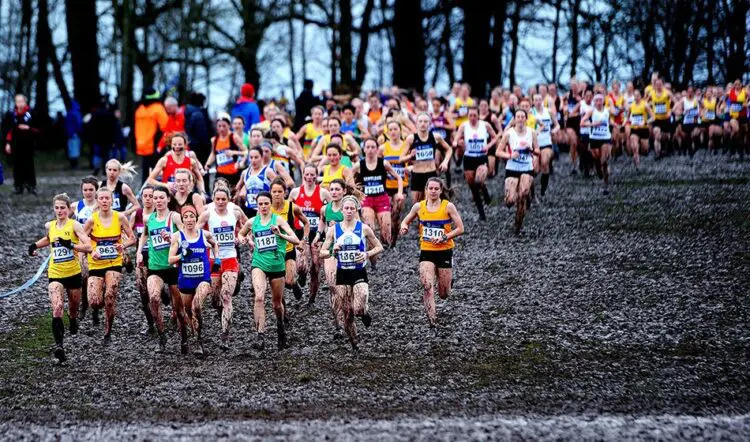
Whilst many athletes used the cross-country season to build strength and stamina for their own specialised events, others dedicated themselves solely to cross country. As Sebastian Coe said, cross-country became the “bedrock of endurance running”.
Cross country briefly featured on the Olympic programme in 1912, 1920 and 1924, before being dropped after the infamous Paris race. Run over 10 km in a searing heatwave, the event turned into both an ordeal and a spectacle. Only 15 of the 38 starters finished and eight needed stretchers. Officials and spectators were aghast. The legendary “Flying Finn” Paavo Nurmi weathered the conditions and claimed victory by just over a minute.
After the Second World War, the ICCU Championships became increasingly global, with nations such as South Africa (1962), New Zealand (1965) and the USA (1966) joining the fold. The event soon established itself as the world’s premier annual footrace, bringing together the best milers, steeplechasers, marathoners and road runners on a single, unforgiving course.
The terrain itself became part of the spectacle – from the sandy tracks of Rabat in 1975 to the precipitous, mud-laden course at Glasgow in 1978. In 1967, women were finally admitted to international competition at the championships in Wales, marking a significant step forward for the sport.
The IAAF World Cross Country Championships began on March 17, 1973 in Belgium, replacing the ICCU era and formally marking the sport’s transition into the modern international age. A decisive shift came in 1981, when Ethiopia and Kenya entered teams for the first time. Their impact was immediate and lasting. In 1986, Kenya’s John Ngugi captured the nation’s first senior men’s title, and in 1994 Helen Chepngeno delivered its first senior women’s crown.

What followed was an era of African dominance. Kenyan men swept the podium in 1988, and in 2010 the country achieved one of the most comprehensive clean sweeps in athletics history, winning all four individual races and all four team titles. Other nations also emerged as major forces. Uganda, in particular, signalled a new competitive balance in 2019 by finishing one-two in the senior men’s race and collecting further individual and team medals across the championships.
Some runners have taken the idea of cross country to the nth degree, traversing entire countries and continents, a testament to the sport’s enduring appeal and versatility. Today, cross country is a global phenomenon, with dozens of nations regularly showcasing talent on the world stage. Its name, originally “cross-countryside”, nods to its pastoral origins, yet modern courses now range from rolling rural fields to urban parklands, racecourses and lesser-known regional towns such as Bathurst in Australia (2023), which arguably hosted one of the toughest courses.
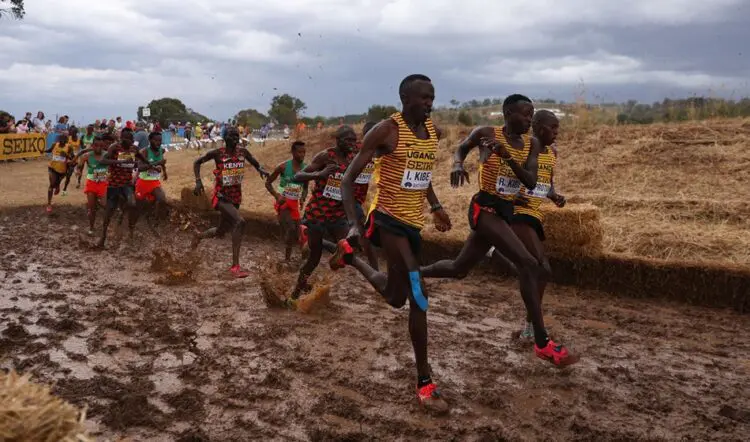
The sport’s adaptability, combining endurance, strategy and connection with the natural environment, ensures it continues to capture the imagination of runners of all ages and abilities. Far from fading, cross country remains a vibrant and accessible test of fitness, resilience, and spirit.
David A. Holmes (PhD, UNSW) is a historian who specialises in the history and politics of athletics. Email: [email protected]