The most exciting running events to watch at the Olympics

The Olympic Games are one of the greatest sporting events in the world, bringing together different communities from around the globe to share sporting excellence. At the Games, athletics is one of the biggest sports, often among the most-followed at the entire event. With sprint races, middle-distance events, long-distance races, steeplechase, and even relays, athletics at the Olympics is truly special. Each of these races offers something different, with some providing a more fast paced experience, whilst others test athletes' stamina. The Olympic Games are the highlight of athletics, undoubtedly the most-watched event, making them a great opportunity for athletes to make history, all whilst representing their countries.
Arguably the most famous event at the Olympics, the 100 metres race is a short event, usually lasting around 10 seconds. The race has seen some of the world's most famous athletes, which, in turn, brings the most eyes to the event. With the race so short in distance, athletes must be at the top of their game when competing, as any small mistake can prove costly.
Reaching an Olympic final in the 100 metre is no stroke of luck, and requires years of development, with athletes doing everything they can to become as fast as possible. Whilst in theory, the 100 metre race should be won by whoever runs the fastest, this is not always true, as it is a multi-layered event that tests everything about an athlete. The start is one of the most important factors in the 100 metre race, testing athletes' reaction times to get out of the blocks as swiftly as possible to avoid being left behind.
The men’s and women’s 100 metre finals are among the biggest moments in the entire Olympic Games, commonly making careers for those who achieve greatness. As seen with the effect of Usain Bolt’s impressive world record, achieving gold and setting new heights in the 100 metre race can make an athlete a household name in the sporting world, bringing incredible recognition.
The 200 metre race combines the explosive speed of the 100 metre race with greater endurance, as it is twice the distance. Unlike the 100 metres, where athletes line up in the starting blocks side by side, this event has a staggered start, with athletes beginning at different points on the track.
The 200 metre race is one of the most exciting events at the Games as a whole, providing entertaining finishes. With the bends in play, the 200 metre race requires a different level of technique than the 100 metre race.
In the Olympic Games, the 200 metre race has one of the longest histories and remains one of the key events for the Games.
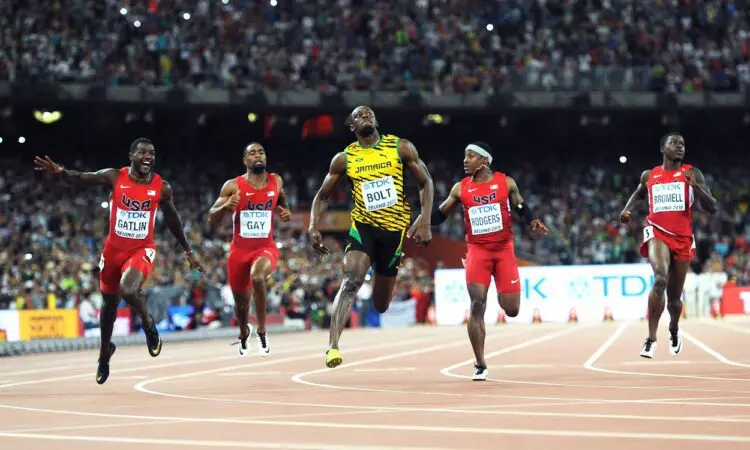
One of the core values of the Olympic Games is teamwork, which is promoted across many events, including the 4x100 metre relay. There will be four athletes on one team in the 4x100 metre relay, with each athlete running a dedicated section of the race. The event is not as simple as running faster than other teams; the baton must be passed between teammates within the dedicated exchange zones, bringing something fresh.
An Olympic team can have four incredibly fast runners and still lose the race as a result of inefficient baton exchanges, making it an important variable in the race. Unlike many races, which have excitement at the start and end, every exchange in the 4x100 metre race is tense, exciting the crowds.
The final exchange to the final straight of the race produces some of the most exciting moments in the Olympic Games.
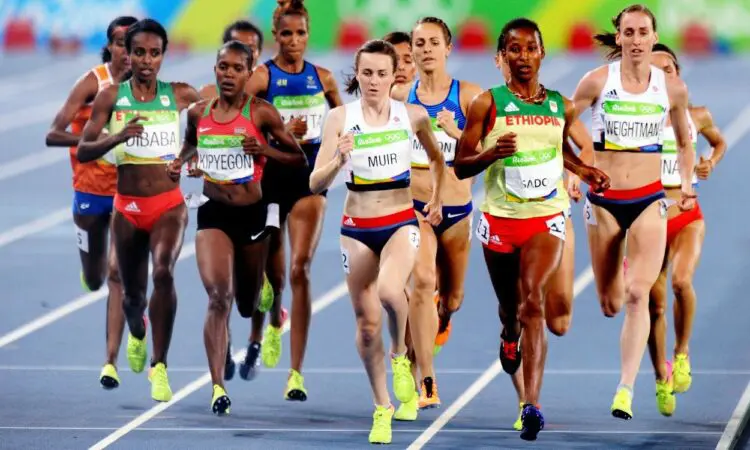
The 1500 metres is one of the most tactically focused races in athletics, requiring detailed game plans that must be followed closely. Athletes in this race must complete three and three-quarters laps of the track, testing every athlete's endurance whilst maintaining high speeds.
In these races, the leader commonly dictates the pace, which can require quick thinking from other athletes if they wish to chase the leader and stay close, or save their energy for the back end of the race. The final lap of the 1500 metres is when the pace picks up, especially as many athletes push to get to the front of the pack and be in a good position for the final straight.
Tense finishes are one of the greatest parts of the 1500 metres, with several runners commonly being in contention for gold until the final straight.
The Olympic Games remain the pinnacle of athletics, with running events being some of the most popular of the entire tournament. The Olympics is so iconic that it has been adapted into games and slots. Every running event in the Olympic Games has a clear objective, whether athletes are chasing another runner or trying to produce the fastest possible time. Every race has unique characteristics from the others, with some requiring athletes to deplete their anaerobic energy stores, whilst others test anaerobic endurance. The impressive variety within the athletics programme also means there is something for every sports fan, with fast-paced experiences and slower ones.