Meet the coach: Luke Gunn

We talk to the Birmingham-based former international athlete who took the plunge into full-time coaching earlier this year.
Luke Gunn is a former Great Britain and Northern Ireland international athlete and multiple national champion in the 3000m steeplechase. A University of Birmingham graduate, he relocated to the US in 2006 to study at Florida State University and was a member of the NCAA-winning Florida State team in 2007 and 2008. Demonstrating leadership from a young age, the two-time All American also captained FSU’s men’s track and field and cross country teams.
Gunn, who is married to 2011 World Championships 1500m silver medallist Hannah England, joined the University of Birmingham as Sports Scholarship Manager in 2010 and was most recently Head of Student Sport. He stepped away from his university role in April 2026 to pursue full-time coaching.
Based in Birmingham, his current group of athletes includes multiple European age-group 800m champion Issy Boffey, two-time national 1500m champion and World University Games silver medallist Sarah Calvert, and European U23 800m bronze medallist Abbie Ives. He remains part of the University of Birmingham coaching team and also helps talented juniors including Tilly Nickell, who has been selected to represent GB & NI in the 3000m steeplechase at the World U20 Championships this month,

What inspired you to move into full-time coaching?
I loved my job at the university but with every career step I was being pulled further into management. In my last role as Head of Student Sport I was responsible for 60 different clubs and sports and the scale of ambition in terms of what they wanted to do was vast. While it’s great to have some power and influence and the ability to make systemic changes, I was three or four steps removed from being “on the ground” and I really missed that.
At the same time, the athletes I was helping were doing really well. One of my absolute turning points was last October. I had athletes in Font Romeu and Hannah went out for 10 days to help assist them on the track because I couldn’t [due to my day job]. I came up for two days to check in and they ran their fastest session of the winter. Clearly there was an impact of having me trackside and I was like, “Hang on, they're pouring weeks of their time into this and I can afford just two days to help them”. And, being frank, we've got athletes who are trying to bridge the gap to Keely [Hodgkinson] and Georgia [Hunter Bell], so I was thinking, “Am I the problem? Am I holding them back?”.
So it was a bit of an impasse where I knew I had to either step back from coaching at that level or go all in and match their passion, which is also mine. It was also a very rare time when doing more coaching actually meant spending more time with my family. I’ve got zero regrets so far. It’s absolutely worth it for my own work/life balance and the focus I can give to doing one thing really well rather than continually multi-tasking.
I’m also a passionate believer that athletics coaching needs to professionalise. It’s not about being paid, it's about having a professional agreement to go, “Look, I'll help you, let's go all in for a year – this is what you can expect from me, and this is what I expect from you”.
Don’t get me wrong, volunteerism and loyalty are the bedrock of junior sports and I wouldn't be where I am if I didn't have volunteer coaches, but I think at this tier – especially when you have senior athletes in particular who want to progress – you don’t want to be the person that’s holding back their growth.
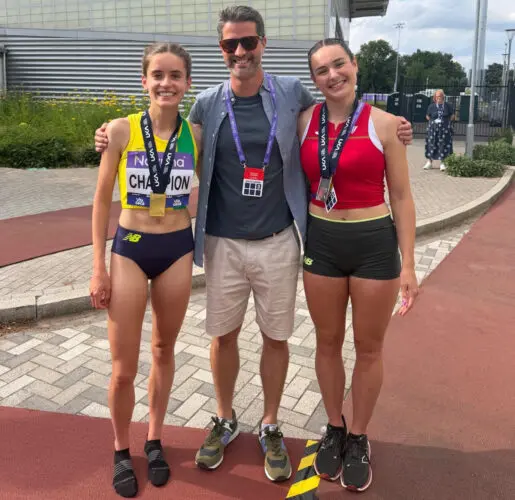
How did you first get into coaching?
My coach Bud [Baldaro] was coaching everybody at the university and he just couldn't give everyone the time, so I was the lieutenant on every run. I ended up being a bit of an interpreter for his philosophy. I also had a few friends ask me to help them because they didn't want to bother Bud.
Bud told me in my first year of university that I’d be a good coach one day and I just thought that he was being nice, but he prepared me for that from a very young age. I always had questions and he was so patient with me, even when I was trying bonkers stuff in my training that probably didn't help my career. He was so open and he encouraged us all to be curious and try new things.
Beyond that, if I had the chance to speak to George Gandy, John Nuttall or Steve Cram… I'd sit for hours and listen. It probably hindered the end of my career because I was trying too much, but it 100 per cent set me up to be a better coach. I've also been really fortunate to learn from different international groups like Melbourne Track Club on camps, too.
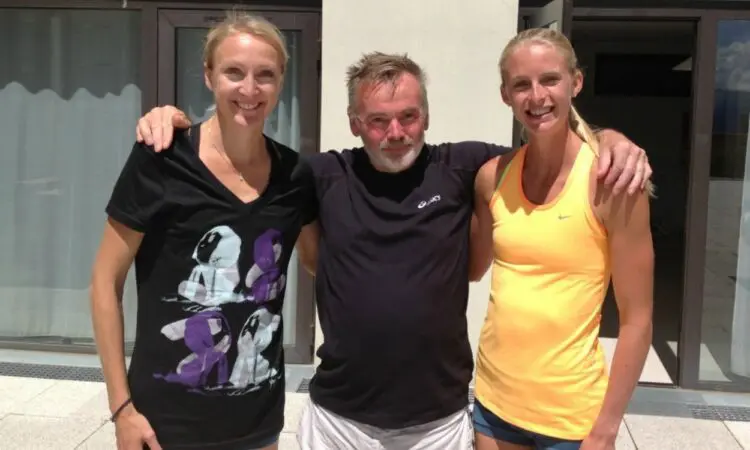
Describe your coaching philosophy
I've always tried to build for the long-term rather than taking shortcuts. Also, I don’t just want to build athletes that can execute training programmes, I want them to be able to execute race plans effectively.
I think at times Bud was very much a gardener, he would allow people to bloom and bloom whereas I’m probably a bit more strategic. We have really targeted plans and I’m a bit more forceful with my periodisation across the year with athletes.
The thing I'm passionate about is trying to unlock the individual and my programme is not the same for everyone. I've got two senior male steeplechasers that do different programmes, for example, but the general philosophy is to be as aerobically strong and as robust as possible, and to handle the specific work at the right time of the programme as simply as possible.
That human side is key and how you unlock that final 10 per cent is often psychological. You’ve also got to build trust with your athletes; that doesn’t come straight away and it’s central to my long-term approach.
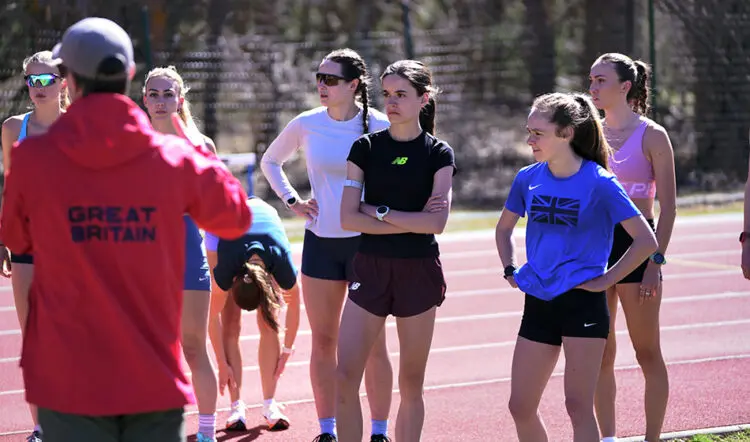
Who has been your greatest coaching influence?
I was massively influenced by Bud in terms of how I speak to people and deal with the person in front of me, but I think my approach is a combination of all the coaching influences I've had over the years – including my Florida coach, Bob Braman, who was a bit more forceful with his system.
We had ridiculous talent on the Florida team and I was really blessed to be exposed to quite a lot of different training groups directly and indirectly. Kevin Sullivan [three-time Olympian and Canadian record holder in the 1500m and mile] was assistant coach on the girls’ team and he was actually still competing at the time. He was coached by Juli Benson who also coached Jenny Simpson [former world 1500m champion and Olympic bronze medallist] and now coaches Nikki Hiltz [world indoor 1500m medallist], so I was seeing what those coaches and their groups were doing. I’d encourage every coach to take those opportunities.
All of the stuff I do with my athletes comes from other people, but it’s taking the elements you want to work with and putting them together effectively that’s the art form. I think I'm quite good at filtering what's valuable [or right or wrong], and I think the ability to critically analyse results and data points is really important, especially now with the impact of social media.
So there’s definitely parts of what Trevor [Painter] does in our training, and Dan Pfaff was a huge technical influence on me and Hannah. I think it was Dan who said, “If you see something good and you want to try it, wait six months [and then try it]”. I think that's really good, because if it still plays on your mind it's probably worth exploring, otherwise you can be drawn to fads.
Another thing I got from Bud is that you're dealing with human beings, not robots. While the programming side of coaching and the details are important, you have to remember you’re dealing with humans who are progressing, growing and learning through the sport. They’re not finished articles.
He also taught me that you've done your job really well [as a coach] if you're not needed at some point in the future. You’re trying to get your athletes to grow and to be independent people because, ultimately, they stand on that start line totally on their own. They are in charge and ultimately the final decision sits with them, I’m a mere guide for them.
What would you say are the key characteristics of a good coach?
You’ve got to be a load of different things. You’ve got to have patience – or steadiness is probably a better descriptor – and you've got to be consistent. As a coach it's your job and your responsibility to show up ready to be the best version of yourself for your athletes that day, but it’s also important to look after yourself to make sure that happens.
You've got to be curious around the detail, too. You need to be a student of the sport and innovations, but you also need to be curious and analytical about the nuances of training and the race splits and trends that you're seeing in an individual or group.
And you've got to be positive. These guys are going deep on a daily basis. The sport's brutal, you can be in such good shape then you can get one step wrong in a race, or an illness at the wrong time. It’s too hard for coaches to also be taskmasters. I think those days have largely gone now, so just being a positive force and creating a fun environment for your athletes is super important.
What advice would you pass on to a new or aspiring coach?
Humility: it’s not about you! We're here to support athletes – and their athletes' careers are sometimes very short so you've got to try the best you can to get it right for them.
Everyone's different: it's my job to work out what athletes need, when I’m needed and when I need to step back – that’s key.
Look after yourself: I think there are times where coaches get too drawn into things and get obsessed or even negative and bitter. On those occasions you have to pull yourself out. I set all of my athletes a rest day, so I know I need to take rest days and have downtime too.
Collaborate: I think the UK endurance running community has got a really nice vibe at the minute. Coaches are collaborating and looking out for each other, which I know I’ve really appreciated. We’re all trying to help people to succeed and sometimes it’s forgotten that coaches are also human.
Ask for help: coaching can be lonely at times trying to solve complex problems, so please reach out to others – or even better get yourself a mentor. Most of my biggest breakthroughs have come from talking to others who have helped me see the solution more clearly.