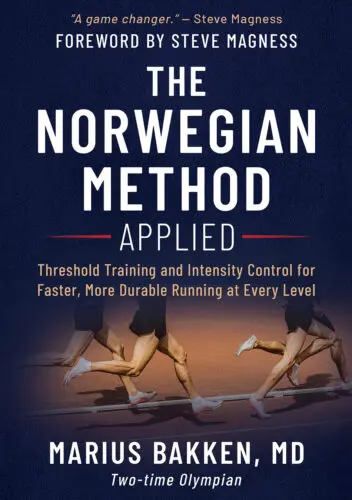
Marius Bakken delivers the ultimate guide to the Norwegian Method

The man credited with creating this popular and highly effective system of training has published a brilliant guide which will be of interest to runners of all levels.
During nearly 30 years at AW a steady trickle of around three or four books each month have dropped on my desk for review. Most are okay. Increasingly they are self-published. Once in a blue moon, though, an absolute gem arrives.
I am referring to the Norwegian Method Applied by Marius Bakken and, keeping with the digital era, it arrived via email as a PDF from the author himself. Yet after reading it page for page on my laptop, I now have an urge to buy an actual copy as well to sit in my library. Yes, it is that good.
Not only is Bakken’s book one of the absolute best training books I’ve ever read – and I’ve been devouring such publications since the early 1980s – but it is one of the best books about running, period.
Other articles and books have been written on the Norwegian Method in recent years, in addition to thousands of social media posts and videos, but Bakken is widely regarded as the father of the system. Apart from being a 13:06 5000m runner and two-time Olympian at the turn of the millennium, he is a qualified doctor and has spent several decades experimenting with the Norwegian Method, which includes conducting around 5500 lactate tests.
The book begins with a great story. He remembers training in Ingrid Kristiansen’s group in Frogner Park in Oslo and while everybody was pushing themselves hard in each session, Bakken patiently settled into the middle of the pack. Yet the following summer he ran 13:22 for 5000m, more than a minute quicker than the next best runner in the group.
“I was watching something most runners never notice,” he explains. “The line where training stops building you up and starts breaking you down. Most runners cross that line without ever realising it.”
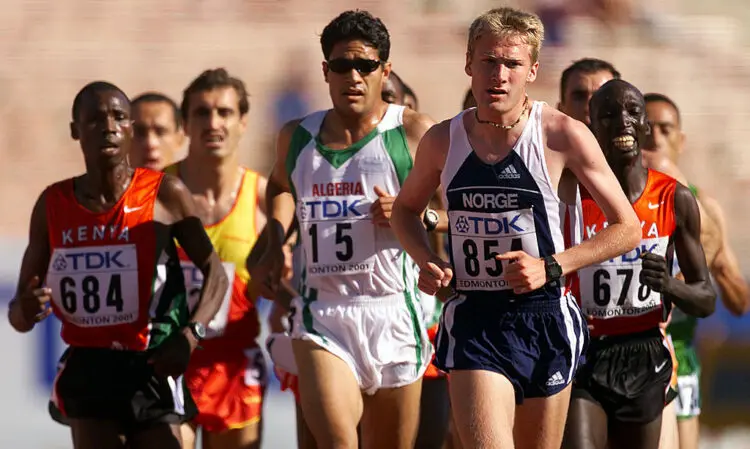
The book is peppered with great anecdotes like this. A couple of years earlier, for example, he spent a period training under Peter Coe. During this time he discovered Coe’s theory of giving athletes such as his son, Seb, ‘top-up weeks’ to boost their mileage at certain periods of the year – one of many lessons he learned on an athlete journey that would culminate in the Norwegian Method that we know today.
What would Coe think of it if he were still alive today? Bakken told AW: “He would for sure like it. Peter was a special man, a brilliant mind, and someone who challenged the thinking of others. Even though he was much more into variety and anaerobic work than I am, he would love the concept of thinking differently and trying to build something out of precision."
Related to this, Bakken also tapped into the knowledge of another British coach, Alex Stanton, who guided Paula Radcliffe’s career, at one point having what he describes as “a long conversation where he dissected their (Stanton’s and Radcliffe’s) experience before we looked at how it could solve my challenges”.
So what are the principles of the Norwegian Method? Many associate it largely with ‘double threshold sessions’ – the kind that have been popularised by Jakob Ingebrigtsen in recent years. But as Bakken explains in his book, there is much more to it than that.
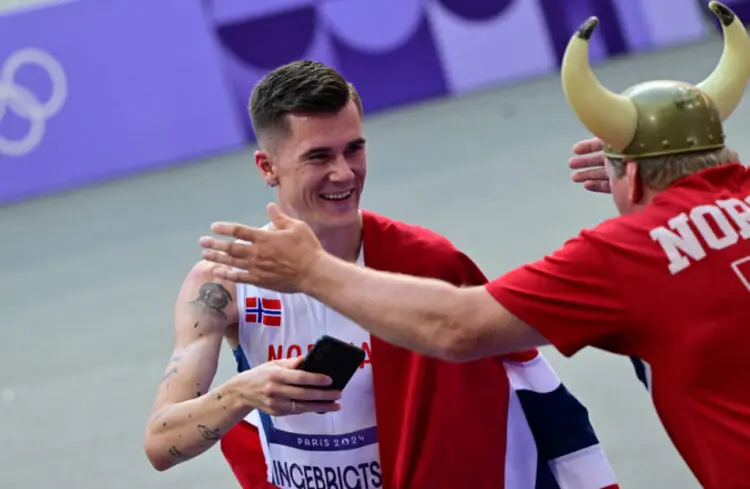
One of the core principles is that Bakken believes the muscular system, as opposed to the cardiovascular system, is the true limiting factor for runners. He writes: “The Norwegian Method is about managing load over time. Threshold-adjacent work is executed at an internal intensity high enough to drive adaptation, yet stable enough to be repeated with quality. The goal is not individual sessions that impress, but weeks that hold together.”
When it comes to double threshold sessions, Bakken uses a great analogy of studying for an exam. Isn’t it better, after all, for a student to do two sessions of three hours rather than one continuous six-hour session where concentration will probably wane? Similarly, why not split the amount of threshold running done on a particular day into two sessions?
“Think of it this way,” says Bakken. "Double threshold is really one long session with a long break in the middle.”
He adds: “The body adapts to stress, but only when it gets the opportunity. Train too hard, and the opportunity closes. The body spends its energy on recovery instead of adaptation."
There are several new phrases and concepts in the book. One of them is what Bakken calls the “golden zone”, or a “sub-threshold” pace that should be stuck to during so-called threshold sessions.
“When I talk about threshold training in the book,” he says, “I mean training just below the threshold, never right at it. Many call this sub-threshold or sweet spot training. I call it the Golden Zone. The pace is hard enough to adapt, controlled enough to repeat.”
Of course this needs discipline to stick to this pace. “It goes against our instincts to not give everything in a session,” Bakken admits.
However, he believes the rewards are huge. Also, employing the Norwegian Method requires accuracy, because going too slow, or especially too fast, will backfire.
There is an exception to this, though. Bakken includes what he calls an 'X-session' in the weekly programme – a non-threshold workout that aims to inject a bit of speed and usually comes in the form of short hill reps.
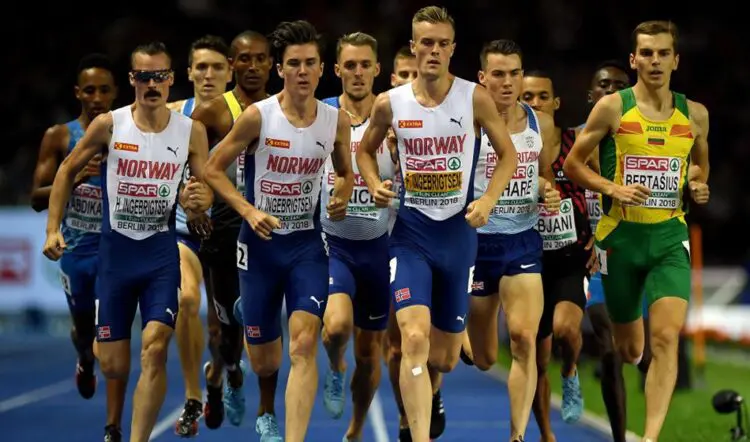
Muscle tone, or muskeltonus in Norwegian, is another key concept in the Norwegian Method and Bakken says his interest in this area has “bordered on obsession”. He adds: “When it comes to muscle tone, I’ve been relentless, driven by the need to understand something so central to performance yet so rarely described anywhere.”
Muscle tone rises and falls depending on how hard a runner has trained. Much of the Norwegian Method is therefore geared around controlling this.
One thing I wondered when reviewing this book is whether the Norwegian Method suits every runner, or whether just certain physiological types such as Bakken, Jakob Ingebrigtsen and British 5000m record-holder George Mills respond to it favourably. Halfway through the book, Bakken answers the question.

“This is not a recipe to follow blindly,” he writes. “It’s a framework you must make your own. The principles are fixed, but how you apply them will vary with your level, your daily life, and your body. A recreational runner with four training hours per week will make different choices than an elite athlete with twenty. Both can follow the same philosophy.”
I wonder, too, if it suits the more ‘punchy’ middle-distance runners, particularly Keely Hodgkinson-esque ‘400m/800m types’. Bakken accepts the Norwegian Method might not be the best plan for these kind of runners and he uses the example in his book of Vebjørn Rodal, the 1996 Olympic 800m champion from Norway.
“Before the 1999 season, Rodal's training shifted from a relatively intensive focus to somewhat more threshold-based work,” Bakken says. “I remember a proud sports director showing me his measurements during spring. The threshold numbers were better than ever. But the competition results? They dropped substantially relative to his level.”
He continues: “Rodal was probably more ‘type II–dominant’, explosive, fast, built for shorter, more intense loads. When some of his training was converted to longer, monotonous threshold sessions, part of what made him unique disappeared.
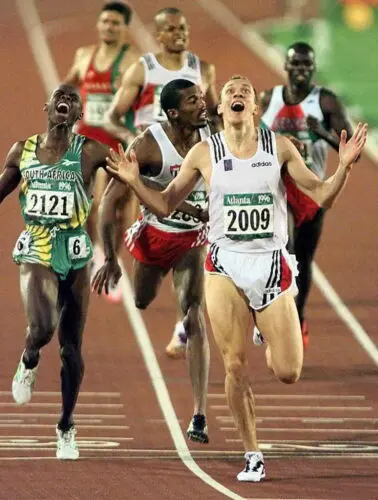
“Many runners thrive and flourish with long threshold sessions and high volume. Some tolerate it poorly, regardless of training experience or understanding. The difference most likely lies in muscle fibre composition. There are recreational runner versions of Rodal as well.”
This caveat aside, the Norwegian Method will have benefits from the majority of endurance runners. Bakken describes it all in a way that will appeal to runners of all standards too.
What criticisms can I find with this book? Firstly, I would have loved to have read more anecdotes relating to his own training sessions and conversations with top coaches and athletes. There are some in the book and they are like gold dust.
Also, there is a fair reason for you to save your money and not buy this book because Bakken has already given away a lot of the theories and information on his own website and in past articles. He has also written a Norwegian version of the book called Løping! Raskere og skadefri for alle nivåer, which translates to Running! Faster and injury-free for all levels.
Writing these many thousands of words about the Norwegian Method, however, has helped him arrive at the finished product that I am reviewing here.
Maybe it is not quite a finished product either. The quest to perfect the system is ongoing and everything will become easier to measure in future if – or rather when – continuous lactate measurements become commonplace. Currently athletes prick their finger or ear to take blood to measure their lactate mid-session, which is an awkward and fairly expensive process, or amateur athletes simply keep to a certain pace or heart rate zone. But it just a matter of time before smart wearable devices similar to glucose monitors come into operation, offering lactate readings in real time.
“Find your Golden Zone. Train there regularly. Keep the easy days easy. Be patient.”
Finally, I wonder if Bakken has welcomed, or been frustrated, by the huge number of articles, social media posts and even books that have tried to explain the Norwegian Method. In late 2024, for example, I reviewed a book about the Norwegian Method by Brad Culp.
Bakken says: “It has been an interesting journey for sure. I am actually just very happy that this type of training is gaining some traction, is being discussed and implemented.
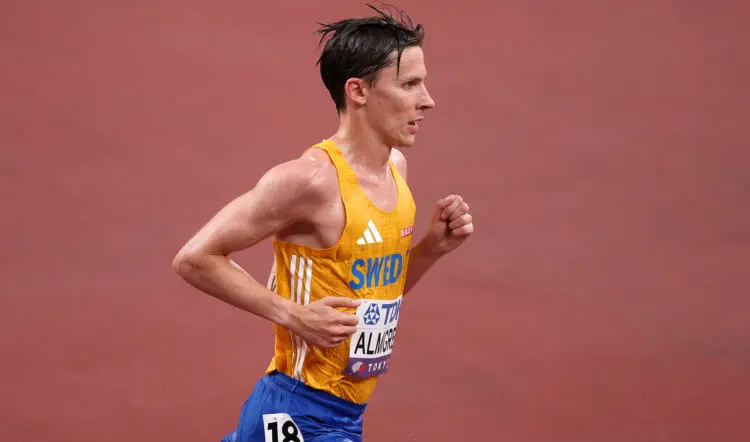
“The simple reason being: we know this is an effective general way of training for top athletes, if you look at the times of athletes like Jakob and Andreas Almgren. But I also think it is a safer way for younger runners and recreational runners as well.
“It is built on a different way of thinking about load, variety and precision. And if you try to respect those boundaries and take into account the muscular component that I talk at length about in the book, most runners will stay injury free more easily, feel fresh more days and run faster.”
As a former club level 800m runner who is now aged 56, I have been inspired by Bakken's book and attempting to follow this system in the last couple of months. I always felt as a young runner I responded best to high quality sessions and didn’t run too well after spells of longer, slower reps and higher mileage. But Bakken’s theories are so strong, I am keen to put the Norwegian Method to the test as I strive to improve my 5km and 10km times.
As Bakken says, the Norwegian Method is simple to understand but can be tricky to implement. “Find your Golden Zone," he advises. "Train there regularly. Keep the easy days easy. Be patient.”
The Norwegian Method Applied: Threshold Training and Intensity Control for Faster, More Durable Running at Every Level by Marius Bakken is out now here