Thrill of the chase

Elise Thorner has taken great strides forward this summer and has put herself firmly in European contention. The British champion talks about dealing with expectation, the advantages of sibling rivalry and feeling like she belongs.
There is a moment every athlete remembers. A moment when the years of training, quiet belief and countless unseen hours suddenly crystallise into something tangible. For Elise Thorner, that moment arrived beneath the Californian sun at the Sound Running Track Festival this spring.
The 25-year-old crossed the line knowing her 3000m steeplechase win had been a convincing one but what she hadn’t expected was the time on the clock. Her ambition before the race had been to open the season with something around the 9:18 mark, but the pace was aggressive from the gun. Thorner found herself slightly detached from the leading pack in the opening stages and wondered whether the race was moving too quickly. But then came the second half.
"I was a bit nervous," she admits of that opening kilometre. "We'd been told originally it would be paced for 9:20, then in the call room they changed it to 9:15. I thought: 'That's quite quick for a season opener.'"
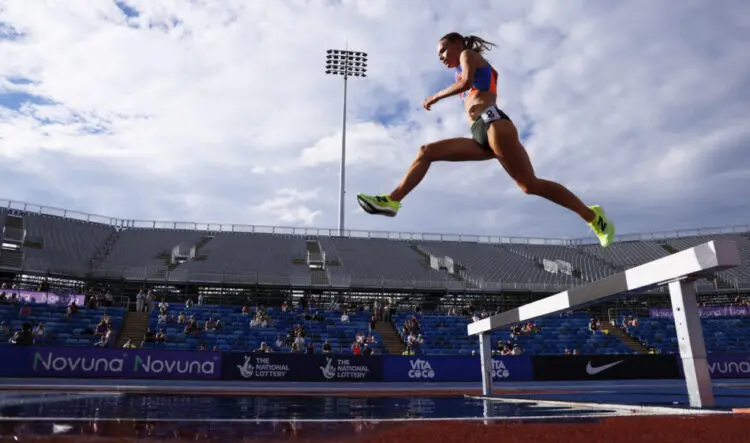
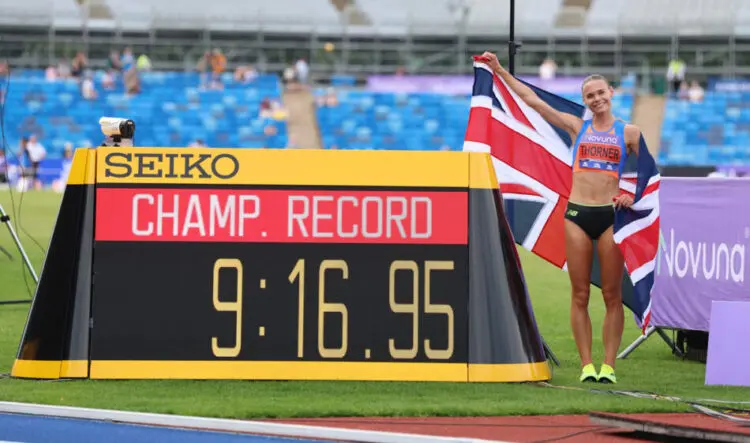
But Thorner gradually reeled the field back in and, come the finish line, she had not only comfortably survived the ambitious pace but smashed through it, stopping the clock at 9:07.39 – a time that left her completely stunned considering that she had arrived in Los Angeles with a personal best of 9:14.37.
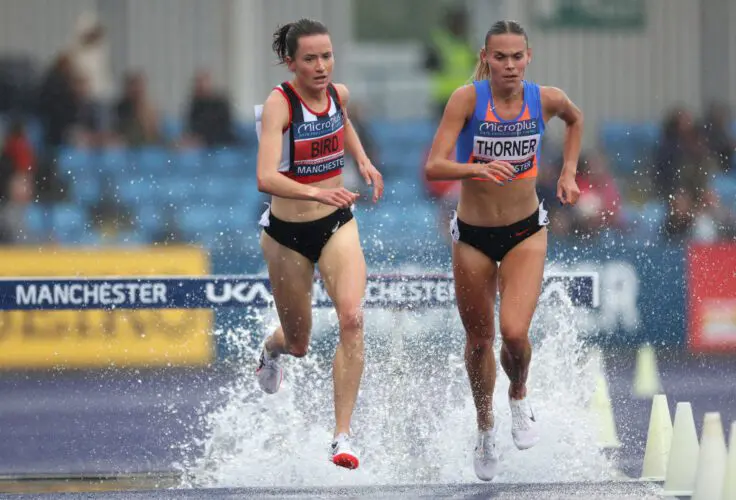
It was a performance that also instantly transformed her status heading into the summer. It not only made her the fastest European over the distance in 2026 but also ranked her seventh in the world this season, elevating the British champion to a genuine contender for a European medal on home soil. It also brought Lizzie Bird's British record of 9:04.35 firmly into view.
For now, though, that national mark is being placed to one side. With Birmingham 2026 representing the clear priority this summer, the focus is firmly fixed on championship racing rather than chasing fast times. The record remains an ambition, but only if the opportunity presents itself naturally.
"I always want it [the British record],” she says. “There's never a time I don't want to get it. But this year is about racing. I just need to beat everyone in Europe.”
Thorner appears comfortable carrying expectations that, only a year ago, would have seemed almost unimaginable. But that assurance has not arrived overnight. It has been built steadily over many years, through junior international championships, the demands of the NCAA system and a series of gradual improvements that have all contributed.
In many ways, the start of that journey can be traced back to her childhood in Somerset and a desire to emulate her twin brother, Oliver. The pair began athletics together but, while her sibling quickly excelled across multiple disciplines, Thorner simply wanted to keep up. Oliver was soon being noticed and is still competing today, having spent much of the past several years based in the United States as he continues to pursue his own career as a decathlete.
“When we first started, he was so much better than me,” Thorner says. “He was just being scouted left, right and centre. He was just so good at anything that he did. I wanted to be just like him.”
That competitive dynamic has remained a constant throughout their careers and Oliver remains one of the people that Thorner relies on most.
"He brings out the other side of me, the side that has to give it everything I've got in track sessions, even if I'm on the floor afterwards, which is such an unknown for me because I don't do that,” she says. “I like feeling within myself.
"But he's made me so much better and it's great to be able to talk to him through the highs and the lows. He understands everything that I go through, the good and the bad, and he doesn't sugarcoat it because that's not what I need."
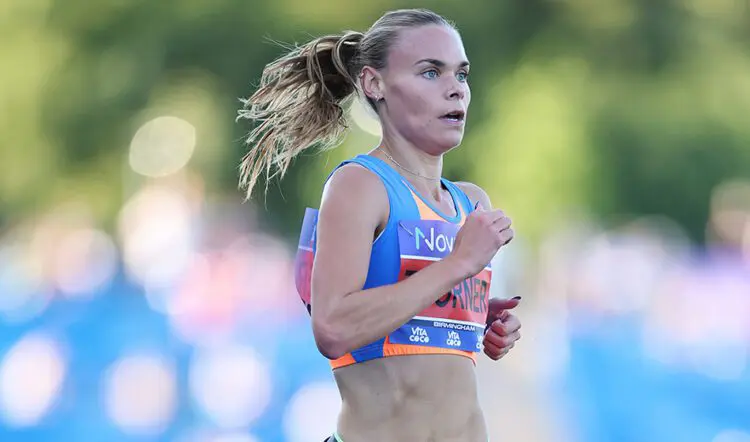
Like many young athletes, Thorner experimented with almost every event available before eventually finding where her potential lay. She competed in cross country, middle-distance races, the heptathlon and sprint hurdles, but it was during those hurdling sessions that one coach noticed something unusual. Although she lacked outright sprint speed, her technique over the barriers came naturally and, perhaps more importantly, she instinctively switched lead legs – a skill that would prove invaluable in the steeplechase.
As she reached the age where she could contest the event at English Schools, she decided to give the event a try and immediately found herself drawn to one element that many athletes spend years trying to master. The rhythm of the barriers initially took some getting used to, but the water jump felt strangely instinctive from the very beginning.
“I wasn't very good at first and I didn't like all the stop-starts at the barriers," she says. "But I loved the water jump, so I just kept doing it."
Selection for the European Under-18 Championships soon followed and, although the result itself was unremarkable, the experience proved transformative. Looking around those junior teams she was a part of and seeing so many familiar faces now winning Olympic, World and European medals has only strengthened her belief that she belongs at that level, too.
“The European Under-18s was my first GB vest and I went with my brother. Keely [Hodgkinson], Max Burgin and Amy Hunt were there and all of these people are winning medals now. It felt like we all knew what was going to come, we all felt like one.
"It's crazy how many of us are still competing now. I'd say 70 or 80 per cent are still in the sport. It also shows there's no timeline," she says. "Keely did what she did at such a young age, but someone else might do it at 30. Everybody's journey is different."
While those formative years helped shape her mentality as a competitor, the next major chapter of Thorner's career would ultimately transform her as an athlete. That chapter began in the United States and the fiercely competitive NCAA system, where she began her collegiate career at the University of New Mexico before spending her final year at the University of Florida. The standard was unlike anything she had experienced before.
"The NCAA final is one of the scariest things I've ever been part of,” she says. “The times people are running are absolutely mad."
Yet it was precisely that intensity that appealed to her. Rather than arriving with expectations of immediately becoming one of the leading athletes in the country, Thorner embraced the opportunity to be part of a training group full of ambitious runners, all striving to improve together.
"I didn't mind not being the best," she says. "I just wanted to be part of a big group of girls all trying to become the best they could. It probably took me three years to really get used to everything but, once I did, I felt like it made me into the athlete I wanted to become."
As rewarding as that experience proved to be, Thorner always knew her long-term future lay back in the UK. When her NCAA eligibility came to an end, she was ready to take the step into the professional ranks, although exactly where that would be was still uncertain. The answer arrived when New Balance coach Helen Clitheroe reached out to invite her to join the Manchester-based training group.
"I always wanted to come home after finishing university," says Thorner. "Then Helen messaged saying they had a space on the team and I was so happy because, not only did I love the team, but I also loved the brand. Usually you get one or the other, but this was a win-win. I really believed someone had to see the potential. I was really lucky that Helen had followed my journey without me even knowing."
Training alongside athletes such as Hannah Nuttall and Eloise Walker has since accelerated her development, but the biggest area requiring attention, says Thorner, was everything that underpins elite performance – building greater strength and endurance, improving nutrition, embracing recovery and adapting to the day-to-day demands of professional sport.
Clitheroe's own experience as an international athlete has also played a significant role in that process, even if it is often accompanied by plenty of humour.
"Helen did every event and she was very good in every event. It wasn't until later on that she decided to do the steeplechase,” says Thorner. “We always have a laugh, but she's taught me everything and she's a great person to rely on. I first came with a lot of weaknesses, but that just means there are still seconds to take off."
Thorner is equally optimistic about the wider picture for British women's steeplechasing. Inspired by athletes such as Bird and Aimee Pratt, and having progressed through the age groups alongside Sarah Tait, she believes it is enjoying one of its strongest periods for many years. More importantly, she relishes the idea of sharing that journey with others.
"I don't want to do this alone," she says. "At [the world championships in] Tokyo I had Sarah Tait there with me and she was my rock. I'm so excited to keep progressing alongside her. I really think we can inspire the next generation to show that British women can make finals and compete for medals at major championships."
Having watched the electric atmosphere of the Birmingham Commonwealth Games from the stands, the opportunity to compete at the European Championships in front of a home crowd is something Thorner has eagerly anticipated ever since the event was announced. Inevitably, with that opportunity comes expectation, but she has developed a simple way of dealing with it.
"I kind of pretend it doesn't exist," she says of the pressure. "A ranking doesn't really mean anything to me. It's who turns up on the day and who performs the best. Pressure is always a privilege."
As the championships draw ever closer, Thorner arrives with every reason to believe she can challenge the continent's very best. Yet perhaps the most striking aspect of her rise is that she speaks as though there is far more to come. This may just be the beginning.
Since this feature was published, Thorner improved her PB to 9:05.45 to win silver at the Commonwealth Games in Glasgow