The Commonwealth Games on home soil is what you dream of

The Commonwealth Games have previously been staged in Scotland three times and here we look at Glasgow 2014 as we speak with one of the athletes who was at the heart of an innovative competition that transformed Hampden Park.
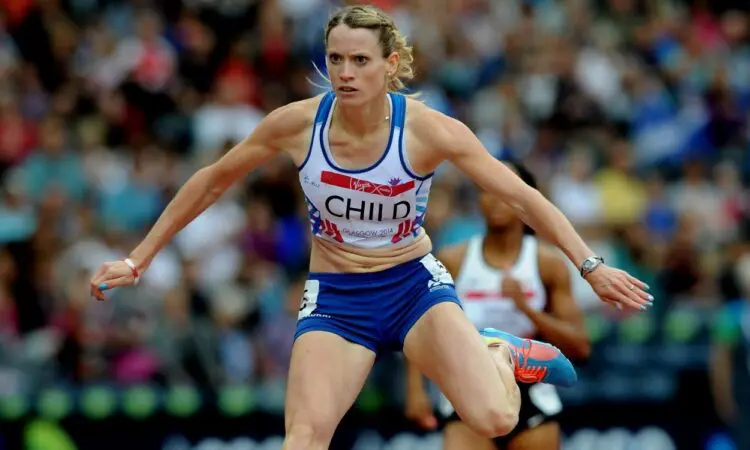
Eilidh Doyle remembers just one moment when it felt as if she was being blown off course during the “whirlwind” of the 2014 Commonwealth Games. “I was going into the blocks before the [400m hurdles] final,” she says, “and I saw my hands shaking, I was really nervous and I couldn't quite catch myself. I could feel myself getting really worked up.
“[At the same time] I think it was Jade Lally who was competing in the discus, and she hit the cage with a throw, so they called us back. When they did that, the crowd started laughing. I think everybody was feeling really tense and it was like a collective [release and deep breath]. In that moment I was able to say to myself: ‘Calm down’. That was the only point of me thinking: ‘I've not got control of this, I'm getting caught up in it’.”
It’s not difficult to understand why that was happening. Doyle, then competing under her maiden name of Child, was very much the centre of attention. Every one of the 58 track and field athletes chosen to compete for Scotland at those Games in Glasgow enjoyed a higher profile, but the then 27-year-old from Perthshire was a poster girl and her image was to be found all across the city.
Given that she lived and trained in Bath at the time, Doyle had been able to avoid much of the hype that had built around the Commonwealth Games’ third staging in Scotland. The 2012 Olympics were still incredibly fresh in the collective memory and the public wanted to experience and be part of such an occasion again. Glasgow offered the perfect opportunity.
While Jessica Ennis-Hill had been ruled out through pregnancy and Mo Farah opted not to compete, a number of the other athletes who had shone in London committed. Even Usain Bolt was making noises about racing in Scotland for the first time. For the home competitors, this was something not to be missed.
“For the athletes, Scottish Athletics tried to make sure everybody got publicity, that every week it was somebody different that was getting spoken about,” says Doyle of the Glasgow build-up. “The level exposure upped for everybody involved, and so, when you're in that, there was a feeling of: ‘This is a big deal’. Those two weeks felt like a whirlwind.”
Glasgow 2014 was an ambitious Games. It was innovative, too. A new indoor cycling velodrome and the Emirates Arena that would go on to host top-class international indoor athletics were built, while the Tollcross swimming pool that also sat in the city’s east end was revamped. The budget didn’t stretch to a purpose-built stadium to host the track and field competition, however, so a ground-breaking solution was found.
Hampden Park, usually home to the Scotland football team, had a deep history of staging athletics events – usually at half-time during international matches or showpieces such as the Scottish Cup final – but never like this. The famous old arena was transformed as eight rows of seats were removed to make way for a temporary deck that consisted of 1000 base panels and was supported by over 6000 steel stilts. On top of that sat the grass infield and a pristine Mondo track.
The stage was set, but it needed to be tested first and so it was that the Diamond League meeting that was usually held in London came to town. As a keen football fan, Doyle is no stranger to Hampden, but she recalls: “We went to visit it before that Diamond League to do a press event, and I couldn't get my bearings to what Hampden had been like before. It was really weird.
“I raced the Diamond League meeting and I won it. I ran my season’s best, nailed the race and thought: ‘Hampden’s a good track’ but the stadium wasn't that full. It was quite a nice atmosphere but I was not expecting it to be what it was.”
The first inkling Doyle had that Glasgow might be a Games like no other arrived on opening night – and she was nowhere near any of the action. In the swimming pool, Hannah Miley won Scotland’s first gold as she broke the Commonwealth record in winning the 400m medley, before Olympic silver medallist and home town boy Michael Jamieson was upstaged in dramatic fashion by team-mate Ross Murdoch in the 200m breaststroke.
“We were in the holding camp and I remember being in tears watching Hannah win and thinking: ‘I need to not watch this’. And then with Ross Murdoch winning it was like: ‘There's been so much drama and the athletics hasn’t even started yet!’. It was just like: ‘This is a lot’.”
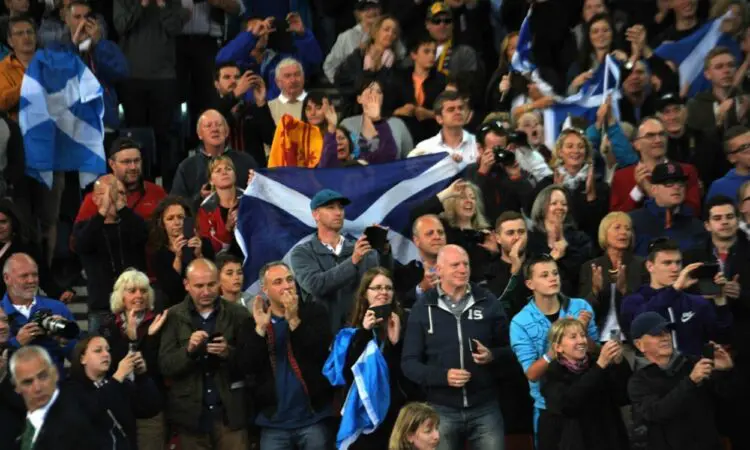
That suspicion was confirmed when it became time for Doyle to get involved and she stepped out in front of the Hampden crowd.
“Nothing really prepares you for it until you’re out there.” she says. “I remember, even just coming out for my heat, people cheering. I was doing my run out, and I thought: ‘What are they cheering at?’ and then I realised it was me, because I was the only Scottish athlete out there.”
Doyle knew how to handle it, though, thanks to the experience of having been in front of a partisan crowd two years previously in London at her first Olympics.
“When I came out to start at London, I did my practice run, and someone said: ‘Good luck, Eilidh’. I stuck my thumbs up to acknowledge the crowd and that whole section of the stadium just went mental, erupted and started cheering. I remember thinking: ‘I don't like having this kind of power!’ and wanting to be off the track as soon as possible. I learned from that, to make sure that in Glasgow I would try and take it for what it was. ‘This is never going to happen again. Ultimately I’ve just got to run my race’. The good thing about that year was my stride pattern was so consistent, I ran the same stride pattern and it worked, so it was like: ‘Just run that and you’ll be fine’.”
Doyle also had the advantage of coming at the event from a position of strength. Though Jamaican Olympic bronze medallist Kaliese Spencer was the favourite for 400m hurdles gold, the probability of a medal coming Scotland’s remained extremely high.
“I was quite lucky, because I was expected to win silver, unless something went disastrously wrong,” says Doyle. “I was comfortable enough that I was ahead of the rest. The fairytale would have been beating Kaliese, but she was so dominant that year that nobody was expecting me to win.”
The race still had to be run, though and, as many elite sportspeople will tell you, it’s how you manage what is out of your control that can make all the difference. So when there was a delay in bringing the athletes out on to the track for the final, Doyle faced another test.
“I think the men’s hurdles was just before us and somebody had fallen and they were having to adjust and reset, so we were delayed slightly,” she says. “Standing under the stadium was horrible, because you're just standing there, you can't do anything, but you can hear everything. You can hear the thumping. It reminds me of Gladiator, but on a much smaller scale!
“Once I was on the track, I could sit on my blocks, I could do my practice run, I could do things, whereas at that point – we were there for maybe five minutes – you couldn't go anywhere, you were just stuck listening to everything, so that was probably the worst bit. But when they called your name, and the cheer went up, that was amazing. It’s what you dream of.”
Once the gun went, there were no more unforeseen circumstances. Spencer did indeed streak away to victory while Doyle also made sure of silver – an achievement that brought with it a lap of honour and priceless moments with her family.
“That was the first chance where everybody got to be there to see me win a medal,” she says. “When I think back to 2014 I don't think about the race, I think about being on the track and doing the lap of honour. That was the best part for me.”
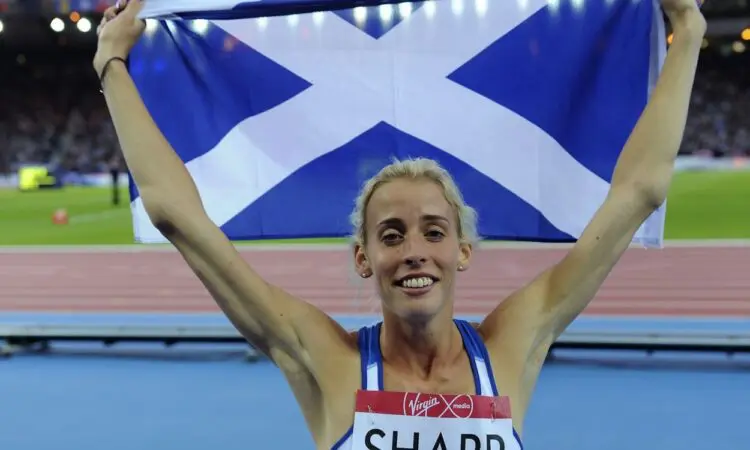
Doyle was one of four Scottish track and field athletes who got to stand on the podium at those Games. Lynsey Sharp dramatically recovered from a bout of food poisoning and followed the instructions of “Get out strong, commit” that she had written on her hand to win 800m silver behind Kenya’s Eunice Sum. There was also a bronze medal for Mark Dry in the hammer.
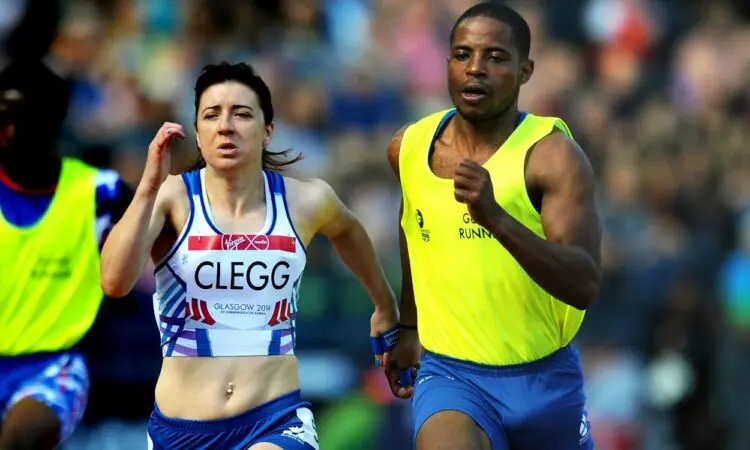
The only track and field gold for the host nation came in the para events, incorporated into the Commonwealth programme for the first time. Libby Clegg seized the opportunity to come out on top in the T12 100m.
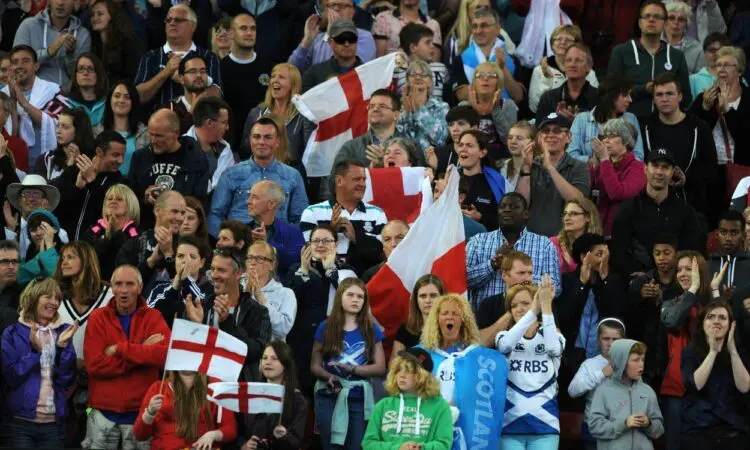
But it wasn’t just the hosts who felt the warmth of the Glasgow crowd. “I remember hearing them cheer for all the home nations,” says Doyle. “I remember the English athletes saying: ‘We didn't expect to get such a massive support as well’.”
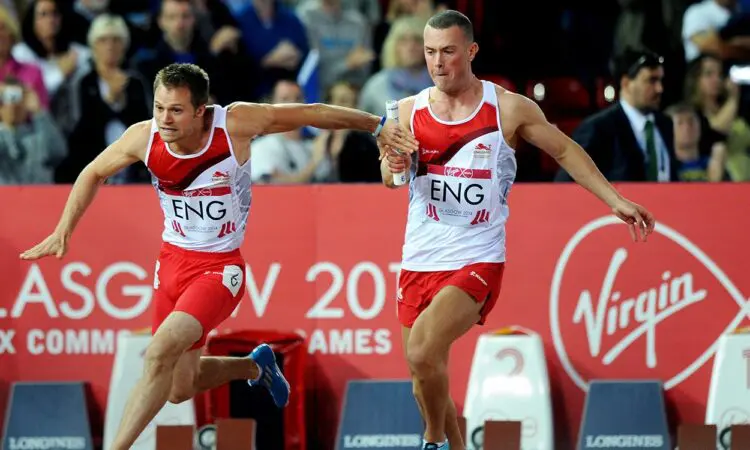
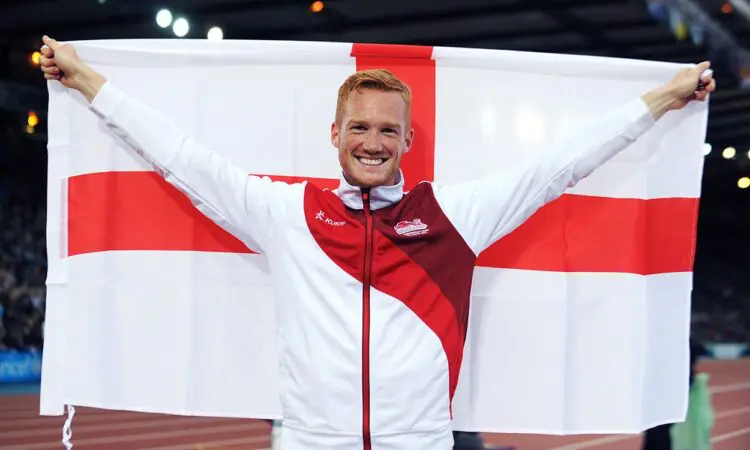
The England team responded, winning the highest number of athletics medals. Their tally of 27 included five gold – Greg Rutherford in the long jump, Steven Lewis in the pole vault, David Weir in the T54 1500m, Dan Greaves in the F42/44 discus and an emerging talent called Matthew Hudson-Smith forming part of the victorious men’s 4x400m squad – as well as 13 silver and nine bronze.
Kenya and Jamaica both left Glasgow with 10 gold medals apiece, with Faith Kipyegon holding off England’s Laura Weightman to win her first major title in the women’s 1500m, though world record-breaking Olympic champion David Rudisha was beaten into second place by Nijel Amos of Botswana.
Nigeria’s Blessing Okagbare completed a 100m/200m double in the women’s sprints, while Olympic 400m champion Kirani James broke one of eight Commonwealth records in defeating Wayde van Niekerk.
Now, some 12 years on, the Games are coming back to Glasgow, albeit in a very different guise. Doyle argues, though, that even this smaller edition will still be of great value to the home athletes and that it still has the potential to produce a special moment or two at Scotstoun.
“I think the most important thing is that it’s still going,” she says. “It would have been awful if that had been it. Looking back to 2014, we didn't really know what to expect, and we're going into this one not really knowing what to expect. But the good thing is that the athletes want to do it, and if you've got a full stadium and you've got the athletes there then they'll take care of themselves.
“The guys in the team that maybe aren't good enough yet to be part of a GB set-up, they’ll go to the Commonwealth Games and see Laura [Muir], Jemma [Reekie], Josh [Kerr] and Jake [Wightman] and think: ‘I'm on the same team as them’, and it hopefully will be a catalyst.
“We were lucky in 2014 that our team was massive but what we maybe lost there was a lot of that intimacy. With other Games I've been to in the past, like Delhi in 2010 and the Gold Coast in 2018, the team was much smaller, but there was a real team spirit. Everybody was supporting each other. We were all in it together. So there's a positive spin there, too, that the team will be really united and they'll get to experience something really special.”
Doyle knows how that feels and that summer of 2014 didn’t end for her in Glasgow. She didn’t even see the closing ceremony of the Commonwealth Games – by then she was back in Bath to prepare for the European Championships that fell just two weeks later.
She came out on top in Zurich to put the lid on the most consistent season of her life.
“I wish I had enjoyed it more but then, if I had tried to embrace a bit more, I probably wouldn't have been able to deal with it, whereas I was very much like coming to the village two days before I was going to race, and then I went home straight away after my final. I was like: ‘I need to get back to normal, I need to focus on the Europeans’.
“I was quite methodical about it. I had to be quite switched on about it and then it was probably only when the season ended that I was like: ‘Oh, that was quite a lot!’.
“When I won the Europeans, I cried on the podium and I would never normally get that emotional but I think it wasn’t just winning that, it was the Commonwealths, it was everything. It was just like: ‘It's done, it's over’.”
Eilidh Doyle was speaking to AW following the Lindsays Sports Forum – Celebrating a Summer of Athletics in Glasgow last month
When Bolt came to town
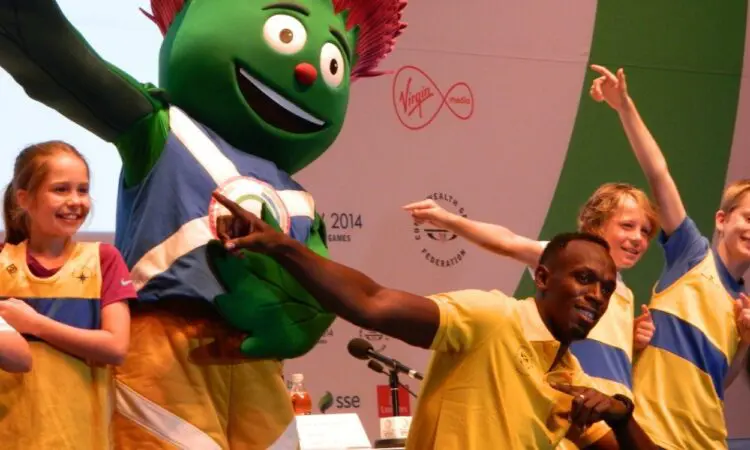
Much of the build-up to Glasgow 2014 centred around one recurring question: was Usain Bolt going to compete? The answer only truly arrived when the Jamaican sprint star touched down in Scotland. He opted to just take part in the 4x100m relay rather than the individual 100m or 200m – foot surgery having meant he hadn’t raced all season – but still his visit would be an eventful one.
First, there was a huge press conference which took a bizarre turn when Bolt was asked about topics that ranged from the situation in the Middle East to the Scottish independence referendum. He was even asked by one journalist for a selfie.
And then came a row with the Times newspaper, who claimed he had described the Games as being “a bit s***” – a report that Bolt said was “nonsense”. The 100m and 200m world record-holder spent much of his time in the athletes’ village but did venture out to watch the Jamaican netball team in action, where journalists attempted – unsuccessfully – to get his further thoughts on the Games.
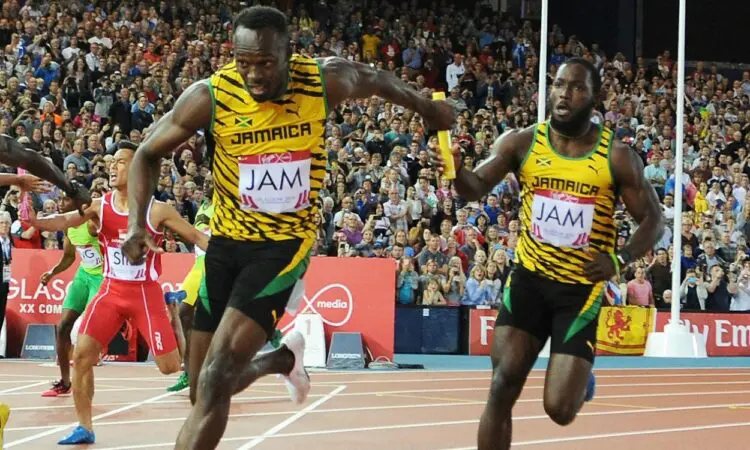
When it came to the sport, if the Glasgow public had been harbouring any ill will towards the superstar over the whole affair then they certainly didn’t show it when he stepped on to the track. Bolt competed in the 4x100m heats and then, on the final night of competition at Hampden, brought the house down with a searing anchor leg that took Jamaica to gold – his first, and only, Commonwealth honour.
That he played up to the crowd, dancing to the Proclaimers and then donning a tartan hat, only endeared him further to the spectators who got what they had come for.