Boston Marathon 2026 preview: Korir, Kipruto and the pull of history

Kenyan athletes are favourites to win but American contenders could make their mark on Monday.
There is always history hanging in the air at the Boston Marathon, but in 2026 the sense of legacy feels particularly acute. On Monday April 20, the world’s oldest annual marathon stages its 130th edition, and the narrative writes itself: champions return, rivalries sharpen, and reputations are either confirmed—or undone—on the unforgiving roads from Hopkinton to Boylston Street.
If the men’s race delivers on its billing, we may witness a defining chapter in the careers of John Korir and Benson Kipruto.
Korir arrives as defending champion after a commanding 2:04:45 victory in 2025 — one of the fastest winning times in Boston history — and has since elevated his personal best to 2:02:24. His trajectory suggests an athlete not merely holding form, but accelerating into his prime. Boston, with its tactical demands and punishing late hills, rewards precisely that blend of strength and intelligence.
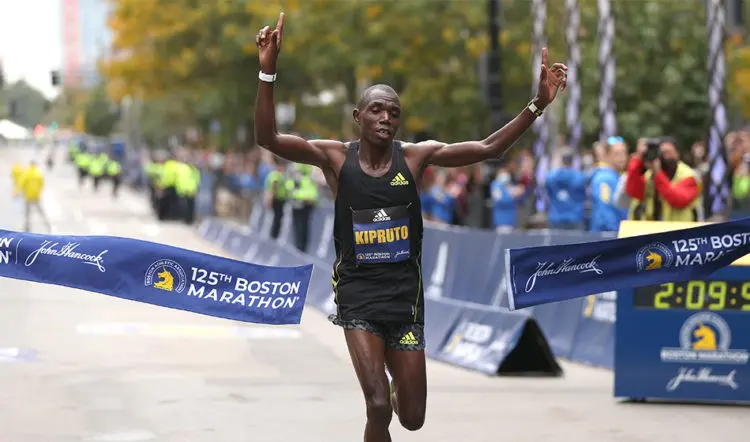
Yet Kipruto may be the more complete marathon résumé. A former Boston champion (2021) and winner of all the other World Marathon Majors — Tokyo, Chicago and New York — he enters as arguably the most decorated athlete in the field. Their personal bests are separated by seconds, their recent victories by little more than circumstance.
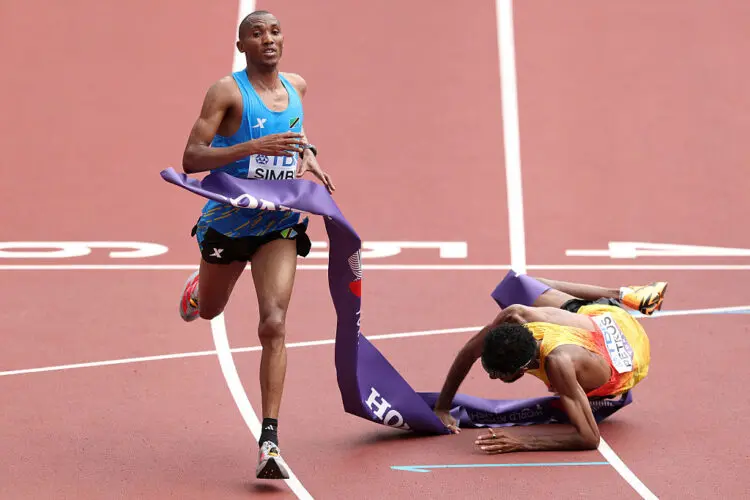
Behind them lies world-class depth. Tanzania’s reigning world champion Alphonce Simbu, Olympic medallist Abdi Nageeye and emerging Ethiopian talent Milkesa Mengesha all bring major-winning pedigree from the past two seasons.
Elsewhere, contenders include Americans Clayton Young, Joe Klecker, Galen Rupp and Charles Hicks.
This is no two-man race — Boston rarely is — but the sense persists that the winner will come from the Korir–Kipruto axis unless something unexpected unfolds over Heartbreak Hill.
If the men’s race centres on rivalry, the women’s race is framed by absence — and possibility.
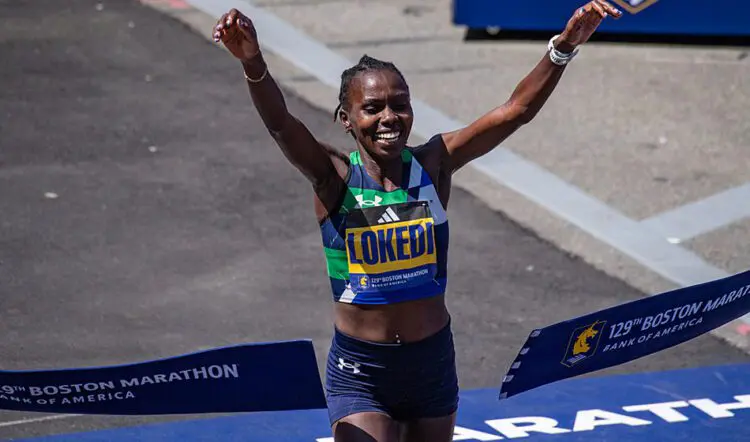
Sharon Lokedi enters as clear favourite after a 2:17:22 course record in 2025, a performance that reset expectations for what is possible on Boston’s traditionally slower course. She has evolved into one of the most tactically astute racers on the circuit.
Crucially, reigning double champion Hellen Obiri is absent, opting for London instead. That removes the athlete who has most consistently challenged Lokedi in recent years and opens the door for a broader cast.
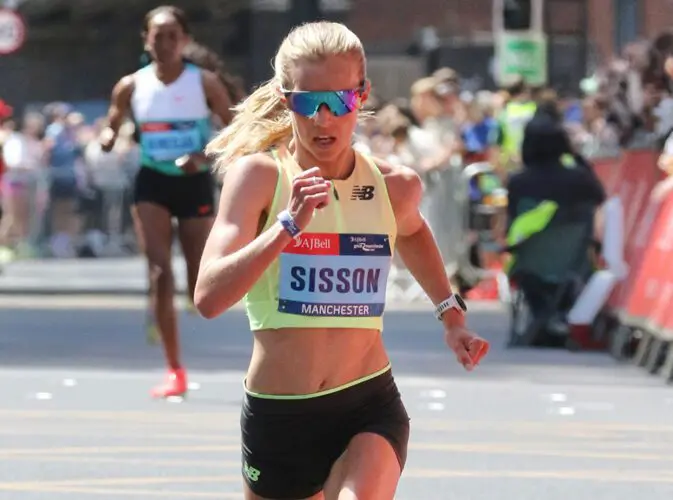
Among those poised to capitalise are Irine Cheptai and Workenesh Edesa, both sub-2:18 performers capable of dictating a fast pace. American athletes Fiona O’Keeffe, Emily Sisson, Sara Hall, Jessica McClain and Dakotah Popehn will also hope to make their mark.
But Boston often resists pure time-trial running. Instead, positioning and patience matter just as much as raw speed.
For all the talk of names and times, Boston remains uniquely resistant to prediction.
The net downhill start tempts aggression; the rolling early miles punish it. By the time runners reach the Newton hills, the race is often poised on a knife-edge. Heartbreak Hill, coming after 20 miles of cumulative fatigue, does not decide the race on its own—but it exposes any weakness.
READ MORE: Boston 2025 coverage
Korir’s 2025 victory illustrated this perfectly: a decisive move around the 20-mile mark shattered the field, turning a competitive race into a solo procession. Expect similar tactics this year, particularly from athletes confident in their strength rather than their sprint.
Weather, too, will play its part. Boston in April can swing from ideal to punishing within hours—tailwinds enabling fast times, headwinds turning the race into survival.
READ MORE: Big moments in Boston
Come Patriots’ Day, the script will be rewritten on the roads of Massachusetts. As ever in Boston, the only certainty is that reputation alone will not be enough.