Mara Yamauchi: my greatest race

After coming ninth at the 2007 world championships, the Englishwoman returned to Osaka to claim her first-ever marathon victory. She went on to come sixth at the Beijing 2008 Olympics, equalling the best ever finish at a Games by a British woman.
I'd already lived in Japan from when I spent four years there as a diplomat. And then I moved there again in January 2006 so I'd already been there for a while and I had family and friends there.
I'd done Japanese races already. I'd run the Tokyo marathon in 2005 and was doing quite a lot of races in Japan – not just marathons, but half-marathons and other races – so I was familiar with how they're organised, what the challenges are.
Generally in Japan, it's very easy to get around to go to events, because everything is well organised and the public transport is very good. It's reliable. Hotels function normally. They're comfortable, easy to use. And speaking the language and being familiar with Japanese food were certainly two things that were beneficial.
I had even run a test race in Osaka for the 2007 world championships. I did my heat acclimatisation there. Living in Tokyo at the time was a huge advantage. It was just a train trip to Osaka. I didn't have to cope with a long flight and jet lag.
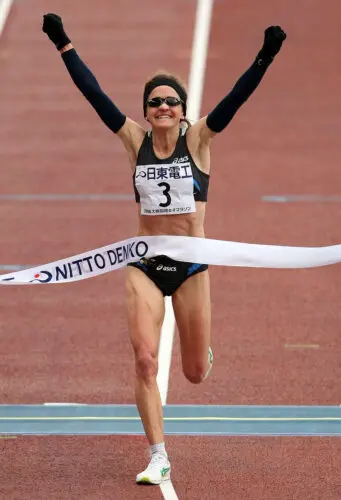
And I was in great shape then. The conditions were very hot and humid so you know that's a leveller. I had a really good chance to do well at the world championships but I messed up my tactics and I went too hard too soon, at about 29km, and I ended up in ninth place.
I was really disappointed with myself because I felt I could have done better than that had I stayed with the pack until nearer the end. I probably wouldn't have got a medal, but I think I could have done better than ninth. I coped well with the conditions. I was up at the front trying to fight for a top position. I wasn't half-way down the field, just going for a time.
And then, the following January, the Osaka ladies marathon was run on the same course. The weather conditions were totally different. It was about five degrees and slightly sleeting but that's not difficult to get used to. You just have to wear the right clothes. Again, because I was there, I didn't have to cope with a flight and jet lag. But it was also a race in which I learned from mistakes that I made five months earlier at the world champs.
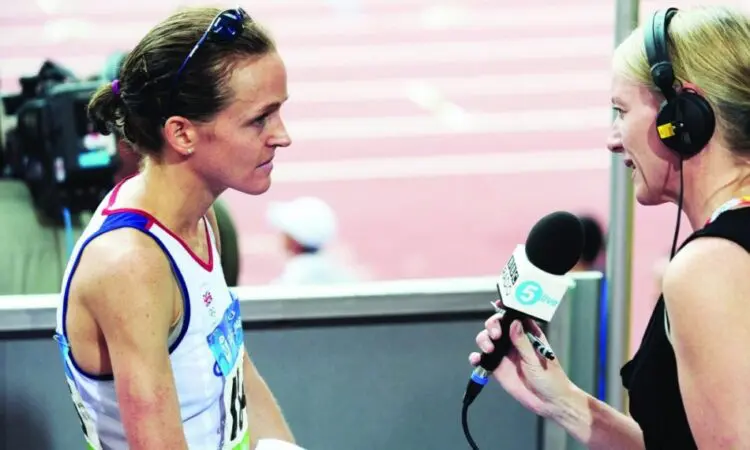
The race was the marathon debut of Kayoko Fukushi, who was known as the queen of the track, so it was a massive occasion in Japan. Everyone was so excited to see her. And she went off at world record pace and we never saw her. Myself and a few others were in a second group from the start and I thought: “Well, there's no way I can do that pace, I'll have to let her go.”
I made a point of not going too fast too soon, and I felt really comfortable to halfway. I was sort of tempted to push on but I deliberately didn't. I kept something back for the last few kilometres and that's how I managed to win. I used a more conservative race plan, and it came good on the day.
At about 34km I dropped the rest of the group I had been in and then I saw the TV trucks come into view. I figured they must be accompanying Fukushi so I realised that I must be catching her. Once I did, and I went into the lead, I thought: “Blimey, I can win this, I can win a marathon for the first time ever.”
That, of course, was thrilling and exciting and motivating. But I was still quite a long way from the end. For the last seven or eight kilometres at the end of a marathon, you're suffering. So basically, what I told myself was: “Just don't mess this up! I'm in the lead, I can win this, I just have to keep going and not screw anything up.”
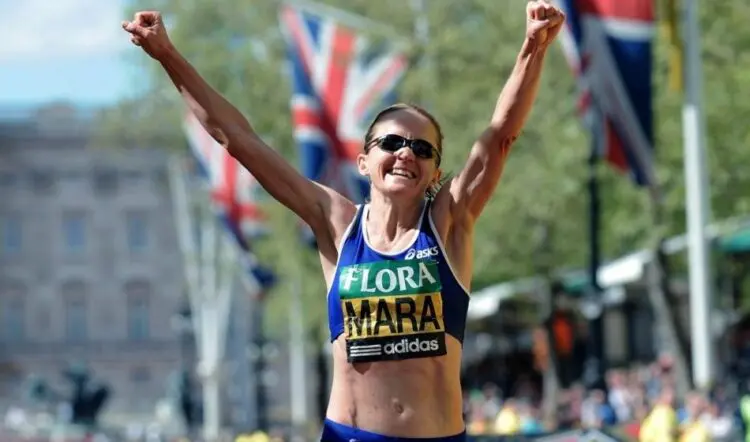
Because that's how it is in the marathon. If you get a gap early on, you just have to maintain it and not throw it away by going too fast. I was kind of listening out for what was going on behind me and I couldn't hear anything. But you get a feel for what's going on, based on the crowd or what the accompanying vehicles are doing so I had a fairly good idea that I had a bit of a gap.
I tried not to look back. I felt good. But it is always hard at the end of a marathon. I just hung on. In the end, second place was about 20 seconds behind so the gap was not much. I was just so over the moon to finally win it and do better than I had the summer before. It was a real redemption for that disappointment.
That whole year, I felt like all the hard work I'd put in was really coming together with winning Osaka, and then coming sixth in Beijing. I was able to cope better with training and recovering well which was the effect of several years of hard marathon-specific training coming good.
What I could have done differently was have more confidence in myself. I was a better athlete than I ever gave myself credit for and I should have raced a little bit more aggressively. I finished second in London but realistically it would have been very hard for me to ever win it.
But a race like Osaka, or other races which are not the absolute top in the world in terms of depth and standard, I wish I'd entered more of those and set out to win them. Because I think I needed more practice in actually racing – as opposed to just trying to get a certain time.