Adam Gemili: "The world is changing so athletics needs to evolve"

The former world and four-time European champion sprinter retired at the end of March following a 15-year career at the top level. He gives his honest assessment of some key areas of the sport.
Competition
When I first came into the sport, there was London, Birmingham, Crystal Palace, Gateshead – it just seems that, over the years, there are fewer and fewer top-level meets in Britain, when it should have gone the other way. But the reality is that the money isn’t there at the moment.
People are starting to fill the void with meets like Stratford Speed, which is brilliant. You can see the success from the waiting lists of people to compete there. But, considering the tracks and stadiums we have in the UK, there just aren’t enough meets being put on. We don’t get access to those brilliant facilities. That’s why international-standard athletes will go abroad, and be out of pocket to do so, chasing the times they need to qualify for major championships.
For me, although I always loved the Diamond League circuit, it was never really my priority. Some athletes focus on them, because they are a great way to make a living, but I always chose to focus on championships.
There’s definitely something quite glamorous about competing at a Diamond League as it’s always full of top athletes. Some meets are more prestigious than others, of course, and there are certainly some you want to do more than others. But they all have meaning.
The trouble sometimes is that athletes don’t always have a lot of choice and power to get into meets. Often it comes down to who your agent is and who their friends are – that can dictate which athletes might get certain lanes at Diamond Leagues.
The pay isn’t bad at Diamond League level but, compared to other sports, it’s not massive. Sometimes – usually at Continental Tour level – you’re lucky to get your flight and hotel covered.
There are times when you might turn up to a Continental Tour meet and find you are one of three or four people sharing one bedroom. Or that you’re literally sharing a double bed with another athlete you’ve never met before. Unless you’re an Olympic champion, any athlete on the circuit has a horror story of what they’ve found after travelling for a meet.
It can be pretty ropey. You get to travel the world, but it’s not always the most glamorous unless you’re doing the top Diamond Leagues.
I’m all in favour of any new formats that provide additional opportunities, so when I first heard about Grand Slam Track I thought it sounded great. We want to see athletes competing, so if there’s a route to get to know the names and personalities involved more, then brilliant. Sadly, I think they were just a little bit too bold. They didn’t need to offer so much money, which is a shame, because the concept and idea was brilliant.
Something like Athlos is fantastic. We need more formats and more ideas that get eyes on athletes. Grand Slam was trying to do that, it just couldn’t pay the bills. The world is changing and athletics needs to evolve with it.
Governance
I’ve always wanted to be involved in athletics governance, which is why I’ve been on every athletes’ commission I can, including with UK Athletics, the British Olympic Association and World Athletics. While other athletes would just focus on training, I’ve always wanted to try and make a difference.
Athletics is brilliant and it should be everywhere. Unfortunately it isn’t and I think the people responsible for that are the governing body. How many performance directors and CEOs have UK Athletics had while I’ve been in the sport? More than I can count. It’s such a shame because there hasn’t been the stability that we need.
There is, at least, some stability now and it feels like we’re in a better place than we have been for quite a few years. Whether you agree with some of their strategies or not, I think the right people are running UK Athletics now. Jack Buckner, the current CEO, knows the sport and has a clear mindset. As long as there is a clear direction and people are in it for the long term, I think our sport will flourish.
Sadly, I’ve had some hard conversations with people in senior positions recently where I’ve been told that the sport isn’t in a space to grow at the moment, it’s only in a position to protect what it currently has because there isn’t sufficient money for grander aspirations. It’s a real shame.
Currently, it feels like we are just waiting for superstar athletes to come along – someone like Mo Farah or Keely Hodgkinson, who is guaranteed medals, but in doing so they sort of pave over the cracks. We have the talent and hunger for athletics in Britain for someone to be challenging for a medal in every final. But the investment isn’t there to help them.
I remember the moment I knew things weren’t great was when I was competing at the Olympic trials ahead of Tokyo and there were no sponsors around the stadium. Compare that to the Olympic trials before London 2012, when I looked around and thought: “Yeah, this is what the sport is about”. Athletics should have sponsors throwing money to be part of it, but it just doesn’t.
Thankfully, one positive note is team selection, where UK Athletics at least seem to be picking everyone they can now for the biggest events, which wasn’t the case for quite a long time, when athletes would have invites turned down so the governing body could save money. I’m glad that’s stopped because it shouldn’t be allowed.
Media
When I was in my early days as an athlete, I used to fight against media coverage a little bit and take it a bit more personally. But, as I got older, I sat back and realised how important everyone’s role is in the sport. Everyone involved in the athletics community plays a big role in promoting it and selling it to the world.
To that end, it’s been really sad to see written press coverage in national newspapers shrink over the years. It used to be so nice when you’d go to a championships, head into the mixed zone after a race and see the same faces. What those journalists would be writing wouldn’t always be positive, but it’s part of the journey and, ultimately, it gets more information out there. The less in demand it is, the less our sport is seen.
People consume things so differently these days, though. Athletes are making blogs and working more with videographers to push out their own content for people to see.
It was never like that when I was a young athlete; in fact, it was the complete opposite. I remember once when I was in Florida training with Tyson Gay. We had a really good session, and I put something on Twitter about it. The next day when I came into training he pulled me aside and said: “That’s not what we do, we keep it secret.”
Nowadays, did you even do a training session unless you filmed it and put it on social media? It’s a completely different world, and athletes are really taking the onus to put themselves out there. There’s positives and negatives to that.
Television coverage could definitely be improved. I loved watching the recent World Indoor Championships, but I didn’t see it advertised much. If I didn’t follow athletics, I doubt I would have known it was even happening.
I do think there’s an opportunity for some new pundits to emerge as well. One thing I always liked about Michael Johnson was that he talked honestly. Even though I was on the receiving end of that at times, I want to watch someone give an opinion and speak knowledgably, not sit on the fence. I always appreciated his honesty.
There’s a cohort of recently retired athletes who could come in, and bring new perspective and insight to the sport. You can see that when someone like Richard Kilty does it.
I would love the opportunity but, unfortunately, unless you achieved certain things in your career it seems incredibly difficult to get the chance.
Grassroots athletics
Now that I’m not racing any more, most of my focus is going to be on coaching in various different forms. I’m hoping that one of those will be at an athletics club because I’d really like to give back. But I have to be realistic, and the hardest thing about coaching at a club is that it’s all volunteering. I have to make sure that I can pay the bills and it’s not always easy to give time for free.
It’s why I take my hat off to every volunteer up and down the country, because without them the sport doesn’t happen. It’s not how it works in other countries or in other sports, and I think it’s to athletics’ detriment in Britain. We can’t be relying on coaches to find and harness the next generation of athletes without anything in return.
The reason we lose so many young people to other sports is because there isn’t the infrastructure and pathway to bring them through from that foundation level into senior athletics. There’s so much untapped talent out there that we are missing out on. The next Dina Asher-Smith, Keely Hodgkinson or Katarina Johnson-Thompson is out there, but we need to make sure we identify and help them.
Certain clubs like mine, Blackheath & Bromley Harriers, have managed to make sure they are self-sustaining, but a lot aren’t. There isn’t enough investment into them from the governing bodies. We’ve seen a few clubs who can’t afford to keep athletes going to meets, which is a real shame. I think there needs to be a bigger push towards funding for clubs.
If that happens, and there are better quality meets put on, then it will also become more appealing for elite athletes to compete for their clubs. At the moment, no top athlete really competes for their clubs outside of the UK Championships. It’s sad, and doesn’t help the whole grassroots system.
Technology
There has been so much talk about spikes and shoes in recent years, and I have to say it’s incredible what these super spikes can do. I had a bit of both worlds in my career because I mainly competed in the old-school spikes. I remember when the super spikes were first introduced, testing out prototypes and it’s like having a spring in your shoe – if you hit the ground hard enough it fires you forward.
The improvements are incredible. I would have loved, in my fastest years, to have run in those super spikes. I wonder how fast I really could have run. But you run in the era that you run in and I wouldn’t change that. It’s interesting that you see the improvements a lot in middle-distance times, but not so much in the sprints. I think the reason for that is just down to talent.
The likes of Usain Bolt, Yohan Blake and Justin Gatlin were so super-talented. There’s massive talent nowadays as well, but they just aren’t at that level. They will get there, or somewhere close to there, but I don’t think anyone will break Usain’s record. We are very lucky to have seen him compete. I don’t think we’ll see that again.
I don’t really understand people having a problem with advances in technology. You judge things by the era that they happen in. You can’t compare competing in the 1980s to someone in the 2000s. It’s the same as trying to compare the 2000s to the 2020s. This is the era of super spikes now.
You want the sport to keep evolving and moving forward, and that happens through technology. I don’t see any problem with it. The next thing that needs fixing is the clothing and the fact we still have a little bib on our vest flapping about when we compete.
In fact, the only downside to super spikes is that they are so expensive to buy. If they break then you have to spend hundreds of pounds on new ones. It’s crazy how much they cost these days.
I really noticed that at the back end of my career when I wasn’t sponsored and had to start paying for my own spikes. I couldn’t believe it! I realise how lucky I was throughout my career to get them for free.
Doping
It feels like more people are getting caught for doping offences now than when I started my running career, and that has to be a good thing. The truth is that people have been cheating in athletics for decades and there are always going to be people out there figuring out how to beat the system. Luckily for me, I haven’t had to be upgraded to a medal because someone has been done for doping. I hope it never happens, and I don’t see it happening.
When I look at the medals I missed out on and the people I lost out to, I don’t think any of them were dirty. But I’ve definitely competed against athletes that have been doping, sometimes quite blatantly, and getting away with it.
We are tested so much in the UK. A lot of people don’t realise how intense the anti-doping requirements are – it’s an hour slot, every day of your life. They can come and test you when you’re training, when you’re not training and even when you’re on holiday. I was doing that from the age of 18 until last year.
But I always understood that it’s part of being a professional athlete. If you want to be a professional athlete, this is the job. You make your peace with it. It’s sometimes inconvenient, but that’s part of what you have to do. It sometimes feels like some of the newer athletes don’t realise why it’s so important.
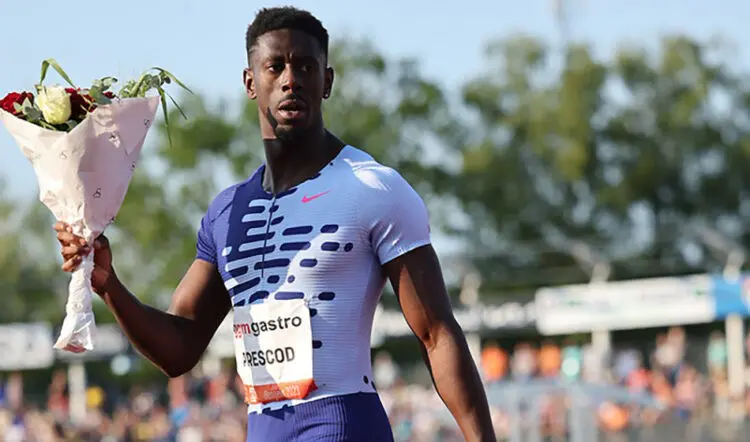
Speaking of doping, I don’t agree with the Enhanced Games at all. It’s cheating and it’s against the integrity of sport. I’ve got friends there competing – I’ve trained with Reece Prescod and Marvin Bracy, and I’ve known Fred Kerley for many years. For them, I understand it’s financial. They are looking after themselves and their families. They have chosen to tarnish their legacy, but they are grown men and women, so they can make their own decisions, and I have to respect that. But it’s not for me.
The truth is it’s not about sport. There are other agendas behind it. All they want to do is showcase something spectacular, hopefully see a world record and then use it to promote drugs to the general public through their company. It’s dangerous and I don’t agree with it.