Coe: our season is simply too short

World Athletics president reflects on Budapest's inaugural Ultimate Championship, the case for a longer calendar, Usain Bolt's return and the sport's "innately conservative" streak.
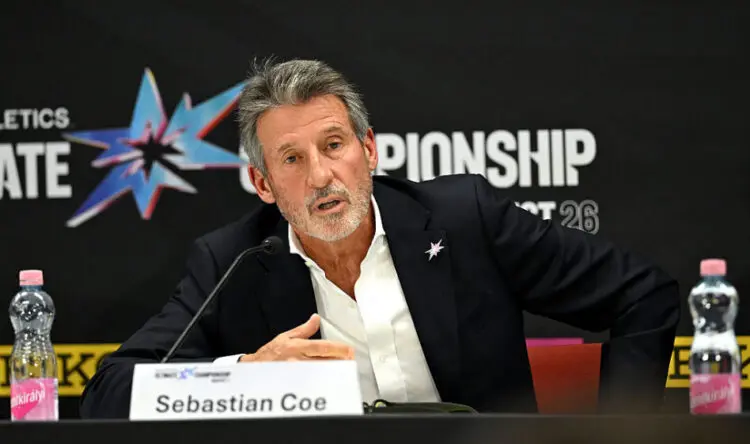
For many athletes, the World Athletics Ultimate Championship in Budapest is the last dance in the 2026 track and field season. But Seb Coe, the president of the global governing body, believes the current competitive period is not long enough.
"Our season is still too short,” he said, speaking on Sunday morning on the banks of the Danube ahead of the final session at the Ultimate Championship. “The sport comes together for the big magnesium moment between June and September. That, across any metric, is a short season for a sport that's supposed to be professional.”
Could we then see the Ultimate Championship taking place in October in coming years? “That’s one for my successor,” he said, although he added: “There are going to be the realities of climate change. Seasons are going to have to extend simply because you're not going to be able to [hold events in] parts of the season if you really are committed to athlete welfare."
On the idea of a May–October season, he said: “It may be finding parts of the world where you can start the season slightly earlier.”
Coe was asked about athlete welfare and whether a long season would put too much strain on their bodies. But he insisted: “I've never put athletes under pressure to compete.”
He added that he often ‘triaged’ his own season – picking and choosing when and where to compete – and that giving today’s athletes more options was his goal.
"It's not for us to sit there saying you've got to compete,” he said. “I think we're an enabling organisation.”

Coe says he met Jakob Ingebrigtsen shortly after his 5000m victory in Budapest and the Norwegian was weighing up whether to do the 1500m as well (he has since decided not to). Coe says: “I told Jakob, ‘I care more about you than I do an event. So you make the decision that you think is in the best interest’.”
On the relative success of this inaugural Ultimate Championship, Coe says there are two lines he will "treasure for a long time”. The first is sprint hurdler Masai Russell describing her win was "the most money I've ever earned in 11 seconds” – as she earned $150,000 for the performance.
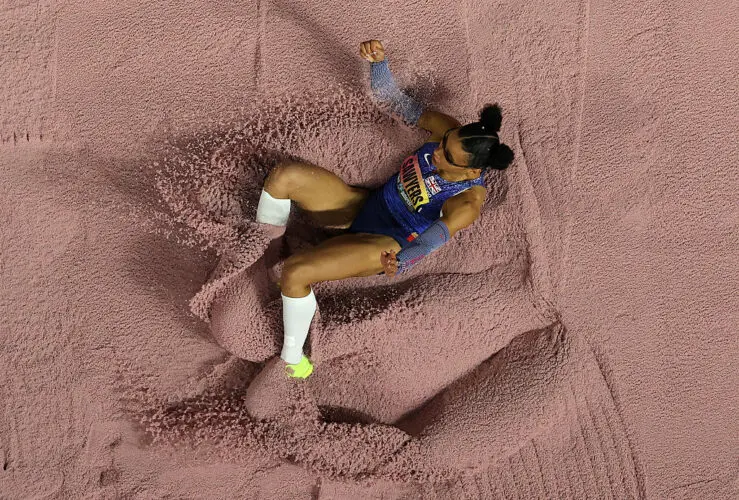
The second is Jazmin Sawyers saying her $75,000 for finishing runner-up in the long jump means she "can stay on in the sport for another year … and buy another sewing machine!”
On the handsome prize money, Coe added that it helps “keep athletes maybe in a sport for another Olympic cycle... they don't have to jump into making precipitative decisions at the end of their careers."
Generally, on the Ultimate event, he said: "At first inspection and it's early, it seems in large part to work pretty well. The athletes have been uniquely positive about this, really.
"We're an innately conservative sport. And I just think we've moved slightly away from the risk-averse end of that. Not probably by much, but it's a start!”
Not everyone has loved every aspect of the new format but Coe says it was largely driven by spectator research. "Our sport isn't that understandable if we're being blunt about it,” he said.
"Taking lengthy introductory periods with the athletes, for example, leaves people cold. They just want the event.
"A lot of our fans say they just find the studio chatter leaves them cold too.”
Some have been critical of certain events being left out, too, but Coe said: “The work we've done around understanding popularity of different disciplines is not to get rid of those disciplines on a ranked order... it's actually to figure out what kind of resource and innovation... [is needed] to raise the profile."
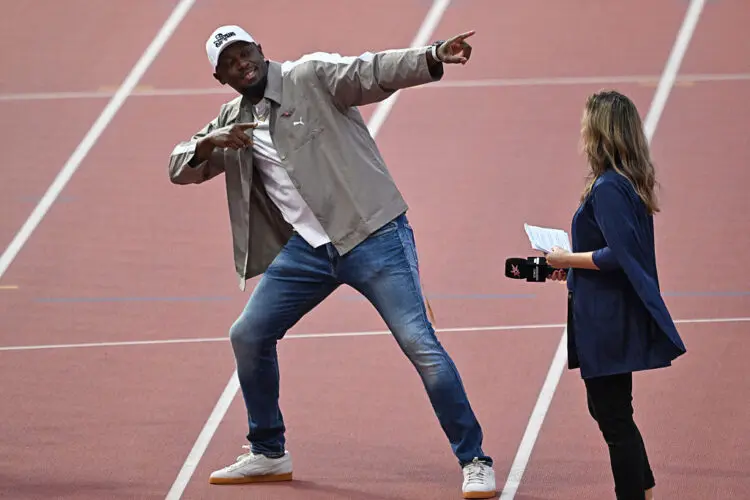
On Usain Bolt’s presence at the event, Coe said: “I sort of feel Usain is back in our sport again. And that's important.
"If I had gone to Usain and said, would you chair a committee or commission — he would have said no, I don't want to do that. So it was finding stuff that he would want to do instead.”