Catwoman on the track: the story behind Keely Hodgkinson's speed suit

From a first try-on in South Africa to an anti-gravity treadmill session on injured knees, we hear from coach Jenny Meadows and Nike's designers about how the Olympic 800m champion's head-turning outfit came together.
Jenny Meadows was taking a break from coaching at M11 Track Club's warm-weather training camp in Potchefstroom back in January, playing a game of padel with her husband and fellow coach Trevor Painter, when one of their athletes called out to them.
"Trev, Jen, what do you think of this?" They both turned to see Keely Hodgkinson standing in the Nike speed suit that has created headlines and sparked huge interest since the Olympic 800m champion used last month's Athlos London meeting to finish her season by sporting a striking new look.
"My initial reaction was like: 'Oh, you've got to be brave to wear that'," recalls Meadows. "Trevor was like: 'Yeah, you're like Catwoman! Go for it. It's so you.'"
Alongside Painter, Meadows has witnessed first-hand how sketches of the speed suit – first delivered to Hodgkinson at the end of last year – transformed into the tangible piece of clothing that became such a huge talking point when she stepped out to race in it at the StoneX Stadium.
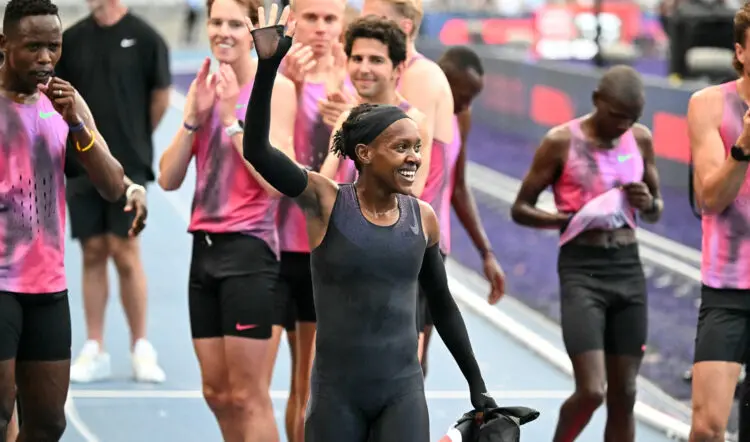
The project, developed over the course of a year, can trace its origins back to Faith Kipyegon's attempt to become the first woman to break the four-minute barrier for the mile in June last year. Hodgkinson was in Paris for the Nike-backed event and was fascinated by the Kenyan's aerodynamic 'Fly' speed suit, featuring 3D-printed performance material, strategically placed aeronodes and a headband.
And so it was that discussions began last October between the inquisitive 800m world indoor champion and her sponsor about her "one-of-one" speed suit, and over the winter months she worked with the brand's expert designers and innovators – based at the LeBron James Innovation Centre in Beaverton, Oregon.
The first test of the garment came during that training camp in South Africa and Meadows, who describes Hodgkinson as an "innovator" and a "fashion icon", states that over a dozen personnel from Nike – including a number of their innovation team – travelled to watch the British record-holder putting it through its paces in temperatures of up to 37C.

"Nike were so respectful of us as coaches because they obviously wanted us to be really comfortable with the process," says Meadows. "At the end of the day, we think about performance and it's not just what you look like in it.
"There's extra pressure because Nike is there and it's obviously a very different feeling to what you've had at previous training sessions, but both me and Trevor understand the responsibility that comes with coaching athletes of that status.
"Keely has worn the speed suit, I'd say, three or four times in training sessions, and has described it as 'so light'. We didn't change our sessions. We will never change things to suit anybody else so we were like: 'No, these are the sessions'. So the speed suit just fits into our normal schedule. Nike were really good about that.
"When she wore the speed suit, the stopwatch said really good things but, arguably, she's been in great shape anyway. The suit wasn't doing anything negative and we just wanted to make sure it didn't slow her down. Mentally and physically, she felt like it was really working for her."
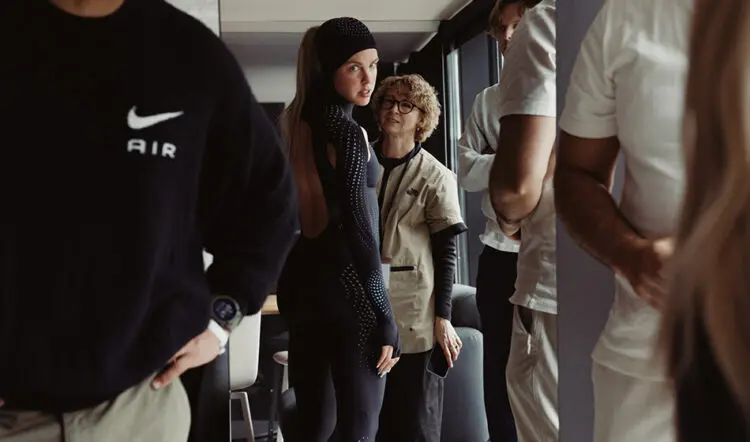
Hodgkinson's feedback was invaluable during the development process. Dan Farron, vice president of apparel innovation product design at Nike, states that the 24-year-old was incredibly specific about the changes she wanted – and that some of them were bold.
The design of the hood is one example. Hodgkinson told Nike's innovation team that her ponytail being on show was a "non-negotiable", while she also worked with the brand on how her sunglasses interacted with the hood.
"There are tiny pockets that [the glasses] insert into, so there are no gaps for them to drag around," Farron says. "The hood also has 3D-printed vortex generators on top, so all of that felt right for her and didn't impede the way she runs.
"When you're bringing out a hooded suit for any athlete to wear, it's a big, bold move. You've got to be bold to want to try it. She was so open and she could feel things that we wouldn't have noticed, so right from the beginning we knew we would create something special out of this. When you see a personality like Keely's brought into the innovation process, that's when you see it come to life. We worked within the boundaries she set, to create something that was light and had great aerodynamics."
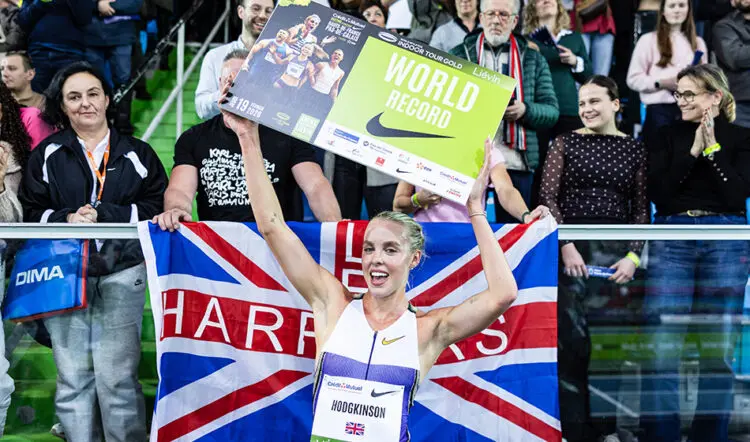
After breaking the world indoor 800m record with 1:54.87, topping the world indoor podium and then setting a British 800m record of 1:54.33 at the Stockholm Diamond League, the plan had been for Hodgkinson to debut the suit at the London Stadium in July.
By then it had gone through quite a few iterations and Nike had also witnessed her training in it on the track at Sport City in Manchester. Just as she was preparing to compete at the Prefontaine Classic, however, Hodgkinson tripped heavily on a metal grille while on a cool-down run by a canal in Wigan.
The fall left her with a jarred back, as well as badly gashed and swollen knees, meaning the much-anticipated 800m world record bid in London was halted and a decision was made to delay the speed suit's debut. Hodgkinson still travelled to Oregon to race over two laps at Hayward Field in Eugene but first made a stop at the LeBron James Innovation Centre and tested the suit out on an anti-gravity treadmill at the facility – with revealing results.
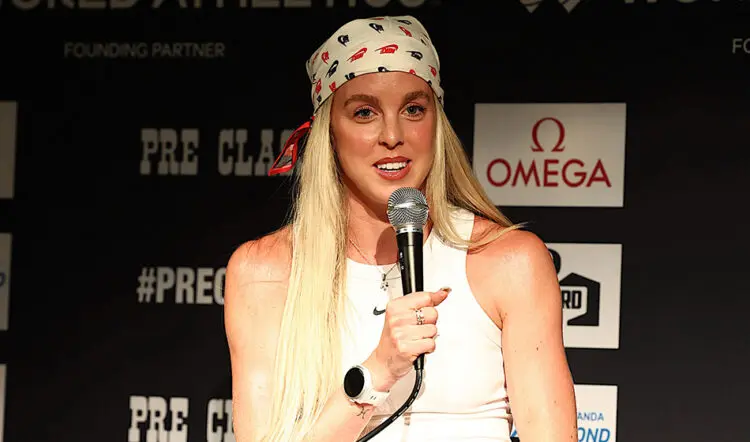
"This is one example which showed me the speed suit can help performance-wise," Meadows says. "Keely could hardly walk that day because her knees were so swollen and she was in a bad way. She was questioning whether she could compete at Pre Classic at all [Hodgkinson placed second to Lilian Odira with 1:56.73].
"When she got on the treadmill at the end of the day, she said that the speed suit helped her to move. Without the speed suit, she couldn't bend and flex her knee because of the inflammation from the fall. She was like: 'Oh my gosh, I can actually run'.
"I think they thought the level of compression the speed suit provided helped hold her knee in place and prevented it from moving sideways. In total she ran for 40 minutes. We were all learning on the spot. I don't know if anyone envisaged that."
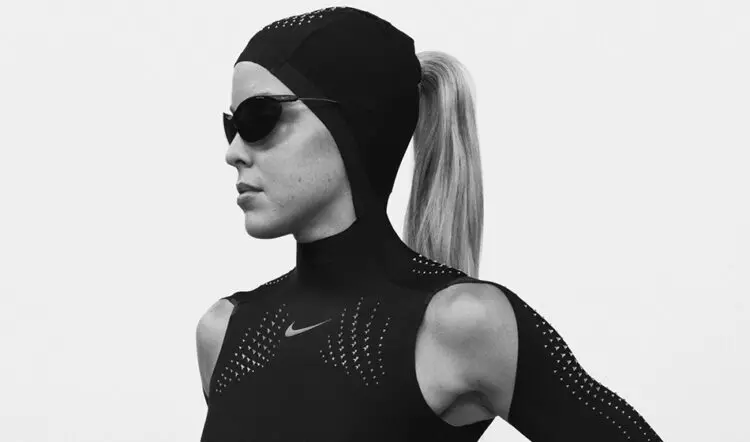
Hodgkinson's suit has technical features like an articulated back knee that allows the fabric to lie smoothly, even in peak flexion; a patented 4D mobility gusset; and large openings at the underarm and back, which support thermoregulation.
The 3D-printed vortex generators work by creating mini tornadoes, or vortices, that force fast-moving air around the body to mix with and attach to slow-moving air trapped against it. This cuts down on the low-pressure wake that normally forms at the back of the body, reducing the amount of drag on the athlete and supporting greater speed.
How much of an advantage can be gained from wearing such a speed suit remains to be seen – The Telegraph reported that it could be worth half a second – and with Audrey Werro, Femke Broeders-Bol and Hodgkinson all aiming to break Jarmila Kratochvílová's 43-year-old world record of 1:53.28, every fraction of a second counts.
"We've tuned every single aspect of that suit," says Farron. "There are a few areas we focused on and aerodynamics is one of them. For example, we tested out the speed suit in a wind tunnel.
"We scanned Keely on campus. We have her avatar. We can put it through motion. We can basically fit the suit many times before she ever tries on the next version. We can make sure the mobility is perfect, ensuring the suit fits with her stride and mechanics."
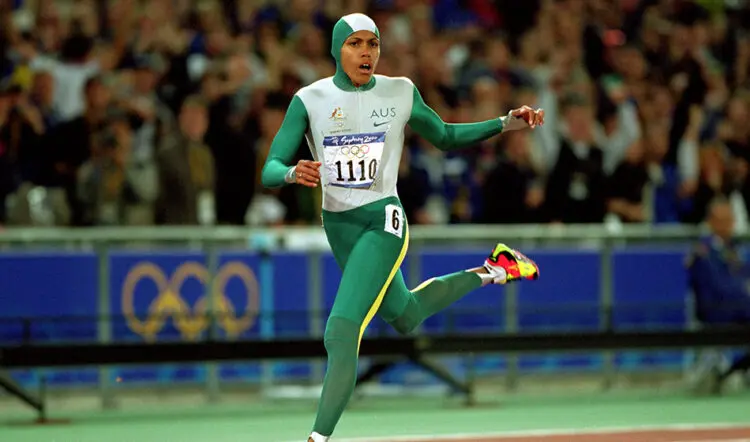
After Hodgkinson had crossed the line to win the 800m at Athlos, comparisons were quickly made with Cathy Freeman's 'Swift' speed suit from her gold-medal-winning run in the 400m at the Sydney 2000 Olympics.
The Australian's outfit used zoned aerodynamics to reduce drag and help regulate muscle temperature, but technology has evolved considerably since, with 4D design methodology used to construct Hodgkinson's updated version.
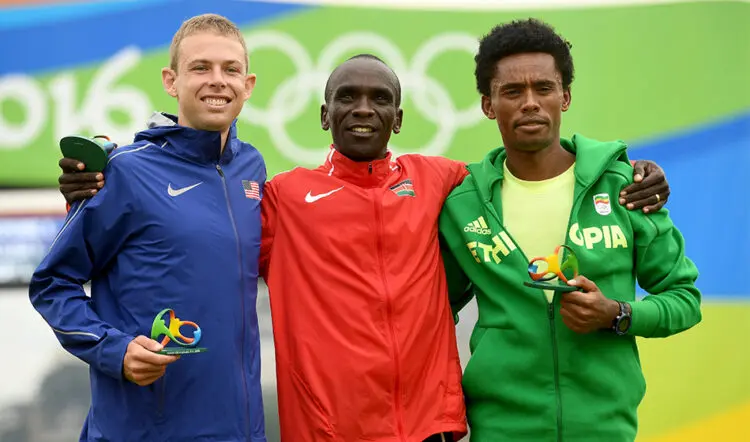
The development of shoe technology is well documented and after the release of the Nike Vaporfly to the public in 2017 – one year after the top three men's finishers in the Rio 2016 Olympic marathon wore prototypes of it – other brands soon followed suit, sparking the rise of the super shoes to which everyone is now very much accustomed.
In 2020 World Athletics modified the rules governing competition shoes for elite athletes, stating that the sole or stack height should be no greater than 40mm. As it stands there is no regulation relating to speed suits, though.
The global governing body told AW: "World Athletics does not regulate the technical aspects of clothing beyond shoes. However, we do have advertising regulations in place for clothing and accessories that must be adhered to."
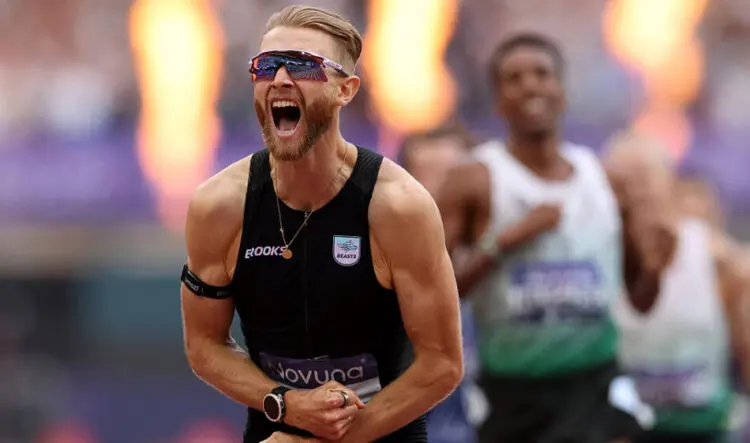
So could we see multiple brands develop speed suits in the future? Josh Kerr wore a bespoke Brooks Hyperion 222 speed suit when he broke Hicham El Guerrouj's 27-year-old world mile record with 3:42.66 at the London Diamond League. At the Berlin Marathon, Tigist Assefa, who won the race in 2:11:04 – the third-quickest time in history – wore an Adidas vest with her bib and timing chip integrated into the fabric. The vests, which are approved by World Athletics, were created to reduce wind resistance as well as allow the numbers to exist in the same breathable material.
Technological advancements are showing no sign of slowing and Farron believes athletics is in a place now where more investment and innovation are possible.
"What excites me and the team is that every discipline is completely different," he says. "From the 100m all the way up to the marathon, we can produce different designs and tweaks. With endurance, thermoregulation becomes even more important, whereas if you get down to the 100m we can be laser-focused on speed, so it changes in each event and then for every athlete. That's the challenge but it makes all of this exciting."
Speaking after Athlos, Georgia Hunter Bell – Hodgkinson's M11 team-mate – indicated that more athletes could wear speed suits in the future.
For Meadows, this past summer marks a new era for the sport and one that is a far cry from when she was competing. She states that social media has played a big role in athletes wanting to showcase their personality more, highlighting the red-carpet events at the World Athletics Ultimate Championship in Budapest and Athlos in London.
"This year marks 10 years since I retired, and sometimes I feel like it's a completely different sport," adds the world and European 800m medallist. "I think allowing your competition uniform to be part of that [personality] is probably the next step forward.
"You can't do anything wild because obviously the governing bodies of the sport are going to say: 'Look, that's out of the realms of what's acceptable'. But I think we should embrace it, and it has created talking points.
"Keely's speed suit helped bring new people to the sport. To engage that audience, it's much more than who is the fastest athlete these days."