Do elite athletes use gaming to unwind, stay sharp, or as part of a pre-race superstition?

Thirty years ago, not many athletes sat around and played video games. In fact, you’d have to scour the web to find any information, and even then, some of that information is not too reliable.
Yes, there’d be pros out there who enjoyed playing arcade games, or some of the big names of the era like Michael Jordan, renowned for his gambling vices, but gaming was a new market, tailored to a different demographic.
It’s important to remember that athletes in the years surrounding the dawn of the 21st century grew up in a time where gaming was not ubiquitous. Arcade gaming was an expensive hobby for many people.
Throughout the 1980s, when many of these athletes were working tirelessly to hone their talents, home video consoles were not high up on the agenda. So, how has this changed in the 2020s, and how many elite athletes switch off by playing their favorite games?
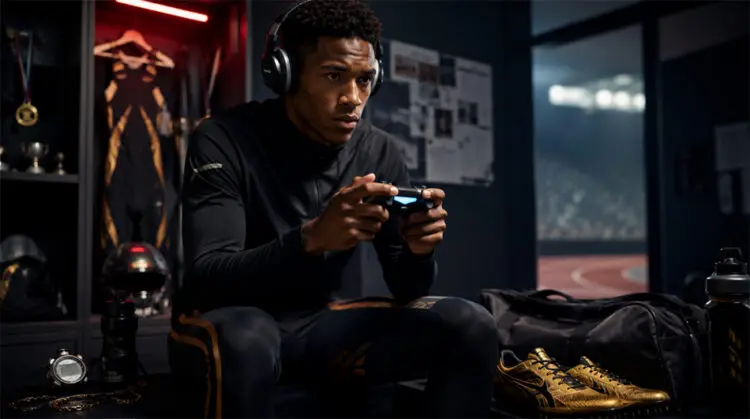
The dynamics of the gaming market have completely changed over the last few decades. Games went from arcade-style, predictable, almost brainless ways to switch off to enormous open-world games and highly tactical, strategic games that require remarkably impressive levels of skill. In many ways, they blurred the dated misconception that they were simply a way to switch off and could not be used as a form of cognitive engagement.
We’ve seen how first-person shooter games like Counter-Strike 2 (CS2) have become market leaders as strategy games, as well as the prize pools they can offer. Such is the size of these global markets; it’s not unusual to see prizes in the multi-million-dollar range.
With such a successful market, subsidiaries that deal with spin-off betting markets have also found success online, and often, the strength of any professional competitive market can be aligned with the size of the betting market that underlies it. CS2 betting has become one of the most popular forms of esports betting over the last decade.
As money continues to flow into the development of the game and marketing strategies that embrace all things digital, ingenuity will continue to bring in millions of new gamers. It doesn’t matter whether it is in CS2, the adjacent markets, or innovative forms of betting that look at new ideas and new forms of currency, such as crypto.
All of this has mass appeal; it’s no longer aimed at a gaming audience, but those who want to play these types of games to unwind, as well as those who want to kill two birds with one stone and stay sharp.
Gout Gout, who for many is the next megastar of track and field, has mentioned several times that he is a huge fan of games like Zelda and Minecraft. More established senior athletes such as Noah Lyles have spent big money on his PC gaming spec to maximize the quality of his League of Legends game time. Freddie Crittenden has spoken about his love of Elden Ring several times, racking up hundreds of hours on the game.
Lionel Spitz, the Swiss 400m runner, is partial to a game of FIFA, or FC as it’s known today. While many athletes across every discipline enjoy gaming but don’t go as far as to proclaim it as part of their pre-race ritual, we imagine there are athletes out there who do or will incorporate it moving forward.
Pro athletes are a superstitious bunch. We’re not just talking about those out on the track either; this encompasses sports right across the globe. There are so many to go through; there’s Ja’Kobe Tharp’s McDonald's pre-race meal, which is a big part of his preparation and has been from when he won his first state title to breaking the 110-meter hurdle world record.
Even if you handpicked out any sport, you could find a range of top names with their own quirks that help them set themselves mentally. It’d be quicker to name the top soccer players who don’t have superstitions than the ones who do.
Cristiano Ronaldo always steps onto a pitch right foot first and leaps into the air; John Terry had several eye-catching ones, including wearing the same shin pads for years because he deemed them lucky.
So, what do superstitions have to do with anything? They’re part of a ritual, and now that this generation of athletes are those that have grown up in the 2000s and in the 2010s, they’re more aware of the presence of gaming than any generation of athletes that have come before them. For some, it’s been a part of their routine for years.
Many athletes who have grown up with video games have continued playing their favorite games, even as they train tirelessly to reach the pinnacle of their field. Hobbies, superstitions, and pre-game rituals do contain significant overlap, and with gaming being such a popular medium, athletes are no strangers to endorsing or putting their image rights into a gaming idea they like the look of.
Ultimately, as games continue to become more widespread, including mobile games that are cheaper and easier to access, this trend is likely to grow. More athletes, especially Gen Z athletes who are just now breaking onto the global athletics scene, are going to integrate gaming into their rituals, superstitions, or even to network and socialize.