Usain Bolt: "I wanted to set high standards. And I did"

Sprint superstar reflects on still being the benchmark and how he invited the world into what he did for a living.
The man we have all come to see answers the question with a question. “Do you really want to know the answer?” he says and the atmosphere in the room crackles ever so slightly. His audience leans in.
He is responding to the query of why, given all the advances in sports science, nutrition, technology and innovation, the world’s best male sprinters aren’t closing in on the fastest 100m times in history.
It’s a good question. Of the current crop, Olympic and world silver medallist Kishane Thompson is the fastest with his PB of 9.75 but it only puts him sixth on the all-time list. The five marks ahead of him were all run between 2009 and 2015 and the 9.70 barrier was last broken in 2012.
So, after the dramatic pause, are we about to bear witness to some great insight or perhaps even a revelation or two?
“We were just more talented,” grins Usain Bolt, shrugging his shoulders, and the tension turns to laughter. Even now, eight years into retirement, he can still hold the crowd in the palm of his hand.
“That’s all I’m saying. Of course, it shows when it comes to the men. You can see the women are different. They’re running faster times and faster times. So it shows – it has to be the talent.
"You have Shelly-Ann [Fraser-Pryce], who has got the new spikes, and she ran faster. So it’s just the talent. We’re just way more talented men over that time. It shows if you look at it.”
Other things endure with Bolt, too. His name remains synonymous with being the very best. He ruled over the sport of athletics in a way that no-one else ever has, and his presence at the World Championships in Japan has been keenly felt.
After stepping off the track in 2017, save from training session visits to the Racers Track Club in Kingston where he honed his craft, the eight-time Olympic champion, 11-time world champion and the man who still holds the 100m and 200m world records (9.58 and 19.19) disappeared from the athletics scene entirely.
The 39-year-old re-emerged earlier this summer, though, to visit the Oslo and Stockholm Diamond League meetings and he is in Japan to help with the promotion of World Athletics’ Ultimate Championships next year. He is a valuable resource for the sport to tap into.
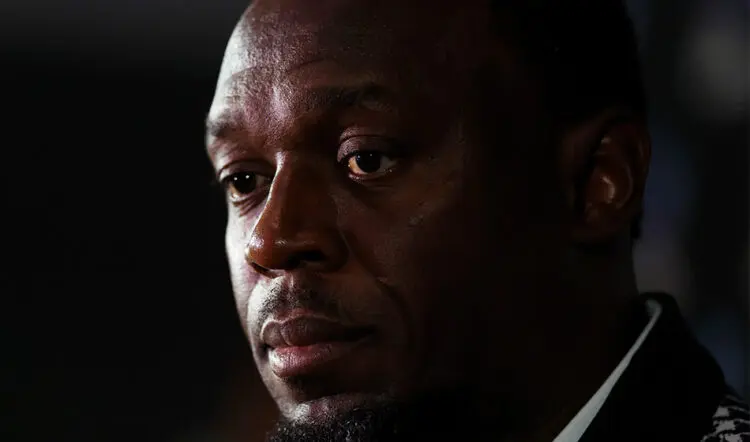
“Just like the old days,” he quips as he arrives to speak to an assembled group of journalists in a hospitality box at the national stadium, just a few minutes ahead of the start of the women’s 100m semi-finals. Everyone still wants to hear what he has to say.
The conversation covers a few different topics - from the memorabilia he has kept from his career (only the baton from the London 2012 Olympics 4x100m final), through to the athletics event that is the most exciting. “I feel like the 800m is a pinnacle of excitement - it's just right. Not too long and not too short.”
But most of the questions revolve around just how he did it. How he became this force of nature that not only left the competition trailing but left the audience wanting more. As one questioner put it: “It’s one thing to be fast, but it’s another thing to be fun.”
How did he draw people in? And why haven’t other people managed to do it to the same level?
“It's the personality,” he says. “I think a lot of people try to be fun, but it comes off different. If you try [too hard], then it's not going to be the same, but I was just having a good time.
“I knew that the crowd liked it, so I thought about what I was going to do if I was going somewhere. When I was in London, I knew the Queen, so I waved. I thought about these things that people like and they could connect with so they understood it's not just my personal thing. I wanted them to understand what I'm actually doing. I tried to engage with the fans, and I think that's why they gravitate to.”
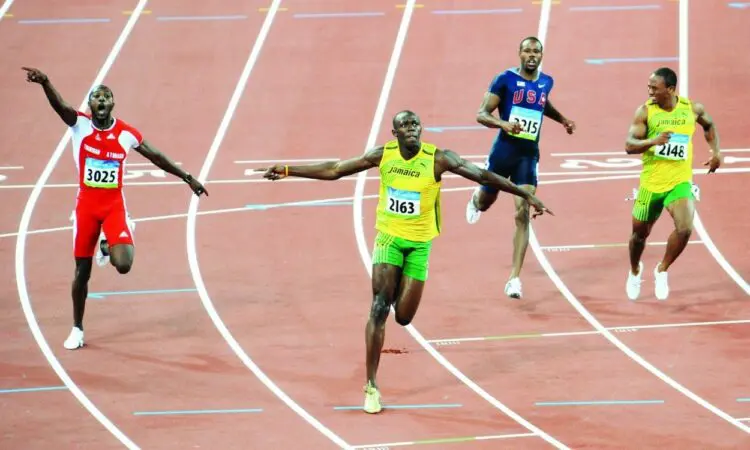
Not long after the conversation wraps up, Fraser-Pryce will bring the curtain down on another extraordinary Jamaican sprinting career, while Oblique Seville will become the first man from the Caribbean nation to become world 100m champion since... well, I think you know the answer to that one.
The hope is that we are about to see more of Bolt around and, judging by the normal daily routine he described that involved “just chilling”, the occasional gym workout and being “into Lego”, it seems he has time to spare.
There will certainly be a visit to the 2027 world championships, in Beijing – the city in which his life changed forever following the 2008 Olympics where he won three gold medals and set three world records.
“I’m excited because I get to bring my kids and I can tell them: ‘Listen, this is where it all happened. I’ve shown my kids videos and stuff like that,” he says, referring to five-year-old daughter, Olympia Lightning Bolt, and four-year-old twin sons, Saint Leo and Thunder Bolt. "They’ll be six and seven, and they’ll kind of understand the moment, and I can explain to them what their dad has done over the years.”
There are millions who don’t need to be told.
“When I was competing, I was working to break the benchmark so, now that I've retired, it's a great feeling to know that I'm the benchmark if you want to be the best or you want to be a legend,” he says. “I wanted to set high standards. And I did.”