Tom McNab: athletics' great all-rounder, dies aged 92

AW pays tribute to the National Coach who devised the Five Star Award scheme for a generation of schoolchildren, advised the actors in Oscar-winning movie Chariots of Fire and was a best-selling author to boot.
Few people in British athletics have enjoyed such a rich and varied life as Tom McNab. A Scottish triple jump champion in his youth, he went on to become one of the famed National Coaches in the 1960s, technical director of Chariots of Fire and best-selling author.
An incredible athletics enthusiast with a great love of the sport's history and coaching, he was a prolific contributor to AW's columns over the years. When he wasn't writing, his distinctive booming voice could be heard on tracks around the nation for many years, advising athletes like Greg Rutherford and Daley Thompson, or putting the world to rights with his great friends and fellow National Coaches Wilf Paish and John Anderson.
In the late 1960s he collaborated with another regular AW writer, Tony Ward, to create the British Athletics League. McNab was also the brains behind the Five Star Award scheme which was hugely popular for a generation of youngsters growing up in the 1970s and 1980s. Indeed, McNab would often joke that many kids' tracksuits during that period were held together by the Five Star Award badges that were sewn into the cotton.
McNab remained hugely active in older age and in great shape, playing tennis and lifting weights into his 80s, but sadly died this week aged 92.
An energetic and restless character, he left his fingerprints on many different corners of the sport. He was a national champion, an Olympic team coach and the man who helped turn a young Thompson toward the decathlon. Outside athletics, he was the fitness advisor behind England's run to the 1991 Rugby World Cup final and made a big impact in the world of bobsleigh.
Born in Glasgow on December 16, 1933 and educated at Whitehill Secondary School, McNab trained as a PE teacher at Jordanhill College before National Service in the RAF, where he reached the rank of Flying Officer. He was a fine athlete himself: a triple jumper with Shettleston Harriers and later Victoria Park AAC, winning the Scottish senior title five times and setting a national record of 14.58m in Glasgow in 1958. Decades later, well into his sixties, he returned to competitive athletics in the hammer, still collecting national medals in his age group, although he often played down his own talent in self-deprecating fashion.
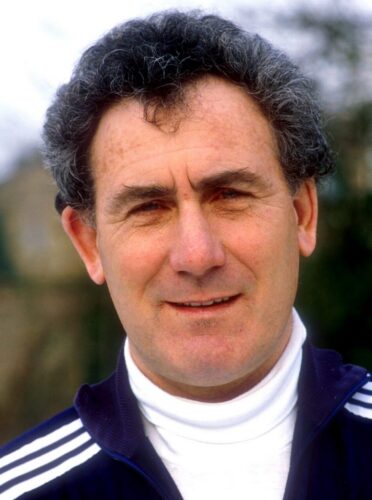
It was as a coach, though, that McNab first made his name nationally. He became National Athletics Coach for the South of England in 1963 – a major role at the time in the sport – and two of his early creations would go on to shape the sport for a generation. In 1966 he established the national junior decathlon programme, through which he began working with a teenage Thompson — a relationship that helped set Thompson on the road to two Olympic decathlon golds.
That same year McNab devised the Five Star Award scheme, a beautifully simple system of school athletics badges that introduced technical events such as hurdling and jumping to children who might never otherwise have tried them; over the following decades it reached tens of millions of young people and became one of the most successful grassroots initiatives British sport has produced. Not surprisingly, in later years, he was deeply and vocally critical of subsequent young athletes' schemes such as the Shine Awards and Star:Track in the run-up to the London 2012 Olympics.

McNab served as one of Britain's Olympic athletics coaches at both the 1972 Munich and 1976 Montreal Games, and his technical books from the period — including Modern Schools Athletics (1966), Triple Jump (1968) and Decathlon (1972) — became standard texts for a generation of coaches. He later broadened his focus well beyond athletics: as fitness advisor to the Rugby Football Union from 1987 to 1992, he helped prepare England for the inaugural Rugby World Cup and their run to the final of the 1991 tournament, work for which he was named British Coach of the Year. He went on to serve as Performance Director for British Bobsleigh, advised Chelsea FC and in 2004 produced an influential report on English amateur boxing. Athletics was McNab's first and true love but he recognised that 'athletic principles' were at the core of many other sports.
McNab was one of only three British coaches to receive the Geoff Dyson Award, given for a sustained and significant contribution to coaching in the UK, alongside Maeve Kyle and Frank Dick. He had earlier been awarded a Winston Churchill Fellowship in 1967, and served as an Olympic historian to the IOC from 1976.
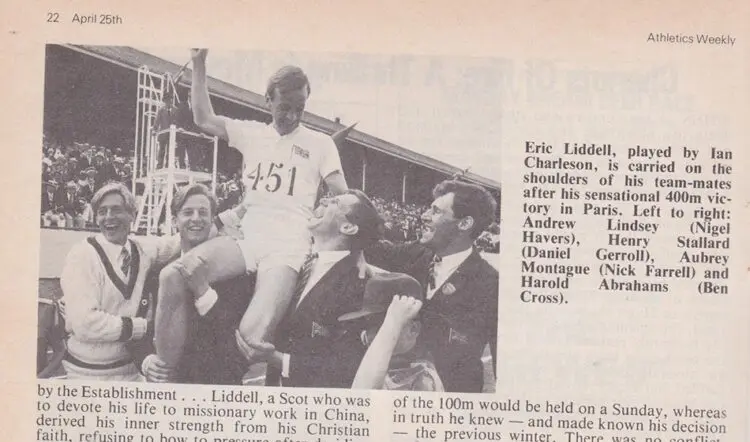
It was his historical knowledge of the sport, as much as his coaching pedigree, that led producer David Puttnam to recruit McNab as technical director and athletics consultant on Chariots of Fire. He put would-be leads Ben Cross and Ian Charleson through their paces on a freezing Putney track and it was McNab who suggested reshaping Nigel Havers' aristocratic hurdler character — inspired by Lord Burghley and the champagne-glasses-on-the-hurdles training routine associated with Olympic medallist Don Finlay. The film, of course, won four Oscars, including Best Picture. McNab later worked as a consultant or writer on several other athletics-themed productions, including the 1984 television film The First Olympics: Athens 1896.
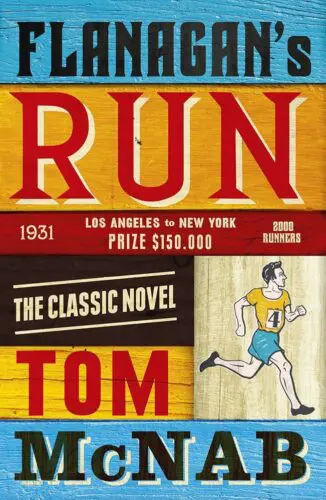
Alongside his coaching, McNab built a substantial career as a novelist and journalist, writing for most of the British broadsheet newspapers. His 1982 novel Flanagan's Run, about a transcontinental foot race, won the Scottish Novel of the Year award, topped bestseller lists and was translated into 16 languages; Miramax bought the film rights and McNab was engaged by Harvey Weinstein to write the screenplay. Further novels, including Rings of Sand (1984) and The Fast Men (1986) — billed as the first sports-western — followed, alongside technical and historical works such as The Complete Book of Track & Field and, with Peter Lovesey, The Guide to British Track and Field Literature.
McNab settled in St Albans, where he founded a 300-member athletics club in 1990 and remained an active presence in the local sporting community for decades. Indeed, in addition to bumping into him at multiple meetings such as the English Schools and national championships, AW was once invited to visit his home in St Albans where we spent the afternoon talking about the history of the sport and throwing ideas around in the never-ending quest to improve the quality of AW's pages.
He continued coaching well into his 70s and in 2005 he helped turn an unknown club athlete named Greg Rutherford into the world's leading junior long jumper — a reminder that, whatever else he was doing, McNab never really stopped being a coach.
He is remembered by those who knew him as a generous, endlessly curious figure: as comfortable discussing the training methods of Victorian professional "peds" as he was analysing a modern decathlete's javelin technique and always willing to pass on what he knew to the next generation of coaches, writers and athletes.