Tigist Assefa retains her London crown with another world record

Ethiopian sees off the challenge of Hellen Obiri to break her own women's-only marathon mark with 2:15:41.
On a truly historic day for distance running, Tigist Assefa emerged triumphant at the London Marathon on Sunday morning (April 26) for the second year in a row, breaking her own women’s-only world record by nine seconds with a run of 2:15:41.
The Ethiopian’s surge as she approached the final turn on to The Mall saw her win a fascinating battle with the Kenyan duo of Hellen Obiri, who clocked a big personal best of 2:15:53 on her London debut, and 2021 winner Joyciline Jepkosgei (2:15:55).
Assefa has never finished outside of the top two during her marathon career but, while there have been record-breaking highs, she has also missed out on major titles when the races have come down to a two-way battle. Sifan Hassan pipped her to the Olympic crown in Paris, for example, while Peres Jepchirchir beat her to the world title in Tokyo last summer by the finest of margins.
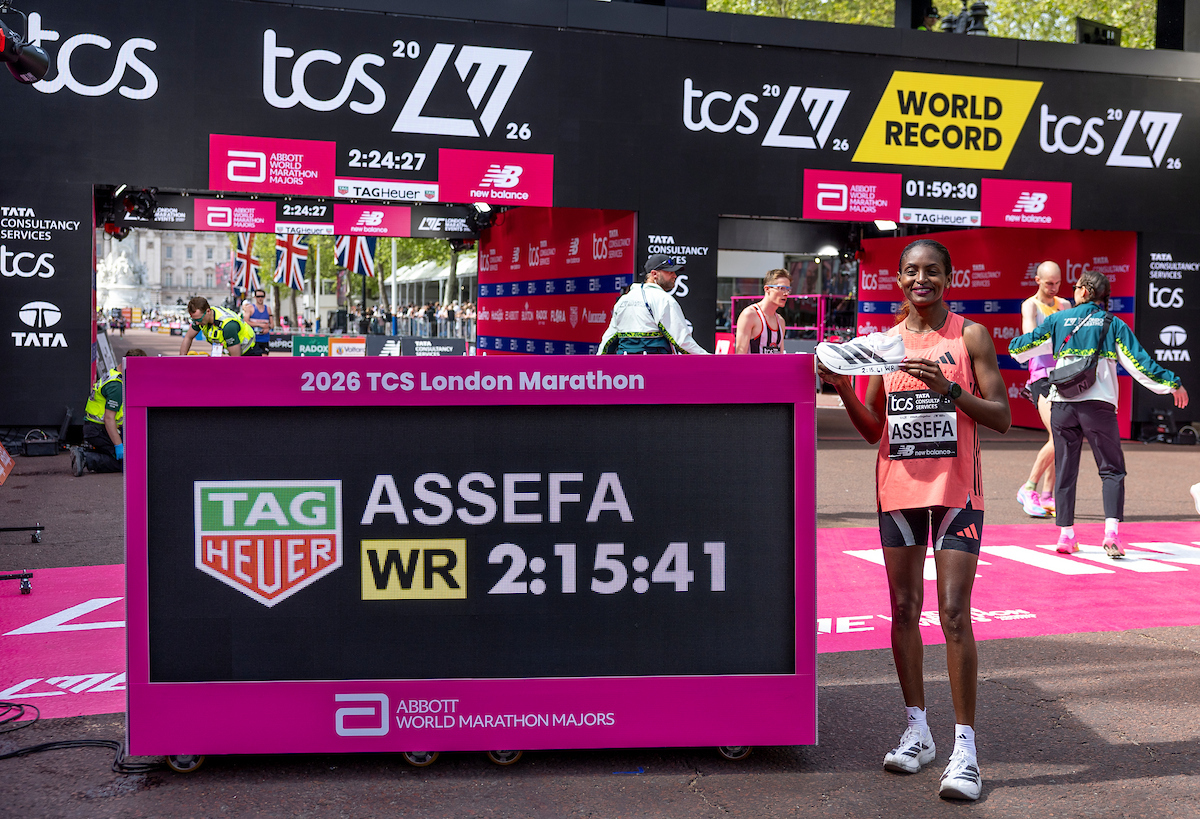
In London, Assefa had the fiercest of opposition to contend with once again. London debutant Obiri, two-time winner of Boston and New York marathons, has been a formidable force for many years and over many events. She has won a 3000m world title indoors, two world 5000m gold medals outdoors on the track, not to mention two Olympic silver medals and a world cross country victory for good measure.
Meanwhile, Jepkosgei’s lowest London finish in her previous four attempts had been third and she possesses a marathon personal best of 2:14:00 from Valencia last December.
With Jepchirchir and Hassan both having withdrawn in the lead-up to London through injury, it was expected that the battle for honours would be waged between Assefa, Obiri and Jepkosgei – and so it proved. After the opening 15km, when only Kenya’s Catherine Amanang’ole did her best to hang on to their speedy coat tails, it was that trio who surged away and set up a superb contest.
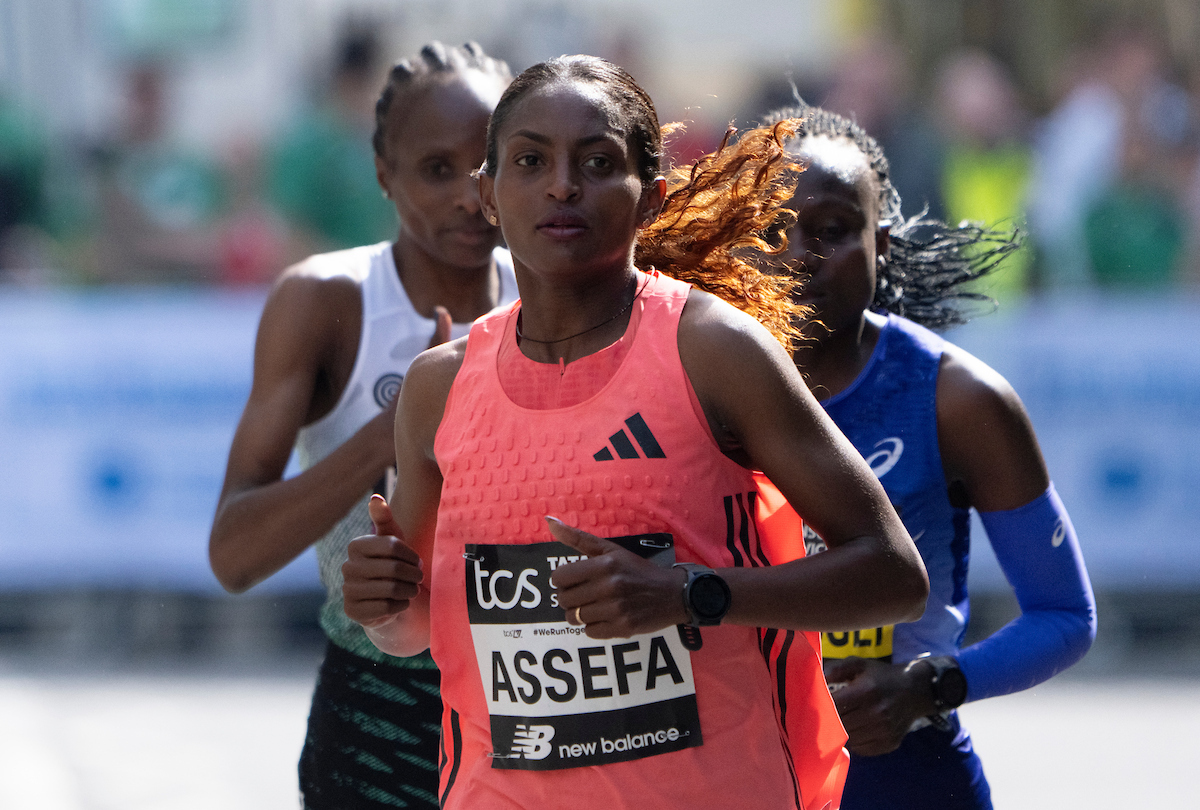
There was no secret to the fact that Assefa, the third-fastest woman in history with 2:11:53 from Berlin three years ago, was targeting her women’s-only mark and the opening stages were fast. Very fast. The first 5km was covered in 15:39, and the second in 15:24 – at that point putting the leaders on schedule for a finishing time of 2:10:58.
While that pace didn’t last in the bright sunshine, the leaders were very much ahead of schedule as they hit the halfway point – the only slight barrier to their progress having come at the 20km drinks station when Obiri was almost sent tumbling by one of the pacemakers cutting in front of her to grab a bottle.
While they had planned to reach 13.1 miles in 67:30, instead they went through in 66:12 - meaning a projected time of 2:12:24. Was it too fast, though?
“I came into the race wanting to beat my own record and I knew it was in good shape, said Assefa. “I was aware that [early pace] was very fast but after that it slowed, I felt very good and I just concentrated on winning the race.”
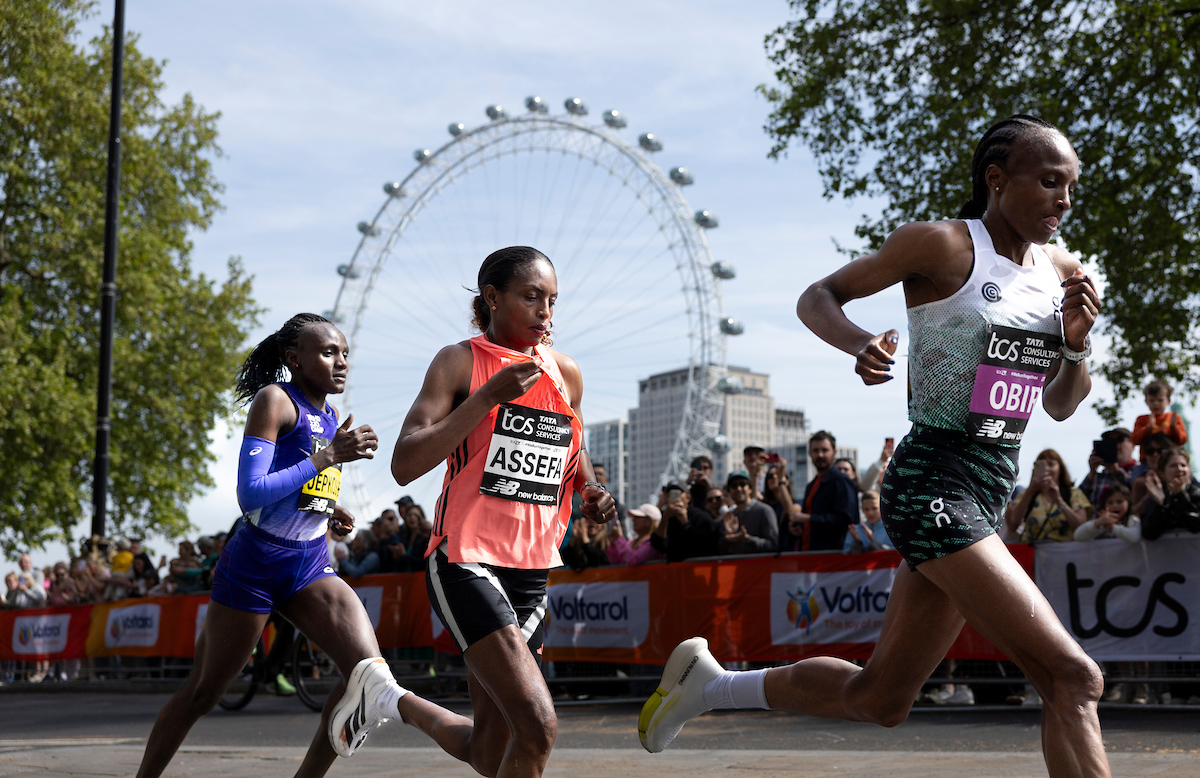
It was around mile 17 that the pacemakers stepped away and left the leading trio to it. Assefa seemed caught in two minds, looking around to double check on what her rivals were doing. Would she make the long break for home or hold on to rely on her well-known finishing speed?
She decided on the latter, a move that represented a gamble given Obiri’s impressive record when racing comes more down to strength of will and becomes about tactics rather than all-out speed.
Concentration levels seemed to have dipped somewhat at the 30km point, too, when Assefa chose not to pick up her drinks bottle, while Obiri and Jepkosgei weren’t exactly smooth in collecting their fuel.
Obiri was the first to show her hand and decided to take charge, going to the front with around 6km to go and trying to force the pace, surging and testing her opponents as they went. Her final effort to break free came on Birdcage Walk, with around 800m left, but that push only took her fractionally clear and, as it turned out, Assefa was biding her time to strike.
“I just waited until my moment to push for the line,” said Assefa and she did just that as she approaching that famous turn in front of Buckingham Palace. By the time she had rounded that bend she was free and clear – able to enjoy the closing metres and a hard-earned victory.
READ MORE: Sabastian Sawe's road to success
After Assefa's 2:15:50 in 2025 and Jepchirchir's win in 2:16:16 in 2024, it was the third successive year that the women's only mark had fallen in London.
Behind them, Ethiopia's Degitu Azimeraw was fourth with 2:19:13, while Amanang’ole finished fifth in 2:21:20 and Eunice Chebichii Chumba of Bahrain was sixth in 2:23:44.
Eilish McColgan was the first British athlete home, finishing in seventh place with a time of 2:24:51 that was 26 seconds outside of her Scottish record of 2:24:25 from 12 months ago.
World bronze medallist Julia Paternain, who runs for Uruguay and grew up in the UK, was eighth in 2:25:47, with Britain’s Rose Harvey ninth in 2:26:14. Louise Small completed the British top three in 2:28:29 in 11th spot, with Jess Warner-Judd 12th in 2:29:28.