Verity Ockenden's recovery vehicle

The international distance runner writes about the approaches she took, and the lessons she learned, during an injury comeback that was challenging both physically and psychologically.
It’s easier to write this now, following a successful return to the very extroverted world of racing through city streets for all to see, but the comeback to this point following four months of injury rehabilitation has felt devastatingly insular.
We often acknowledge the pressure of standing on a start line knowing that it’s all down to us – and us alone – in that moment, but we forget the pressure of knowing that the only person who can do all of the work to get back on that start line is also just us.
It takes a lot more discipline, belief and willpower to stick out a lengthy rehabilitation programme than it does to spring out of the door feeling fit and fabulous. Getting back to competition can feel like an insurmountable task, with the finish line seemingly out of sight.
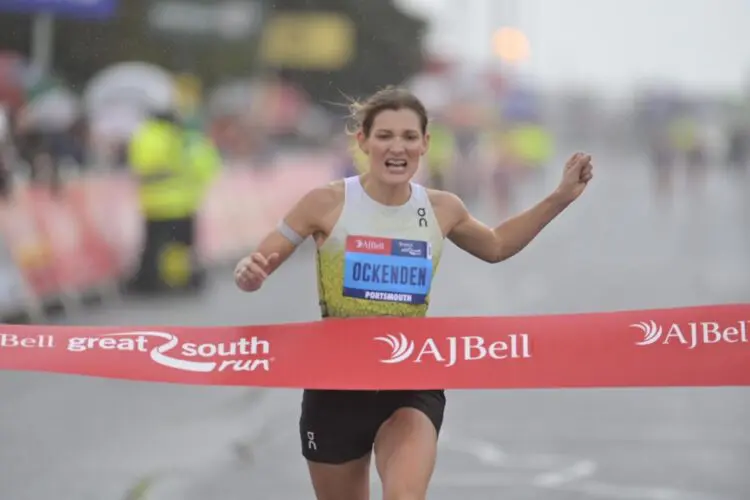
When I crossed the finish line at the Great South Run, my first race back after recovering from a fractured fibula, it felt like the conclusion of so much more than just that race. It marked the end of an emotionally exhausting chapter in which most of the worst things that were said about me were things I had invented myself, and in the end it was only myself that I needed to prove wrong by winning. The biggest battle of it all was getting out of my own head.
Put simply, all I needed to do during my comeback was to do the training, which would build the fitness, and to do the race, which would banish the thoughts. It wasn’t simple, though, because the thoughts made it so much harder than usual to do the training. It was a vicious cycle.
I felt hyper-critical of my body, I didn’t want to slow my training partners down and I definitely didn’t want to show anybody how badly I was handling the whole thing. I felt unprofessional, and even though the image of the perfect professional athlete that I’d created in my head just doesn’t exist, I compared myself to it constantly.
In the end, the thing that helped to get me through it was realising that if I couldn’t banish those kinds of thoughts, I could at least drown them out where possible… and that there was actually a whole community of people who knew exactly how I felt out there and were willing to help me if I would just let them.
After a particularly bad day, I called my coach and we had a long conversation about how to get back to the most important aspect of running, the place from which everything else stems: enjoyment. I was allowed to quit altogether if I wanted to, if running wasn’t something I could enjoy any more, but I was also allowed to go and do whatever form of running that I felt like that week. I settled on the idea of going down to the track and just joining in with whatever happened to be going on, and it was revolutionary. I felt like the child who first showed up at a Poole Runners club night again.
I had no idea what was going on, but I just jumped in the pack and ran until the pack stopped, and started when they started again. I lost all track of pace, distance or rep number. I couldn’t even tell you what the session was. Forget the watch and just run. This was lesson one.
After plucking up the courage to answer honestly when my running pals asked me how I was doing, they quietly leaned in to creating more opportunities for me to let them carry me along and forget myself for a bit. I threw my usual morning run schedule out of the window and prioritised waiting for them to finish work so that we could all run together in the evenings instead.
I’d often risk getting dropped as they churned through the miles but, since I didn’t know the route, I’d focus solely on keeping up which was honest work and required just enough focus to stop me from doing any actual thinking.
We went on long runs that weren designed to be fun. We zig-zagged through vineyards and jumped gates, hauled ourselves up hills and across riverbeds, and capped it all off with a stop at the bakery. It didn’t really matter what I was doing, as long as I was doing something, and that flexibility freed me from my own expectations. This was lesson two.
The accountability I maintained to show up to meet people as a good friend became what got me out of the door, and I forgot about the kind of accountability I had worried that I didn’t possess when I felt unmotivated to go out on solo runs. I had thought this meant maybe I just didn’t have the kind of discipline that it takes to be competitive but, honestly, who can blame me for not enjoying running alone when I had been being such unpleasant company for myself?
Little by little, I crowded out the mean voice in my head with other real conversations that were always full of kindness and understanding, and before I knew it I was getting fitter, just by doing something with my friends.
When I did find myself heavy-legged and struggling to accept it on the days that I ran alone, I called my Mum, she took my mind off the sensations, and the miles passed faster. When I came home and it was time to recover, I switched my ruminative Instagram scrolling for various podcasts that shifted my mood from comparison to inclusion, from feeling left out to feeling understood through listening to conversations that resonated with my experiences. Feeling lonely was a choice and I chose to embrace sharing instead. This was the third lesson.
It all took time, and I’m acutely aware that I wasted so much energy through psychological stress that could have been better spent on healing and training. But the final lesson is that there is no point in looking back at what you wish you had done differently or better. The psychological impact of getting injured is an unavoidable part of the sport, and even the best athletes in the world all have their own ugly wrestling matches with it behind closed doors. There is no going around it, you just have to keep going when you’re going through it.