Format flaws, Nairobi and the fairness question — Ultimate Championship raises big issues

The inaugural Ultimate Championship delivered outstanding racing but with a flawed format, argues Steve Smythe — and this week's news that Nairobi will host the 2029 World Championships revives an old debate about fairness at altitude.
The World Athletics Ultimate Championship was a genuine success in Budapest — better racing than Brussels the week before and the huge prize money gave it an edge the Diamond League final couldn't match. But the name invites an obvious question: isn't the Olympic title still athletics' true "ultimate"? A season-closing invitational, however well-funded, sits closer in spirit to the Diamond League final it replaced than to a global championship.
The missing events problem
No shot put, no steeplechase, no discus, no women's hammer, no men's triple jump. Adding all of those within the broadcast window may not have been realistic, but scheduling them earlier in the day — rather than not at all — would have been fairer to those athletes, several of them Olympic or world champions with no lesser claim to a share of the money on offer.
It's also worth noting how much tougher qualification has become for the events that did make the cut. World Athletics has sharply raised its automatic entry standards for the next World Championships cycle — the men's 800m standard has jumped to 1:43.00, the 1500m to 3:30.00 and the 5000m to 12:50.00 — part of a deliberate push to make the world rankings, rather than the standard, the main route into global finals. Only a handful of men hit those marks in 2026, and some of those did so only over the mile or in a straight 1500m rather than in championship-style racing.
There's also an inconsistency in how the programme was trimmed. Field events were cut to finals of eight, but track events kept their heats and semi-finals intact. If the sub-800m rounds added little to the spectacle, cutting them would have freed up time for more events and, in turn, spread more money to more athletes. And if throws and jumps can be reduced to four rounds — two, in some cases — there's a case for shortening the track programme too: a 3000m instead of a 5000m, a 300m, 600m and 1000m instead of 400m, 800m and 1500m. If World Athletics wants to be genuinely radical about growing the audience, look at what track cycling does with an elimination race or a 1000m time trial.
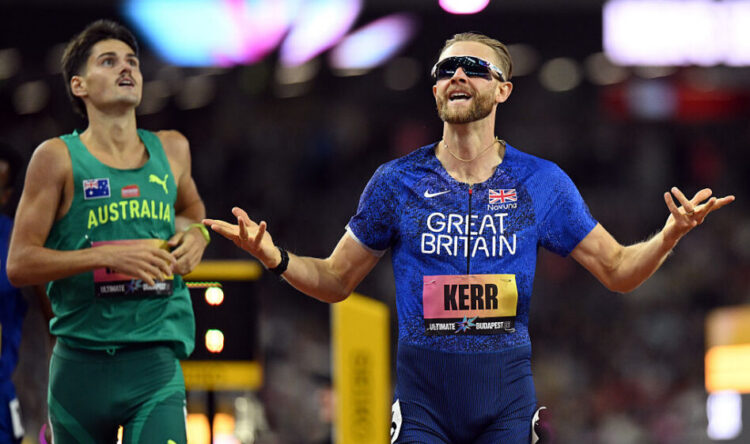
Kerr's case for world No.1
Whatever the format debate, the Ultimate Championship reinforced just how good a year Josh Kerr has had. He won every 1500m, mile and indoor 3000m race he contested in 2026 — his only defeats came over 800m and in an indoor two miles — and the season now includes a mile world record (3:42.66, also a British 1500m record equivalent), Commonwealth Games mile gold, the world indoor 3000m title and now the Ultimate Championship crown. That puts him on a different level to any other British athlete — arguably any British sportsperson — in 2026.
Amy Hunt deserves real credit too — she's Europe's outstanding current female sprinter and her 22.10 for 200m in Budapest was a fine run. But by World Athletics' own rankings she sits 11th in the world at 200m and only 25th= at 100m this year. Kerr, by contrast, is a clear world No.1. The gap in how each is talked about domestically doesn't reflect that gap in world standing.
Nairobi, altitude and a live question
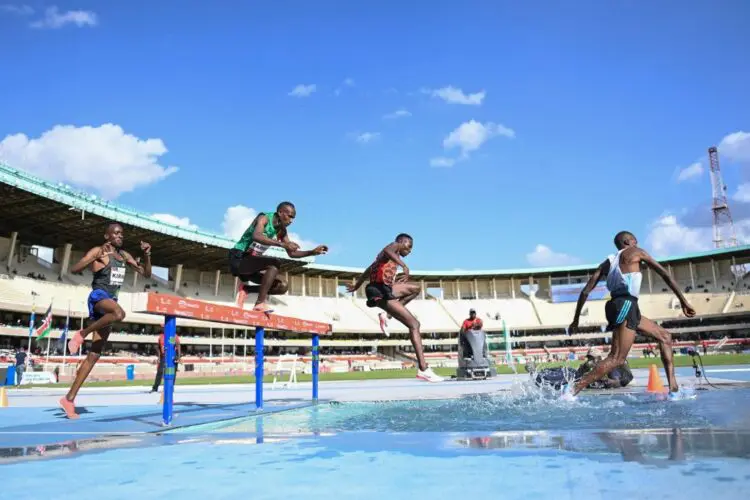
World Athletics confirmed on Tuesday, in Budapest, that Nairobi will host the 2029 World Championships — the first time the championships have been held in Africa — with Munich taking 2031. It's a landmark decision and Kasarani sits at around 1700m above sea level.
That revives a question athletics hasn't had to answer at global-championship level in a long time: what happens to fairness in the middle- and long-distance events at altitude? The comparison that's usually reached for is the 1968 Mexico City Olympics, where altitude-adapted athletes had a clear edge over sea-level rivals in everything from 800m upwards — Jim Ryun, the world record-holder at 1500m and the mile, finished three seconds behind Kip Keino, a result many felt would have been reversed at sea level. Ron Clarke suffered similarly in the 10,000m. Kenyan and East African athletes already have the physiological benefit of being raised at altitude; hosting the championships there for the first time will only widen that gap for European and sea-level-based distance runners. It's a debate World Athletics will need to address seriously before 2029, not dismiss as sour grapes from sea-level nations.
Given Kenya's appalling doping record of recent years and financial scandals, I would say there is also a better case for Kenya to be banned from competing in a World Championships than there is for hosting one.
One more thing
On Kerr's point about identical kit: agreed, nobody wants a final lining up in eight copies of the same vest. But is there a halfway house — sponsor-made kit for each athlete, so Brooks makes Kerr's GB vest with both GB and Brooks branding on it? Sponsors get their name on the track, athletes keep their national identity and multiple manufacturers aren't racing each other over template designs.