Mud, money and medals: the fight for cross-country’s future

Is British athletics’ winter sport in decline? We investigate a corner of the sport being squeezed into an ever-shorter season, stripped of its TV audience and watching its oldest domestic series shrink — even as grassroots leagues thrive and Glasgow prepares to host the European Championships.
Something odd has happened to the British cross-country season. It used to run from September through to the World Cross Country Championships in late March, a six-month slog through mud, frost and the occasional blizzard. Now, according to the people who run it, coach in it and used to race in it, the serious business is largely over by Christmas.
“That ship has sailed,” says Chris Jones, endurance strategy manager at UK Athletics, of the old full-length campaign. “It has sailed because there’s more of a different offer in athletics at a global level.”
Eamonn Martin, the last British man to win the London Marathon and now secretary and team manager at the English Cross Country Association (ECCA), goes further. “Personally, I’d like to see no cross-country in March,” he says.
It is not, on the face of it, a healthy diagnosis. The UK Cross Challenge, which launched in 1997 with six fixtures and £45,000 in prize money from Reebok, now runs to just three meetings and a fraction of that sum in real terms. The Great Edinburgh International, once a BBC One fixture watched by well over a million people, has not been held since 2019 – which means the only cross-country likely to reach British television screens this winter is the European Championships in Belgrade in December, probably tucked away on the BBC website and iPlayer rather than terrestrial TV.
And yet, set against that is a run of medals at that same European Championships that shows no sign of stopping, a domestic series that has found sponsorship again, a genuine shot at Winter Olympic status and a home European Championships arriving in Glasgow in 2027. Just as significantly, there is a whole tier of the sport – the leagues, the counties, the schools – that barely recognises the “season’s over by Christmas” narrative at all.

The vanishing winter
Ask anyone with a long memory of the sport what has changed most and the answer comes back the same way: the calendar has concertinaed. Jones traces that to the sheer growth of indoor and road racing.
“If you look at the US collegiate system, [cross-country] starts early in August and finishes quite early as well, prior [to] Christmas,” he says of the American model that increasingly shapes global racing patterns. “The generation of our better athletes now are spending more time towards the road, so the Valencia 10km and what’s happening on the road around that period has become significantly important.”
Martin has been fighting the calendar from the inside for years, trying to drag fixtures earlier into the winter so the sport is not competing with road racing’s spring peak.
“I’ve been proactively banging my head on a brick wall to try and get changes,” he says. “Even at the ECCA, there are only two or three people on the Exec Committee of 12 who are really interested in change. They think the sport’s the same as it was, say, 20, 25 years ago. It is not.”
His frustration is partly with the phrase he hears repeatedly in committee rooms. “I’ve heard it so many times I can’t stand it – ‘if it ain’t broke, don’t fix it’. ‘We’ve always done it like this’,” he says. “Those two rub me the wrong way. And, if we carry on, we’ll just go sliding down the slope to oblivion.”
His preferred fix? Push the national championships and counties forward into December and January, leave March to the leagues, and stop pretending there is still a championship season running into spring.
“I think the national cross-country should be around February 20 or 21,” he says. “If people want to win their local league and run it in March, fine – but I don’t see any kind of championship then.”
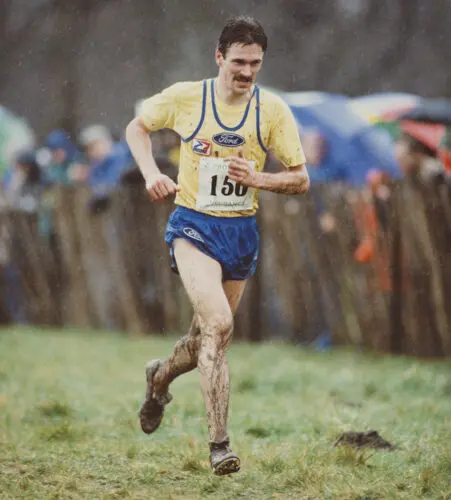
Hayley Yelling, the two-time European cross-country champion and now a British team manager at the event, sees the same shift but from the athlete’s side. “The cross-country season has been squashed,” she says. “It doesn’t mean to say that there aren’t loads of really good cross-country runners and it’s a really good event... it’s more after Christmas where things have changed, with the World Cross moving its date. I definitely think Euro Cross is still quite well supported. But, after that, I don’t know.”
Why do the big names stay away?
It is one of British distance running’s oldest grumbles: the leading names who thrived on cross-country as teenagers tend to vanish from it once they become seniors. Jones partly puts it down to simple biomechanics.
“There’s an element where, as a youngster, you’ll do very well at cross-country,” he says. “Then, as you’re moving up the ranks, the surface and the conditions play a big impact on different athletes’ development. Athletes who are very reactive on a firm surface... don’t need that elastic energy to run really well.”
He recalls a conversation with UKA chief executive Jack Buckner about his own competitive days: “Jack said: ‘Oh yes, I was a prancing pony’. He said it was terrible. So it’s horses for courses.”
The bigger pull, though, is financial and it has only grown stronger since Yelling’s own era. “It’s all changed, hasn’t it?” she says. “Athletes get a salary now – we never got a salary. A little bit of sponsorship, but not a lot, to be fair. The cross-country was quite appealing back in our day because at the Cross Challenge you could win a little bit of prize money and, if you did well there, you’d race abroad and get a little bit of appearance money. But the whole thing has totally changed now.”
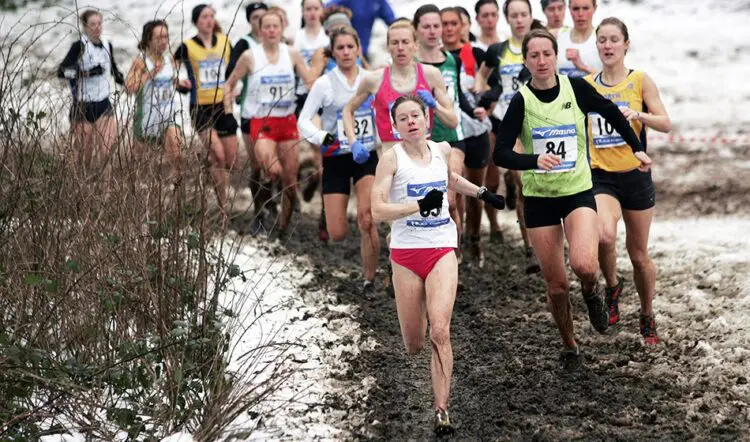
Tim Hutchings, the former world cross-country silver medallist, frames it as a straightforward trade-off against the modern road circuit’s speed. “They know that if they go over to Valencia and put on the super shoes, you are almost guaranteed a PB as soon as you step off the plane because the course is so fast,” he says. “It’s interesting how that is more of an attraction than going to a good old cross-country race and actually getting a vest and representing your area or your country.”
Hutchings also believes the diminishing emphasis on cross-country running is affecting British standards at 5000m and 10,000m on the track. “The 800m and 1500m are very strong, but our standards have fallen at 5000m and 10,000m,” he says, suggesting that this decline is linked to top runners avoiding the mud to race indoors or on the roads.
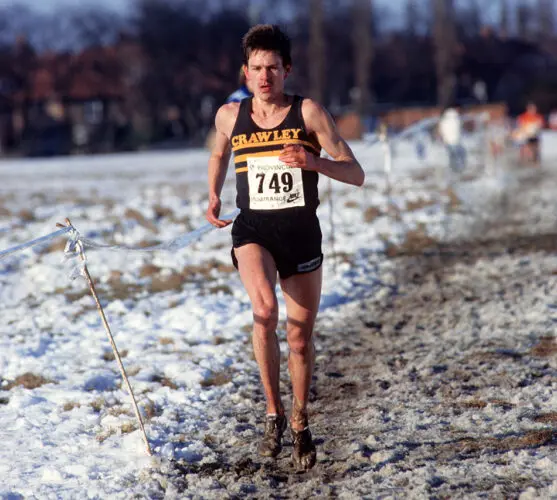
Martin has seen the choice play out directly. Preparing his team for last month’s Belgian CrossCup fixture in Roeselare, he found athletes turning him down in favour of the Valencia Half Marathon on the same weekend.
It is not just international vests losing out to the road. Martin put in a lot of work trying to establish a London International cross-country meeting at Parliament Hill a couple of years ago, only for the project to be derailed by a sponsorship clash before it could properly get going – a reminder that even organisers with ambition and a flagship venue can be undone by the sport’s thin commercial base.

The beauty of cross-country
The sport is sometimes linked to a “punishment” at school, or something that only masochists would enjoy. But Yelling is one of many who extol the virtues of the sport.
“I love the purity of cross-country, because it isn’t time-related, it is all about competition – who’s there on the day. The terrain, it doesn’t really matter. It’s just about who you’re competing with on that day and I feel like that vibe has gone a little bit, when everyone chases the times for the roads.
“It builds your strength, it builds everything. In a way, it builds your competitive spirit a little bit more, because you are competing against other people rather than the clock sometimes. You’re in your moment, aren’t you? You’re in a race vibe, whereas a lot of the time you might have a pacemaker and you’re going for a certain time – it’s all against the clock. Things change, whether it can be massively muddy, waterlogged... and it’s fun! That’s the main thing, especially for young ones coming through. You’ve got to enjoy it.
“It’s really good fun, [it builds a] really good team spirit. We used to have lovely, really good bonds with our cross-country team, because it used to be the same people and really good friendships. I’m still friends with those people now.”

British gold rush
Whatever might be wrong with British cross-country right now, it does not show up in December’s medal table. The European Cross Country Championships remain the one fixture where the nation can be relied upon to dominate and it is an undisputed bright spot in an otherwise gloomy calendar discussion.
“It’s actually one of my favourite competitions without a doubt – and it always has been,” says Jones. “We do punch above our weight. We are successful in this area and it’s in our DNA. It’s brilliant for developing youngsters in a competitive environment and blooding them at the first international. It’s an environment where there’s nowhere to hide.”
He is careful to note that the achievement has become harder to repeat, not easier, since European Athletics reduced counting team places. “That changed when they changed from four counting to three,” Jones says. “It has become harder, there’s no doubt about that, to get those medals.”
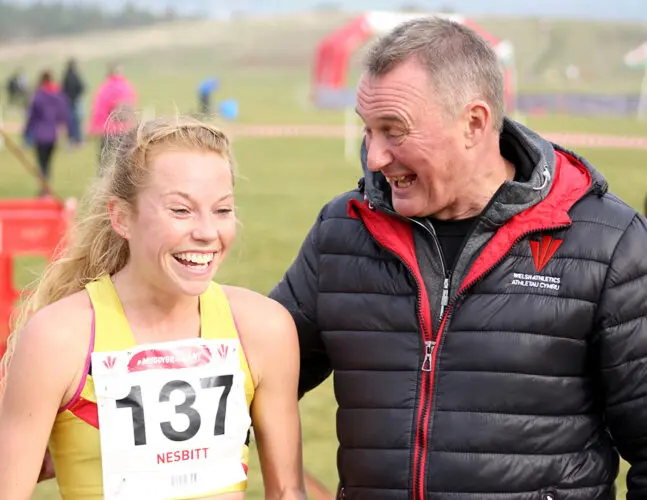
Yelling, who gets a closer view than most as a team manager, describes the excitement and anticipation building through November around the trials.
“There’s a big buzz at this time of year in the run-up to the trials in Liverpool and then whoever qualifies for the championship itself – it just seems to increase in popularity,” she adds.
Unlike the domestic winter calendar, she sees little sign of this particular event losing its pull on athletes. “The Europeans hasn’t really changed much, to be fair. It was always a fairly small-ish field. Athletes generally support it.”
Glasgow calling
That appetite is about to be tested on home soil. European Athletics confirmed in April that Bellahouston Park in Glasgow will host the 33rd SPAR European Cross Country Championships on December 12 next year – the first time Britain has staged the event since Edinburgh in 2003 and only the second time Glasgow has hosted a major cross-country championship since the World Cross visited the same park in 1978.
Buckner said cross-country is “at the heart of athletics in the UK” in confirming the bid, which was delivered jointly with Glasgow Life, VisitScotland and the events agency Athletic Ventures. Cherry Alexander, European Athletics’ vice-president, who worked on the inaugural European Cross Country Championships in Alnwick in 1994, described the return to Britain as “a very special full circle”.
For Jones, the hope is that a championship on home turf will finally tempt some of the bigger senior names who currently give cross-country a wide berth to get involved. “This is superb news for the sport in this country,” he says and suggests the target is not just the individual races but the mixed relay, where Britain’s strength in depth across several events gives the team a good shot at gold if those higher-profile names can be persuaded to take part.
“I expect that really to be a very strong, challenging relay for that medal zone,” he adds. “We’re actually trying to build that from now to put it out there as a priority and attract the bigger names in.”
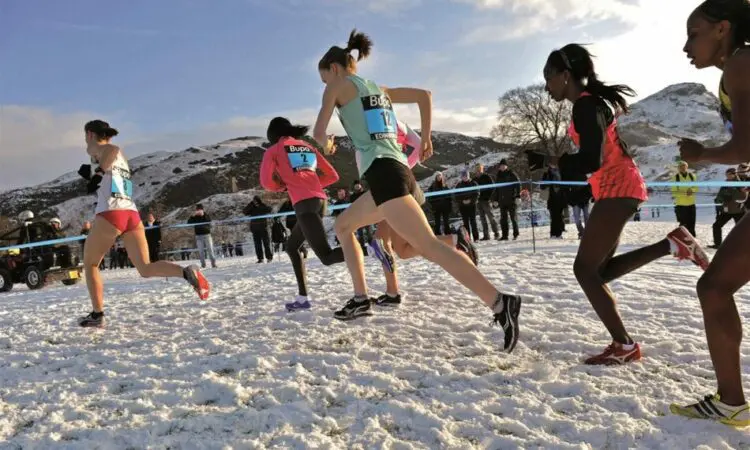
Edinburgh XC RIP
If there is one loss that everybody interviewed mentions with genuine regret, it is the Great Edinburgh International, which drew live BBC One audiences in the hundreds of thousands at its peak before the event moved to Stirling and then disappeared from the calendar entirely after 2019.
“I was a huge fan of Edinburgh,” says Jones. “I thought Edinburgh, after the European Cross Country Championships, just closed off and it was a really high-quality event. That to me would be the natural sort of sign-off at that point. It’s a shame that we’ve lost that, no doubt. I’m not sure [the brief move to Stirling] was quite the same, was it? No, not at all.”
Before Edinburgh, the same televised cross-country international was held in the north-east of England at venues such as Consett, Durham and Gateshead with athletes like Paula Radcliffe involved. But, again, those days are long gone.
Yelling is equally blunt about what was lost. “Edinburgh’s gone. That was a real bonus, because it was a really good chance for the sport to get on the telly,” she says. “It’s hard to think of a solution, really. It’s not easy to get a sport back on the telly.”

A game-changer on snow and ice?
One development could, in theory, transform the finances of British cross-country overnight: Winter Olympic inclusion. It has been talked about for two decades without ever quite arriving, but currently looks more likely than ever, largely due to World Athletics president Seb Coe giving it strong support.
“First of all, I think that would be a game-changer,” says Jones. “The reason why it would be a game-changer is that it would then become investable from UK Sport. Everything would be elevated by that one decision.”
He adds that it could also offer a lifeline to endurance athletes weighing up a move to the marathon. “I think we’d see cross-country standards go up,” he says. “I think people would move up, performance levels would move up at a world level, definitely.”
Hutchings, who has covered the sport as a broadcaster for years, points to the sheer scale of the sport worldwide as the case for inclusion. “We’re talking 50 million [people] do cross-country around the planet,” he says. “You could replace almost any other [athletics event] with the numbers.”
Yelling simply wishes it had happened sooner. “It would be amazing if we got on to the Olympics, wouldn’t it? I always wished it [had happened] when I was running.”
The reality, for now, is less encouraging. The International Olympic Committee ruled out adding “crossover” sports to the 2030 Winter Games in the French Alps, with IOC president Kirsty Coventry stating bluntly: “For 2030, we have taken the decision, no crossover sports, no summer sports... it will only be snow and ice.”
The 2034 Games in Salt Lake City remain, at least technically, open.
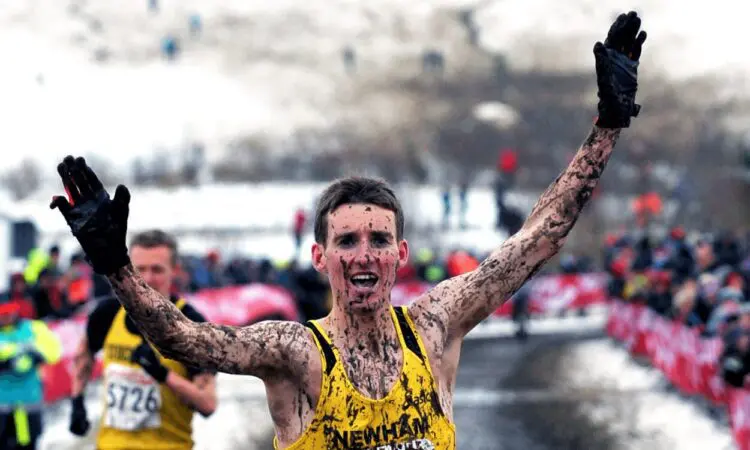
Club runners at grassroots level
For all the talk of a shrinking elite calendar, there is a parallel version of British cross-country that looks nothing like decline – and several of those closest to it argue the “season’s over by December” narrative simply does not apply to the sport most people actually compete in.
Jon Brown, the 1996 European cross-country champion and twice fourth in the Olympic marathon, puts his finger on the problem with measuring the sport by its elite end alone. “I guess the question is: ‘How do we measure the health of the sport?’” he says. “Participation numbers at English Schools and county, regional and national championship events? Success at European level is important for the UK federation, but won’t give a true picture of what’s happening at grassroots level.”

Martin Duff, AW’s long-serving contributor, makes the same case forcefully. “I don’t think that the cross-country season wraps up in December,” he says. “I think that maybe there are two camps of runners with respect to the cross-country season. One is composed of the potential elite runners whose sole aim is to represent their country at the Euros, while the other – and much bigger – one is the great mass of club runners who enjoy the leagues.”
Duff, who first raced cross-country himself back in 1957, points out that the county, area, inter-county and national championships have always run from January to March, and that anyone who has attended the English Schools Championships or the SIAB Schools International in recent years would argue the season runs into late March, not December.
“On the leagues, there are six recommended dates in the calendar, three before Christmas and three afterwards and the main leagues – such as Birmingham, Met, Manchester, Chiltern, Surrey and NE Harrier, to name just a few – attract thousands to each of their fixtures,” he says. “I wonder how many of the former internationals who suggest that the season ends in December actually follow the great mass of cross-country runners every week.”

The leagues and the national championships are also where the next generation of internationals is produced in the first place. “Don’t forget, it is the clubs and their runners in the leagues who supply the athletes to compete in the major pre-Christmas events like the Mansfield cross-country relays, the Cross Challenge and the Euros,” Duff says.
That grassroots energy is also where some of the sport’s more inventive recent ideas have come from. Martin has spent the past few years trying to modernise Mansfield, home of the national cross-country relays, adding a mixed relay that drew 58 entries from four-runner teams in its first year without, he stresses, taking entries away from the existing senior races.
He has also pushed for more spectacle: club gazebos lined up along the finishing straight, in the manner of the Cardiff Cross Challenge. “It’s just such a great vision,” he says. “It’s a modern world and people are expecting more. You’ve got to try and keep doing that – keep thinking outside the box, keep trying to improve things.”
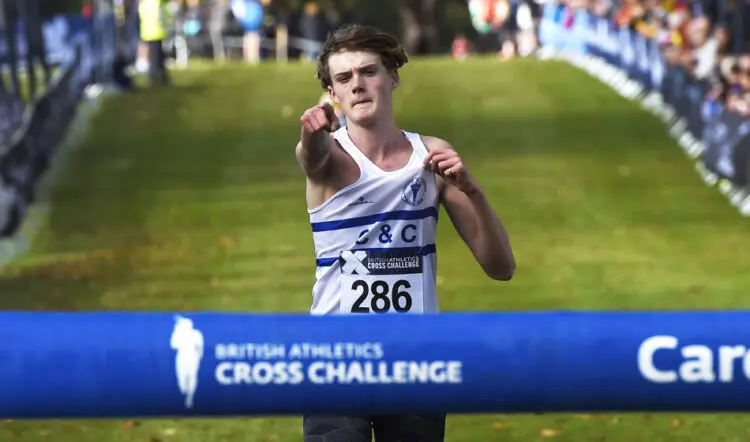
Mixed terrain
What emerges from our interviews is not a single verdict but two overlapping stories. At elite level, the season has genuinely narrowed, prize money has fallen and television coverage has largely disappeared – and those closest to the sport, from UKA’s own endurance strategy manager down, are candid about all three. But underneath that, the leagues, the counties and the schools calendar carry on largely as they always have, feeding exactly the athletes who go on to win Britain’s medals every December.
Glasgow 2027 and the long-shot case for Winter Olympic inclusion offer the clearest paths to changing the elite picture. Whether either arrives in time to matter is, for now, an open question.
As Martin puts it: “All is not lost. But change is needed. Mindset is needed. Don’t think it’s the same – it’s not the same sport as it was.”
UKA Cross Challenge – a series that has stood the test of time
The UK Athletics Cross Challenge was launched in the winter of 1997 – an idea first floated in the pages of AW, with the magazine’s former news editor Trevor Frecknall closely involved in both shaping the concept and publicising it in its early years.
In the first winter it was six fixtures with a total prize fund of £45,000, all sponsored by Reebok. Such was its impact, athletes continued calling it the “Reebok Challenge” several years after the shoe brand ended its support.
Almost three decades on, the series is still running – this winter at Cardiff, Liverpool and Nottingham – and has recently found sponsors again after several unbranded years, with SportsShoes.com and Nike coming on board as headline backers. But the numbers tell their own story. Cash prize money across this winter’s three rounds totals around £6300 in senior and under-20 prizes, against roughly £8400 across last winter’s four rounds – a reduction of around 25 per cent in a single year, with under-18, under-16 and under-14 age groups continuing to receive sports vouchers rather than cash. Measured against the original £45,000 pot from 1997, even allowing for inflation, today’s cash prizes represent a small fraction of what Reebok put up at launch.
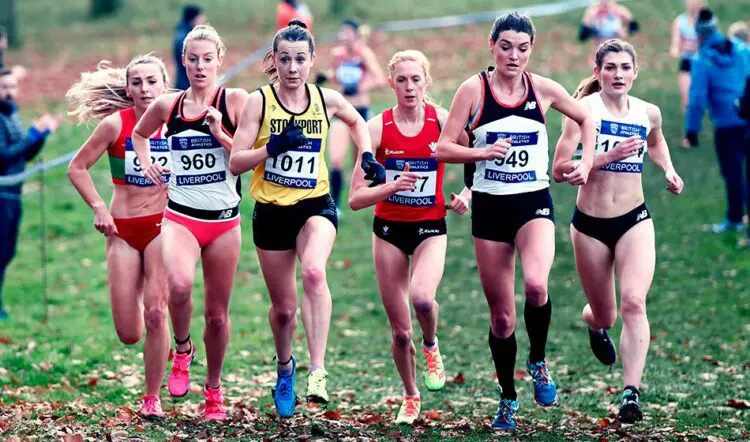
Nobody interviewed for this piece suggested the figures were anything other than a symptom of a wider commercial challenge facing the sport, rather than any lack of effort on the part of current organisers. Asked where the series sits now, Jones was clear that more investment is the ambition rather than the status quo.
“The fabric of the Cross Challenge is really, really important,” he says. “What we really need is a model where we could have three races at that level, maybe more, four races in the future. I do believe investment, more sponsorship, more branding around that probably is the way forward for the Cross Challenge to be elevated to the next level.”
UKA has working groups looking at exactly that over the next three to four years, he adds, with the explicit aim of attracting more international quality into the fields while strengthening the depth of the domestic series underneath it.