Kilian Jornet: “Doing simple things is very hard”

The legendary trail and mountain runner discusses how to approach training, the role of technology and remembering what's important.
Kilian Jornet has time on his hands. Having undergone knee surgery in the latter part of last month, the man known for his feats of endurance and daring in the mountains and on the trails is taking life just a little slower at the moment. It might not surprise you to hear that he doesn’t intend to be completely idle, however.
“I will focus on other things besides aerobic and leg training - rehab, altitude, upper body strength," he says. “And do other things that I don't often have the time for, such as writing and studying.”
There will also be an opportunity for reflection – about what has been working in his approach to training, and what hasn’t. The Catalan will turn 40 next year and has spent over 20 years revolutionising and raising the profile of off-road competition, with numerous victories across the world’s most prestigious and difficult trail races.
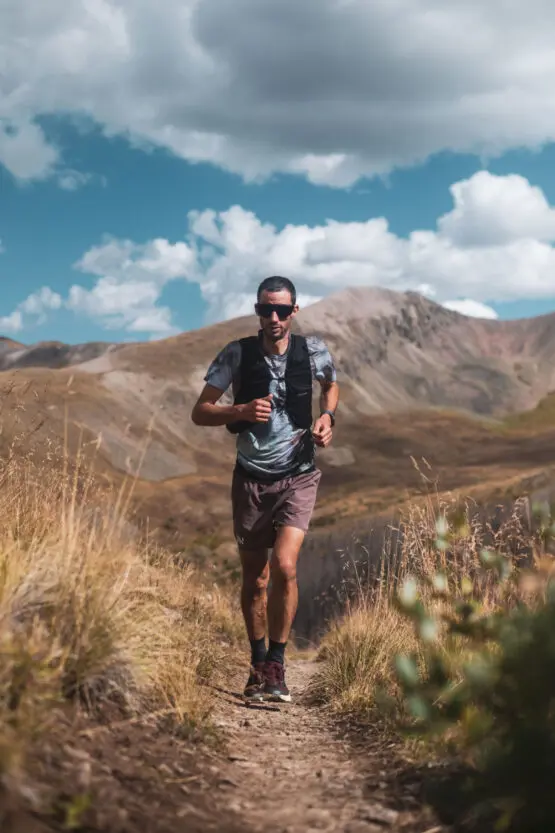
There have been more personal projects, too, such as his double summit of Mount Everest without supplemental oxygen or fixed ropes within the space of a week in 2017 or last year’s States of Elevation – a human-powered journey to link the 72 peaks over 14,000 feet across the United States by foot and bike. That followed 2024’s Alpine Connections, in which he linked all 82 of the Alps' 4000m peaks in 19 days without using motorised vehicles.
Jornet is a man unafraid to mix things up, set himself new goals and test himself in different ways. “It's important to understand that our body is always changing so what worked or didn’t work in the past is different from what can or will not work in the future,” says the father of two who lives in Norway with his wife and fellow international mountain runner Emelie Forsberg. “With the adaptations we get, the response of the same stimuli is different with time, so the stimuli should be different to get more adaptations.”
The man who grew up in the Pyrenees admits his own approach has changed significantly since he first started out.
“In the past I thought more in a mechanistic way – our body is a machine, if we work muscles we will get strength, if we need energy we need to eat,” he says. “But with knowledge and experience I learned that it is a complex interaction between all different systems (metabolic, cardiovascular, neuromuscular, renal, gastrointestinal, microbiota, temperature, oxygen and cognitive). That is not a stimuli/response inside the same system but a multifactorial response.”
To many people, that will all sound incredibly complex. However Jornet insists the key when it comes to training involves the very opposite.
“The principles should be simple,” he says. “Individualisation of the stimuli and load, periodisation (build capacity over a long time, build specificity in the last weeks), continuity (change comes from repetition over years). Align the commitment and the goals.”
In the current age of relentless information, with no shortage of training advice and “wisdom” constantly being shared across social media and the wider online world, remembering the fundamentals can be increasingly difficult. Does Jornet believe, then, that we have managed to overcomplicate what is essentially an extremely simple sport?
“Yes, but doing simple things – have a no-stress life, sleep long, eat clean, train a lot – is very hard,” he says. “It takes time and a lot of commitment, and is a 24/7 lifestyle for many years. We want simple tips that might improve something one per cent and are easy to do – take a supplement, do this specific exercise, do this recovery protocol – because they don't demand real commitment. I think our environment is the most important, what our lifestyle looks like and the people we have around us.”
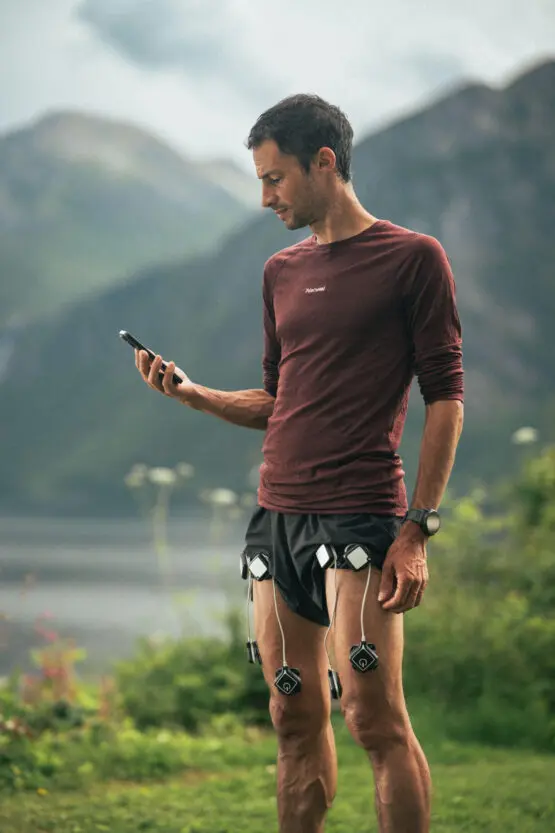
Technology’s role in training has increased down the years, too – and Jornet recently announced a partnership with Compex to support the launch of its new Ultimate EMS range of devices that are designed to stimulate healthy muscles in order to improve or facilitate muscle performance. He is not someone to shy away from incorporating tech into his training regime, but will stop short of allowing it to take over.
“I do embrace and like what technology brings us, to study and learn more but not to be dependent on it,” he adds. “I think it has its place and it's important to have a deeper understanding of our physiology and to be very precise at some moments of the preparation. But the use of technology sometimes means that we rely too much on it and we lose the feeling of our body.
“I think it's great to use tech in your early career to develop a connection between data and feeling, to then be able to rely on feeling and then use tech to be very precise on specific sessions.”
Even with the passing years, Jornet’s appetite to learn more about what he might be capable of seems nothing short of insatiable to the point that, when asked what keeps the inner fire burning after all this time, he appears slightly confused.
“If I’m honest, that's a question I have never understood,” he adds. “I have always been motivated to train, to go to the mountains. [I have never fallen out of love with] running or mountains, but from the other things around competition, such as travel, the fanfare of races, the exposure. But then I just get back to a few weeks of only mountains and running without all of that.”
Living as remote a life as possible doesn’t mean he isn’t paying attention to the wider sporting world, though. Jornet is “inspired” by those who excel in his own field, while he has been a keen observer of the progress being made by the likes of Jakob Ingebrigtsen, Andreas Almgren, Yomif Kejelcha and Sabastian Sawe. And for others who have been similarly inspired by those figures to improve their own performance, what would his parting piece of advice be to them?
“To keep the passion. Consistency is the biggest thing they can do to improve performance, and that comes with passion, to do it because you love it. That can come from social interaction with a group, with the feeling of running, the connection with nature or your body, for performance… but find what makes you love it and keep it that way.”
To find out more about Compex, click here