Believing in miracles and a look back at the Mile of the Century

As the mile returns to the Commonwealth Games for the first time in 60 years, we revisit the legendary Bannister-Landy showdown that helped cement the event's place in athletics folklore.
It is 60 years since the mile was last contested at the Commonwealth Games, Kenya’s Kip Keino defeating England’s Alan Simpson and Ian Studd of New Zealand in Kingston, Jamaica.
But the classic distance will make its return at Scotstoun Stadium this month, replacing the 1500m at the 2026 edition in Glasgow. The inspiration behind the decision lies in the enduring legacy of the showdown between Roger Bannister and John Landy showdown in Vancouver in 1954.
Dubbed the “Miracle Mile”, the eagerly-awaited event was held on the final day of the British Empire and Commonwealth Games in front of a 35,000-strong crowd on August 7. Three months earlier Bannister had become the first sub-four-minute miler with his 3:59.4 in Oxford, with Landy improving the world record to 3:58.0 in Turku little over a month later.
Vancouver saw the two sub-four-minute men go head-to-head amid huge anticipation, for not only was it a clash between a pair of finely matched milers but it was a culture clash between the Oxford University student with his long raking stride, powerful sprint finish and sometimes aloof personality versus the more laid-back Landy whose strength lay in his stamina, not his speed.
Tactically, it was felt the race would see the classic battle of a renowned front-runner trying to draw the sting out of the finish of an athlete who knew his best chance was to sit-and-kick.
As the sun beat down on the athletes on a warm Canadian summer’s day, eight men lined up for the race. Drawn on the outside, Bill Baillie of New Zealand went down into a crouched start just before the gun fired and then blasted into an early lead, only to be overtaken soon afterwards by Bannister’s England team-mate and fellow Oxford student David Law.
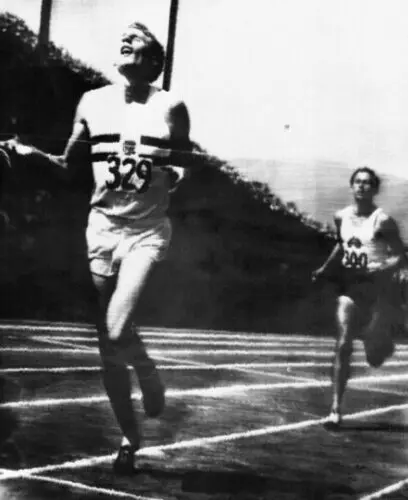
Before the end of the first lap, though, Landy made his intentions clear and went surging into the lead, passing 440 yards in 58.2. Bannister immediately had to deal with a gap that had opened up and as Landy passed 880 yards in 1:58.2, with Bannister now in second place, there were at least 10 metres between the two men.
At one point the margin appeared to grow to 15 metres but, on the third lap, which Landy covered in 60.2, Bannister worked hard to close the deficit with a 59.3 split and he got back on to Landy’s heels at the bell.
Down the back straight Landy tried to surge away again, glancing nervously over his shoulder, but Bannister would not be broken. Around the final bend, one of the sport’s most iconic moments unfolded with Landy casting a glance behind over his left shoulder at the precise moment Bannister kicked past on his right.
The image was later commemorated in a bronze sculpture which stood outside the stadium. Many felt it was the moment Landy lost the race, although Bannister powered away to win by 3:58.8 in 3:59.6 before collapsing into the arms of officials.
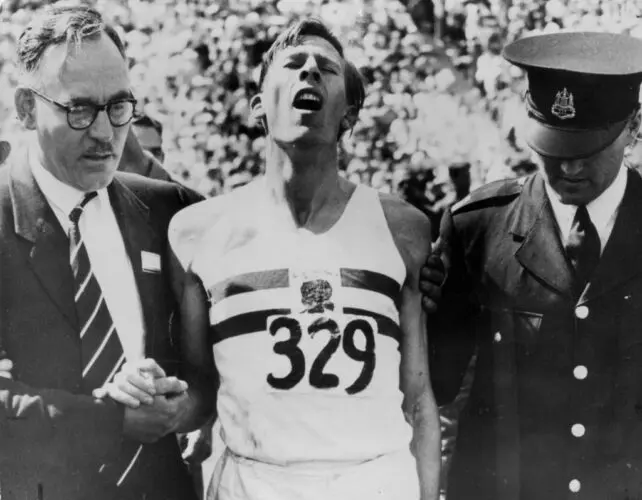
“That was the fastest time I’ve ever done,” said Bannister. “It’s always faster to run against an opponent but it’s not easy to come across someone who can run a 2:57 three-quarter mile as he did today. There’s no doubt my great respect for him as an athlete made me bring the very most out of myself. He’s a great runner and it was a privilege for me to run in that race.”
On his tactics to lead, Landy responded: “I had no alternative. I had no-one to help me. I tried to run a lone wolf race. If I couldn’t shake Roger off, I had to lose.
“When I looked around on the final back straight, he was still with me and I knew it was curtains. It was a very good race, though. I have no excuse and couldn’t beat him in the circumstances. It was a good, clean race and definitely went to the stronger man on the day.”
There is no doubt the decision to stage mile races – with all their rich history – as opposed to 1500m at this summer’s Commonwealth Games has gone down well with athletes and fans.
Contenders are likely to include Scottish athletes Josh Kerr (the pursuer of the world record in London this month), Jake Wightman and Neil Gourley, plus in-form Australian Cameron Myers and 2022 Commonwealth 1500m winner Olli Hoare, while the athletics programme at the Games ends with a women’s mile.
“The one mile is the quintessential Commonwealth athletics event whose return to the Games in Glasgow 2026 I very much welcome,” said World Athletics president Sebastian Coe.
“From 1930 through to 1966, the mile was the blue riband event of each Games. The magic of the mile continues to resonate with sports fans and a ticket to watch its Commonwealth final will be one of the must-have seats in Glasgow.”
12 memorable mile races
Bannister's first sub-four-minute mile
The most famous mile race of all. Roger Bannister's 3:59.4 at Iffley Road on May 6, 1954, shattered one of sport's greatest perceived barriers and became one of athletics' defining moments.
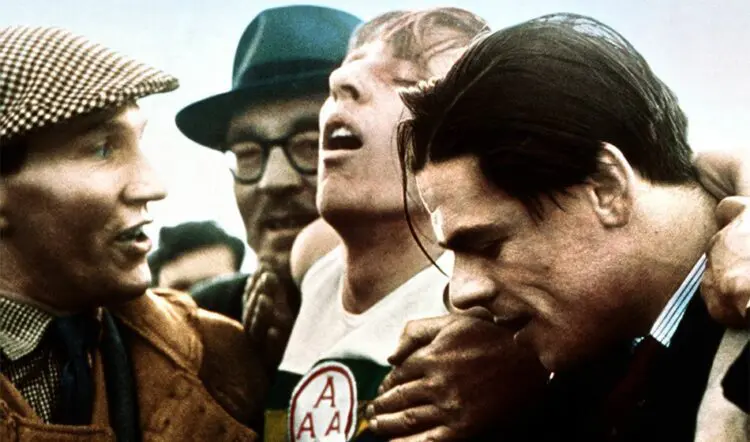
El Guerrouj's world record
Hicham El Guerrouj's 3:43.13 in Rome has survived as the men's world record since July 1999. Could Josh Kerr overtake it this summer?
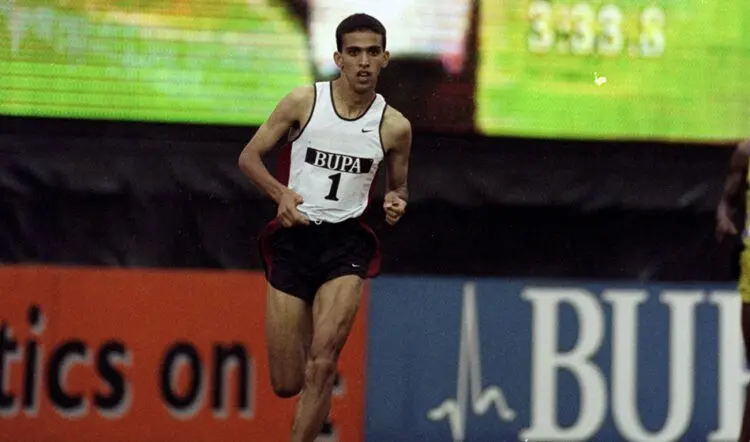
Cram’s Dream Mile in 1985
Steve Cram made 3:46.32 look easy when he strode away from Jose Luis Gonzalez and two-time Olympic 1500m champion Seb Coe to win in style in Oslo.
Seb Coe's 3:47.33 in 1981
Seb Coe and Steve Ovett swapped the mile world record several times from 1979 to 1981. It culminated in Coe clocking 3:47.33 at the Golden Mile in Brussels to beat the 3:48.40 that Ovett had run two days earlier in Koblenz.
Mike Boit’s sub-3:30 on the roads
Mike Boit was a fine runner with a track best of 3:49.45 for the mile but, in a downhill mile in New Zealand in 1983, the Kenyan ran a remarkable 3:27.8, beating Steve Scott and Ray Flynn, both of whom also ran inside 3:30.
Bannister beats Landy in the Miracle Mile
The two sub-four-minute mile pioneers, Roger Bannister and John Landy, clashed in Vancouver for the 1954 Commonwealth title with Bannister winning a thriller as both men cracked four minutes again.
Eamonn Coghlan’s sub-3:50 indoors
The Irishman won the 1983 world 5000m title but he was largely known for his amazing success on the indoor circuit. In February 1983 he became the first man to run a sub-3:50 mile indoors with 3:49.78 at the Meadowlands Arena in New Jersey.
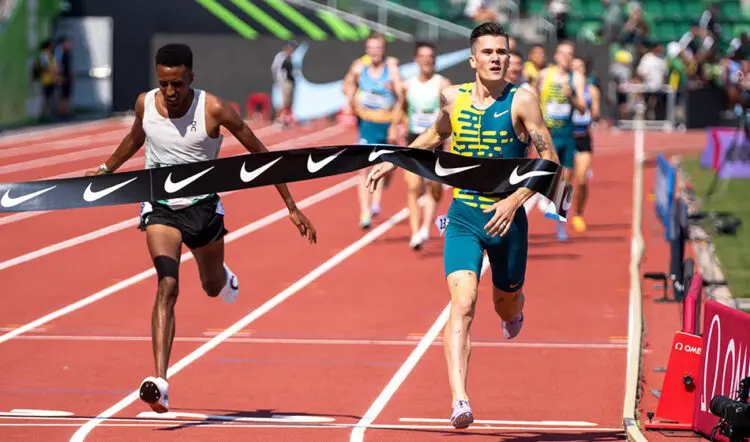
Jakob Ingebrigtsen's 3:43.73 in Eugene
The Norwegian came close to the world record as he smashed Steve Cram’s European mark with 3:43.73 at Hayward Field in 2023. Runner-up Yared Nuguse took almost three seconds off the US record with 3:43.97, too, as the results were peppered with national records and PBs.
Faith Kipyegon runs 4:07.64
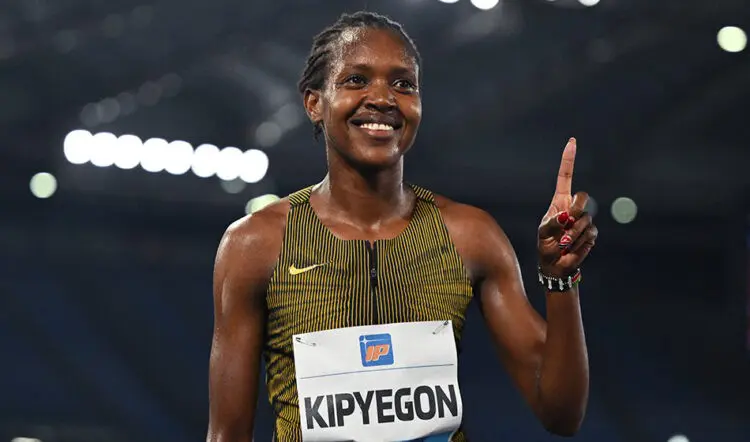
In Monaco in 2023, the Kenyan obliterated Sifan Hassan’s women’s world record of 4:12.33 to add to the 1500m and 5000m marks she set earlier in the season.
Diane Leather's historic sub-five
In the same month that Roger Bannister ran a sub-four-minute mile, Diane Leather became the first woman to crack the five-minute barrier. Racing in Birmingham and without pacemakers, Leather ran a solo 4:59.6 to create history.
Decker-Slaney runs 4:16.71
One year after their infamous clash in the LA Olympic 3000m final, Mary Decker-Slaney, Zola Budd and Maricica Puica clashed on the track in a series of races in the summer of 1985. Over one mile in Zurich, Decker Slaney clocked a world record of 4:16.71 as Puica ran 4:17.33 and Budd 4:17.57.
Swedish supermilers clash
Gunder Hägg and Arne Andersson each broke the world mile record a remarkable three times in the early 1940s and the culmination of their rivalry saw them almost break the four-minute barrier. The great rivals enjoyed a brilliant race in Malmö in 1945, with Hägg triumphing in 4:01.4 as Andersson finished second in 4:02.2.