Athletics off to a solid start at Scotstoun

Opening session starts the job of telling some good news track and field stories at the Commonwealth Games.
With a series of high-profile withdrawals in recent days, the narrative around athletics at the 2026 Commonwealth Games has centred around the athletes who aren’t competing in Glasgow just as much as those that are.
The work on changing that storyline got under way on Monday morning (July 27), however, with the opening session at Scotstoun Stadium.
The last time these Games were hosted in Glasgow 12 years ago, the athletics action all unfolded at Hampden Park on an innovative drop-in track that turned Scotland’s home of football into a temporary temple to track and field.
With the city stepping in to host the event again, only on a much smaller scale, finding a creative solution has been necessary this time, too. Local residents are more accustomed to seeing the venue set up for rugby in its guise as the home of Glasgow Warriors, but Scotstoun is a place also steeped in athletics history and the arena that has been revamped with a capacity of almost 11,000 for this week, as well as being adorned with a new blue mondo track, impressed as the spectators began to arrive.
It was only really the light drizzle that was putting a dampener on proceedings as the men’s 100m heats got the day's programme up and running in front of a crowd that grew to fill around half the capacity.
Sprinters usually love the heat and, though that wasn’t in great supply, there was still plenty of warmth from the onlookers as the former world indoor champion Jeremiah Azu stepped on to the track.
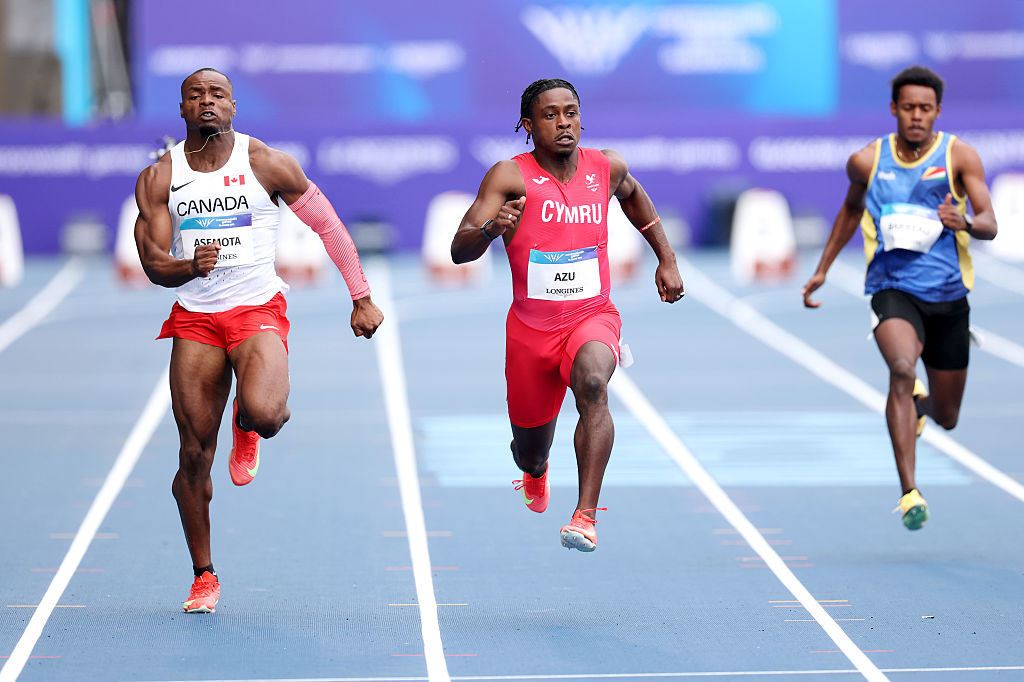
With the top eight athletes on the rankings receiving a bye to the semi-finals, there was passage for 17 others to secure and the Welshman did that comfortably in the blustery conditions, clocking 10.10 (1.7) to seal his slot for tomorrow evening’s next stage.
“I believe I'm in [sub 10-second] shape,” he said. “But, right now, it's about coming and performing, making the final and getting on the podium. If you do that in 13 seconds, you do it in 13 seconds. There were loads of Welsh flags, loads of Welsh support. I think even the other nations might be showing a bit more support because they're used to maybe seeing my name on the British vest. It was super cool.”
One of the other biggest cheers of those 100m heats was reserved for Koneshe Mjoela, who broke the national record of Lesotho with his run of 10.07 (1.4), a time matched in the following – and final – heat by England’s Elliot Jones, albeit with a tailwind of 3.9.
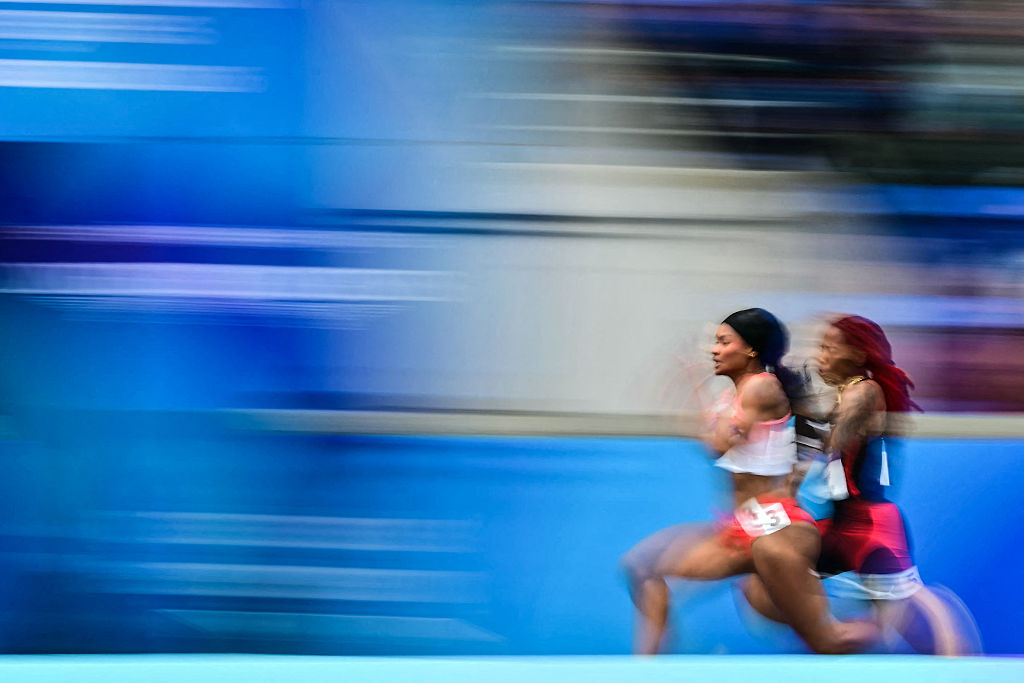
In the women’s 100m heats, England’s Imani Lansiquot also received the warmest of welcomes as she progressed fastest overall with a time of 11.04 (2.1) to win heat six, while Australian record-holder Torrie Lewis clocked 11.15 (2.4), in winning heat three. England’s European U20 silver medallist Mabel Akande also went safely through in winning heat one with 11.32 (-0.3).
The main contenders for the women’s T37/38 100m final this evening also made it through unscathed. England’s Sophie Hahn made a statement of intent to win the opening heat with 12.75 (0.7), while Australia’s Rhiannon Clarke took heat two with 12.96 (1.0) ahead of Wales’ defending champion Olivia Breen (13.05) and England’s Maddie Down (13.10).
England’s Sam Bennett was fastest in the men’s 110m hurdles heats, meanwhile, with his run of 13.20 (2.1) and he was joined by team-mate Tade Ojora who was fifth-fastest in the conditions that were far from straightforward for the hurdles, clocking 13.48 (2.9).
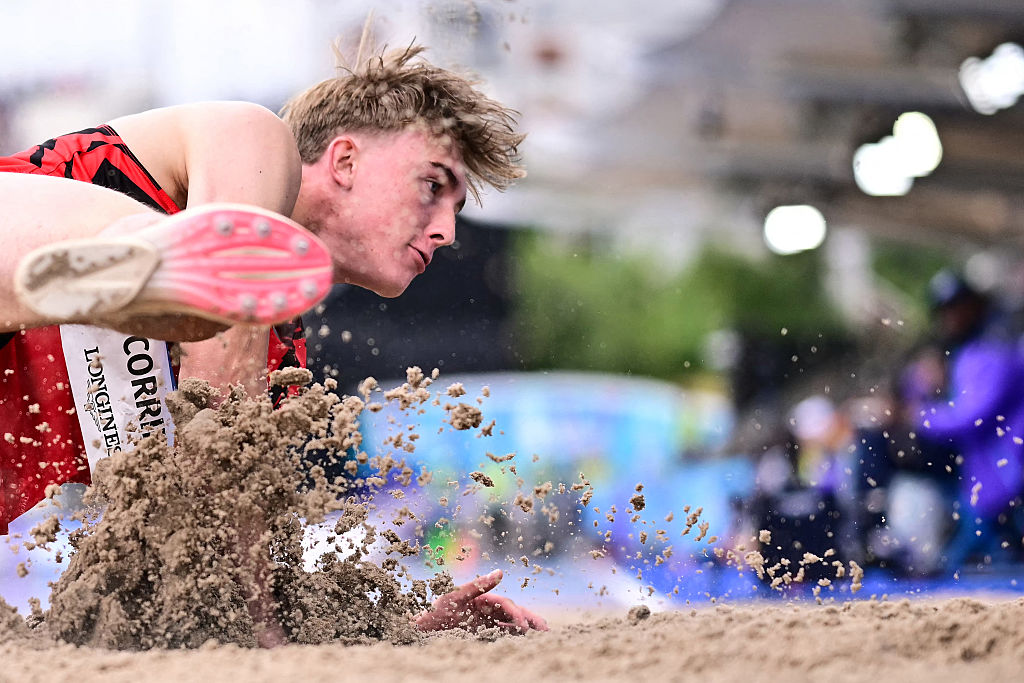
In the field, Jamaica’s former world champion Tajay Gayle leapt 8.10m (0.1) to lead the way into the men’s long jump final, but it was the Isle of Man’s Regan Corrin who enjoyed plenty of attention from the Scotstoun crowd.
The teenager had flown into an early outright lead in the competition with an effort of 7.84m that represented a personal best of almost 30 centimetres but an illegal tailwind of 3.6 played its part. Corring has a busy few days ahead of him as he is also competing in this evening’s high jump competition – a discipline in which he is a British indoor silver medallist.
British champion Stephen Mackenzie also progressed to the long jump final, the Scot producing a best jump of 7.75 (1.8).
There was little surprise in Camryn Rogers throwing furthest in qualifying for the final of the women’s hammer. The reigning Olympic, world and defending Commonwealth champion reached out to 68.81m to lead the way, while England’s Charlotte Payne’s 66.72m saw her finish fourth overall and she will be joined in the final by team-mate Tara Simpson-Sullivan (12th in 60.43m), who finished one place behind Angela McAuslan-Kelly of Scotland (60.59m).
Overall, this was a promising start for a championships that would love to be telling a few more good news stories over the coming days.
Full results here