Arise, Sir Brendan Foster

Sir Brendan Foster started his international career 50 years ago and it lasted 10 years as he bowed out at the 1980 Olympics.
His first known race was the Catholic Diocesan Schools Cross-Country Championships in Sunderland in December 1962 when he was second to John Trainor and his first major race was the 1963 English Schools Championships at Chelmsford where he was fourth in his 440 yards heat in 55.5, which was not enough to make the final.
He showed more promise at cross-country (10th in the 1966 National youths cross-country at Sheffield) but little suggested he was a future world beater and at the end of 1969 and aged 21 he ranked 25th in the UK at both 1500m (3:47.1) and the mile (4:05.6) in that year’s rankings.
That all changed in 1970 and here we look at the major races of Brendan Foster the athlete over the last 10 years of his career.
Commonwealth Games Trials 1500m, Leicester June 6, 2nd 3:42.8 (PB)
AW referred to him as a 'revelation' and Foster led through 1200m in 2:58.6. Though he had to give way to 1969 European champion John Whetton, his three-second PB ahead of John Kirkbride sealed a shock Commonwealth selection.
Ceylon Tea 2 miles, Crystal Palace, July 5, 2nd 8:30.8 (PB)
He was surprisingly the only athlete able to challenge Olympic 1500m champion Kip Keino and only lost contact in the last 800m. He finished a second down and only missed Dick Taylor’s UK record by 0.6 of a second.
Commonwealth Games 1500m, Edinburgh, July 22, 3rd 3:40.6 (PB)
Ninth ranked, Foster again shocked by winning a battle for bronze with Pete Stewart by one hundredth of a second with Whetton fifth. Keino (3:36.6) and Dick Quax (3:38.1) took the other medals.
European Cup semi-final 1500m, Zurich, August 1, 3rd 3:48.6
As British No.1 at Edinburgh, Foster gained his first British selection and battled for third well behind France’s European mile record-holder Jean Wadoux (3:44.4).
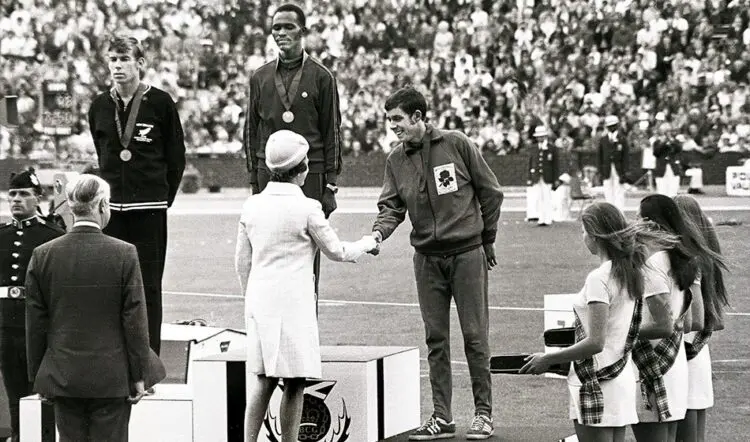
Inter Counties Championships Mile, Leicester, May 31, 3rd 3:58.5 (PB)
His first sub-four came behind Walter Wilkinson (3:56.6) and Stewart (3:57.4).
Milan 1500m, July 1, 4th 3:39.4 (PB)
Though well behind Marty Liquori (3:36.0) and Francesco Arese (3:36.3), Foster went inside 3:40 for the first time.
AAA Championships 1500m, Crystal Palace, July 24, 3rd 3:40.7
Kiwi Tony Polhill (3:40.0) won from Stewart (3:40.4) but Foster’s third place ensured his European selection.
European Championships 1500m, Helsinki, August 15, 3rd 3:39.2
Two championships and two PBs as Foster led at 800m and battled to bronze behind Arese (3:38.4) and European indoor champion Henryk Sjordikowski (3:38.7) just ahead of Kirkbride’s PB (3:39.5).
Edinburgh Highland Games 2 miles, August 21, 2nd 8:24.8 (UK rec)
Emile Puttemans broke the world record with 8:17.8 but behind him Foster set a UK record as he won a tussle against Commonwealth 5000m champion Ian Stewart.
Emsley Carr Mile, Crystal Palace, June 10, 2nd 3:55.9 (PB)
Foster started Olympic year well with a huge PB to go third all-time in Britain but lost out to Peter Stewart’s British record of 3:55.3
UK v Poland 1500m, Edinburgh, June 16, 1st 3:43.7
Foster gained his biggest win to date.
Stockholm Mile, July 5, 1st 3:57.2
Another victory and no one would have known that two months later that the little-known Pekka Vasala, who shared Foster’s time, would win Olympic gold.
AAA Championships, Crystal Palace, July 15, 4th 3:39.3
He only missed his PB by 0.01 of a second but this was a mini-disaster as in the Olympic trials and the best ever domestic 1500m he was behind Peter Stewart’ British record (3:38.2), shock Ray Smedley (3:38.5) and Kirkbride (3:38.7).
UK v Finland v Spain 1500m, Helsinki, July 25, 2nd 3:42.0
Foster was given a second chance of Olympic selection in a run-off with Kirkbride and he did so easily. Vasala (3:41.2) was well ahead though Kirkbride got a reprieve as Stewart had to withdraw from the Munich team.
Olympic 1500m semi-finals, Munich, September 9, 3rd 3:38.2 (eq UK rec)
Foster qualified for the final in style, equalling Stewart’s UK record as Rod Dixon (3:37.9) won.
Olympic 1500m final, Munich, September 10, 5th 3:39.0
He led the opening lap and was still in medal contention on the last lap but ultimately fell 10 metres short behind Vasala (3:36.3), Keino (3:36.8), Dixon (3:37.5) and Mike Boit (3:38.4).
AAA Championships, 5000m, July 14, 1st 13:23.8 (PB)
In his first major 5000m, Foster won easily from Olympic bronze medallist Ian Stewart (13:31.0) and a top class field including newly crowned 10,000m world record-holder Dave Bedford.
UK v Hungary 1500m , Crystal Palace, August 25, 2nd 3:38.5
Though not absolutely flat out, he effectively tied with future Olympic fifth-placer Frank Clement and just missed the British record.
Bank Holiday International 2 miles, August 27, 1st 8:13.68 (world rec)
Foster was paced to most of halfway in 4:05.4 (60.8, 60.6, 62.5, 61.5) and held on through the second half with laps of 61.9, 63.5, 63.2 and 59.7 to just get inside Lasse Viren’s world record (8:14.0).
European Cup Final 5000m, Edinburgh, September 9, 1st 13:54.8
In pouring rain, in a slow tactical race, Foster put in a 60.2 lap mid race to shake the field but needed a 57.6 last lap and fast last 150 metres to dispose of future European 10,00m champion Manfred Kuschmann and 1964 Olympic runner-up Harold Norpoth. Double Olympic champion Viren finished fifth.
Commonwealth Games 5000m final, Christchurch, January 29, 2nd 13:14.6 (UK rec)
It was one of the greatest 5000m duels in history as Foster smashed the UK record and went third in the world all-time but lost out to Kenyan Ben Jipcho (13:14.4) despite a 55.5 last 400m and 2:00.0 last 800m.
Commonwealth Games 1500m final, February 2, 7th 3:37.6 (UK rec)
Though well behind the real action, he set another UK record as Filbert Bayi (3:32.2) won in world record time from John Walker (3:32.5), Jipcho (3:33.2), Dixon (3:33.9), Graham Crouch (3:34.2) and Boit (3:36.8).
AAA 12-stage Road Relay 5 miles 900 yards, Sutton Coldfield, April 27, fastest 24:28 (lap record)
Helping his Gateshead club, this stunning run over the undulating park roads was at a faster pace than Ron Clarke’s celebrated world six miles track record at Oslo.
AAA Championships 5000m, Crystal Palace, July 13, 1st 13:27.4
Foster won by six seconds from now top agent Jos Hermens, courtesy of a 59.2 breakaway lap.
UK v Czechoslovakia 1500m, Edinburgh, July 26, 1st 3:41.2
Foster showed he can still win at the shorter races as he defeated Scot Frank Clement (3:41.7).
Gateshead Games 3000m, August 3, 1st 7:35.2 (world rec)
At the opening of the new tartan track, and as newly-appointed sports and recreation manager for Gateshead, Foster made history at his own meeting.
Mike Baxter paced him through the first half (3:49.1) before he ran a solo 3:46.1 second half to take 2.6 seconds off Puttemans’ world record.
His laps were 60.1, 60.5, 62.2, 61.2, 60.0, 62.1, 59.9 and 30.1 for the final 200m.
European Championships 5000m final, September 7, 1st 13:17.2
On a hot day, the Briton demolished the field with one of the greatest front running performances in a distance final in history.
He led through 3000m in 8:01.2 and then put a lap of 60.2 in followed by a lap of 62.8 to entirely break the field.
Had he chosen to he could have challenged the world record but eased in as Kuschmann (13:24.0) won the battle for second ahead of Viren (13:24.6).
Coca-Cola Meeting 2 miles, Crystal Palace, September 13, 1st 8:23.0
In front of an excited capacity crowd, that year’s BBC Sports Personality of the Year won from Smedley (8:25.8), with Viren fourth (8:25.8).
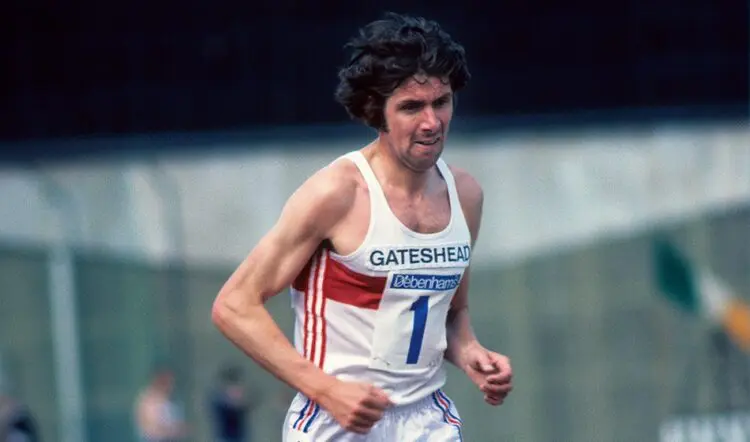
Philips Golden International 2000m, Crystal Palace, July 4, 5th 5:02.9 (UK rec)
A race featuring the best middle and long distance runners in the world was won in a last lap sprint by Walker (who was set to run history’s first sub-3:50 mile the following month) and saw Foster edge Ian Stewart and set another UK record.
European Cup seni-final 5000m, Crystal Palace, July 13, 1st 13:30.4
A 59.4 lap broke the field and he won easily by 20 seconds.
Gateshead Games 5000m, July 26, 2nd 13:33.0
Foster suffered a rare off day and Olympic 1500m bronze medallist Dixon eased away for a six-second victory.
European Cup Final 5000m, Nice, August 17, 1st 13:36.2
Foster returned to form to produce a stunning 58.2 lap at 3000m to win easily from Enn Sellik (13:42.8)
UK v USSR 1500m, Crystal Palace, August 25, 1st 3:42.2
Foster sharpened up with victory in front of a big British bank holiday crowd.
Coca-Cola Meeting 10,000m, Crystal Palace, August 29, 1st 27:45.4
In an incredible atmosphere, Foster ran a world lead and the world’s fastest debut over 25 laps when he out-sprinted Olympic marathon champion Frank Shorter (27:46.0) and Hermens (27:46.6).
Gateshead International Cross-Country 4.5M, November 29, 1st 22:41
The exciting race made a great impression on television as Foster narrowly edged Hermens (also 22:41).
European Clubs Cross Country Championships 10km, Arlon, January 25, 1st 30:23
He had a clear win over three-time world runner-up Mariano Haro. (30:36).
Kraft Games Olympic Trials 5000m, June 5, 1st 13:33.8
Foster eased to victory over Dave Black and Ian Stewart (both 13:35.4) to ensure a spot in the GB team for Montreal.
Kraft Games Olympic Trials 10,000m, June 12, 1st 27:53.8
The Gateshead Harrier ensured he was on for the Olympic double as he beat Tony Simmons (27:56.4).
Olympic Games 10,000m final, Montreal, July 26, 3rd 27:55.0
Beset by stomach problems, Foster was not at his very best and could not match Viren (27:40.4) and Carlos Lopes (27:45.2) but he still won Britain’s only athletics medal in Canada.
Olympic Games 5000m heat, Montreal, July 28, 1st 13:20.4
Foster showed better form to set an Olympic record that would last until the 1984 Olympics.
Olympic Games 5000m final, Montreal, July 30, 5th 13:26.2
The Briton was still in contention on the final bend but did not have the speed to challenge Viren (13:24.8), Quax (13:25.2), Klaus-Peter Hildenbrand (13:25.4) and Dixon (13:25.6).
Coca-Cola Meeting 2 miles, Edinburgh, August 6, 1st 8:22.2
With Crystal Palace out of action, Nick Rose, who was not selected for the Olympics, was second (8:23.0) to Foster as double double Olympic champion Viren (8:35.4) finished a poor 11th.
Helsinki 5000m, August 10, 1st 13:26.4
Foster easily defeated Viren (7th 13:42.2) on the Finn’s homeland and was chased home by top Norwegian Knut Kvalheim (13:26.8).
AAA Championships 5000m, Crystal Palace, August 14, 1st 13:33.0
Foster was again chased home by Rose (13:37.0).
Gateshead Games 2 miles, August 22, 1st 8:36.2
This time on his home track he defeated Kvalheim (8:36.6) and he again beat Viren who was fourth.
Lappeenranta 5000m, August 26, 1st 13:47.4
He again defeated Viren in Finland who were the second race running was exactly four seconds back. The Finn never beat him except in Olympic finals.
Emsley Carr Mile, Crystal Palace, August 30, 3rd 3:57.7
Showing good speed he was close to future and past world record-holders and Commonwealth champions Dave Moorcroft (3:57.1) and Bayi (3:57.5) and beat a teenage Seb Coe (3:58.4).
National Cross Country Championships, 9 miles, Parliament Hill, March 5, 1st 43:49
In an exciting finish, Foster won from fellow Olympic 10,000m top eight placers as well as former winners Bernie Ford (43:50) and Tony Simmons (43:53).
They were followed home by past winner Black (44:31), future winner Mike McLeod (44:37), Barry Smith (44:37) and previous champion Bedford (44:38). As an added bonus Gateshead won the team title.
Debenham Games, Crystal Palace, June 26, 1st 13:21.2
In front of a big domestic crowd as the new Jubilee stand witnessed its first major athletics, Foster won easily from Julian Goater (13:30.0).
Dewhurst Games 200m, Spalding, July 3, 2nd 25.5
A defeat long forgotten but in a match race against Geoff Capes (who had won the shot with a mighty 21.30m), Foster, who had run 20 miles that morning, had no answer to his 143kg rival, who the announcer Stuart Storey claimed was occupying lanes two, three and four, who won in 24.9.
AAA Championships 10,000m, Crystal Palace, July 22, 1st 27:45.7
This was a serious world record attempt and he ran the fastest ever halfway time of 13:38.9 but he suffered in the high humidity in the second half but though slowing 30 seconds on the second half still won by 200 metres from Black (28:19.0).
GB v USSR 5000m, Edinburgh, August 26, 1st 13:42.4
Foster returned after an Achilles injury with a narrow win over Black (13:43.8).
Coca-Cola Meeting 10,000m, Crystal Palace, September 9, 1st 27:36.6
Watched by a wildly enthusiastic 18,000 capacity crowd this was the greatest mass 10,000m of all-time – with the fastest ever times recorded from second to 12th position.
Foster won to go third all-time with a 13:39.4 second half from future world record-holder Henry Rono (27:37.1) with current holder Samson Kimombwa 11th.
Manitou Games 3000m,Gateshead, September 12, 2nd 7:49.6
Three days after his 10,000m, Foster was not at his best and was out kicked by Mike McLeod in 7:49.1.
Stockholm 5000m, June 13, 1st 13:27.3
Foster started his season with a clear win over Dave Fitzsimons, who had been third in the inaugural World Cup in 13:17.4.
AAA Championships 10,000m, Crystal Palace, June 23, 1st 27:30.3 (Eur rec)
In very wet and chilly conditions, Foster ignored the waterlogged track to put halves of 13:45.1 and 13:45.2 together to break Bedford’s European record.
It would have been a world record but for Rono’s run 12 days earlier. He won from 200m from McLeod (28:04.2) and Black (28:06.9).
Emsley Carr Mile, Crystal Palace, July 1, 3rd 3:57.4
John Robson (3:55.8) won from Scottish junior sensation Graham Williamson (3:56.4) with Foster just beating 17-year-old Steve Cram (3:57.4).
UK Championships 5000m, Edinburgh, July 16, 2nd 13:25.4
Foster suffered his first ever defeat to a Briton at 5000m as McLeod (13:25.2) produced a 25.0 last 200m to edge Foster on a windy day.
Commonwealth Games 10,000m, Edmonton, August 6, 1st 28:13.7
In hot weather (28C) and 2500ft altitude, Foster became the first athlete to win a medal at 1500m, 5000m and 10,000m as he broke clear over the later laps to win from Mike Musyoki (28:19.1) and McLeod (28:34.3).
Commonwealth Games 5000m final, Edmonton, August 10, 3rd 13:31.4
A tired Foster was unable to match Rono (13:23.0) and Musyoki (13:29.9) but he showed his usual big race temperament to out finish McLeod (13:33.2) for third.
European Championships 10,000m, August 29, 4th 27:32.7
Foster led on the last lap but the efforts of Edmonton took its toll and he did not have his usual last lap zip and he lost out to Martti Vainio (27:31.0), Venanzio Ortis (27:31.5) and Aleksandr Antipov (27:31.5) as the first nine broke 27:42.
European Championships 5000m heat, August 31, 6th 13:38.3
A fresh Foster would have surely won the 10,000m but fatigued he was some way from making the final which was won by Ortis.
National Cross Country Championships, Luton, March 3, 19th 49:03
The muddy course did not suit him and he was well behind McLeod (47:10), Ford (47:12) and Rose (47:13) but he was in the winning Gateshead team that took the title for the fifth time in six years.
AAA National Road Relays 5M 900yds, Sutton Park, April 28, Fastest leg (24:33)
Gateshead regained their title with Foster, who was chasing Rose (24:36), just five seconds short of his 1974 record as he was again fastest.
AAA Championships, 5000m, Crystal Palace, July 14,6th 13:34.8
Foster fell mid race as future world champion Eamonn Coghlan won in 13:23.6.
Oslo 2 miles, July 17, 2nd 8:17.0
Foster lost out to Dixon (8:15.2) yet again but produced one of his best shorter races for a few years.
European Cup Final 10,000m, Turin, August 4, 1st 28:22.9
In his last major victory Foster won easily by 100 metres from European bronze medallist Antipov but it was inexplicably not enough to impress the European selectors to pick him for the World Cup.
Rotary Watches International 2 miles, Crystal Palace, August 31, 1st 8:21.5
Foster looked sharp as his 3:01.9 last three laps proved too much for Rose (8:23.5) and Black (8:25.2).
IAAF Golden 10,000m, Brussels, September 4, 2nd 27:41.3
Though he suffered his only ever defeat by a Briton at 25 laps, Foster ran well and won the battle with Leon Schots for second but was left well behind McLeod who produced a 54.8 last lap and stunning back straight burst (opening 15 metres) to set a near 25-second PB of 27:39.8. Viren was 12th in 28:04.7 his fastest ever non Olympic run.
Amoco Games 3000m, Gateshead, September 8, 1st 7:46.3
He won easily from Steve Binns’ UK junior record (7:51.9)
Auckland Marathon, February 3, 5th 2:15:49
He tried his one and only marathon and found the last few miles hard as the race was won by Quax in 2:13:12 (10 years after the pair had finished second and third in the Commonwealth 1500m).
Stockholm, July 8, 2nd 13:20.5
Things looked encouraging for the Olympics as he ran his fastest time since the Montreal heats and was beaten by future European champion Thomas Wessinghage (13:19.8).
Olympic Games 10,000m, Moscow, July 27, 11th 28:22.6
Stomach troubles and not re-hydrating sufficiently after the heat run in stifling conditions meant the Briton was a shadow of his form of three weeks earlier and he finished 200m behind winner Miruts Yifter (27:42.7) with Viren only fifth (27:50.5) but again beating Foster in Olympic races.
Coca-Cola Meeting 5000m, Crystal Palace, August 8, 4th 13:35.2
He was some way off the action ahead in a race remembered for Olympic 800m champion Steve Ovett celebrating early and being surprised and beaten by John Treacy’s late lunge (both 13:27.9).
British Meat Games, Crystal Palace, August 25, 1st 8:32.8
It was one of his slowest ever two miles but he won in his final Crystal Palace appearance but was pushed all the way by Dick Callan (8:32.9).
England International Match, Gateshead, August 31, 1st equal 13:35.7
His final Gateshead appearance (and last race) saw him share victory with fellow Gateshead Harrier Barry Smith, who was to win the following year’s IAAF Golden 5000 on this track.
(Photos by Mark Shearman)
» For more on the latest athletics news, athletics events coverage and athletics updates, check out the AW homepage and our social media channels on Twitter, Facebook and Instagram