Lily Partridge among Boxing Day race winners - weekly round-up

A round-up of some of the action over the festive period, including a win in Poole by Partridge, while Adam Bowden was the quickest parkrunner on Christmas Day

Poole Round the Lakes 10K, December 26

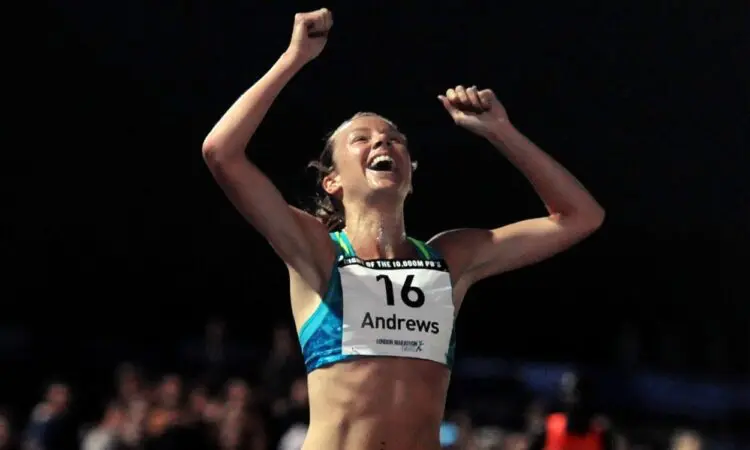
Lily Partridge finished third overall and first woman by almost four minutes in 33:24.

David Long was first man in 31:40, while South of England M50 champion Andrew Leach was first veteran in fourth overall with 33:33.

Witham Boxing Day 5, December 26

Top veteran Ady Whitwam won the race in 25:55 while Victoria Hayes was first woman in 31:14.

Glynneath 5, December 26

Kristian Jones was first in a PB of 23:50, leading home Jonathan Hopkins (24:25) and Guy Smith (24:26).

Clara Evans was first woman in 28:19.

Greencastle 5, December 26

Irish Olympian Paul Pollock was first in 24:52. Catherine Whoriskey was first woman in 28:12.

Brighton Boxing Day Walks, December 26

Malcolm Martin denied former Olympian Ian Richards a seventh successive win with victory in 49:11 to Richards' 49:24.

Brighton Boxing Day Run, December 26

James Turner won the men's 7km in 23:55 while Katy Hedgethorne was first woman in 26:30.

Clevedon Boxing Day 4, December 26

2008 Olympian Kate Reed won in a time of 20:53 from former European under-23 champion Emma Pallant, who now focuses on duathlon and triathlon.

Belgian Jean-Pierre Weerts won the men's race in 19:11.

Ribble Valley 10K, December 27

Marc Scott, who earlier in the month ran a fast 13:38.87 5000m indoors in the USA, continued his winning ways back in the UK with a 29:33 victory which gave him a 26 second win over both Chris Farrell and Richard Allen.

Emily Japp was first woman in 34:35, with track star Alison Leonard fifth in 36:14.

parkrun, December 24/25

Former international steeplechaser Adam Bowden ran the fastest parkrun on Christmas Day with 14:44 at Cassiobury.

Marathoner Paul Martelletti won at Mile End on Christmas Eve with a 15:30 on a day he ran 40 miles. The following day, he ran 27 miles to complete a 200 mile plus training week and set a course record 15:45 at Greenwich.

» Check out Athletics Weekly’s online news section and online global update reports for more of the latest from the world of the sport

Recipes for recovery and pre-session fuelling

Whether it's pre- or post-session nutrition ideas you're after, check out these recipes

Renee McGregor is a dietitian and nutritionist who has worked at the University of Bath’s Sports Science Centre and with many elite athletes.

Here she shares some recipes for recovery and pre-session fuelling.

SUNFLOWER AND CHIA PORRIDGE

With the nuts boosting its protein and essential fat content, this is a sound choice for before long-endurance training sessions or after training as a recovery option. Using milk, rather than water, will make a creamier, heavier porridge, which is better for recovery.

Serves 1
Preparation time: 5 minutes
Cooking time: 5 minutes

2 tsp sunflower seeds
55g/2oz/heaped cup rolled oats
200ml/7fl oz/cup skimmed milk or water
1 tsp chia seeds
2 tsp ground almonds
a drizzle of clear honey

1 Put the sunflower seeds in a dry saucepan over a medium heat and toss for a few minutes until just beginning to brown.

2 Add the oats, milk, chia seeds and ground almonds, bring to the boil, then turn the heat down to low and simmer for 3-5 minutes, stirring occasionally, until the milk has been absorbed and the porridge is thick.

3 Transfer to a bowl, stir in the honey to taste and serve hot.

Nutrition facts (per serving): Calories 403, carbohydrate 56g, protein 18g, fat 11.3g (of which saturates 1.4g)

RECOVERY HOT CHOCOLATE

This indulgent drink contains the right balance of carbohydrate and protein for recovery. It’s amazing after a cold, late training session.

Serves 1
Preparation time: 5 minutes.
Cooking time: 5 minutes

300ml/10 fl oz/1 cup skimmed milk
25g/1oz skimmed milk powder
20g/0.75oz dark/bittersweet chocolate (at least 70% cocoa solids), broken into chunks

1 Put the milk and milk powder in a saucepan over a low heat, stirring occasionally, until the powder has dissolved into the milk. Add the chocolate and keep stirring until the chocolate has melted.

2 Pour into a mug and serve straight away.

Nutrition facts (per serving): Calories 290, carbohydrate 39g, protein 19g, fat 6.1g (of which saturates 4.3g)

APPLE BREAD

Whether you say you’re ‘not a breakfast’ person or leave the house very early, this bread is easy to prepare in advance and provides a nutritious breakfast eaten on its own or toasted and topped with honey or nut butter. It doubles up as a portable snack to eat either before or after a high-intensity training session.

Makes 8 slices
Preparation time: 10 minutes.
Cooking time: 30 minutes

A little rapeseed/canola oil, for greasing
150g/5oz spelt flour
200g/7oz wholemeal flour
Half tsp salt
1 tsp bicarbonate of soda/baking soda
1 large or 2 small eating apples, such as Cox’s, peeled, cored and coarsely grated
55g/2oz walnuts, chopped
60ml/2fl oz walnut oil
2 tbsp clear honey
1 egg
200ml/7fl oz apple juice

1 Preheat the oven to 180C/Gas 4 and lightly grease a 450g/1lb loaf pan.

2 Mix together the flours, salt and bicarbonate of soda/baking soda in a bowl, then fold in the grated apple. Reserve 1 tbsp of the nuts, then stir the rest into the mixture. Gently stir in the walnut oil, honey, egg and apple juice, being careful not to over-mix. Spoon the mixture into the prepared pan and scatter the reserved nuts over the top.

3 Bake for 30 minutes, or until a skewer inserted in the centre comes out clean.

4 Leave to cool in the pan for 10–15 minutes, then turn out and transfer to a wire rack. Serve warm or cold. The loaf will keep in an airtight container for up to three days.

Nutrition facts (per serving): Calories 173, carbohydrate 27.5g, protein 6g, fat 5.2g (of which saturates 0g)

» Renee McGregor is author of Fast Fuel: Food For Running Success (nourishbooks.com £9.99). For more on planning your ultimate training diet, see the full feature by McGregor in the October 20 edition of AW magazine

Merit rankings 2016 - UK women

Statistician Peter Matthews' assessment of form and achievements during 2016

These merit rankings of female British athletes are an assessment of form and achievements during the 2016 outdoor season by Peter Matthews from Athletics International.

The major factors by which the rankings are determined are win-loss record, performances in major meetings, and sequence of marks.

This year the major targets for top athletes were the Olympic Games or the European Championships and for younger athletes the World Junior Championships or the European Youth Championships.

Below you will find the top three in each women's event. The top three in the men’s rankings can be found here, while international men's and women's rankings will be published online in the coming days. The full British top-12 list for every event (except in those events where there were insufficient British athletes producing adequate performances), including the details of athletes' seasons, are featured in our December 15 bumper 112-page end-of-year stats special, which is available to buy and read digitally here.

100m
1 Dina Asher-Smith
2 Desiree Henry
3 Asha Philip

200m
1 Dina Asher-Smith
2 Desiree Henry
3 Jodie Williams

400m

1 Christine Ohuruogu
2 Emily Diamond
3 Anyika Onuora

800m
1 Lynsey Sharp
2 Shelayna Oskan-Clarke
3 Alison Leonard

1500m 
1 Laura Muir
2 Laura Weightman
3 Charlene Thomas

5000m
1 Eilish McColgan
2 Stephanie Twell
3 Laura Whittle

10,000m
1 Jo Pavey
2 Jessica Andrews (Martin)
3 Beth Potter

(10 miles - 20km) Half-marathon
1 Lily Partridge
2 Gemma Steel
3 Alyson Dixon

Marathon
1 Alyson Dixon
2 Sonia Samuels
3 Charlotte Purdue

2000m and 3000m steeplechase
1 Lennie Waite
2 Rosie Clarke
3 Louise Webb

100m hurdles

1 Cindy Ofili
2 Tiffany Porter
3 Jessica Ennis-Hill

400m hurdles

1 Eilidh Doyle
2 Meghan Beesley
3 Jessica Turner

High jump

1 Katarina Johnson-Thompson
2 Morgan Lake
3 Isobel Pooley

Pole vault

1 Holly Bradshaw
2 Sally Peake
3 Lucy Bryan

Long jump
1 Lorraine Ugen
2 Jazmin Sawyers
3 Shara Proctor

Triple jump
1 Laura Samuel
2 Sinead Gutzmore
3 Chioma Matthews

Shot
1 Rachel Wallader
2 Sophie McKinna
3 Adele Nicoll

Discus

1 Jade Lally
2 Eden Francis
3 Kirsty Law

Hammer

1 Sophie Hitchon
2 Sarah Holt
3 Carys Parry

Javelin
1 Goldie Sayers
2 Joanna Blair
3 Laura Whittingham

Heptathlon
1 Jessica Ennis-Hill
2 Katarina Johnson-Thompson
3 Jessica Taylor

Walks
1 Bethan Davies
2 Heather Lewis
3 Emma Achurch

» For the full top-12 list for every event (except in those events where there were insufficient British athletes producing adequate performances), including the details of athletes' seasons, see the December 15 bumper 112-page end-of-year stats special edition of AW, which is available to buy and read digitally here.

» Peter Matthews is the co-editor of Athletics International. For more information on receiving the Athletics International newsletter email [email protected]

Merit rankings 2016 - UK men

Statistician Peter Matthews' assessment of form and achievements during 2016

These merit rankings of male British athletes are an assessment of form and achievements during the 2016 outdoor season by Peter Matthews from Athletics International.

The major factors by which the rankings are determined are win-loss record, performances in major meetings, and sequence of marks.

This year the major targets for top athletes were the Olympic Games or the European Championships and for younger athletes the World Junior Championships or the European Youth Championships.

Below you will find the top three in each men's event. The top three in the women’s rankings can be found here, while international men's and women's rankings will be published online in the coming days. The full British top-12 list for every event (except in those events where there were insufficient British athletes producing adequate performances), including the details of athletes' seasons, are featured in our December 15 bumper 112-page end-of-year stats special, which is available to buy and read digitally here.

100m
1 Joel Fearon
2 Adam Gemili
3 Chijindu Ujah

200m
1 Adam Gemili
2 Nethaneel Mitchell-Blake
3 Danny Talbot

400m

1 Matthew Hudson-Smith
2 Rabah Yousif
3 Martyn Rooney

800m
1 Michael Rimmer
2 Elliot Giles
3 Charlie Grice

1500m - 1 mile
1 Mohamed Farah
2 Charlie Grice
3 Chris O'Hare

5000m
1 Mohamed Farah
2 Andrew Butchart
3 Tom Farrell

10,000m
1 Mohamed Farah
2 Ross Millington
3 Dewi Griffiths

10 miles - half-marathon
1 Mohamed Farah
2 Callum Hawkins
3 Chris Thompson

Marathon
1 Callum Hawkins
2 Tsegai Tewelde
3 Derek Hawkins

3000m steeplechase
1 Rob Mullett
2 Zak Seddon
3 Tom Wade

110m hurdles

1 Andrew Pozzi
2 David Omoregie
3 Lawrence Clarke

400m hurdles

1 Jack Green
2 Sebastian Rodger
3 Rhys Williams

High jump

1 Robbie Grabarz
2 Chris Baker
3 Allan Smith

Pole vault

1 Luke Cutts
2 Steven Lewis
3 Max Eaves

Long jump
1 Greg Rutherford
2 Daniel Bramble
3 Daniel Gardiner

Triple jump
1 Julian Reid
2 Nathan Douglas
3 Ben Williams

Shot
1 Scott Lincoln
2 Scott Rider
3 Gareth Winter

Discus

1 Brett Morse
2 Zane Duquemin
3 Nicholas Percy

Hammer

1 Chris Bennett
2 Mark Dry
3 Nick Miller

Javelin
1 Harry Hughes
2 Matti Mortimore
3 Joe Dunderdale

Decathlon
1 Ashley Bryant
2 Ben Gregory
3 Timothy Duckworth

20km walk

1 Tom Bosworth
2 Daniel King
3 Dominic King

50km walk
1 Dominic King
2 Daniel King

» For the full top-12 list for every event (except in those events where there were insufficient British athletes producing adequate performances), including the details of athletes' seasons, see the December 15 bumper 112-page end-of-year stats special edition of AW, which is available to buy and read digitally here.

» Peter Matthews is the co-editor of Athletics International. For more information on receiving the Athletics International newsletter email [email protected]

Happy Christmas from AW

All the staff at Athletics Weekly would like to wish our readers a wonderful Christmas time

Whatever your plans this Christmas Day, whether you're training or taking a well-earned day off, all the staff at Athletics Weekly and Running Monthly hope you enjoy the festivities.

Click here to find out how some of the elites will be spending their day.

aw-dec-15-2016-cover-200The latest edition of Athletics Weekly magazine is the December 15 bumper 112-page end-of-year stats special. If you've not got a copy but want to have a read over the festive period, why not check out our digital edition? It's available here.

Otherwise, there's plenty on athleticsweekly.com to keep you going. News is here, our online performance section is here, while interviews are here and videos can be found here.

The next edition of Athletics Weekly magazine is out on January 5.

If you're doing some Christmas Day training or want to shout about some new kit, let us know! Why not send us a seasonal snap of you in action? Tweet us @AthleticsWeekly or get in touch on Facebook.

Happy Christmas!

Former coach of Russian whistleblower Yuliya Stepanova handed 10-year ban

Court of Arbitration for Sport announces a 10-year period of ineligibility for Vladimir Mokhnev, while Russian runner Anastasiya Bazdyreva is banned for two years

The former coach of Russian runner and whistleblower Yuliya Stepanova has been banned from the sport for 10 years, the Court of Arbitration for Sport (CAS) has announced.

Issuing its decision, the CAS said that Vladimir Mokhnev has been found to have violated International Association of Athletics Federations (IAAF) rules "relating to possession, trafficking and administration of banned substances and/or methods".

Mokhnev's 10-year period of ineligibility began on the date of the decision announcement, December 23, 2016.

The CAS also announced a two-year period of ineligibility, beginning on August 24, 2015, handed to Russian runner Anastasiya Bazdyreva.

"Anastasiya Bazdyreva has been found to have violated Article 32.2(b) of the IAAF Competition Rules (the IAAF Rules) which concerns 'Use or Attempted Use by an Athlete of a Prohibited Substance or a Prohibited Method'," the decision announcement read in part.

All results achieved by Bazdyreva between April 23, 2014, and August 24, 2015, will also be annulled.

The cases had been referred to the CAS by the IAAF.

The decision announcement continued to read in part: "The CAS has acted as first instance decision-making authority for these matters, substituting for the All Russia Athletic Federation (ARAF), which was suspended at the time the matters were ready to be adjudicated (and which remains suspended). The cases were referred to the same Sole Arbitrator.

"The evidence submitted by the IAAF in each case, namely admissions by the persons concerned contained in covertly-obtained recordings, was ruled admissible, and showed to the Sole Arbitrator’s comfortable satisfaction that they had breached the IAAF Rules."

Nutrition rules for festive survival

Mountains of food and hours of inactivity can play havoc with your body over the Christmas period so Peta Bee shares some steps for survival

Embrace the festivities with these top nutrition tips.

Gobble plenty of turkey

Not only does our favourite festive bird have a lower fat content per serving than even chicken and is relatively high in protein, helping with muscle maintenance and repair, but there are potent performance-enhancing compounds in the meat.

Turkey breast contains one of the highest concentrations of the amino acid beta-alanine which is converted in the body to a compound called carnosine and stored within the muscles.

Together, beta-alanine and carnosine help to buffer so-called hydrogen ions that are produced alongside lactic acid during intense exercise.

“It’s a build-up of hydrogen ions causes an increase in acidity that affects the way muscles relax and contract, resulting in fatigue, so it’s important to prevent that as much as you can,” suggests Alex Popple, a performance nutritionist who has worked with the English Institute of Sport and Team GB athletes.

In research at the University of Chichester’s school of sport and exercise science, a team led by Professor Roger Harris set out to discover whether eating more turkey meat might enable athletes to train harder. They gave a group of cyclists supplements of beta-alanine that were equivalent to eating small 145g portions of turkey meat. Results showed that concentrations of beta-alanine in the muscles increased by 40% and cycling performance improved by 13%.

By raising the intake to an average-sized 250-300g portion of turkey a day, the researchers predicted that muscle concentration of beta-alanine might rise by as much as 80% over six months, leading to an even more positive impact on performance. It has also been shown to boost sprint finish times.

Just make sure you eat your leftovers within three or four days or freeze the meat in tightly packed aluminium foil.

A survey by the website onbuy.com showed that one in five of us are at risk of food poisoning this Christmas from turkey kept for too long or in warm conditions.

Eat Brussels sprouts

All vegetables are good providers of the vitamins and minerals your body needs for optimal performance. But some —including members of the cruciferous family like Brussels sprouts and broccoli – are particularly high in antioxidants and vital nutrients.

A study published by the New Scientist this year heralded sprouts as a richer source of many nutrients than foodie-favourite, kale, and dieticians say that just one sprout provides enough folic acid, important for keeping blood healthy, to last all day.

Pick dark chocolate

When the chocolate box gets passed round, make sure you opt for a plain, dark chocolate rather than a sickly fondant-filled milk variety. Dark chocolate is known to contain a substance called epicatechin – a type of flavanol found in the cacao bean, that increases nitrate levels in the body.

It’s nitrates in beetroot that are linked to the many performance-enhancing benefits of the super-root and, earlier this year, research showed that dark chocolate may also prompt similar improvements.

Rishikesh Kankesh Patel, a researcher at Kingston University, found that after eating dark chocolate, cyclists used less oxygen when cycling at a moderate pace and also covered more distance in a two-minute flat-out time trial.

“Both dark chocolate and beetroot juice are known to increase nitric oxide, which is the major mechanism we believe is behind these results,” Patel said of his findings, published in the Journal of the International Society of Sports Nutrition. “We found that people could effectively exercise for longer after eating dark chocolate – something that’s not been established before in this way.”

» For Peta Bee's full feature of six steps for festive survival, see the December 15 edition of AW, which is available in shops now or to read digitally here

Training: Keep it simple

The appliance of science has its place in modern training methods, but it has yet to produce meaningful results, argues Ross Murray

In today's sporting world, sportsmen and women are always looking for that extra edge and a more efficient way of training.

Sports science has evolved and we now understand the body in a way we never could previously. It allows us to utilise areas that were not previously given much attention – strength and conditioning, nutrition, altitude camps, physiology, drills, ergogenic aids like beta alanine and countless amounts of vitamins and minerals to keep the body healthy during hard training periods.

With all of these added dimensions to our training, is it logical to think we should be running significantly quicker than we were 30 years ago?

Before I continue, this is not going to be one of those articles that has a go at standards of British endurance running today. I think it’s in a good place, being led by superstars like Mo Farah and Laura Muir.

What I’m questioning is the effectiveness of all of these new elements of training and how much of a role they have to play in determining the success in endurance athletes. I wonder whether we overcomplicate simple training principles by throwing in all the new science. For example, a physiologist giving you four different training zones for running and then sub-zones within those zones makes it a concept difficult to grasp. It used to be: easy running, steady running and hard running. You gauged it by how you felt on the day. Not, it seems, any more.

On the other hand, are athletes like Farah great examples of what modern training methods can produce? Potentially it’s riskier to have a heavier training load, but when it goes right you can see a new age of super-athletes.

Why aren’t we running any quicker?

I suppose the bottom line question is: with access to all of this new information, new technology and new science, why aren’t we running any quicker? Why haven’t we moved from the 1:41/3:29 bests for 800m/1500m to 1:39/3:25? Surely with all these extra training methods we should have managed this easily. Could it be that we have simply reached the limit of what the human body can achieve?

Given that we aren’t running significantly faster and we don’t have the depth of accomplishments and times that we used to have, should we be questioning the benefits and effectiveness of these new training methods? Does science simply give athletes more to stress about, potentially taking away the quality from their running, creating more injury risks? In short, are we trying to complicate a previously simple way of making endurance runners great athletes?

The Eighties approach

Seb Coe, Steve Cram, Steve Ovett and Peter Elliott boast PBs of around 3:29-30 and 1:41-42 – times that right now would still put them well in the mix for a medal at a major championships. Yet, Mo Farah aside, in the last 19 years the quickest time by a Briton has been by Mike East, who ran 3:32 – three seconds off the times these athletes were knocking out 30 years ago.

Dave Moorcroft pretty much front-ran his way to 13:00 and won by 150 metres. If Moorcroft was in a quick 5km in Monaco, I think it’s more than feasible to think he would have run close to 12:50, which would put him in contention for a medal at major championships, particularly with a 3:33 time to his name. Again barring Farah, the closest Brit to that since then has been Andy Butchart with 13:08.

The reason I’m stressing “barring Farah” is that he is a once-in-a-lifetime athlete and arguably the greatest distance runner of all time. If we were to use him as our reference point for today’s standards, it wouldn’t give a true reflection of our current position.

I’ve spent a lot of time meeting the 1980s generation of athletes on training camps or at races and, after giving a lot of them the Spanish Inquisition about how they trained, along with reading books like The Perfect Distance, I feel I’ve absorbed a lot of information on how “the old boys” trained. From what they have told me, the approach was very simple: run a lot of miles – up to and over 100 miles per week in the winter, two or three hard sessions down at the club and little junk mileage in between these sessions.

In the summer the mileage dropped slightly and they ran hard, event-specific sessions on the track. There was, of course, training periodisation involved but I’m trying to paraphrase a lot of information here. I could write another full article on the specifics. The point I’m trying to make is that the fundamentals were basic and based around putting in the miles and the hard work. The remainder of the time you rested and did things to take your mind off running.

It was simple but it clearly worked.

Strength and conditioning?

What’s notable is that nobody I’ve spoken to from the 1980s dream teams talked about doing specific group drill sessions. If they wanted to improve their speed and technique, they added in hard sprints once or twice a week on the track and ran flat-out for 50 to 100m. They did a lot of hill running and Ovett famously used sand-dune running as a key part of his build-up. There were no daily core and conditioning sessions, few weights. Sometimes, I think people forget that when you run you work your whole body. Run 90 to 100 miles per week and those thousands upon thousands of steps you take gives you a good enough stimulus.

It poses the question: is running more the best way to condition your body for running?

There is an exception, of course. Coe’s training was influenced by a gym programme and his success suggests there is a place for weight training. Nevertheless, I think in the last 30 years we have overcomplicated the basics of strength work to zero effect in terms of progression.

Nutrition

In the 1980s, athletes did not have nutritionists. Rather, they ate pretty much the same diet as everyone else in Britain at that time – a lot of meat, vegetables and potatoes. It was clean and simple. Their recovery drink after sessions was a glass of milk or water. It wasn’t three scoops of whey protein with super minerals and vitamins mixed with organic coconut vegan milk.

Altitude camps

Altitude camps were in their infancy at this point. Some people were heading to places like Colorado, but if you looked at what they did when they were there, experts now would say they were doing it all wrong. Many were going in March, which meant that by the time the summer came they weren’t getting any benefits. Plus, going once a year for three to four weeks really wouldn’t be something that’s going to make you a superstar.

Physiology

Back then, there were few physiology tests or coaches taking blood lactates at the track. Athletes knew they were running hard in sessions because they felt it – in their lungs and in their legs. They didn’t need to know they had 9ml/g of lactate per 100mg in their blood to know they were training hard. They didn’t need someone to tell them that after four weeks on a training camp they had got fitter because they produced less lactate in a step-test or that their oxygen uptake was more efficient. They knew they were fitter because, when they got on to the track, their times got quicker. And that’s ultimately the thing that matters. Have we forgotten this?

Moderation is key

What I’m not suggesting is that endurance runners shouldn’t be doing anything other than run. I don’t believe that. And I think these extra training methods have their place, but should be built into a programme in moderation.

I believe there is too much emphasis put on time in the gym, working on drills, and spending time in the laboratory, but not enough belief in the simple things we know worked for so many world-class athletes in the past.

Some coaches and athletes reading this will be thinking that I’m talking rubbish because they’ve found massive gains from scientific input. If that’s the case, keep doing it. Every athlete is different and you have to do what works for you. Yet if you’re reading this and, like me, the appliance of science has produced no improvements and have actually been injured or ill more often than ever, then perhaps it’s time to take a step back, relax, get back to basics and take a look at what used to work for the superstars in the past.
Miruts Yifter ‘the shifter’ dies

Winner of Moscow Olympics distance double passes away

The exploits of Ethiopian distance runner Miruts Yifter at the 1980 Olympics captured the imagination of the world.

After unleashing an astonishing injection of speed to win the 5000m and 10,000m at the Moscow Games, he was dubbed ‘Yifter the shifter’ and among those inspired by his victories was a seven-year-old boy called Haile Gebrselassie who was following Yifter’s progress on a crackly radio in Ethiopia and dreaming to one day follow in his footsteps.

Along with Abebe Bikila, Mamo Wolde and Kenenisa Bekele, Yifter and Gebrselassie are known as the famous five in distance running-mad Ethiopia. Bikila was the forerunner with his Olympic marathon titles at the 1960 and 1964 Olympics but Yifter went on to play a prominent part in the athletics history of the nation with his amazing double in Moscow.

Yifter was a tiny, balding figure, but appearances can be deceptive and he showed on the grandest stage of all that he possessed one of the most fearsome kick finishes in history. The Moscow Games were dominated by the Seb Coe vs Steve Ovett showdown, but Yifter brought the 5000m and 10,000m races to life with his spectacular ability to change gear when it mattered.

In the 10,000m, Yifter and his team-mates Mohammed Kedir and Tolossa Kotu (pictured from right to left in the image above) surged and slowed during the 25 laps in an attempt to unsettle the defending champion Lasse Viren and fellow Finn Kaarlo Maaninka before Yifter sealed the win with a vicious burst of speed 300m from the finish. Covering his final 200m in 26.8, he took the title in 27:42.69 as Maaninka won silver a couple of seconds behind and Kedir took bronze ahead of Kotu and Viren.

Then, in the 5000m, Yifter faced a larger pack of rivals at the bell, including the fast-finishing miler Eamonn Coghlan of Ireland and Suleiman Nyambui of Tanzania. Yifter also found himself boxed behind Kedir, but his selfless team-mate glanced behind in the back straight to check if Yifter was ready to sprint and then moved aside to let him through.

The rest was academic as Yifter blasted out a final 200m in 27.2 to win in 13:20.91 ahead of Nyambui, with Maaninka third and Coghlan fourth. The distance double was complete and in some style too.

"We talked about it with the coaches and I practiced taking off with 300m to go in both the 5000 and 10,000m races," he told the IAAF in 2004. "The 300m is the ideal mark - not too late, not too early. I listened to the movements of my opponents until five laps remained and then decided on my course of action. The tension starts building at the bell, but before they could reassert themselves, I make my move."

Yifter’s talent was spotted when he joined the Ethiopian air force, but his international career got off to an inauspicious start in 1971 when he appeared to out-kick Steve Prefontaine in a United States vs Africa match in North Carolina before realising he had timed his sprint finish one lap early. The following day he beat Frank Shorter in the 10,000m at the same match and the following year took bronze over the same distance at the Munich Olympics behind winner Viren.

Yifter was also due to race the 5000m at the Munich Games but missed his heat and mystery forever surrounds the reason why. Theories range from getting lost on the way to the stadium to being blocked by security at a check-in gate to getting involved in a pre-race dispute with Ethiopian officials and there have even been reports that he was thrown into jail on his return to Ethiopia for being a 'traitor' for missing the race.

A similar mystery also surrounded his age, with his birthday reported to be anywhere from 1938 to 1944. This meant no one quite knew whether he was in his early 30s or early 40s when he won in Moscow and Yifter added to the intrigue by telling reporters: “I don’t count the years. Men may steal my chickens, men may steal my sheep, but no man can steal my age.”

In 1976, he missed the Olympics due to Ethiopia boycotting the Games. Then, after Moscow, he attempted to train for the marathon at the Los Angeles Games in 1984 but the plan did not come off.

Outside the Olympics, he won the IAAF World Cup four times over either 5000m or 10,000m in the late 1970s, he set a world half-marathon best of 62:57 in 1977 and helped Ethiopia to gold a couple of times at the world cross country championships in the early 1980s.

In more recent years he had been a team coach at major events but moved to Canada, where he spent his last days. In typical Yifter style, even his death was shrouded in confusion and some mystery. After falling ill with a collapsed lung, his death was prematurely reported a few weeks ago before he finally passed away just before Christmas.

Christmas Day training?

Whether you run or rest this Christmas Day you'll be in good company! Athletes have shared their festive training plans and given a range of responses

"Train twice on Christmas Day. Your competitors may only train once…" Whether you agree with Daley Thompson's school of thought or not, you won't be alone, as recent responses from some of Britain's top athletes have proven.

So who will and who won't be training this December 25th?..

British 10,000m champion and Rio Olympian Jessica Martin (née Andrews)
"No I will not be training on Christmas Day. My coach gave me the choice if I wanted to or not. The last few Christmas Days I have run, but every Sunday I take a rest day. I always look forward to it.

"I am also in England for the first time in a few years so I am going to enjoy the day off with family and friends."

jess_andrews

Paralympic, world and European gold medallist thrower Aled Davies
"I won't be training on Christmas Day because I work hard enough all year round to ensure that I can enjoy the holidays."

Olympic 5000m finalist Eilish McColgan
"I will be training this Christmas with it landing on a Sunday. I'll get my normal long run in and then have the rest of the day to chill out and enjoy Christmas. I'll also be in Qatar so it'll be a little different to a typical Christmas!"

IAU 100km World Championships bronze medallist Joasia Zakrzewski
"I won't be 'training' on Christmas Day as I'm making myself take a four-week break from training after the two World Championships (100km and trail), but I will be running.

"Some of the runs I've done on Christmas Day in the past have been fabulous, be it a parkrun with family and friends, or a longer run with no one else about."

Olympic 200m fourth-placer Adam Gemili
"I won't be training on Christmas Day this year. Spending time with family and relaxing is just as important as training for me. I'll be enjoying lots of food and games with everyone instead."

adam gemili

English discus record-holder and Rio Olympian Jade Lally
"Yes I will be training on Christmas Day. I will be going to the gym to do my normal lifting session. Luckily, there is one nearby that is open!

"It is slightly harder to do than to get my miles in if I was a runner, but I have a three-hour gap in which the gym is open, so no doubt I'll be there for two of the available hours!"

Rio hammer Olympian Mark Dry
"I won't be training on Christmas Day. I used to, and I don't think it's because I've got lazy, but that was always my mindset when I was a kid.

"Actually, that's a lie, I will be training - I still can't help myself from doing it! I'll go out for a run or do something light but I won't be doing a proper training session."

World indoor long jump bronze medallist and Rio Olympian Lorraine Ugen
"I won't be training. Christmas Day falls on a Sunday this year and I don't normally train on Sundays at this time of year so it would have been my day off regardless."

Olympic 4x100m relay bronze medallist Asha Philip
"Yes I will be training on Christmas Day. I will be doing a personal training session for my family. I will be forcing them to do a Christmas cardio calorie burn off for the the massive dinner we would have eaten!"

» Let us know if you'll be training this Christmas Day - sent us a tweet @AthleticsWeekly, pop a message on Facebook or reply beneath this post!

» Whether you will or won’t be training this Christmas Day, you can still read about it! Check out Athletics Weekly’s dedicated performance section online here

Richard Bowker announced as chair-elect for UK Athletics

Bowker will succeed Ed Warner as chair of the national governing body in January 2018

UK Athletics (UKA) has confirmed that Richard Bowker will succeed Ed Warner as chair of the national governing body in January 2018.

As Athletics Weekly reported earlier this year, Warner will step down from his position at the end of 2017.

Warner had taken up the role at the national governing body at the beginning of 2007 after former 5000m world record-holder David Moorcroft left his position as chief executive in January that year.

"We wanted to ensure the most orderly handover possible to the new chair. Particularly with the World Championships being in London the next year we wanted to give the next chair the chance to meet everybody from world athletics – both IPC and IAAF,” Warner told AW this summer.

Bowker is currently a non-executive director of London Marathon Events and is an independent director of the EFL (English Football League). A former group CEO of National Express Group and chair of the Strategic Rail Authority, he received a CBE for services to the rail industry in 2005.

He will join the board of UKA as a non-executive director next month before succeeding Warner as chair in January 2018. Bowker will stand down from the board of London Marathon Events on joining the UKA board.

"I am delighted to welcome Richard to the board of UKA in what will surely be a phenomenal year for the sport in this country," said president of the UK Members Council, Jason Gardener.

"2017 is a crucial year for athletics and next summer will see the biggest sporting event in the world hosted in London as we host both the World ParaAthletics Championships and IAAF World Championships.

"Richard was an outstanding candidate following our search for a future chair and I look forward to working with him closely in the coming years."

Bowker commented: "I am honoured to have been asked to chair UK Athletics from January 2018. Athletics is very close to my heart and I am very excited to be joining the sport in the UK at this time.

"Hosting their respective world championships is something any sport in the UK would want, and athletics is on the cusp of some exciting years.

"I look forward to working with everyone involved in athletics in the UK at every level. We can all look forward to great performances at London 2017, Tokyo 2020 and beyond."

Asbel Kiprop: Standing out a mile

The imposing figure of Asbel Kiprop has been at the forefront of the metric mile internationally for several years, but he spoke with Stuart Weir about his Rio disappointment

Asbel Kiprop has been the dominant 1500m runner on the world stage in recent years. He won the world title in 2011, 2013 and 2015 to add to his 2008 Olympic gold but in the Rio Olympics he could only finish sixth.

He grew up in a village near Eldoret. His father, David, ran for Kenya in the 1987 All Africa Games in the 1500m and later ran marathons.

Like most Kenyans, he began running at school. He says: “In fact running has always been a part of my life. I have had many years of running since I was 13 years old.”

His breakthrough came in 2007 when he won the gold in the 1500m at the All-Africa Games and junior gold at the World Cross Country Championships and finished fourth in the IAAF World Championships in Osaka. He saw fourth as a success, explaining: “I wasn’t disappointed at all because it was the first year of my career and I managed to reach the final in the World Championships and to race against the greats like Bernard Lagat, Rashid Ramzi and those guys I used to watch on TV. It was an achievement for me to line up with them – fourth was very promising.”

In his first Olympics the following year, aged just 19, he finished second behind Ramzi of Bahrain. However, when Ramzi was disqualified following a positive test for a banned substance, Kiprop took the gold medal and it was a bittersweet moment.

“It was good but it didn’t even happen that I won it live on the track,” he said. “I was given the medal afterwards. It would have been even better if I had won the Olympics live on track so I am still chasing the dream – winning the Olympics on the track. That is what I am longing for, what I am really hungry for. I really want to do that and hope I will one day.”

"It would have been even better if I had won the Olympics live on track so I am still chasing the dream – winning the Olympics on the track. That is what I am longing for"

Kiprop was fourth again in the IAAF World Championship in 2009, but his reaction was quite different this time. “In 2009 I was disappointed because I was good and I was close to getting a medal but unfortunately it didn’t happen,” he said. “I was a bit inexperienced and I didn’t clinch a medal.”

He learned from the experience, winning the next three World Championships. He particularly remembers 2011, saying: “In Daegu I won Kenya’s first ever gold medal in 1500m – since the World Championships started in 1983... That was important to me to hear the Kenya national anthem. Following Bernard Lagat in 2007 for USA and Yusuf Saad Kamel, who took the title to Bahrain in 2009, it was my time to win it for Kenya.”

The disappointment in that period of dominance was the London Olympics when he was third in the heat, second in the semi-final but last in the final because of injury. “I had a hamstring injury before going to London,” he said. “I was totally injured and couldn’t help it.”

Kiprop trains mainly in Kenya – in Iten or Eldoret: “My training begins in November, building up all the way to March or April when we start the speed work. I train with a team including James Kiplagat Magut, who was the Commonwealth champion in 1500m, and other good guys. It is an advantage that we have endurance but also the company of guys who run 3:30 and the Commonwealth champion so we have a good training team and programme.”

Training is varied. He explained: “We encounter a lot of miles with endurance, strength and speed work. It’s not that we concentrate on specific training but we mix it up. We do a lot of mileage and we do strength work and lots of exercises. There is speed endurance and sometimes pure speed. To develop speed, once we finish longer sessions on the track we go to shorter ones – 200m five or six times and 100m and 50m times six – sprints and kicks to help with the finishing power in championship races.”

Kiprop entered 2016 as world champion and the dominant man in the event. The year started well with Diamond League wins in Doha, Eugene, Birmingham and Oslo. A 12-month unbeaten run came to an end at Monaco, ironically on his favourite track – where he set his 800m PB of 1:43.15 in 2011 and his 1500m best of 3:26.69 in 2015. “I think Monaco is the best track for running fast times,” he said.

“It happened again in 2012 when I came to run 1500m and broke the barrier of 3:29 for the first time. I ran 3:28.8 and the next year 3:27. In 2014 I went back to 3:28 and then 3:26 in 2015. This place is nice, it is a fast track, it is at sea-level and the crowd helps. So I like coming back here and racing.”

"To develop speed, once we finish longer sessions on the track we go to shorter ones – 200m five or six times and 100m and 50m times six – sprints and kicks to help with the finishing power in championship races"

At the time he was not unduly bothered to lose in Monaco in the context of the Olympics, saying in his understated way: “I think I am at a peak now. We have still got three weeks or a month to Rio. I still have the confidence that I might get a medal.”

In the slow, tactical Olympic final he clocked 3:50.87 behind winner Matthew Centrowitz’s 3:50.00. He ran most of the race towards the back, on the last lap moved on to Centrowitz’s shoulder and was then passed by four athletes in the final 150 metres.

There was a lot of criticism in the media and social networks of his race plan. The armchair experts felt that he was too far off the pace and used up his energy making up ground on the last lap. Others said that a man capable of running 3:26 should not lose a race in 3:50.

He said afterwards that he was not expecting such a slow race. He said the absence of Elijah Manangoi, whom he had beaten into second at the 2015 Worlds, had deprived him of the chance to run as a team. “Manangoi is always a team player and things would definitely have been different if he had been in the race,” he said. “Manangoi is a front-runner while I like trailing from the pack. In his absence, the race was too slow and efforts to try and speed things up were countered by my rivals.”

Kiprop was clearly hurt by the criticism, responding on social media: “Enough please those who expressed their emotions on social media towards me due to my race tactics and loss last night. Spare me for the good I have ever done to Kenya. I have a lot to offer in store. But it’s hurting even more what I read. Remember I’m the only Kenyan who has ever won his country 1500m 3 times at the world championship; yes I’m that Kenyan who represented you in the heating conditions in Mombasa & won you glory as a junior in 2007. I’m your own. I’m born and raised in Kenya under the same flag and National colours. Spare me please I don’t deserve the accusations. I will do much better than that. I’m sorry.”

Kiprop also said after Rio that he would defend his 1500m title in London but after that might switch to the 5000m. That would be an exciting prospect!

Secret Link