Alex Haydock-Wilson on coming to terms with bipolar diagnosis

The British international opens up about being diagnosed as bipolar which has allowed him to approach his sport with a fresh sense of perspective.
The best way to understand Alex Haydock-Wilson is to let him take the lead in explaining things. Take his PhD, for example. Its subject matter – photovoltaic technology – means little to the uninitiated. But when he breaks it down into a core quest to make solar panels more resistant to dust and certain weather conditions, it starts to make a little more sense. Not fully, of course, because few among us are first-class engineering graduates, as he is. But, under his guidance, you begin to grasp the bigger picture.
The same applies to his present approach to athletics. Haydock-Wilson, 27, has just endured the worst season of his running career. Two after winning Olympic bronze medals in the men’s and mixed 4x400m relays, he trailed last in his 400m heat at this summer’s UK Championships and ended the season ranked 16th in the country. He describes it as his “fall-off year”, admitting it was “devastating in a few ways”. But, at the same time, he feels happier and “a lot more secure” than he has in a long time.
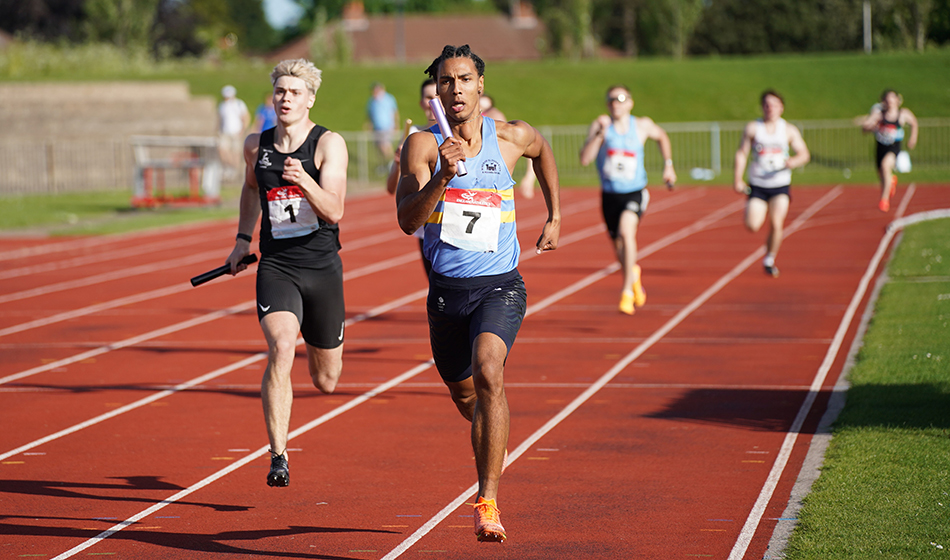
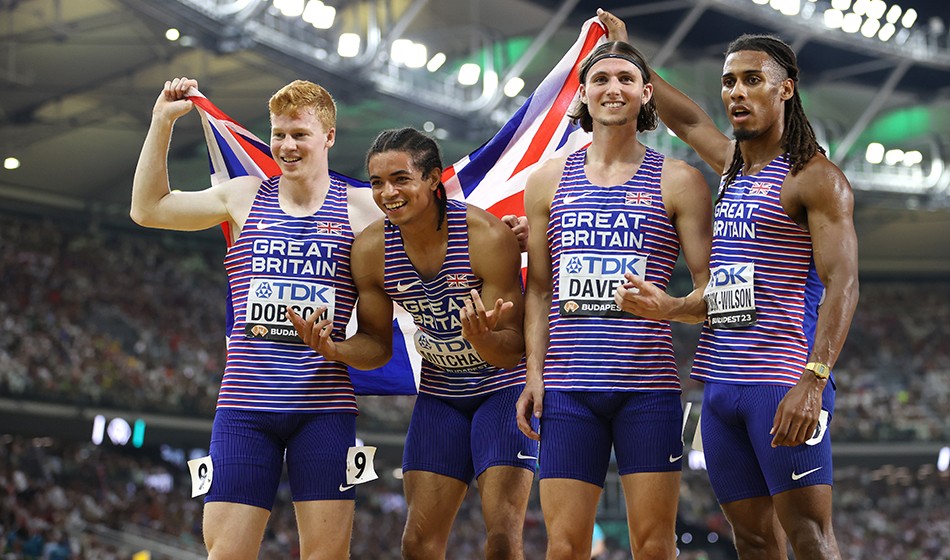
To understand that paradox requires Haydock-Wilson to guide the narrative once more. And the best place to start, he suggests, is the scene of that Olympic joy. Twice stepping up onto the Paris 2024 podium provided “exactly the high point that I’d been anticipating,” says a runner who claimed European 400m bronze in 2022 and a world 4x400m medal the following year. When his mental health deteriorated in the immediate Olympic aftermath, that peak performance stripped away his last remaining defence.
“A lot of things I’d been brushing under the carpet resurfaced and they had nowhere to go,” he says. “I couldn’t say it would all be fine when I won medals at the Olympics, because I’d won medals at the Olympics and it wasn’t all fine. There was nothing else to distract me. So I then had to address it.”
A few months after those Paris Games, Haydock-Wilson was diagnosed with bipolar disorder. At first, he attempted to brush it off. Having a family history of the condition meant he understood the reality of its severe shifts between mania and depression, making him initially reluctant to accept what felt like a “life sentence”. But, by the end of the 2025 indoor season, denial was no longer an option.
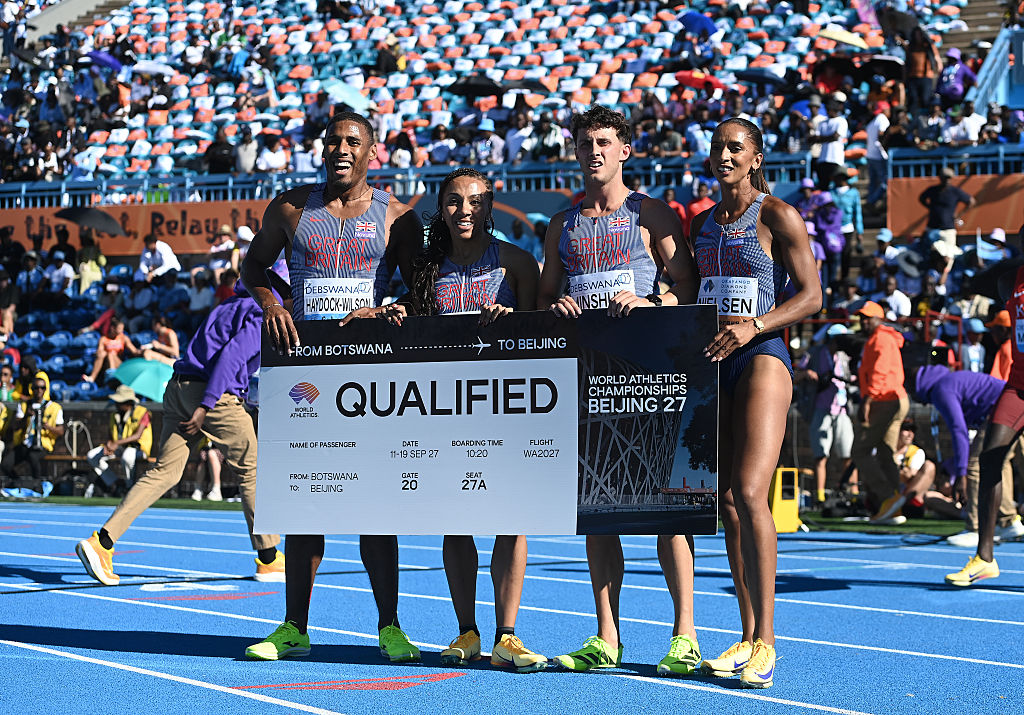
“It really came to a point where I couldn’t cope any more without actually confronting what bipolar was and what it meant,” he says. “I needed to rebuild my life with that in mind.
“I needed a lot more stability. That was the start of a new journey, where I started sharing more about my mental health and having really open and honest conversations.”
What followed was a period of time away from the sport – an open-ended hiatus that ultimately ended up lasting a few months in the spring of 2025. A belated return that summer saw him miss out on making the World Championships, but it also laid a platform for what he assumed would be a breakthrough 2026 campaign.
“I really thought this would be the year where I make a statement,” he says, “and speak for people who have struggled with their mental health, while showing that it can have a happy ending.”
To aid his athletics cause, Haydock-Wilson decided to take a break from his PhD. As a diligent student and serial high academic achiever, it was the first time he had focused fully on running at any point in his career. The presumption was that the removal of a significant distraction would aid his times. “Inevitably I’m going to run faster,” he remembers thinking. “Surely.”
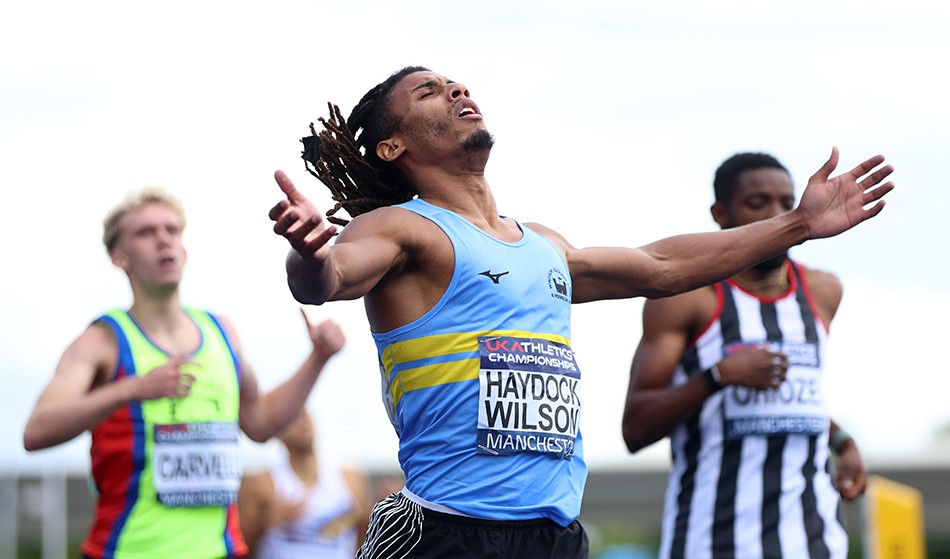
The reality proved different. Despite hitting the necessary metrics in training, there was an enduring, niggling feeling that “something felt off”. He says: “I was doing everything correctly but it didn’t feel like I was building to something great; it felt like I was holding everything together and eventually things would unravel.”
A 45.08 runner at his best, he arrived in Birmingham for the UK Championships in June knowing that he did not have it within himself to perform. Clocking 48.62 to finish eighth in his heat confirmed as much.
“It was really hard,” he admits. “It was so far away from what I intended or planned for the year.”
But here is his key point: despite the public humiliation on the same stage that he had become British 400m champion three years earlier, he remained grounded. The off-track work he had put in following his bipolar diagnosis allowed him to separate his athletic output from his human value. He could cope with the bad result, rationalise it and recognise it for what it was – a poor sporting performance that would not detract from his wider self.
“It hasn’t hit me as hard as it did last year, even though I’ve performed much worse,” he explains. “And it hasn’t hit me as badly as previous years where I felt I’d underperformed, either.
“I know how to process it now, and I know not to conflate it with my self-worth, which is maybe the win that I needed from this year. You can drop from the Olympic podium to 16th in the country, but if you’re intentional enough with yourself about developing a sense of purpose outside of the sport, then it can get to the point where it does not affect you so deeply.
“I felt robust after British Champs because I’d been honest with myself leading up to it. I’d almost pre-metabolised it. What was incredibly hard were the years of being so close. Anyone who has seen my journey recognised there was a point where 44 seconds as an individual athlete seemed inevitable. But, year on year, getting close to it and not quite tipping over the mark was becoming excruciating.
“Now I’m so much further away from that goal than I was before. That does naturally hurt. I know it sounds a bit weird, but seeing how easily I can slip from 45 consistently to 48 has given me a sense that it’s not as solid a wall as I imagined it to be. If it’s that easy to mess up when still trying your best, and be running up to three seconds slower than your best, then if we get it right you could just as arbitrarily end up running 44.
“I feel very privileged, despite having this fall from grace, to have confidence that the climb back to where I was before – and beyond – is possible. I just have to count my blessings.
“I want the results to reflect the hard work, from multiple people, that has gone into making me a 44 runner. That hasn’t appeared yet and it sucks. But we move on. Time goes on.”
Some practical changes are already in the pipeline as he seeks to identify the source of his track struggles. He amicably parted with his former coach Dai Greene earlier this year and has been working with Jamie Webb over recent months. He is also soon to return to his PhD at Loughborough University.

“Logically, having less on my plate should have produced better results,” says Haydock-Wilson. “But, for me, not having as much structure around my day meant more tendencies to spiral and overthink. More periods of low points. Previously, when I’ve been busy, that’s kept me stimulated, more balanced and I’ve achieved better results across the board.”
While the Los Angeles 2028 Olympics remains his primary sporting goal, he is “preparing for life” without UK Athletics funding when the latest list of funded athletes soon emerges for 2026/27.
“It has been my main source of living and allowed me to put more into running,” he says. “But there’s a part of me that’s seen athletes like Eugene Amo-Dadzie, Tyri Donovan and Success Eduan – incredible stories of people who have been working pretty much full-time, while training around it, and still achieving high levels of performance. I know it will make it a lot harder, but let’s unravel the ego for a second and embrace the possibility that you can have financial freedom and also pursue this as less of a job. Because that can just drive you crazy.”
It is all part of a new way of looking at things. The ambition has not dimmed, but nothing on the track will be to the detriment of Haydock-Wilson as a person.
“I’ve come to understand myself a hell of a lot better,” he says. “Being 16th in the country is far from my best, and yet I am still here, I’m still kicking, and I still feel an enormous sense that my goals aren’t so far out of my reach. I feel more optimistic, if anything, because I’ve demystified a lot of things about myself that I used to repress.
“I have a lot more self-passion, a lot more understanding and a lot more openness.
“My mental health being on a nice level was previously somewhat conditional on me performing well within my sport. So it does feel good. I do have a bit of a happy ending, it just hasn’t come tied with a bow of running really fast as well.”