Verity Ockenden: "Don't call it a comeback"

How we label an athlete’s return to the sport following time away can have a big impact, writes Verity Ockenden. It should be left up to them to define their moment.
Nobody likes to tempt fate, least of all an athlete. Despite our daily sacrifices in sweat, paid in full to the gods of sport, our careers still depend quite a lot on luck. That’s certainly one of the reasons you’ll rarely catch us calling a return to sport a "comeback”. Speaking the word feels like inviting a jinx. In reality, though, this hesitation is about far more than mere superstition.
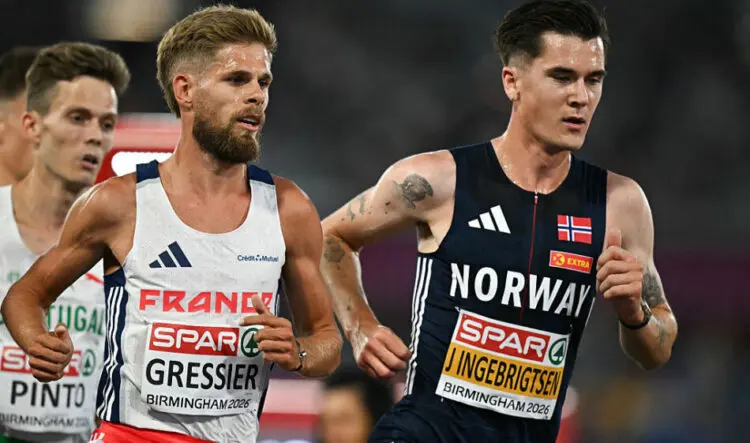
Take a look at the European Athletics Championships in Birmingham. Jakob Ingebrigtsen stole the show with what looked like the mother of all textbook comebacks. Yet, in all of his 11 months out through injury, he never referred to it that way. Correct me if I'm wrong, but I don’t believe Jakob is a superstitious man. So why avoid the word?
To the casual fan, a return from injury, illness, or a long absence is the very definition of a comeback. We love the drama of a phoenix rising from the ashes. Yet, for elite competitors, the word carries a hidden weight that feels like an insult. It implies that they left. It suggests that, while they were away, they lost a piece of who they were.
To understand why athletes push back, we have to look outside the stadium and tune into hip-hop history. In 1989, the rapper LL Cool J was being hammered by critics and peers alike. After his third studio album, Walking with a Panther, many claimed he had gone soft and fallen off the top spot.
hat followed was a blistering response with his 1990 single, “Mama Said Knock You Out”. The track was famously inspired by a conversation with his grandmother, who saw him worrying about his rivals and told him to simply knock them out. Leading off the song with the now-iconic phrase, "Don't call it a comeback," Cool James told his critics right away that he had never actually left. He hadn't fallen off; he was just getting ready for the next round.
In Birmingham, the track was full of athletes channeling exactly the same energy. Ingebrigtsen never saw his return as a reset. Just like LL Cool J, he never stopped seeing the next race as a continuation of his dominance. No matter what he went through between those consecutive titles, his steadfast mindset played a crucial part in achieving them. On the surface, a fourth consecutive 5000m gold is the most fairytale ending a return could have. But these journeys come in all shapes and forms, and there is beauty to be found in all of them.
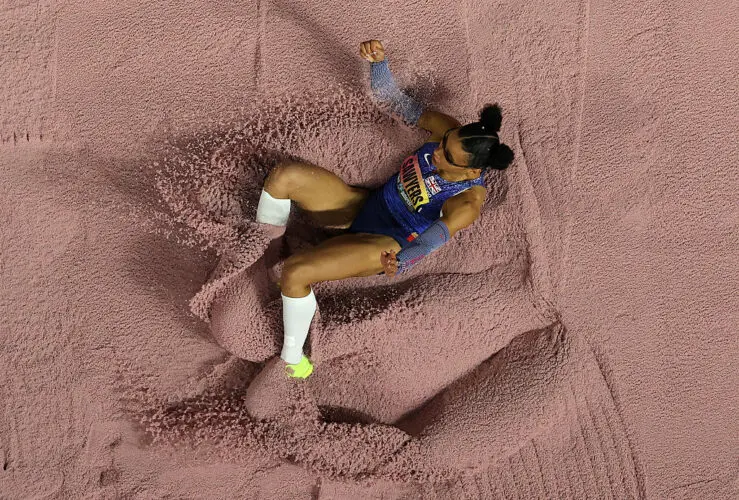
Take Jazmin Sawyers. I know, I write about her a lot! In 2024, she faced a heartbreaking Achilles rupture in her take-off leg. It required surgery and a lengthy rehab, the facts and feelings of which she openly shared on social media. Her return to competition was filled with promising ups and frustrating downs. For those who witnessed her persevere through all of them, that’s what makes her 6.99m silver medal at the Europeans – not ot mention Commonwealth gold – so sweet. There were moments when it seemed like it might not happen, but Jazmin knew a good jump was in there somewhere. She just had to keep going to find it on the right day.
These moments can take days, or they can take years. The prize for the shortest turnaround time goes to Swiss talent Audrey Werro. After a devastating fall in the 800m semi-finals, many assumed her championships were over. But elite athletes operate on a different clock. Werro had just one night to turn things around. She did so in magnificent fashion, bouncing back onto the track to take home the gold.
For Georgia Hunter Bell, the timeline stretched over five years. Her journey required a complete reinvention. She left the sport to pursue a successful career in tech and even won a duathlon world championship along the way. It is up to Georgia whether she wants to label her return to athletics a comeback but I would argue that the character traits that make her a champion were always there and never left; they were just temporarily directed at different things.
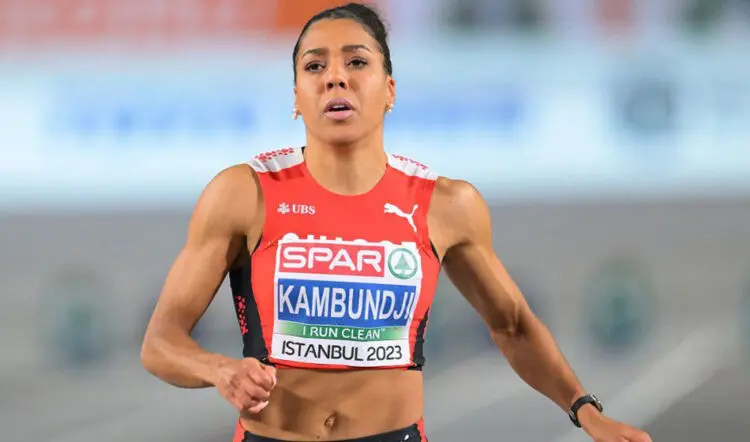
Perhaps the most profound transformation of the championships belonged to another Swiss star, Mujinga Kambundji. The sprinter gave birth in November last year and returned to international competition just eight-and-a-half months later. While she compared the intense process of her postpartum return to an injury rehabilitation programme, it feels like an understatement to call her reappearance over 200m a “comeback”. With her son, Léon, watching from the stands, returning to racing as a mother proved to be something much bigger than sport.
These are five examples of athletic journeys that could technically be defined as comebacks, but the labels we use matter less than the truth they reveal. We celebrate these moments because they give us permission to believe that an athlete's best story doesn't have to be their first one.
There is something particularly compelling about an athlete making a return because athletics is so brutally honest. You cannot fake fitness. You cannot disguise where you are when the gun goes or your foot leaves the take-off board.
There are comebacks and there are continuations. A traditional "comeback" narrative carries heavy expectations and unfair questions: Are they back to their old level? Can they return to their former self? That is why it is vital that only the athlete gets to define their moment.
The argument for these journeys becomes strongest when we treat a return not as a restoration of the past, but as the discovery of who an athlete can become after the thing that changed them. "Comeback" suggests going backward to reclaim a ghost.
A second starting line suggests moving forward into the unknown and everyone deserves a second starting line. So next time you see a runner step back onto the track after a long lay-off, save the sentimentality. Don't call it a comeback. Just sit back and watch them open the next chapter.