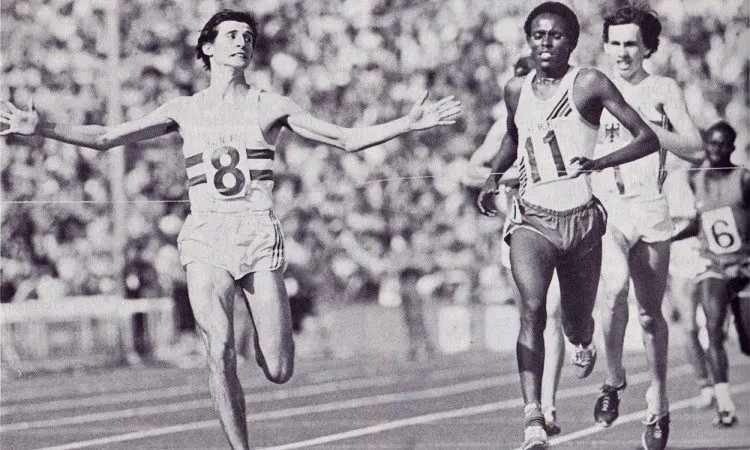
UK, December 28, 2020

Ask the physio - video clinic

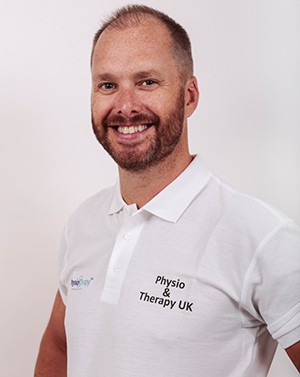
Send us your injury queries ahead of a video clinic with resident AW physio Paul Hobrough

Worried about an injury? Concerned that running niggle could be about to get worse? Well Paul Hobrough of ichatPhysio is here to help.

We will be conducting a video clinic with the resident AW physio in early January to get his expert advice on how to keep you and your body happy and healthy.

Get off on the right in foot in 2021 and share your queries via the form below.

Sorry, this form is now closed. Watch the video clinic with Paul Hobrough via our website in January.

Lead photo via Shutterstock

» For more on the latest athletics news, athletics events coverage and athletics updates, check out the AW homepage and our social media channels on TwitterFacebook and Instagram

Tony Bowman battles through a tough year

After recovering from heart problems the remarkable veteran sprint hurdler has struggled to train and compete in 2020 and lost his wife to Covid-19 but he refuses to be downbeat

Overcoming adversity is a regular theme in athletics. Yet Tony Bowman has endured far more than his fair share of problems in the last year or so.

The 85-year-old has undergone surgery to correct irregularities in his heart and then, earlier this year, his wife died after falling ill with coronavirus.

In an attempt to maintain his own impressive levels of fitness when training facilities were closed due to the pandemic, he bought his own set of hurdles and began practising on an all-weather hockey pitch, only to find there are barely any competitions he can actually do.

Despite this he talks with optimism about 2021 and is looking forward to attacking world masters records in his age group.

Of course the Leeds-based athlete is not merely a ‘tough nut’. He has considerable talent too.

After being inspired by athletics after watching the 1948 London Olympics as a teenager with his dad, in 1952 he won a silver medal in the sprint hurdles at the English Schools Championships in Bradford and then, after a break of many years, he returned to the sport as a veteran to more or less carry on where he left off.

“I gave up sprinting when I was about 26 and then concentrated on playing hockey and tennis,” he says. “But then someone told me about veteran athletics and I was 42 at the time.”

Back in 1981 he ran the first London Marathon but did not believe he was suited to running long distances so he reverted to speed work. It was a smart move, because in addition to his masters titles he won the historic New Year Sprint handicap race in Musselburgh in Scotland in 2007, netting himself £4000 in the process.

In recent years this remarkable man has won world and European masters titles in sprints, hurdles and combined events and has broken world records recently in the over-80s age group.

Bowman fizzes with energy when he talks. “I’m very competitive and don’t seem to have lost that as I’ve got older,” he enthuses. “If anything I’ve got more competitive.”

For years he has paid for his own travel to international masters championships, winning multiple gold medals for Britain, using his own savings and pension. “I don’t get any funding or sponsorship whatsoever,” he says. “The only sponsorship that I’ve ever had is with David Lloyd where they gave me free membership for about three years with a tracksuit and top etc, but then the firm changed hands and they dropped all the sponsorship.

“Fortunately I’ve worked all my life and never been a smoker or a drinker so I use my savings and pension. It’s something I absolutely love so I don’t regret it.”

If he does have one regret, it is maybe not focusing more on athletics as he emerged from his teenage years. After starting national service with the RAF he became intimidated by the increased height of hurdles as he got older and temporarily quit the sport. Still, he had great fun at the time as a young hurdler.

One of his amusing memories involves racing on grass at Twickenham where his shorts literally began to fall down during the race. “I was wearing a pair that my mum made because we didn’t buy shorts in those days, we had them made for us,” he remembers. “I reached down to pull them up and a guy whizzed past me to pip me on the line!”

These days Bowman makes sure he buys shorts with stronger elastic. Lately he has also used the pandemic-hit period to alter his technique. He says it’s been “a bit of a drag” to pace out his own hurdles on the hockey pitch but he has taught himself to hurdle with his weaker leg.

“I never realised how difficult it could be,” he explains. “It’s like trying to write with your other (weaker) hand. I’ve been practising for 12 months and I’ve just about cracked it now. I can hurdle with alternate legs but I need a race now to try it out.”

He adds with caution, though: “You have to be careful hurdling at my age. I realise that. But I think to be honest I’ve had more falls as a kid than I do these days. I once fell when I was about 13 at the White City and I think I still have the cinders buried in my knee now.”

By staying fit he hopes he will keep any health problems at bay, too. “I was having problems with my breathing due to atrial fibrillation,” he says. “I had a jump leads on my chest a couple of times and then a procedure when they go through the groin and burn the inside of the heart. But at the moment my heart seems to be okay.

“I had a dose of the virus in March and that brought on atrial fibrillation again but gradually it’s subsided, and I train back to normal most days. And I never give it a thought that I should reign it in or anything. I just go for it!”

Sadly his wife did not recover from the virus. “We definitely had it (coronavirus) because my wife, myself and son had it. Myself and my son were in bed ill with it for a couple of days but unfortunately it took my wife. She passed away six days after contracting it in March. And because she was in an intensive ward, I never got to see her.”

Bowman himself is still going strong, though. His goal? To reach the age of 120!

“My ambition is to run the 100 metres when I’m 100 and to live until I’m 120,” he says. “I will be 100 in only 15 years’ time and I only feel in my 50s now.

“You ask me what’s kept me going. I think I’m one of these very fortunate people. Not only do I do a lot of sport but I’m keen on dancing – ballroom, salsa, jive, cha-cha-cha, all that jazz – and I’ve won competitions with my dancing partner with Strictly Come Dancing people like Craig Revel Horwood judging. That all helps to keep me young.”

His advice to ageing athletes who want to succeed? “Well, a lot of it is in the genes,” he says. “But if you’re enthusiastic for the sport then that counts for a lot. What can I say? Just keep at it.”

READ MORE: Eric Shirley's rise from rags to running royalty

He reckons more older athletes should do shorter and more explosive events too. “I see a lot of people pounding around the streets because they want to do the London Marathon or a 10km. When they were at school, they weren’t doing that. They would be doing things like sprints.

“There is a whole wonderful world of masters athletics where you can do events all over the world – every track and field event, male or female – and so many people don’t seem to know about it but instead they spend their time pounding around the streets.

"They should try sprinting or high jumping or throwing the shot, discus or javelin.”

» This is an edited version of a feature that first appeared in the December issue of AW magazine, which you can buy here

» For more on the latest athletics news, athletics events coverage and athletics updates, check out the AW homepage and our social media channels on TwitterFacebook and Instagram

Kate Avery and Emile Cairess win Podium 5km - weekly round-up

Limited action over the festive period includes road races at Barrowford and cross country in Guernsey

Podium 5km, Barrowford, Lancashire, December 27

Emile Cairess followed his 10km success in September with another Podium event victory, this time over 5km. Clocking 14:11 in wet and cold conditions, the European under-23 10,000m bronze medallist won a close race ahead of Ross Millington (14:12) and Joe Wigfield (14:13).

In that sub-15:00 race, a total of 20 runners dipped under that mark, including Richard Allen (14:14), Sam Charlton (14:16) and Osian Perrin (14:18), plus 2012 Olympian Nick McCormick, who ran his fastest time for six years with 14:21 in seventh.

The sub-16:30 race saw the best of the women competing and Kate Avery (pictured top) clocked 16:18, with Hannah Nuttall second in 16:38 and Eleanor Bolton, who was fastest woman at the 10km, third in 16:59.

Also in that sub-16:30 race was AW shoe guru Paul Freary (pictured top, behind Avery) who ran 16:14, while triathlete James Scott-Farrington won in 15:04.

AW subscribers can find a more in-depth report and results in the AW Clubhouse here.

Boxing Day Open Full Course, L'Ancresse, Guernsey, December 26

Racing over 4.75M, Alex Rowe gained a clear win over Dan Galpin in the men's race, 26:43 to 27:04.

Megan Chapple comfortably won the women's race in 31:11.

Israeli Half Marathon Championships, Gan HaShlosha National Park, December 25

European 10,000m champion Lonah Chemtai Salpeter, who ran 2:17:45 to win the Tokyo Marathon in March, won the Israeli half-marathon title in 73:38.

Tadesse Getahon won the men's title in 62:09.

Sant Silvestre del Masnou 5km, Spain, December 26

Spain's Boubacar Sabaly and Morroco's Douae Ouboukir won in respective times of 14:36 and 16:55.

» Subscribers to AW magazine can access the AW Clubhouse as part of their membership for further reports and results – click here

» For more on the latest athletics news, athletics events coverage and athletics updates, check out the AW homepage and our social media channels on TwitterFacebook and Instagram

Coe chronicles: 1987 to retirement in 1990

In the sixth and final part of our series on Seb Coe's running career, Steve Smythe looks at the final three years of his competitions

The first three parts of this series are available on the AW website here. The final three parts are available to subscribers exclusively in the AW Clubhouse.

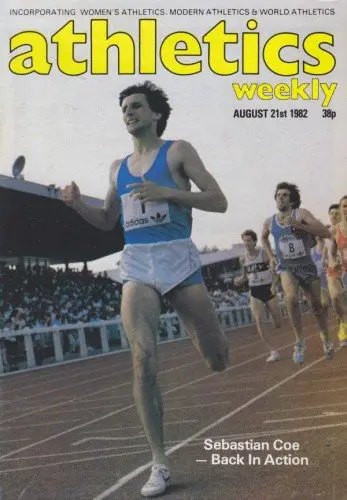
Seb Coe's last few seasons did not go exactly to plan. There was no 5000m, no records and no major championship medals although he did contest his first Commonwealth final.

He was devastated to miss the Olympics after originally being selected but his Olympic place was inexplicably taken away by the British Amateur Athletics Board (BAAB), though he showed enough in his 1989 season and World Cup run in particular to show the British federation made a major error in 1988.

» The first part of our ‘Coe chronicles’ looks at his greatest top 10 races. Click here to read.

» Part two analyses his early races as a teenager. Click here to read.

» Part three covers Coe’s races from 1976 to his first world records in 1979. Click here to read.

» Part four covers his competitions from 1980 to 1983. Click here to read. 

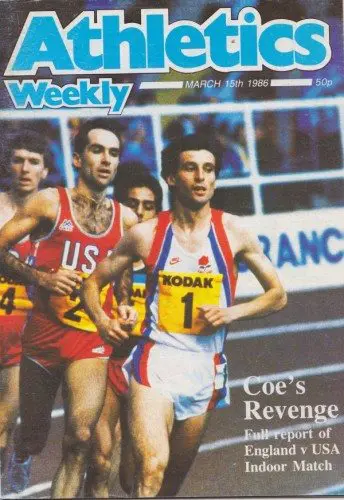
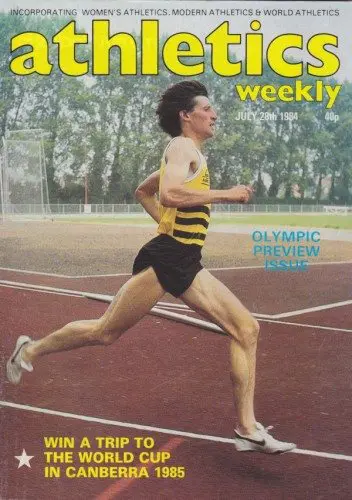
» Part five looks at the 1984 to 1986 seasons including his second Olympic gold. Click here to read. 

» Part six, here, revisits the twilight of his racing career from 1987-1990.

1987

Nike Chingford League 5M, Victoria Park, February 7

3rd 23:20 (PB)

An indoor tour in the USA had to be cancelled due to flu and he returned to competition at this probably slightly short course He was beaten by Steve Crabb (23:00) – who would gain Olympic selection the following year – and evergreen UK road racer Keith Penny (23:04).

Hillingdon 5, Ruislip, February 15

8th 23:43 (PB)

On this tougher course, he found the competition hard too though was only 21 seconds down on the winner Peter Tootell (23:22). Kevin O’Connor (23:23), Karl Harrison (23:24), Penny (23:35), Nick O’Brien (23:38), Andy Catton (23:40) and Gary Ribbons (23:42) all enjoyed the scalp of the double Olympic champion.

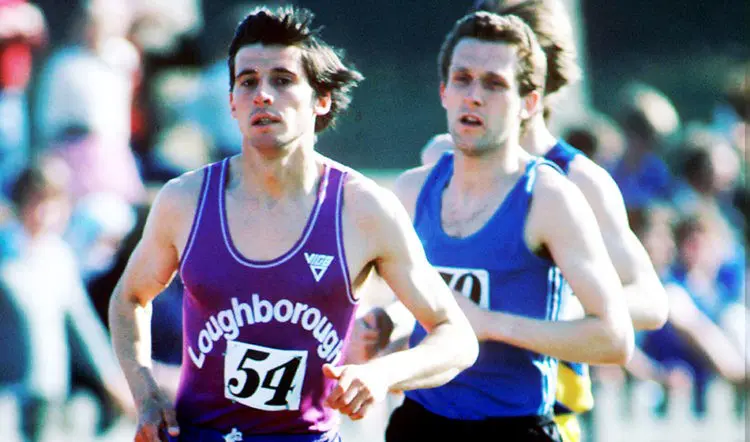
The 1974 European 10,000m silver medallist Tony Simmons (23:46) and Dumpleton (his English Schools conqueror 15 years earlier at nearby Hillingdon Park) ran 23:57 to complete the top 10.

England v USA 3000m, Cosford, March 13

1st 7:54.33

With all eyes on him making his serious track debut at 5000m in Zurich in the summer, he opened his track campaign with that in mind and just missed his PB as he took the lead just after the bell in completing a smooth-looking 2:33 final kilometre to win from Brian Abshire’s 7:55.49 (see right).

Thames Valley Harriers Relay, Cranford, March 28

3.5M: 16:15 (fifth fastest)

In his fourth successive running - previously 16:16, 16:15 and 16:08 - he maintained his consistency and ran leg four moving from fourth to second.

Basildon’s future UK 10,000m record-holder Eamonn Martin set off 20 seconds clear of Steve Harris - Britain’s leading runner in the European 10,000m and he incredibly ran Martin (16:11) down with a stunning 15:47 fastest leg to win by four seconds.

Southern 12-stage Road Relay, Wimbledon, April 4

3.3M: 15:26 (second fastest)

He ran leg four moving from sixth to second and predictably only his team-mate Harris was faster with 15:12 as Haringey finished just 21 seconds down on the winners Luton in finishing a very close third.

British League 800m, Portsmouth, May 9

1st 1:46.18

In his outdoor track debut and still insisting he was focussing on a fast 5000m for the season, and having done no real speedwork, he showed how sharp he was following John Gladwin through 400m in 53.8 and then kicking past the Commonwealth 1500m runner-up (1:46.81) 80 metres out.

He won by five metres in a British League record. His last 400m was around 52.2. He also produced a 46.8 4x400 leg.

An Achilles tendon injury though would stop him doing any more track races in the season and he was unable to take up his World Championship selection.

1988

East Rutherford 3000m, New Jersey, February 13

DNF

His return race after a nine-month break could not have gone much worse. Not at full fitness he was lapped in a race won by Brian Abshire (7:41.57) though curiously Coe dropped out with just 200m to go

At the meeting Peter Elliott, who was to be a thorn in Coe’s side in the summer, set a UK indoor mile record.

England v USA 3000m, Cosford, March 12

2nd 8:05.80

He finished but was well beaten by his England team-mate and the World Championships 1500m representative Adrian Passey (7:57.84) in what would prove to be his last ever indoor race.

TVH Road Relays, Cranford, March 19

16:12 (3rd fastest) Team 4th

Quicker than 1987 and within range of his best ever time, he moved up from 10th to third on leg three though was surprisingly outkicked at the end of his leg. Only Olympic 10,000m finalist Nick Rose (15:56) and Mike Williams (16:11) were quicker.

Southern 12-Stage Road Relay, Wimbledon, March 26

15:24 (3rd fastest). Team 2nd

This time he was 15 seconds down on 1987 but he did easily run the fastest on leg eight and in his silver medal winning team. Overall though he was a lot slower than fastest leg Ovett (who was otherwise going to have a poor 1988) who ran 15:03 and John Sherban (15:17). Coe did not run for Haringey in the National 12-stage.

Middlesex Championships 800m, Enfield, May 14

1st 1:48.8

In his first outdoor track race for a year, he again supported his county, having unusually missed last year’s race through injury. He produced a fairly similar performance to 1986 where he also ran a 52.9 second lap as he easily beat Neil Ovington (1:51.6).

GB v USSR/France 800m, Portsmouth, June 19

1st 1:48.63

The time was slow but a 51.88 second lap did see off UK champion Paul Herbert (who ran 1:45.64 in the recent UK race but 1:49.22 here).

Lausanne 800m, June 24

2nd 1:45.50

After two slow races, he produced his fastest time since 1986, following James May through a 50.25 first lap to be well clear into the second lap. In blustery conditions, he was still five metres clear as he hit the straight but was picked off by fast finishing world 1500m champion Abdi Bile’s 1:45.25.

Peugeot Talbot Games 800m, Crystal Palace, July 8

1st 1:46.13

Coe must have thought he had done more than enough for Olympic 800m selection when he ran a perfect tactical race and strong last 200m to sprint past future Olympic champion Paul Ereng (who ended up fourth in 1:47.14) as Steve Heard followed him home in 1:46.69.

Peter Rono, who would win the Seoul 1500m, was ninth in the 1500m while the future 5000m winner John Ngugi was outsprinted by Paul Davies-Hale, who did not even make the GB team.

Rapperswil 1500m, Switzerland, July 31

1st 3:37.74

Needing a qualifying time for Seoul at the longer distance, he comfortably achieved it but unfortunately picked up a cold.

AAA Championships 1500m, Birmingham, August 8

4th heat 3:45.01

He had complained all season of the controversial first two past the post system and with Cram having won the Dream Mile in 3:48.85 and doing the 800m here, he knew he had to run the 1500m even though he was the reigning double Olympic champion if he wanted to guarantee selection. Unfortunately, illness meant he was struggling and even if his heat he was fading in the last 200 metres.

Subsequently, he was well beaten by Passey (3:43.64), Steve Halliday (3:44.54) and Mark Kirk (3:44.55) and he failed to make the final even as a fastest loser where he would run have against Ovett on an UK track for the first ever time.

The final was won by Elliott (3:44.48) and Crabb (3:45.33) who secured their Seoul places.

The 800m was won by Cram from McKean who confirmed their two-lap places though ultimately both would bow out in the 800m quarter finals in South Korea. The selectors chose Coe at 800m and Cram for 1500m for the third spot in the team but sensationally the British Board refused Coe’s selection and chose Elliott to double which ultimately caused an ill-judged media frenzy (mostly against Elliott).

It meant though after four Olympic medals in the previous two Games he wouldn’t even be in the British team. The IOC even discussed giving him a wild card spot but that was never followed through.

Berlin 800m, August 26

2nd 1:47.87

In a slow tactical race, McKean (1:47.60) comfortably outkicked Coe, who was at least now back to full health.

Koblenz 800m, August 28

2nd 1:43.93

If Koblenz did nothing to show the British Board they had made a mistake, this race may have shown that writing off Coe was a mistake. He couldn’t hold world indoor champion Jose Luis Barbosa (1:43.34) but with his fastest time for three years he did beat 1:42.28 man Sammy Koskei (1:44.06) and showed he would surely have made the Seoul final at the very least.

The bronze medal there ultimately was taken in a fast race in 1:44.06.

Rieti 1500m, August 31

3rd 3:35.72

His one decent 1500m of the year and his final race of the season did not prove he would have necessarily have been a factor in Seoul at this distance as he lost to future world indoor 3000m champion Gennaro di Napoli (3:34.72) and Passey again (3:35.14) but he did beat Olympic selection Crabb (3:36.24).

1989

TVH Road Relay 5x3.5M, Cranford, March 25

16:11 (3rd fastest)

After saying he would never run for Britain again after Seoul, he changed his mind and was selected for the European Indoor 800m, but had to withdraw with a calf injury and returned to competition in his almost annual trip to Cranford. His sixth and final run came after a successive 16:16, 16:15 and 16:08, 16:15 and 16:12! He moved from eighth to second. Only Swansea’s Nigel Adams (15:59) and Geoff Hill (16:03) were quicker.

South of England 12 stage Road Relays, Wimbledon, April 1

15:41 3M 553 yds (8th fastest)

Running leg six, he moved Haringey from eighth to fourth but it was his slowest ever time even though he was easily his club’s quickest on the six short legs and contributed to their team silver and did overtake former English National champion Bernie Ford.

Ovett was eight seconds quicker than Coe with an equally modest run on leg eight but for once over the same distance. The 1983 World Championships 5000m representative Dave Clarke was easily fastest with 15:07 with Seoul Olympian Crabb (15:20) second best.

Middlesex Championships 800m, Enfield, May 20

1st 1:47.2

He kept his county run of wins going but had his hardest race in the event yet as Crabb (1:47.9) finished five metres down with Richard Lynch (1:48.0) also close by.

Euro Clubs Championships 800m and 1500m, Belgrade, June 3/4

1st 1:46.60, 1st 3:51.89

Haringey could only finish fifth but he easily won his two races with a reasonable 800m and a tactical 1500m victory.

Birmingham Invitation 800m, June 24

1st 1:46.83

The race was part of the Britain v Soviet Union v Germany match though came the day after the actual match 800m won by McKean in 1:48.10.

Olympic 400m hurdler Martin Gillingham blasted the first lap in 49.77 with Coe right behind. He was still on world record pace at 600m but died a death in the last 100m and completed his second lap in not much under 57 and only just about held off Kevin McKay (1:46.94).

Roverto 800m, July 21

1st 1:45.97

Again his winning margin was just 0.11 of a second ahead of a fellow Brit and this time he was followed in by 1983 European Junior champion Ikem Billy (1:46.08) who had never been so close before.

Viareggio 800m, August 2

1st 1:46.04

He kept his unbeaten run going this time outsprinting Senegal’s Moussa Fall.

AAA Championships 1500m, Birmingham, August 13

1st 3:41.38

At the fourth attempt he finally won a AAA 1500m title but not without difficulty. Crabb fell just before the bell and in stumbling and having to hurdle Crabb (pictured below), Coe lost 15 metres and hurt his hamstring. He gradually closed and then produced a stunning 25.4 last 200m to easily run down Britain’s European Cup representative Tony Morrell (3:41.93). His 51.8 final circuit also ensured a spot in England’s Commonwealth Games team and got him Britain’s World Cup spot.

A very upset Ovett, who finally got to run against Coe on a British track, just went through the motions and was 9th in 3:45.85 having claimed Andy Norman had exclusively offered him money to compete against Coe.

Zurich Weltklasse 1500m, August 16

2nd 3:34.05

Ten years after setting a world record he returned to Zurich for the last time and was given a big send-off. In his fastest 1500m for three years, he was well placed throughout and produced a 54.8 last lap despite a tight hamstring after his stumble at Birmingham.

However, he was two metres short at the finish behind Kenyan Wilfred Kirochi (3:33.85), who would go on to win the silver medal at the Commonwealth Games and the next World Championships.

Cologne 800m, August 20

4th 1:45.13

Through 800m in just inside 52 seconds he did set a clear season’s best and had a good battle throughout the last lap with European Cup 800m winner McKean (who would also win the World Cup) but the Scot held him off to finish third in 1:44.89 but both were well down on winner Ereng (1:44.01).

Berne 800m, August 29

1st 1:43.38

All those who had written Coe off as yesterday’s man were made to look foolish as he ran his fastest 800m for four years and went second in the world rankings. He followed the pacemaker through 400m in 50.7 and then pushed clear along the backstraight and held his form well to win by over 10 metres from Babacar Niang (1:45.07). Tony Morrell (1:45.13) was fourth.

World Cup 1500m, Barcelona, September 9

2nd 3:35.79

In what proved to be his last great race, Coe moved ahead at 1200m (2:57.74) and began to accelerate. He led into the straight but world champion Bile, the world leader at 3:30.55, kicked up to his shoulder and then cut across him. This caused Coe to check his stride and try and kick again and he finished four feet down having covered the last 300m in 38 seconds despite losing a few metres.

Bile won in 3:35.56 with Jens-Peter Herold filling the same position as the Olympics in third. The British team protested but the appeal was inexplicably thrown out 2-1.

McVities 800m, Crystal Palace, September 15

1st 1:45.70

Eight years after pacing him to a still-standing world record in Florence, world 800m champion Billy Konchellah led through the bell in 50.74 from Coe (51.6) but Coe was ahead at 500m and well clear at 600m in 77.85.

As it was his last ever race in Britain, he chose to cruise in and wave to the crowd in the knowledge that he had also sewn up a Commonwealth 800m place too. Billy, already confirmed in the Auckland team, was 10 metres back in second in 1:46.81.

Coe received a standing ovation from the crowd at the stadium where he had set a 1:56.0 PB 16 years earlier.

1990

Hobart 1000m, January 4

1st 2:21.0

In his first track race of a new decade, he comfortably held off 1982 Commonwealth 800m champion Peter Bourke (2:21.5) in very windy conditions.

Sydney 800m, January 14

1st 1:47.66

After a 55.5 first lap, he went to the front and with a 52.1 last 400, he comfortably held off Brian Whittle (1:48.18) and Matt Yates (1:48.46), two athletes who would ultimately beat him in Auckland (pictured below).

Commonwealth Games 800m, Auckland, February 1

6th 1:47.24 (1:49.83 ht, 1:47.67 semi)

After only finishing fourth in his semi final and unable to change pace, things did not look promising for Coe and he struggled in a rough and messy final finishing sixth ahead of an equally poor McKean (1:47.27).

Little-known Kenyan Sammy Tirop (1:45.98) was a shock winner with Yates (1:46.62) also surprising with a huge PB and his late sprint ensured he was a clear UK No.1 ahead of Whittle (1:46.85) in fourth.

Afterwards it transpired Coe had a respiratory infection and he subsequently withdrew from the 1500m heats and his career was over. Elliott, in his greatest ever form, easily won the 1500m in 3:33.39.

Photographs by Mark Shearman

» For more on the latest athletics news, athletics events coverage and athletics updates, check out the AW homepage and our social media channels on TwitterFacebook and Instagram

Coe chronicles: 1984 to 1986 - Olympic gold and Euro 800m title

Part five of Steve Smythe's six-part series on Seb Coe's middle-distance running career looks at Los Angeles 1984 and Stuttgart 1986

The first three parts of this series are available on the AW website here. The final three parts are available to subscribers exclusively in the AW Clubhouse.

The period from 1984 to 1986 was a good one for Seb Coe after the lows of 1982 and 1983. He survived a scare at the Olympic trials to make the team and successfully defended his Olympic title and though he was easily overshadowed by Cram in 1985, he had a solid season and came back in 1986 to finally win a major 800m title.

» The first part of our ‘Coe chronicles’ looks at his greatest top 10 races. Click here to read.

» Part two analyses his early races as a teenager. Click here to read.

» Part three covers Coe’s races from 1976 to his first world records in 1979. Click here to read.

» Part four covers his competitions from 1980 to 1983. Click here to read. 

» Part five, here, looks at the 1984 to 1986 seasons including his second Olympic gold.

» Part six revisits the twilight of his racing career from 1987-1990. Click here to read.

1984

Thames Valley Road Relays, Cranford, March 31

3.5M: 16:16 (fastest leg)

Not having raced for eight months, and returning after serious illness, his fitness was surprisingly good as his leg three run saw him take over in 20th and make up 10 spots with the fastest overall leg though Ccross country international Deon McNeilly (16:18) came close.

You’d think there would have been great interest in the Olympic champion’s return but the report and result did not appear in AW until May 12 six weeks later!

Southern Road Relay, Wimbledon, April 7

3.3M: 15:07 (fastest leg)

His team (Haringey) could only finish eighth but again his endurance was promising and his was the quickest overall short leg from Julian Goater (15:17), who had surprisingly made the final of the first ever World Championships 5000m and had been the only Briton to do so.

National 12-stage Road Relay, Sutton Park, April 21

3M: 14:00 (2nd fastest leg)

He moved up from 11th to fifth on leg four but missed out on the overall fastest leg by just a single second to Highgate's future 2:10 marathoner Mike O’Reilly.

Middlesex Championships 800m, Enfield, May 19

1st 1:45.2

He had opened his track season with a 46.8 British League 4x400m leg the week before but his first individual race saw him make his Middlesex debut having been born in Fulham. He led through 400m in 52.0 and held on well with a 53.2 final circuit to win by almost five seconds from Hamish McInnes (1:50.0).

Southern Championships 1500m, Crystal Palace, June 2

1st 3:43.11

His first 1500m of the year saw him run a 53.0 last 400m as he passed British Olympic Trials 5000m winner Eamonn Martin (3:44.39) with 80 metres to go.

AAA Championships 1500m, Crystal Palace, June 24

2nd 3:39.79

With world champion Steve Cram and world record-holder Steve Ovett pre selected, only one place in Britain’s Olympic team remained and this was seen by everyone as the Olympic trial.

Coe survived a few early pushes and trips but was in front at the start of the last lap ahead of Peter Elliott, who had been fourth in the 1983 World Championships 800m but wanted to double in Los Angeles.

His rival went ahead 250m out but Coe passed him at the beginning of the straight only to buckle in the last few metres as Elliott (3:39.66) was much the stronger. Some thought that would mean Coe would have to focus on the 800m, for which he was pre selected but the selectors ignored concerns that he may still not be fully healthy and they controversially chose him to double over the Trials winner.

Oslo 800m, June 28

1st 1:43.84

Just five days after his stunning loss to Elliott, Coe showed more familiar form following the pacemaker through 400m in 51.03, then decisively kicking to victory ahead of James Robinson (1:45.12), who had run 1:43.92 in the US Trials and failed to make their team in fourth spot.

Coe’s time meant he became the first ever runner to break 1:44 five times.

Brigg Mile, Haringey July 4

1st 3:54.6

In a largely solo run, Coe put together laps of 59.8, 60.7, 58.0 and 56.1 to complete his competitive preparation for the Olympics. Second was Kirk Dumpleton (4:08.1) who had beaten both Coe and Ovett in the 1972 English Schools race, 12 years earlier.

Olympic Games 800m, Los Angeles, August 6

2nd 1:43.64 (1:45.51 semi, 1:46.75 and 1:45.71 heats)

No one was able to seriously challenge Joaquim Cruz who put together the greatest ever quartet of 800s -1:45.66, 1:44.84, 1:43.82 and 1:43.00 on successive days, and it was the first time athletes had ever had to cope with such a gruelling timetable.

The winning time was the third fastest in history after Coe’s two world records. However, Coe ran brilliantly for his second successive silver but he was far happier this time than he was in Moscow. But for Cruz of course, Coe’s time would have easily been an Olympic record.

Coe’s 200m splits were 24.52, 26.77, 26.64 and 25.71 and he survived a minor clash in the straight as he passed Edwin Koech and fought off bronze medallist Earl Jones (1:43.83) but it made no difference to his medal.

It was his third best ever time after his record runs. Afterwards he proved he was better at running than prophecy as he said: “That was my last chance for an 800m title.”

Olympic Games 1500m, Los Angeles, August 11

1st 3:32.53 (Olympic record) (3:35.81 semi)

While Coe’s sequence of 800m races was of no comparison to Cruz, no athlete had ever gone into into his main event with such a quality series of 800m races and he completed an astonishing Games with a brilliant victory that smashed the Olympic record. This made him Britain’s most successful ever Olympic athlete.

The fast time was even more notable considering the first lap was a cautious 58.85. With the 90,000 crowd roaring its approval, Steve Scott decided he had to make it a more honest race and he took the lead at 500 metres and powered through 800m in 1:56.81 with Coe just behind in second.

Scott was not in the same shape as his world silver medal winning form of 1983 and as he slowed he was overtaken by Jose Abascal just before 1000m.

The Spaniard (2:39.04) led at the bell from Coe (2:39.28) who was followed by Cram and Ovett – though the latter who had finished last in the 800m had chest pains and dropped out 350m from the finish to end the dreams of a British clean sweep.

Coe moved up to Abascal’s shoulder at 1200m (2:53.21) to complete a 56.29 third lap. With 200m to go, and just as Cram made a move, Coe responded himself and kicked ahead to go three metres clear on the bend and then kick even faster in the straight, holding his form magnificently, to more than double his margin.

His last lap was a spritely 53.25 and his time took well over two seconds off Kip Keino’s 16-year-old Olympic record of 3:34.91. Cram was not at his fittest after injury but was a clear second in 3:33.40 but Coe seemed unbeatable that day and many think he would have beaten anyone – even today’s best – in that sort of form.

Zurich Weltklasse 1500m, August 22

1st 3:32.39

A 55.0 first lap was promising but the second was a pitiful 60.9 and any record chance went. The bell time was very similar to the Olympics (2:39.2) but this time Coe - looking unbeatable again - blasted a 53.2 final circuit but only worked hard in the final 200m. Scott showed a return to form to place second about eight metres back in 3:33.46.

This was Coe’s fastest time since 1981 and less than half a second from his PB, despite the pacemakers failure. He injured his foot after the race and had to end his season missing a number of races including the 2 miles at the IAC/Coca-Cola meeting.

1985

5x3.5M Chingford Road Relay, March 16

16:37

In his first race for over six months, he maintained his club’s lead on leg three but they lost out on victory due to Basildon's Eamonn Martin’s fastest leg of the day (16:03). Coe was only the fourth fastest of their five-man team.

Thames Valley Road Relay, Cranford, March 30

16:15 (fastest leg)

Running leg three, he set off in tenth place and moved up to third just five seconds off the lead. His time - a second quicker than 1984 - was the fastest overall by 13 seconds from Pete Barratt. His team eventually finished a close second to Aldershot.

Southern 12 Stage Road Relay, Wimbledon, April 14

Short leg: 15:23

He ran the fastest stage on leg six, moving his team to seventh and they ultimately finished fifth. This was much better than his Chingford run and overall only world steeplechase medallist Colin Reitz (15:17) and Martin (15:19) were marginally faster though his performance was overshadowed by Ovett’s 23:23 at the back of the field for the long leg which was easily the day’s fastest.

National 12 Stage Road Relay, Sutton Park, April 27

14:27

Not warmed up properly after a late arrival, he felt a sciatic twinge and eased back and was only sixth fastest overall in moving Haringey from 25th to 19th on leg four and his team finished 16th. Billy Dee (14:00) was fastest which matched Coe’s 1984 time.

British League Division 1 800m, Birmingham, May 11

1st 1:49.37

In his seasonal track debut, he ran his slowest 800m for six years but did run a last lap of around 52.5 in defeating Roland Weedon (1:50.59).

Middlesex Championships 800m, Enfield, May 19

1st 1:44.0

This was his best ever county performance and he ran a 51.0 first lap and then ran a 25.9 200m to pass 600m in 77.0 (sub 1:43 pace) but though slowing he held his form well in a 27.0 last 200m to just miss his UK all-comers' record (1:43.97) from 1978.

He won by five seconds from former European finalist and AAA champion Pete Browne (1:51.0).

European Club Championships 800m/1500m/4x400, Haringey, June 8/9

1st 1:48.37/1st 3:47.27/47.2

He began with the 1500m and a 52 last 400m easily disposed of Olympic bronze medallist Abascal (3:48.14). In the 800m the following day he ran a 25 last 200m in defeating World Indoor Games winner Coloman Trabado. In the relay Haringey finished second with Coe's 47.2 grittily holding off individual 400m winner Angel Heras by a hundredth of a second.

Coventry Games Mile, June 16

1st 3:54.5

He ran Coventry’s first sub-four minute mile with a relaxed 53 final lap to win by 30 metres from Alan Mottershead (3:58.7).

England v USA 800m, Birmingham, June 21

1st 1:46.23

Coe won courtesy of a 25.79 last 200m but was given one of his toughest ever tests in a domestic 800m as Cram (1:46.46 - on the first part of an amazing track season) pressurised him all the way down the straight.

Peugeot Talbot Games 800m, Crystal Palace, July 19

1st 1:44.34

He had missed a month’s racing including the AAA Championships due to illness and niggles and a need to get back into hard training. He was originally scheduled to run against Cram at 1500m but Cram withdrew after setting a world 1500m record earlier in the week and chose to run the following day’s mile and instead Coe decided to switch to the 800m and take on Olympic champion Cruz for a better race but Cruz refused to run against him at late notice.

AAA champion Jose-Luis Barbosa led at a fast pace in 51.08 at 400m but was powerless to deny Coe’s 26.3 last 200m. Barbosa ran 1:45.11.

Bislett Games Mile, Oslo, August 3

3rd 3:49.22

He was just behind Cram at the bell but had no answer to his fellow Briton’s 53.0 last lap, losing contact with 200m to go and finishing almost three seconds behind the world record (3:46.31) with Jose Luis Gonzalez (3:47.79) also passing him.

IAC Grand Prix International Mile, Crystal Palace, August 2

2nd 3:56.89

A lower back problem and pinched nerve stopped him fully striding out on the last lap and he was narrowly beaten by Pierre Deleze (3:56.70) though he did close in the straight.

Zurich Weltklasse 1500m, August 21

2nd 1500m 3:32.13

Coe looked easy at 800m in 1:52.9 and was ahead at the bell in 2:36.58. However, having missed some training he was not at full strength and produce his usual kick and he was unable to drop Deleze who was roared on by a partisan home crowd and sprinted past in the straight to complete a 55 last lap and run a Swiss record 3:31.75 and go ahead of Coe on the all-time list as Coe only missed his PB by 0.18 of a second.

Cologne 800m, August 25

2nd 1:43.07

It was the first time in eight years that he lost four races in a row but it was a top quality race - his fastest non-world record run. He was just behind Cruz at 400m (49.9) and 600m (75.6) but could only manage a 27.5 last 200m as Cruz proved much the stronger and won in a world-leading 1:42.54.

He was due to run a 1500m against Ovett in Brussels the following week but he suffered a recurrence of his back problem and withdrew and ended his season early.

1986

National Indoor 3000m Championships, Cosford, January 25

3rd 7:55.58

The run of losses continued - his first indoors for 10 years - but in his first race of the winter he was very close to his PB when winning this title in 7:55.2 in 1982. He was in contention at 2000m (5:20.8) but was unable to follow the sustained bursts of Billy Dee and Dave Lewis who put in a 2:00 800m with Lewis winning in a track and championships record 7:49.61 from Dee’s 7:49.97.

UK v Hungary Indoor 1500m, Cosford, February 8

1st 3:45.65

He returned to winning ways producing a 26.6 last 200m to defeat team-mate Mark Kirk (3:47.01).

England v USA Indoor 3000m, Cosford

1st 7:54.32 (PB)

Six weeks after his loss to Lewis, he was much fitter this time and he set his first outright PB (barring a 2000m debut) since his world mile record in 1981. At 2000m (5:25.0) he was five seconds down on his January time but he was comfortably able to follow Lewis’s 2:01 800m injection of pace to the bell then power past in the last 80 metres with a 28-second last lap and win by a second from Lewis (7:55.43).

Thames Valley Harriers Relay, Cranford, March 29

3.5M: 16:08

Running on leg three, he took Haringey into the lead with his fastest ever time but he was slower than the Czech Klimes’ twins Pavel (15:57) and Petr (16:02) though a second faster than Keith Penny and Mike Gratton.

Southern 12 Stage Relay, Wimbledon, April 6

3.3M: 15:09 (second fastest)

He moved from 11th to third on leg four with a strong run well over a minute quicker than his five team mates on the short leg. He was second fastest to AAA 10km champion Steve Harris whose 14:48 took four seconds off Ovett’s lap record.

British League Division 1 1500m, Haringey, May 11

1st 3:45.27

In his outdoor track season opener, he ran a 39.8 last 300m to win easily from Alan Salter (3:49.86).

Middlesex Championships 800m, Enfield, May 17

1st 1:47.9

After a slow 55.0 opening lap he kicked in an extravagant 25.7 200m followed by a more modest 27.2.

Madrid 800m, June 4

1st 1:45.66

In windy conditions he led through 400m in 50.8 and though slowing held on to win by over two seconds from world silver medallist and 1:43.56 performer Druppers (1:47.76).

Hengelo 1500m, June 27

1st 3:34.32

Having controversially missed the AAA Championships but still seeking a team spot at both 800m and 1500m at the two Championships, he showed after a minor injury his exceptional form. He enjoyed a clear win over Abascal (3:35.38) in one of the fastest times in the world.

Stockholm, 800m, July 1

2nd 1:44.17

American Johnny Gray won in a world leading 1:43.85. Coe was eight metres behind at 400 (50.8) and was still five metres back at 600m (77.0) and closed it to three at the finish to at least set a then European and Commonwealth leading time for the year which looked promising with the upcoming Championships.

Beverley Baxter 1000m, New River, July 16

1st 2:14.90

In very windy conditions, he was paced to just short of 600m, but eased round to 800m before unleashing a 25.9 last 200m to set a world lead and win by eight seconds from Matt Barnes. The previous lead was Cram’s 2:15.77 a few days earlier.

Peugeot Games 800m, Crystal Palace, July 19

1st 1:44.10

He easily gained revenge on Gray (1:44.72) being just behind the leader at 400m (51.27) and then kicking hard 270m out.

Commonwealth Games 800m, Edinburgh, July 28

3rd semi 1:48.07

After winning his heat in 1:53.13, he struggled four hours later and finished third – a place up on Paul Forbes of Scotland. However the virus which affected his breathing and made him feel the worse he has for any race and he scratched from the final which was impressively won by Cram (1:43.22).

Zurich 1500m, August 13

2nd 3:35.22

He returned after illness and showed good form with a 53 last lap but showed poor concentration as he eased off slightly and was pipped by Scott (3:35.14) on the line.

European Championships 800m, Stuttgart, August 28

1st 1:44.50

Eight years after first trying to win a major outdoor title over two laps, he finally succeeded as he ran one of his greatest tactical races. Last at the bell, he moved up on the outside on the second lap as Tom McKean held Cram off on the final bend before easing past both in the straight as Britain got a historic clean sweep of the medals.

His last 200m was a superb 24.7 though he only won by a metre from an inspired McKean (1:44.60) and a disappointed Cram (1:44.88) who was not at his sharpest after a calf injury and was some way below his Edinburgh form.

European Championships 1500m, Stuttgart, August 31

2nd 3:41.67 (3:39.03 ht)

While he was perfect tactically in the 800m, he was too far back at the bell when Cram made a predictable long kick for home and though he got the gap down to four metres along the back straight, he lost another metre in the last 200m as his rival (3:41.09) ran a superb last 300m of 37.9 and final 400m of 50.9.

Rieti 1500m, September 7

1st 3:29.77 (PB)

Seventeen years earlier, Peter Coe drew up a projected progression in the hope that his son (then aged 13 with a PB of 4:31.8) would see a 3:30 in 1980.

Six years late he reached the target smashing his PB by over two seconds with a world lead but he frustratingly missed the world record by only 0.31 of a second to go equal third all-time behind Said Aouita (3:29.46) and Cram’s (3:29.67) world records.

Through 800m in 1:52, he looked on schedule at 1200m in 2:48.10 (Aouita was only 2:49.4 in his world record). He finished well but not quite as quick as the Moroccan and his 55 last lap left Maree - whose PB he equalled - 25 metres in arrears. The American (and former South African) ran 3:33.44.

McVities 800m, Crystal Palace, September 12

1st 1:44.28

This was announced as his final international 800m and decathlete Eugene Gilkes paced him through 400m in 50.66 and he was alone through 600m in 76.6 which is 1:42 pace.

He found the last 200m tougher though and he covered it in a laboured 27.7 but still won by over two seconds from world junior champion David Sharpe (1:46.40).

Photographs by Mark Shearman

» For more on the latest athletics news, athletics events coverage and athletics updates, check out the AW homepage and our social media channels on TwitterFacebook and Instagram

Coe chronicles: 1980 to 1983 - Olympic gold and world records

In part four of a six-part series on Seb Coe's racing career, Steve Smythe looks at his build up to the Moscow Olympics, world records and subsequent illness

The first three parts of this series are available on the AW website here. The final three parts are available to subscribers exclusively in the AW Clubhouse.

Seb Coe ended 1979 as the BBC Sports Personality of the Year and was the sport's biggest and brightest star going into Olympic year.

The pressure was on and the subsequent 1980 season went well with one major exception. The 1981 season arguably went even better than 1979 but 1982 and 1983 saw major problems that put his 1984 Olympic preparation in doubt.

» The first part of our 'Coe chronicles' looks at his greatest top 10 races. Click here to read.

» Part two looks at his early races as a teenager from 1971 to 1975. Click here to read.

» Part three covers Coe's races from 1976 to his first world records in 1979. Click here to read.

» Part four, here, looks at his competitions from 1980 to 1983.

» Part five covers the 1984 to 1986 seasons including his second Olympic gold. Click here to read.

» Part six looks at the twilight of his racing career from 1987-1990. Click here to read.

1980

Loughborough Match 3000m, Crystal Palace, April 23

1st 7:57.4 (PB)

Started the season with a modest PB.

Yorkshire Championships 5000m, Cudworth, May 11

1st 14:06.2 (PB)

The previous year he was the county 400m and 800m champion and here he made a winning debut at a distance he was then saying he would take seriously and do as a future championship distance.

UK Inter-Counties Championships 800m, Birmingham, May 26

1st 1:45.5

He put together laps of 52.9 and faster 52.6 to defeat Rob Harrison by 25 metres.

AAA v Loughborough 800m, June 5

1st 1:45.0

In a solo run, his laps were 51.3 and 53.7 and later he also produced a 46.4 relay leg.

Northern Championships 800m, Hull, June 7

1st 1:44.7

He set a world lead and at this stage of the season he owned four of the world’s five fastest times of the year as he followed Steve Caldwell through a 52.0 first lap and he won by three seconds from the Bolton man.

UK Championships 400m, Crystal Palace, June 15

8th 47.10 (47.78 heat)

David Jenkins won in 45.29 to confirm his Olympic team spot but Coe, who blasted through 200m in 22 seconds, tied up and ended up last in a quality race that saw three Britons inside 46 seconds for the first time in the same race.

Bislett Games 1000m, Oslo, July 1

1st 2:13.40 (world record)

Not at his very best with a throat infection, he was not helped by over zealous pacemaking and running a 51.0 first lap.

He passed 600m in 77.8 and 800m in 1:45.2 with a 30 metre lead. His last 200m was a painful 28.2 but it was enough to take half a second off Rick Wohlhuter’s world record.

Willi Wulbeck closed in the last 200m to finish second in 2:14.53. This gave Coe four world records though he would lose the Mile record to Ovett (3:48.8) later in the evening at the same meeting.

Olympic 800m final, Moscow, July 26

2nd 1:45.85 (1:46.61 semi, 1:48.44 heat)

He suffered his first 800m defeat for two years as he ran a terrible tactical race in what was one of the most hyped and anticipated races in history.

He was last at 400m in 55.3 and failed to react when David Warren then Nikolay Kirov and Ovett accelerated down the back straight and he was fifth 10 metres back at 600m.

He closed a little on the final bend to move up to fourth and then moved past Kirov into second 20 metres out, but he made little impression on Ovett (1:45.4) despite a sub-25 last 200m and he finished a deeply disappointed second three metres back on his rival.

Olympic 1500m final, Moscow, August 1

1st 3:38.40 (3:39.34 semi, 3:40.05 heat)

Ovett’s undefeated 1500m and mile run ended at 45 races as Coe made up for the 800m with a perfectly executed run after having been written off by many after his 800m.

The first 800m was a terribly slow 2:04.9 and then East German Jurgen Straub blasted a 54.2 third lap and Coe was quickest to react and on his shoulder.

He was still trailing by a few metres 200m out but he closed up as he began to hit the straight and a double kick took him away from the German, having run the last 400m in a brilliant 52.2.

Ovett, unable to raise himself after his 800m win, was a well beaten third (3:39.0) and was not even able to get past a delighted and inspired Straub (3:38.8) in the last few metres.

IAC/Coca-Cola 800m, Crystal Palace, August 8

1st 1:45.9

A rather modest quality race in front of a 18,000 capacity crowd, was easily won from fellow Olympic finalist Warren (1:46.9).

Zurich Weltklasse 1500m, August 13

1st 3:32.19

If the previous race was solely to ensure he won easily, this was a top quality line-up (arguably stronger than Moscow) against Scott and Walker who missed the Olympics due to the boycott and Bayi who won a medal in the steeplechase.

The first 800m was on world record pace at 1:52.6 but the third lap was a poor 59.0 and Coe found himself surprisingly ahead with 500 metres to go with all his rivals lined up behind him.

He held himself back until the last 100 metres and then produced a superb kick to take over a second off his rivals led by Scott (3:33.33) and Walker (3:33.49) and despite his slow middle, he only missed the world record shared by himself and Ovett by 0.1 of a second and he clearly was in shape to break it easily.

Viareggio 800m, Italy, August 14

2nd 800m 1:45.07

A day after his 1500m, he was not at his best and he was narrowly beaten by American Don Paige (1:45.05) who had also won the 800m in Zurich and ended the season as world No.1 in the rankings.

Coe suffered a slipped disc shortly after and missed the rest of the end of season races.

1981

AAA Indoor Championships 3000m, Cosford, January 24

1st 7:55.2

In his first indoor race for two years, he produced a 27.3 last 200m, 56.2 final 400m and 2:33.2 final kilometre to hold off Yorkshire rival Ken Newton (7:55.8) (pictured below).

Great Britain v East Germany 800m, Cosford, February 11

1st 1:46.0 (world record)

With no intention of a world record but pressurised for 600m by fellow double Olympic finalist Andreas Busse (1:47.1) he put together laps of 25.7, 26.6, 27.2 and 26.5 to take half a second off Carlo Grippo’s four-year-old world record.

UAU Championships 400m, Crystal Palace, May 3

1st 46.9

In his first outdoor track race of the year, he showed good speed with victory over one lap.

Yorkshire Championships 800m, Cleckheaton, May 17

1st 1:46.5

His annual Yorkshire title gathering saw him go back to two laps.

Philips Night of Athletics 800m, Crystal Palace, June 3

1st 1:44.06

He led all the way to set a world lead and run his third best ever time.

His splits were 24.7, 27.1, 26.6 and then a vicious 25.7 to end the challenge of Garry Cook (1:46.04). He also ran a 45.7 relay leg.

Florence 800m, June 10

1st 1:41.73

Future world champion Billy Konchellah led at a perfect pace through 200m in 24.4 and 400m in 49.7 with Coe following in 24.6 and 49.9 and then going ahead 50 metres after the bell. There was no slowing down in the third 200m stretch as he ran a superb 25.1. He was not able to maintain that near 1:40 tempo up but he still produced a 26.7 last 200m which took half a second off his previous record.

Astonishingly, this meant he was now 1.72 seconds quicker than anyone else and the average of his top five runs was 1:43.27 when no one else had run faster than 1:43.44.

European Cup Semi Final 800m, Helsinki, July 5

1st 1:47.57

A year after struggling to get past him in the Olympic final, Coe’s 24.5 last 200m easily destroyed Kirov (1:49.11) by well over 10 metres as Britain won their first ever overall semi final and surprisingly defeated Russia.

Oslo Games 1000m, July 11

1st 2:12.18 (world record)

Running slightly more evenly than his record of the previous year, he put together splits of 25.6, 25.7, 27.1 and 26.2 - moving him through 800m in a staggering 1:44.6 and then he held on well enough with a 27.6 last 200m to take over a second off his world record.

It would last as a world record for 18 years until 2000 Olympic 1500m champion Noah Ngeny ran 2:11.96 and since Coe's run only the Kenyan has gone faster in the 39 years since Coe's run.

He won by nearly 50 metres and close on seven seconds from future 1500m global medallists Jim Spivey (2:19.03) and Jose Abascal (2:19.57).

Leicester 1000m, July 19

1st 2:17.6

This was his first 1000m race that he did not set a world record in! He won comfortably from Steve Cram (2:18.5) and American 1500m champion Sydney Maree (2:19.5).

AAA Championships 800m, Crystal Palace, August 8

1st 1:45.41 (1:45.84 heat)

He won his first ever senior outdoor AAA title with splits of 25.1, 27.6, 27.1 and 25.6 to easily beat Loughborough-based Sudanese Omer Khalifa (1:46.75).

European Cup Final 800m, Zagreb, August 16

1st 1:47.03

He took the lead at 200m and passed 400m in 54.81 and then wound the pace up finishing with a stunning 24.6 last 200m to easily defeat a top class field including future world champion Wulbeck (1:47.72) and reigning European champion Olaf Beyer (1:47.73) and Kirov (1:48.1).

Weltklasse Zurich Mile, August 19

1st 3:48.53 (world record)

Tom Byers led through the first quarter in 56.13 and 1:53.59 but was struggling and dropped out at 1000m and Coe went ahead and was down on Ovett’s 3:48.8 record schedule as he completed a 58.09 third lap as he hit three-quarters in 2:51.68.

He had hoped to even challenge the 1500m record enroute but his 3:33.27 time was half a second slower than Ovett in his mile. However, he finished strongly with 15.26 for the last 109 metres and took a few tenths off Ovett’s record. Mike Boit (3:49.74) set an African record in second.

IAAF Golden Mile, Brussels, August 28

1st 3:47.33 (world record)

Coe’s record only lasted a week before Ovett (3:48.40) responded in Koblenz but Ovett’s mark would last just two days. Byers paced again but this time was healthier and he ran perfect splits of 54.92 and 1:52.67 and Coe’s only worry was that he caught Byers’ heel down the backstraight on the penultimate lap and he had a slight stumble.

Coe went ahead with 500 metres to go but held back initially as he went through three-quarters of a mile in 2:51.9 which was down on Ovett’s time as he still had Boit close behind him. He was through 1500m in 3:32.93 and then impressively changed pace in the finishing straight to take a whole second off Ovett’s mark.

His last 109 metres was a lightning fast 14.30 and his finishing burst took two seconds off of Boit who set an African record (3:49.45).

World Cup 800m, Rome, September 4

1st 1:46.16

After a slow 54.4 opening lap, Coe went ahead at 500m and led through 600m in 81.4 before unleashing a 24.8 last 200 with most of the damage done in a 12.0 last 100m as he won easily from American James Robinson (1:47.31).

World junior record-holder Joaquim Cruz was only sixth (1:47.77) but would gain his revenge three years later!

1982

Yorkshire Championships 1500m, Cudworth, May 16

1st 3:39.1

The traditional county championships supporting this time saw a move to 1500m but no change in the winning.

Bordeaux 2000m, June 5

1st 4:58.85

The endurance looked promising as he reeled off a 2000m PB as a scheduled 3000m was on the cards against Ovett in a lucrative future series of races that ultimately never took place due to injuries.

The Briton won the race from Alex Gonzalez (4:59.59) and Pierre Deleze (4:59.75) with European 5000m winner-to be Thomas Wessinghage also inside five minutes in fourth.

Zurich 800m, August 17

1st 1:44.48

After a two month break from competition due to injury, he returned with a 1:46.5 time trial at Nottingham to confirm to the European selectors he was healthy and this run two weeks later took away all doubts and made him a huge favourite for Athens.

His time just missed Steve Cram’s world lead (for the whole year) by three hundredths of a second. A distant second was East German Detlef Wagenknecht (1:45.02).

Talbot Games 800m, Crystal Palace, August 20

1st 1:45.85

Three days later in a less celebrated line up, he put together splits of 25.8, 27.8, 26.0 and 26.3 to comfortably defeat Garry Cook (1:46.35).

Cologne 800m, August 22

1st 1:45.10

In his third race in five days he followed Hans-Peter Ferner through a 52.3 first lap, and then kicked away to win easily from Robinson (1:45.74).

BAAB Heinz Games 4x800m, Crystal Palace, August 30

1:44.01 leg (1st WR 7:03.89)

He probably did not need another race so close to the Europeans but the BAAB insisted everyone Athens-bound needed to turn out.

The early legs from an unfit Peter Elliott (1:49.14), Garry Cook (1:46.20) and Steve Cram (1:44.54) (pictured below) set up a potential record despite windy conditions. Coe blasted a 49.1 first lap in a 1:44.01 contribution that meant the British team took four seconds off the Soviet’s world record.

European Championships 800m, Athens, September 8

2nd 1:46.68 (1:48.66 heat and 1:47.98 semi)

It seemed to be a formality that Coe would win after easily winning his heats in style the previous two days. He looked at his best when he cruised through the first lap ahead in 53.24 and into the straight he kicked away from the field and it looked all over.

However, he tied up halfway down the final straight and was passed 30 metres out by the ninth-ranked Ferner (1:46.33) who had previously failed to even win a German title and had been well behind Coe in Zurich (1:45.27) and Cologne (1:45.97).

Coe was later diagnosed with glandular fever and he withdrew from the upcoming 1500m in Athens and the upcoming Commonwealth Games. Had he been able to replicate his form in his four previous 800m runs, he would have won easily.

1983

GB v France 1500m, Cosford, February 12

1st 3:42.60

In his first race since Athens and his first indoor 1500m for seven years, he stretched out after the bell and covered the last lap in a scintillating 25.5 to take three seconds off Didier Begouin (3:45.74).

England v USA 800m, Cosford, March 12

1st 1:44.91 (world indoor record)

Colin Szwed paced it perfectly through 400m (50.99) and Coe took up at the pace after 530m. Though claiming he was not race sharp, he took over a second off his two-year-old world record.

His splits were 25.2, 26.0, 27.2 and 26.6. No one else had ever run faster than 1:46.4 indoors but Peter Elliott was a fine second in 1:46.71.

Norway v England 1000m, Oslo, March 19

1st 2:18.58 (world indoor record)

In his fifth race in Oslo, he set his fifth world record and 12th overall.

On a very tight track, Szwed again did a good job leading up to 700m and he kicked in a strong last lap to take a second off a mediocre world record that was very infrequently contested and previously held by Paul-Heinz Wellmann (2:19.1). His splits after a very heavy training week were 27.5, 28.1, 28.1, 28.4 and a fine 26.5.

Emsley Carr Mile inc GB v USSR, Birmingham, June 5

1st 4:03.37

It was the slowest Emsley Carr winning time for 18 years as a 26 second last 200m saw off John Gladwin (4:04.86) and European 1500m runner-up Kirov (4:05.16), who had been so close to him in the Moscow 800m.

Loughborough v AAA 800m, June 12

1st 1:44.99

On the new track, Coe ran a questionable tactical race (shades of Moscow) and was only seventh at 350m and he was unable to get ahead 200m from the finish when Steve Caldwell held him off but he kicked ahead 150m out and won from Graham Williamson’s Scottish record 1:45.6. Coe’s laps were 52.7 and 52.3.

Paris 1500m, June 24

2nd 3:35.17

He suffered his first defeat at the distance for seven years not helped by being pushed off the track in the first 100 metres and losing 10 metres He was ahead at the bell in 2:39.9 and looked to be in control as he hit the straight ahead and kicked but, just as in Athens, he was unable to sustain his kick and he was run down by Jose-Luis Gonzalez (3:34.84).

Bislett Games 800m, Oslo, June 28

1st 1:43.80

If there were any concerns that he might be suffering like Athens they were dispelled by this run as he ran his fastest time since his world record and it was his third best ever behind his two world records.

James King led through 400m in 51.27 and Coe was ahead at 600m in 77.8 but this time he was able to produce a superb kick and complete a 26.0 final 200m as he set a world lead.

Rob Druppers was a distant second (1:44.75), a position he would match in the World Championships.

Talbot Games 1500m, Crystal Palace, July 15

2nd 3:36.03

The alarm bells rung again as he hit the front 500m out and looked to be in control. He held off Craig Masback 200m out and led into the straight but was unable to find his normal kick and he was easily run down by European indoor 3000m champion Dragan Zdravkovic who won comfortably in 3:35.28 in front of a shocked 17,000 capacity British crowd.

AAA Championships Invitation Mile, Crystal Palace, July 23

2nd 3:52.93

An invitation mile was controversially held within the Championships and he was well beaten by World Championships 1500m favourite Steve Scott (3:51.56) as he suffered his first mile loss since 1976 and this made his mind up not to contest the 1500m at Helsinki.

Gateshead Games 800m, July 31

4th 1:45.31

AAA champion William Wuyke set a fast pace of 24.98 and 51.45 and Coe moved up on the second lap and was on Wuyke’s shoulder as he hit the straight and though not finding any notable kick, looked like he might win 40 metres out before slowing.

Cram, who was at the back at the bell and only fourth into the straight, finished superbly to narrowly win in 1:45.03 from Wuyke (1:45.07). Elliott (1:45.25) also got the scalp of Coe, who lost at 800m to a Briton other than Ovett for the first time in a decade.

While his Oslo 800m proved he could still win global title, he withdrew from the Helsinki 800m and said his two-lap career was over as he had planned to run the 5000m in Los Angeles. It was later found he had glandular toxoplasmosis and he was not able to get back into full training until March the following year.

Photographs by Mark Shearman

» For more on the latest athletics news, athletics events coverage and athletics updates, check out the AW homepage and our social media channels on TwitterFacebook and Instagram

UK, December 27, 2020

Coe chronicles: 1976 to 1979 - early senior strides to first world record

In part three of a six-part series on Seb Coe's career, we look at his races in the late 1970s

After a promising but not earth-shattering junior career Seb Coe moved on to the senior ranks as there was no under-23 competition back then.

He was still a teenager for the whole of the 1976 track season but he was improving fast and over this four-year period he moved from being Europe's third best junior 1500m runner to the world's fastest ever 800m, 1500m and miler.

» The first part of our ‘Coe chronicles’ looks at his greatest top 10 races. Click here to read.

» Part two analyses his early races as a teenager. Click here to read.

» Part three, here, covers Coe's races from 1976 to his first world records in 1979.

» Part four goes through his competitions from 1980 to 1983. Available for AW subscribers in the Clubhouse here.

» Part five analyses the 1984 to 1986 seasons including his second Olympic gold. Available for AW subscribers in the Clubhouse here.

» Part six revisits the twilight of his racing career from 1987-1990. Available for AW subscribers in the Clubhouse here.

Note, while some of his career highlights are available on the AW website, you will need to be a magazine subscriber and Clubhouse member (click here to log in) to read all of them.

1976

National Indoor Championships 1500m, Cosford, January 24

5th 3:51.0 (3:51.2 heat)

Did well in his heat to beat Glen Grant, who would make the final in the following month's European Indoor Championships. In the final he was well back in a race impressively won by Dave Moorcroft (3:45.6), who would make the Olympic final later in the year. Second was future Golden 5000m winner Barry Smith (3:46.6).

Harry Wilson BMC Mile, Crystal Palace, April 14

1st 4:07.6 (PB)

Took the lead after a 2:01.0 first 800m and then front-ran to a clear win over Kevin Steere (4:08.6) and two of Britain's fastest milers of the 1960s - Walter Wilkinson and Jim Douglas. Ironically this race was named after the coach who would help deny him an Olympic 800m title in 1980.

British Milers Club Mile, Stretford, May 1

1st 4:05.7 (PB)

He improved his PB again with this win but it was still a long way short of his 1500m equivalent as he defeated Jim McGuinness (4:06.7).

Loughborough v RAF v MCAA v NCAA 800m, Loughborough, May 12

1st 1:53.0 (PB)

He had run a 1:52.0 relay leg at Crystal Palace in March but this was a narrow official PB as he won by over a second.

Yorkshire Championships 1500m, Cleckheaton, May 16

1st 3:43.3 (PB)

He took two seconds off his Athens time with an assured victory ahead of Wilkinson (3:44.3).

Loughborough v BRC 800m, Loughborough, May 19

1st 1:54.0

He gained a narrow win over Dick Ashton (1:54.2) who would go to make the European 400m final in 1978, having also run one of the greatest English relay legs of all-time in the Edmonton Commonwealth Games - albeit unavailingly as his team were disqualified for an earlier discretion.

Inter-Counties Championships Mile, Crystal Palace, May 31

2nd 4:02.4 (PB)

Set a three-second PB with a much faster second half but was a long way down on winner Grant (3:59.5), who would go on to finish second in the Olympic trials 800m and run a 3:38.05 Welsh 1500m record in the 1978 Commonwealth Games.

Kraft Games Olympic Trials 1500m heat, June 11

7th 3:43.2 (PB)

Set another PB but was some way from qualifying for the final in a heat won by Frank Clement (3:40.0) who would finish a close fifth in the Olympics. He did finish one place up on 1972 Olympic semi finalist Ray Smedley (3:43.8).
Ovett ran in the other heat and won the final in 3:39.6.

Loughborough 800m, June 17

1st 1:50.7 (PB)

Took two seconds off his best but with poor pace judgement as he put together laps of 52.5 and 58.2 to defeat John Greatrex (1:51.8).

British Milers Club 800m, Stretford, August 8

1st 1:47.7 (PB)

After a near two-month break from serious racing, went into the event hoping to break 1:50 and surprised himself with a further three-second PB.

AAA Championships 1500m, Crystal Palace, August 14

4th 3:42.7 (PB) (3:45.1 heat)

Coe led the first lap in a slow 61.7 and went back ahead to run a 58.1 third lap. He was unable to repel 1972 Olympic medallist Rod Dixon (3:41.4) or 1976 Olympic finalists Moorcroft and Clement but he did run an exceptional 53.2 last lap and defeat Olympic 5000m silver medallist and future world record-setter Dick Quax.

Rediffusion Games Mile, Gateshead, August 22

3rd 4:01.7 (PB)

In very strong winds, Coe was at one stage 40 metres ahead of a top class field who were playing it cagily. Moorcroft caught him at the bell and they were still 25 metres clear but Olympic champion John Walker (3:59.9) caught the pair making up 15 metres on Moorcroft in the straight Coe defeated European record-holder Thomas Wessinghage.

Emsley Carr Mile, Crystal Palace, August 30

7th 3:58.35 (PB)

Coe led again but in better conditions, he hit halfway in 1:59.4, 12 metres clear of the pack He was caught at the bell (3:00.4) but finished well as Moorcroft (3:57.1) won from 1500m world record-holder Filbert Bayi (3:57.5) and Brendan Foster (3:57.7). Coe set a three second PB close behind Olympic steeplechase champion Bronislaw Malinowski (3:58.0).

Bells Whisky Games Mile, Gateshead, September 14

2nd 4:01.5

Dixon (fourth in the Olympic 5000m) was too strong again but this proved to be Coe’s last defeat in the mile for seven years.

Cosford 600m, November 20

1st 79.7 (PB)

Proof that his speed was progressing further as he ran at 1:46 800m pace indoors.

1977

AAA Indoor Championships 800m, Cosford, January 29

1st 1:49.1 (Indoor PB)

Third at 400m (54.0), he moved ahead at 600m (82.1) and a strong 27.0 last 200m took him over two seconds clear of John Goodacre to go third all-time indoors in the UK.

UK v West Germany 800m, Dortmund, February 19

1st 1:47.6 (UK indoor record)

In his senior international debut he was up against Olympic 1500m bronze medallist Paul-Heinz Wellmann and he started fast and led through 400m in 53.0 and held his form well to beat the German (1:49.3) by 10 metres and take a half a second off John Davies’ UK indoor record.

UK v France 800m, Cosford, February 26

1st 1:47.5 (UK indoor record)

He had been ill during the week and almost withdrew but it did not stop his boldness. He put together splits of 25.8, 26.6, 27.0 and 28.1 to take a tenth off his record and win by nearly three seconds and strengthen his hold on second in the 1977 world rankings.

European Indoor Championships 800m, San Sebastian, March 14

1st 1:46.5 (UK/Commonwealth indoor record (1:48.5 semi and 1:50.5 heat)

There were concerns how he would cope with three races in 36 hours in his first senior championships, but he sailed through qualifying with two wins and in the final he produced his greatest ever race up to then by some margin.

To stay out of trouble, he caught his opponents out by blasting the first 200m in 24.9 and hitting 400m in an unprecedented 51.37. He was still two metres clear at 600m (78.9) and holding his form well with a 27.6 last circuit he stretched the margin to five metres over East German Erwin Gohlke (1:47.2). It just missed Carlo Grippo’s world record (1:46.4). Grippo had dropped out of his semi-final.

AAA Championships 800m, Crystal Palace, July 23

2nd 1:46.8 (outdoor PB)

The three races on the tight Spanish track were probably the cause of an Achilles injury that stopped him training properly for over three months and he knew he was a long way short of his March fitness so he was highly encouraged with his fastest outdoor time and out-kicking Olympic 1500m champion Walker (1:46.9) though the lack of training meant he could not repel Milovan Savic’s (1:46.3) late kick.

Seb Coe and John Walker at C. Palace 1977 (Credit: Mark Shearman)

European Cup Final 800m, Helsinki, August 14

4th 1:47.6

Well placed into the straight and ready to kick, and now fitter and stronger, he was pushed sideways by future world champion Willi Wulbeck (1:47.2) who should have been disqualified. Olaf Beyer, who Coe would encounter the following year was second.

Ivo Van Damme Brussels 800m, August 16

3rd 1:46.31 (PB)

He set an outright PB in finishing third.

Emsley Carr Mile, Crystal Palace, August 29

1st 3:57.7 (PB)

The previous day he had front run the 800m in the match against Germany (1:47.8) and though wary about his lack of training, decided to contest his first race over 800m of the year. He followed former mile record-holder Bayi and narrowly outkicked the Tanzanian (3:57.9) in an exciting finish and came courtesy of a 55 last quarter (pictured below).

IAC/Coca-Cola Meeting 800m, Crystal Palace, September 9

2nd 1:44.95 (UK record)

In front of a 18,000 sell-out crowd, Coe fought all the way with 1972 Olympic medallist Mike Boit (1:44.8) who after a 51.0 first lap, set an UK all comers record and Coe’s reward was breaking Andy Carter’s UK record (1:45.1) set in 1973.

1978

Loughborough Match 400m, Crystal Palace, April 26

1st 48.0 (PB)

Further proof that his speed was progressing as he put together splits of 23.4 and 24.6 to pass Terry Whitehead - who would make the European and Commonwealth teams later in the summer and he then ran a 47.3 relay final leg to make up 25 metres to snatch victory.

Loughborough Match 400m, Isleworth, May 10

1st 47.7 (PB)

Further progress was achieved with another fast victory.

Yorkshire Championships 800m, Cleckheaton, May 14

1st 1:45.6

A brilliant solo run produced a world leading time and championships record.

Philips Games 800m, Gateshead, July 9

1st 1:46.8

A comfortable win was achieved over Americans Tom McLean (1:47.1) and future world leader and Coe-conqueror Don Paige (1:47.6).

UK Championships 800m, Meadowbank, July 15

1st 1:47.1

He easily defeated Scots Pete Hoffman (1:48.1) and current UK M60 No.1 Paul Forbes (1:49.1) though was initially disqualified for breaking too early from his lane but was reinstated on appeal.

Ivo Van Damme 800m, Brussels, August 18

1st 1:44.3 (British record)

While many Brits were competing in the Commonwealths, Coe chose to focus on preparation for the Europeans and first won in Viareggio in 1:45.7 and then really went for it here following a paced 50.5 opening lap, he held on well for a British record that put him into the all-time world top 10 and one that would have equalled the world record just five years earlier. McLean was a distant second (1:46.2)

European Championship 800m, Prague, August 31

3rd 1:44.8

In the form of his life and after impressive qualifying rounds, he run a brave but ultimately foolish race. He blasted through 200m in 24.3 and the 400m in an unprecedented 49.32 but still had Beyer and Ovett close by inside 50 seconds.

With a time of 76.2, he was still on 1:41.6 pace at 600m (the world record was 1:43.4) but he was struggling and was powerless in the final straight when first Ovett and then the unheralded Beyer shot by.

The German, who never approached this sort of form before or after, won in 1:43.8 for a two second PB to go fifth all-time Ovett (1:44.1) took Coe’s British mark.

Coe’s last 200m was 28.6 and 400m 55.4 - six seconds slower than his first lap!

IAC Coca-Cola Meeting 800m, Crystal Palace, September 15

1st 1:44.0 (1:43.97)

Running far more sensibly than he had in Czechoslovakia, he was paced through 400m in 51.0 and hit 600m in 77.1 and held on with a sub-27 last 200m to delight the big crowd with a British record time and technically run his first sub 1:44, though it was round up to 1:44.0 on hand timing.

McEwans Games Mile, Gateshead, September 17

1st 4:02.0

Having stayed away from the mile for a year, he thought he might challenge Frank Clement’s UK record but near gale-force winds kept the paced halfway time down to 1:59.2 and Coe’s vest strap was actually blown off his arm He then just followed new world 3000m, 5000m and 10,000m record-holder Henry Rono down to the 80 metres and took almost two seconds out of the Kenyan (4:03.8).

Loughrea 4 miles, October 1

1st 17:54

Having shown little of his former endurance qualities in past years as he focussed on speed, he shocked European 1500m silver medallist and future world 5000m champion Eamonn Coghlan (17:55) and Commonwealth 10,000m medallist Mike McLeod (18:01) with how he stayed with the fast pace and how he sprinted at the end and easily broke Brendan Foster’s course record.

1979

AAA Indoor Championships 3000m, Cosford, January 27

1st 7:59.8

In his first 3000m for four years, a 3:54.7 second half and 58.0 last 400m gave him victory over Dick Callan (8:00.6).

Yorkshire Championships 400m, Cleckheaton, May 21

1st 47.6

A further tenth was removed from his PB as he won his first Yorkshire title over one lap.

Loughborough Match 400m, May 23

1st 47.4

Two days later he removed two more tenths from his PB as he again worked on his speed.

Northern Championships 800m, Stretford, June 16

1st 1:46.3

He set a championships best with a 50.8 first lap despite almost hitting the railings outside lane six after being skittled sideways after 20 metres.

European Cup Semi Final 800m, Malmo, June 30

1st 1:46.7

A 51.8 second lap took him to a clear 10 metres victory, with all the margin coming in the last 70 metres as he played with the field led by Bulgarian European indoor silver medallist Binko Kolev (1:48.1).

Bislett Games 800m, Oslo, July 2

1st 1:42.33

When Alberto Juantorena broke the world record in 1976 (1:43.5) and 1977 (1:43.4), the consensus was the event might now be dominated by powerful sprinter-types That all changed on a perfect Norwegian night.

A 24.6 first 200m and 50.6 clocking at 400m were perfect. The third 200m though was exceptionally fast as after pacemaker Lennie Smith dropped out, Coe blasted down the backstraight to hit 600m in 75.4 having covered that stretch in an unprecedented 24.8.

While he could not keep that tempo up, he showed no signs of tying up and he stunned the crowd (and himself) as he took a whole second off the previous record with a 27.0 last 200m.

The record had fallen by just 0.9sec between 1962 and 1979. He won by three seconds from Ed White (1:45.8) and Boit, who had beaten him when he set his first British record two years earlier was five seconds behind.

AAA Championships 400m, Crystal Palace, July 13/14

2nd 46.87 (PB) (1st ht 46.95 (PB)

He set a PB and looked relaxed and full of running in winning his heat. Conditions seemed tougher in the final (only two broke 47 seconds as opposed to seven in the heats).

He was no match for Sudanese 45.18 performer Kasheef Hassan who won in 45.82 but by beating Roger Jenkins (47.01) he did effectively become British champion with a strong finish.

IAAF Dubai Golden Mile, Oslo, July 17

1st 3:48.95 (world record) (3:32.8 1500m PB)

Set an incredible 8.72 second PB in taking on the greatest mile field ever assembled which was only missing European champion Ovett.

Steve Lacy led to halfway at 1:54.5 and Coe overtook Steve Scott just before the bell to lead in 2:53.4. He had no idea he was close to world record pace but pushed on to ensure he kept ahead of Scott (3:51.2) and the first eight broke 3:54.

He said he was astonished to find he had beaten Walker’s 3:49.4. His 3:32.8 1500m time was almost 10 seconds quicker than his previous best.

European Cup Final 800m, Turin, August 5

1st 1:47.3

Two years after being barged out of contention in the same event, Coe gained his revenge with a stunning 24.4 last 200m and 51.5 last 400m which easily won from Dragan Zivotic (1:48.1) and Wulbeck (1:48.2) and his Prague conqueror Beyer (1:48.4). He also contributed a 45.5 anchor leg to Britain’s 4x400m team.

Viareggio 800m, August 8

1st 1:45.4

With a big 1500m a week away, he just settled on a quick victory and used this to sharpen up.

Zurich Weltklasse 1500m, August 15

1st 3:32.03 (world record)

Ovett was refused a place in the race so as not to distract Coe from his record-breaking attempt. Pacemaker Kip Koskei ran a far too fast first lap (54.2) and far too slow second lap (58.8) before Coe accelerated through a 57.6 third lap and he just about managed an uncomfortable 56.8 final circuit to narrowly break Bayi’s world record. Craig Masback was a distant second in 3:37.0.

After three world records in 41 days, he was not to race again in 1979 due to an injured leg muscle suffered in training.

» For more on the latest athletics news, athletics events coverage and athletics updates, check out the AW homepage and our social media channels on TwitterFacebook and Instagram

Ask the physio - Achilles tendinopathy

In the second of his regular columns, renowned physiotherapist and best-selling author Paul Hobrough examines Achilles tendinopathy – a problem which can afflict many a runner
WHAT IS ACHILLES TENDINOPATHY?

Some of you who have been running for a number of years will want to call this injury ‘Achilles tendonitis’, however it is more commonly known as ‘Achilles tendinopathy’ these days.

The primary reason for this is that there is barely any inflammation, if at all, within an injured Achilles. ‘Itis’ means inflammation and so this terminology was in fact incorrect, so it had to change.

Tedinopathy is a degermation of the proteins that form the collagen of the tendon, a much more accurate description of what is going on when we feel injury at the Achilles tendon.

There is a lot of dogma associated with what causes the tendon to become injured. Some say it is due to biomechanics, linked to varying opinions on pronation, while others say it can be down to poor footwear, overtraining, training errors, age, short calf muscles, long calf muscles.

I have even heard one person relate his Achilles trouble to the fact he carried a bottle in one hand when running.

The truth is, we don’t accurately know what causes a tendon issue, but in most cases it is due to ‘an unaccustomed load’ which frankly could relate to just about any of the reasons mentioned.

‘TENDONS ARE LIKE YOUR MOST BORING FRIEND – THEY HATE CHANGE’

This means that your tendon, in this case the Achilles, doesn’t like it when you ask too much or too little of it, so it may be just as bad to take on a large increase in training as it is to take a three-week holiday from running.

Most commonly I hear that a runner felt it was time to join a club and attempted a track session or hill reps for the first time. Then, two days later they feel their Achilles is sore and feels stiff in the morning.

The early warning sign of a stiff and sore Achilles first thing in the morning is quite a key factor to note.

The interesting thing is that, like DOMS (delayed onset muscle soreness) it takes about two days (36 hours to be precise) to show up after this unaccustomed load.

This is a key factor when discussing the road back to running with a patient as, whatever we try – be it a short run or some carefully worked out intervals – the resultant information from the body/ brain that the Achilles coped well or not takes on average 36 hours to show itself.

Therefore, running every day on a return from injury can be a bad idea. It is possible that after run one you feel fine so you go out again on the second day and, come day three, you are in agony.

That is just the first run’s soreness revealing itself. Wait until tomorrow, it will most likely be worse again.

THE FIVE BEST TIPS FOR ACHILLES TENDINOPATHY

Some eminent scientists who have made the mysteries of the Achilles tendon their focus are Cook, Purdham and Malliaras. Their work from 2009 changed the way we looked at the tendon and we have been developing the science ever since.

Here are their take home messages on the Achilles:

1 Be sure to increase your training load over several sessions gradually. Tendons respond best to gradual increases in load and by doing so can reduce the chances of developing Achilles tendinopathy.

2 Avoid active stretching of the calf and Achilles when symptoms are present. This may cause a compressive load on the Achilles tendon and increase symptoms. A good alternative is using a foam roller to release the calf.

3 Don’t let your pain linger for weeks. If the Achilles pain is not settling, see your physiotherapist for an individualised programme.

4 Do not have complete rest from your exercises. Tendons do like load and finding alternative forms of exercises can be beneficial.

5 Ensure your rehabilitation progresses to incorporate the highest level of load required by your Achilles tendon.

THE BEST METHOD FOR EXERCISING THE ACHILLES

Weeks 1-2: Isometric calf raise
45 seconds x 3-5

The isometric calf raise is a static calf raise. Raise up onto your toes on the affected leg and hold still for 45 seconds.

Depending upon your ability/tolerance of the exercise repeat this three, four or five times with two minutes rest between. ONLY ON ALTERNATE DAYS. Remember the rule of 36 hours.

Weeks 3-6: Heavy Slow Resistance (HSR)
15 repetitons x 3-5

Heavy slow resistance is a full calf raise, both up and down, but very slowly and evenly across the movement.

From the floor at first, lift up to the top of your tiptoes over four seconds, do not pause at the top and lower down over four seconds again.

After two weeks of this, move to a step and, when lowering down, keep going until your heel has dropped off the edge of the step about as far as is comfortable.

Because of the increased distance, now opt for six seconds up and down for the remaining four weeks. Rest for two minutes between sets. As with all of this rehabilitation, only ever do this on alternate days.

The key to this is the word HEAVY. You need to add weight (a rucksack with cans/weights in works well). You must be overloading the tendon sufficiently. In fact, if you do this correctly, you shouldn’t really be able to manage all 15 reps of the last one or two sets and have to settle for 13 or 14 reps.

Weeks 7 and onwards: Eccentric calf raises
15 reps x 3-5

Eccentric work is the lowering movement only, so not really a raise at all – in fact, the purpose is to remove the raise part from the exercise. Start on your tiptoes on the step, lower slowly as before with HSR, over six seconds.

Once you reach the bottom of the movement, return to the start with your unaffected leg, so the injured side does no work to get to the top, or at least work up with both legs.

As you move from HSR to eccentric loading, the weight carried must go up, you can take a much bigger load when all you have to do is lower down slowly, plus it can increase strength moreso than the upward concentric movement.

Once again alternate days only and this should be very hard indeed.

The common mistakes with this sort of tendon loading is not making the exercises either heavy enough or slow enough. The devil is in the detail of how you do the exercise rather than simply doing it and going through the motions.

If all else fails there is always shockwave therapy – an acoustic and physical wave that passes into the tendon and helps to regenerate the tissues through a stimulation of the fibres within the tendon.

A great deal of scientific work has been done by the likes of Rompe, Knobloch, Leal and Gerdesmeyer with Rompe’s keynote paper demonstrating an 82% success rate of shockwave therapy for the treatment of Achilles tendinopathy.

So remember, when all seems lost, when the Achilles pain is forcing to stop you running, then there is an answer – do the rehabilitation correctly, with forensic accuracy and to stick to the plan.

Build up your training gradually over several sessions and you get rid of the moaning from your most boring friend.

ASK THE PHYSIO

Each month we will be asking for readers’ questions to ask Paul for his expert answers and treatment advice. If you have an injury problem you need solved or any sort of physio query, please send your questions via our social media channels, using the hashtag #AWaskthephysio

» Paul Hobrough is a chartered physiotherapist, sports scientist and Clinical Director of paulhobrough.com

» Paul Hobrough in association with IchatPhysio - 'Online running physiotherapy anywhere, anytime'

» This feature was first published in the November edition of AW magazine, which is available to order online in print here and read digitally here

» Click here to find out how you can become an AW subscriber to receive our monthly magazine and weekly email newsletters as well as gain access to the online AW Clubhouse, which offers exclusive content as well as the latest results, member-only podcasts, an AW magazine archive, offers and more

» For more on the latest athletics news, athletics events coverage and athletics updates, check out the AW homepage and our social media channels on TwitterFacebook and Instagram

UK, December 26, 2020

Coe chronicles - the junior years

In part two of a six-part series looking at Seb Coe's racing history, we list his competitions from 1971-75

Sebastian Newbold Coe was born on September 29, 1956, just less than a year after a certain Steve Ovett.

His first appearance in AW was in 1971 but he had competed before that but none of his results appeared in the magazine. At that time hardly any boys aged 13 or 14 had their results in AW, as unlike girls of the same age, they were very poorly catered for outside of schools athletics.

Coe ran 4:31.8 for 1500m in 1970 and improved that to 4:18.0 in 1971. In the latter year while Ovett was third in the English Schools intermediate 400m, Coe failed to make the final of the junior boys 1500m. None of these three Coe results were considered noteworthy enough for AW.

Additionally, none of his track results from 1970 to 1972 appear in either The Coe and Ovett File by Mel Watman or Sebastian Coe - Born to Run - A life in Athletics by David Miller. The track results in the latter are very detailed beginning in 1973 but just list his times and below I have tried to give some details where known of those ahead or behind him where relevant but also in events up to 1990.

Clearly, while Coe was a very good junior, especially in 1975, he was a long way short of the natural ability of Ovett and later that shown by Cram who both set world teenage records.

Ovett (800m) and Cram (3000m) also won European Junior titles with Coe winning a bronze medal at 1500m.

At the end of the 2020 track season on the all-time UK under-20 lists, Ovett still ranks third at 800m with his 1:45.64 while Cram is second at the mile (3:57.03) and Ovett fourth (3:59.4). At 1500m, the only under-20 list on Power of 10 that Coe appears in, he now lies 74th equal all-time with his 3:45.2 from his European Junior run.

» The first part of our 'Coe chronicles' looks at his greatest top 10 races. Click here to read.

» Part two, here, looks at his early races as a teenager from 1971 to 1975.

» Part three covers Coe's races from 1976 to his first world records in 1979. Click here to read.

» Part four goes through his competitions from 1980 to 1983. Available for AW subscribers in the Clubhouse here.

» Part five analyses the 1984 to 1986 seasons including his second Olympic gold. Available for AW subscribers in the Clubhouse here.

» Part six looks at the twilight of his racing career from 1987-1990. Available for AW subscribers in the Clubhouse here.

Note, while some of his career highlights are available on the AW website, you will need to be a magazine subscriber and Clubhouse member (click here to log in) to read all of them.

1971

Yorkshire CCA Colts Championships, Bingley, January 30

1st 11:28

This result did not appear until the March 13 issue and was his first appearance in AW. This event is not the main Yorkshire Championships but it incorporated a colts race which were not part of the usual Championships back then. Girls had national U15 and U13 events but boys had to wait to the under-17s for significant club competition. Runner-up was future top agent and coach Kim McDonald (11:38) and third was Malcolm Prince (11:43). The latter would go on to run 13:28.15 for 5000m, significantly faster than Coe ever did!

Yorkshire Schools Junior boys Championships, Huddersfield, February 20

1st 18:05

This result appeared a week after the first and saw him gain a 24 seconds victory over L Coupland, who presumably did not compete at the same level when older as I can find no future reference to him to ascertain his Christian name!

English Schools Junior Boys Championships, Luton, March 27

24th 14:35

Tom Quinn won the race in 13:40 from Malcolm Plant (13:46) and Ian Ray (13:59) with Coe just under a minute short of the winner and he was immediately behind Steve Emson, who would eventually run 13:28.99 for 5000m. Ray would also feature later in Coe's junior career.

Worksop Young Athletes Boys Race, December 12

5th 15:53

This was only included as so few of his races did make the pages of AW around this time but he did lead Hallamshire to team victory. The race was won by Barrie Moss (15:14) who still holds the UK youths 3000m record from his 8:13.42 1972 run.

1972

Yorkshire CCA Boys Championships, January 29

2nd 10:26

As in the 1971 colts race, he finished just ahead of Prince but this time had to settle for second in his new age group behind Andy Hitchen (10:21).

English Schools Intermediate Boys Cross-Country, Hillingdon, March 25

10th 22:05

He might have been well down on winner Kirk Dumpleton (21:19) and runner-up Ovett (21:42) but this still was a notable run as he was a first year in the age group.

BMC Youth 1500m, Crystal Palace, May 13

6th 4:05.7 (PB)

Was making steady progress and this BMC race brought him on further though he finished well behind winner Paul Williams (4:01.0), who had set a UK age-16 5000m record of 14:46.8 in 1971 and went on to run for Britain in the 1980 European Indoor Championships.

BMC Youths 800m, Hendon, June 3

5th 1:59.9 (PB)

He would eventually run almost 20 seconds quicker but this run at the age of 15 saw him go inside two minutes for the first time though Ovett’s Brighton clubmate Graham Cooper won in 1:56.5 just ahead of Williams (1:56.8).

Northern Youth Championships 1500m, Kirkby, June 17

3rd 4:07.4

More progress was made at 1500m as he narrowly took the bronze medal - sharing the time with fourth place as Hitchen won in 4:04.9.

English Schools Intermediate Boys 3000m, Washington, July 8

13th 9:07.0

Less than a week earlier he had run a PB 8:50.0 which would place him 10th at the end of year national rankings but he fared less well under pressure finishing 150 metres down on the winner Moss (8:42.8) - who as mentioned earlier still holds the UK youths record 48 years later. Dumpleton (8:44.8) was second and Ray set a world age-14 best of 8:46.0 in third.

1973

AAA Youths Indoor 800m, Cosford, March 17

4th 2:02.6 (2:02.5 heat)

Was some way from the medals. John Ashton, had his best moment in his athletics career with a win in a championships best 1:58.1. Malcolm Edwards, over a year younger than Coe, shared the winning time. Edwards looked the better prospect then and would set various age records including an age-16 best of 1:51.5 (beating Ovett's mark) and have a good senior career too to finish fifth in the 1986 Commonwealth Games in a PB 1:45.86.

Stretford Track League B 800m, May 1

3rd 1:56.6 (PB)

He made significant progress on his indoor form with this startling PB against senior competition.

BMC Youths 800m Trials Crystal Palace, May 13

2nd 1:56.0 (PB)

He again moved forwards finishing just behind Martin Wilson (1:55.8) and ahead of the flamboyant Wayne Tarquini (1:57.8) who would go on to win the AAA Youths title that year in 1:53.8.

Northern Youths Championships 1500m, Sheffield, June 16

1st 3:59.5 (PB)

On his home track he enjoyed his biggest win to date with his first sub-four 1500m and well ahead of Prince (4:04.7) and McDonald (4:07.4) who had followed him home back in the first race listed in 1971.

English Schools Championships 3000m Bebington, July 7

1st 8:40.2 (PB)

Showing what swift progress he had made in a year, he easily outsprinted Ray (8:42.2) who had been 21 seconds ahead of him in 1972. Ray went on to finish eighth for England in the 1982 Commonwealth Marathon.

AAA Youth 1500m, Aldersley, August 4

1st 3:55.0 (PB)

A very fast 42.1 last 300m in a PB race showed additional progress in his speed levels as he beat English Schools 1500m champion Wilson (3:55.9). He was not the only 1984 Olympic medallist to run as Ireland’s future marathoner and world cross-country champion John Treacy ran in the heats (4:00.7).

Stretford League 3000m, August 18

6th 8:34.6 (PB)

Against seniors he set another PB as he finished eight seconds down on former European Indoor 3000m champion and world record-holder Ricky Wilde (8:26.0) who was fourth.

1975

AAA National Indoor Under-20 Championships 1500m, Cosford, March 22

1st 3:54.4 (PB)

While Ovett was winning European silver 800m in 1974, Coe missed the whole season due to stress fractures in both legs but he returned in style here. While Ovett had uncharacteristically led the National senior 1500m in 58.5, and run 3:45.2, Coe blazed his first 400m in 57.7 and held on well to win in a PB and take gold by five seconds from H Forgie, who had his finest moment in the sport following Coe home.

Pye Cup 1500m, Cleckheaton, April 13

1st 3:49.7

Pacing it slightly more evenly (60, 2:01, 3:03) than his indoor run, he went nearly five seconds quicker.

Yorkshire Championships 1500m, Cleckheaton, May 31

1st 3:51.3

Won his first Yorkshire senior title with a more astute tactical performance out-sprinting Ken Newton. Pictured below, Kim McDonald 68) leads from Newton (obscured) and Coe (6).

Pye Cup 800m, Cleckheaton, June 8

1st 1:53.8 (PB)

Showed his speed was also progressing as he took over two seconds off his previous best.

Northern Under-20 Championships 1500m, Gateshead, June 21

1st 3:50.8

Reverted to Filbert Bayi-type tactics with a 57 first lap and held on well to set a championship record.

Northern Under-20 Championships 3000m, Blackburn, June 28

1st 8:14.8 (PB)

Set a 20-second PB in holding off Andy Armitage (8:15.4).

AAA Under-20 Championships 1500m, Kirkby, July 27

1st 3:47.1 (PB)

Did not make his move until after 800m and a 1:41.7 last 600m saw him win from Wilson (3:48.6) who just beat Ireland’s future European indoor runner-up and AAA 5000m champion Ray Flynn. John Robson, who would win a Commonwealth bronze in 1978, and run 3:33.83 in 1979 ran 3:53.5 in his heat but did not feature in the final.

UK v France v Spain Under-20 1500m, Warley, August 10

1st 3:50.8

A successful international debut saw him win from Jose Abascal (3:50.9) who would also win a medal nine years later behind Coe in the Olympic 1500m.

European Junior Championships 1500m, Athens, August 24

3rd 3:45.2 (PB) (3:48.8 ht)

In his final race as a junior, he led through 400m in 60.0 before conceding the lead to favourite Ari Paunonen who won in 3:44.8. Coe ran a 55sec last lap and set a PB but was picked off by Dmitriy Dmitriev (3:45.1), who finished better than he would in the World Championships 5000m in 1983 when he led into the straight and finished fourth. Flynn was 10th.

» For more on the latest athletics news, athletics events coverage and athletics updates, check out the AW homepage and our social media channels on TwitterFacebook and Instagram

Secret Link