Lorna Boothe, Paula Dunn and Chris Maddocks recognised in New Year's Honours

Commonwealth hurdles gold medallist Boothe and para athletics head coach Dunn receive MBEs, while five-time Olympic race walker Maddocks becomes a BEM

Former athletes Lorna Boothe, Paula Dunn and Chris Maddocks are among those to have received recognition in the New Year's Honours list.

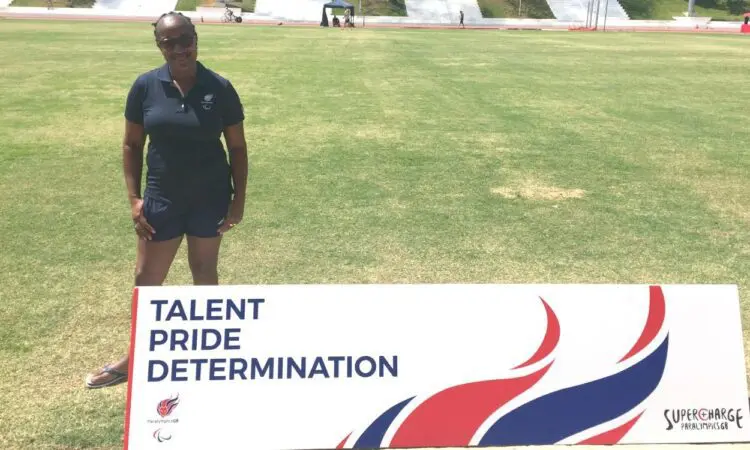
As a sprint hurdler Boothe (pictured above) claimed Commonwealth gold in 1978 and silver in 1982 and represented GB at two Olympic Games. The former British record-holder went on to become a coach and senior athletics administrator and receives her MBE for services to sports coaching and administration.

Boothe, who was a British Athletics team manager for nine years, has coached senior international sprinters James Dasaolu and Imani Lansiquot in the past and currently guides European Under-18 Championships fourth-placer Marcia Sey.

Her son Tremayne Gilling has run 10.25 for 100m, while she is also a cousin of the late Jamaican legend Herb McKinley.

Joining Boothe in becoming an MBE is UKA's para athletics head coach Dunn, who receives her honour for services to athletics.

The former sprinter competed in the 100m, 200m and 4x100m at the 1988 Olympics in Seoul and also claimed five Commonwealth medals and a European bronze during her career before turning her attention to coaching. She became the first female head coach at UKA when she was appointed in 2012.

Maddocks, meanwhile, becomes a BEM for services to athletics. The five-time Olympic race walker turned journalist and commentator remains the British 50km race walk record-holder thanks to his 3:51:37 from 1990.

At the Sydney Games in 2000 he became the first British track athlete to compete in five Olympics and he achieved that feat in memorable fashion, too. After injuring his hamstring on the eve of the Games, he struggled to finish the 50km walk but with '500 Miles' by the Proclaimers blasting around the stadium he received a standing ovation and a larger applause than the winner Robert Korzeniowski.

Technical official Roger Blades receives an MBE for services to athletics and school sport, while Paralympian Sophia Warner gains a BEM for voluntary service to disability sport.

BEM honours have also been awarded to John Messum and William Russell for services to athletics in Wales and Scotland respectively.

Mairi Levack, who this year received honorary life membership by Scottish Athletics, becomes a BEM for services to sport and young people on the Islands of North Uist, Benbecula and South Uist.

Merit rankings 2018 - UK women

Statistician Peter Matthews’ assessment of athletics form and achievements during the past year

These merit rankings of British athletes (of which this is the 51st successive year) are an assessment of form and achievements during 2018.

The major factors by which the rankings are determined are win-loss record, performances in major meetings and sequence of marks, with both indoor and outdoor results considered.

This year the major targets for top athletes were the Commonwealth Games and European Championships and for younger athletes the World Junior or European Youth Championships.

Below you will find the top three in each women’s event. The full British top-12 list for every event (except in those events where there were insufficient British athletes producing adequate performances), including the details of athletes’ seasons, are featured in our December 20 end-of-year review special issue, which is available to buy and read digitally here or order in print here.

The top three in the men’s rankings can be found here.

100m
1 Dina Asher-Smith
2 Imani Lansiquot
3 Daryll Neita

200m
1 Dina Asher-Smith
2 Beth Dobbin
3 Bianca Williams

400m

1 Anyika Onuora
2 Laviai Nielsen
3 Eilidh Doyle

800m
1 Lynsey Sharp
2 Adelle Tracey
3 Shelayna Oskan-Clarke

1500m 
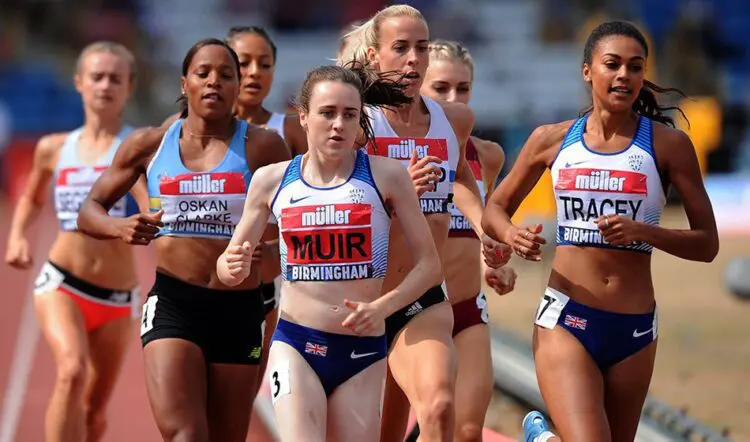
1 Laura Muir
2 Laura Weightman
3 Sarah McDonald

Photo by Mark Shearman

5000m
1 Eilish McColgan
2 Melissa Courtney
3 Laura Weightman

10,000m
1 Alice Wright
2 Charlotte Arter
3 Charlotte Taylor

(10 miles - 20km) - half-marathon
1 Charlotte Purdue
2 Lily Partridge
3 Charlotte Arter

Marathon
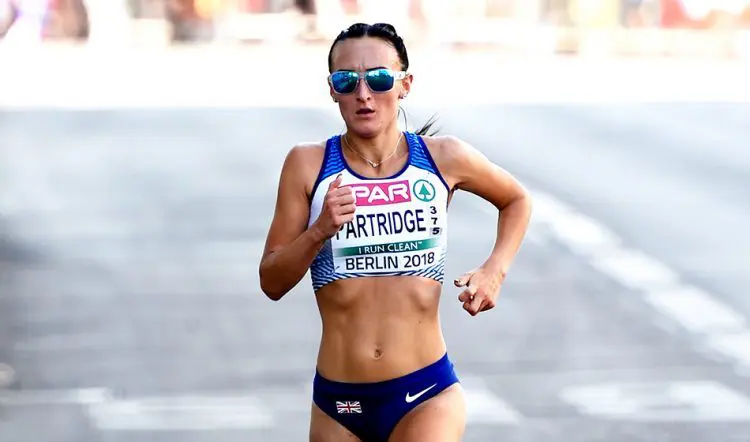
1 Lily Partridge
2 Tracy Barlow
3 Sonia Samuels

Photo by Mark Shearman

2000m and 3000m steeplechase
1 Rosie Clarke
2 Aimee Pratt
3 Elizabeth Bird

100m hurdles

1 Tiffany Porter
2 Alicia Barrett
3 Megan Marrs

400m hurdles

1 Eilidh Doyle
2 Meghan Beesley
3 Kirsten McAslan

High jump

1 Morgan Lake
2 Katarina Johnson-Thompson
3 Nikki Manson

Pole vault

1 Holly Bradshaw
2 Molly Caudery
3 Lucy Bryan

Long jump
1 Shara Proctor
2 Lorraine Ugen
3 Jazmin Sawyers

Photo by Mark Shearman

Triple jump
1 Naomi Ogbeta
2 Laura Samuel
3 Sineade Gutzmore

Shot
1 Sophie McKinna
2 Rachel Wallader
3 Amelia Strickler

Discus

1 Jade Lally
2 Kirsty Law
3 Eden Francis

Hammer

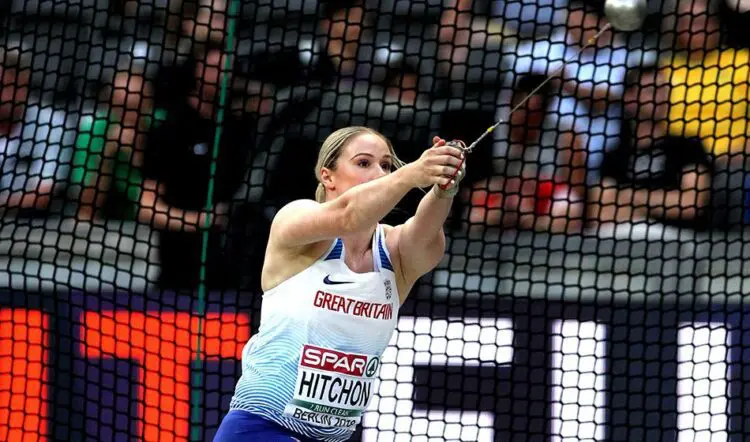
1 Sophie Hitchon
2 Jessica Mayho
3 Philippa Wingate

Photo by Mark Shearman

Javelin
1 Laura Whittingham
2 Emma Hamplett
3 Bethan Rees

Heptathlon
1 Katarina Johnson-Thompson
2 Niamh Emerson
3 Jade O’Dowda

Walks
1 Bethan Davies
2 Heather Lewis
3 Gemma Bridge

» For the full top-12 list for every event (except in those events where there were insufficient British athletes producing adequate performances), including the details of athletes’ seasons, see the December 20 end-of-year review special issue of AW, which is available to buy and read digitally here or order in print here.

» Peter Matthews is the co-editor of Athletics International. For more information on receiving the Athletics International newsletter email [email protected]

Merit rankings 2018 - UK men

Statistician Peter Matthews' assessment of athletics form and achievements during the past year

These merit rankings of British athletes (of which this is the 51st successive year) are an assessment of form and achievements during 2018.

The major factors by which the rankings are determined are win-loss record, performances in major meetings and sequence of marks, with both indoor and outdoor results considered.

This year the major targets for top athletes were the Commonwealth Games and European Championships and for younger athletes the World Junior or European Youth Championships.

Below you will find the top three in each men's event. The full British top-12 list for every event (except in those events where there were insufficient British athletes producing adequate performances), including the details of athletes' seasons, are featured in our December 20 end-of-year review special issue, which is available to buy and read digitally here or order in print here.

The top three in the women’s rankings can be found here.

100m
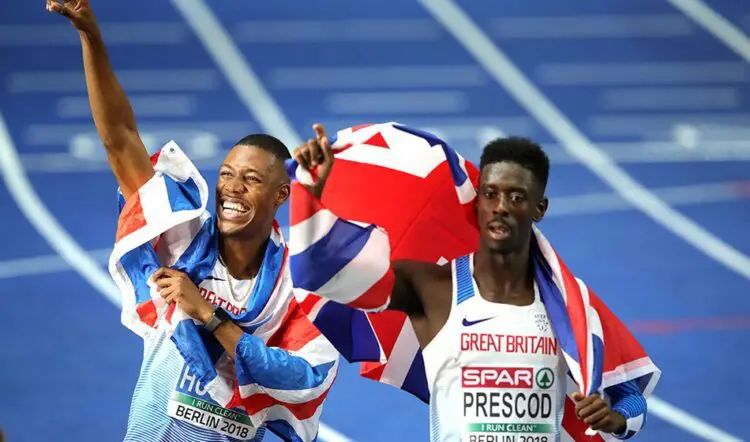
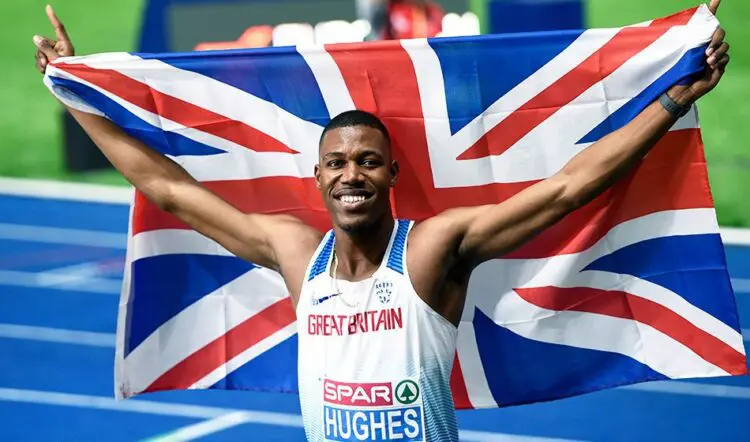
1 Zharnel Hughes
2 Reece Prescod
3 Chijindu Ujah

Photo by Getty Images for European Athletics

200m
1 Nethaneel Mitchell-Blake
2 Adam Gemili
3 Zharnel Hughes

400m

1 Matthew Hudson-Smith
2 Rabah Yousif
3 Dwayne Cowan

800m
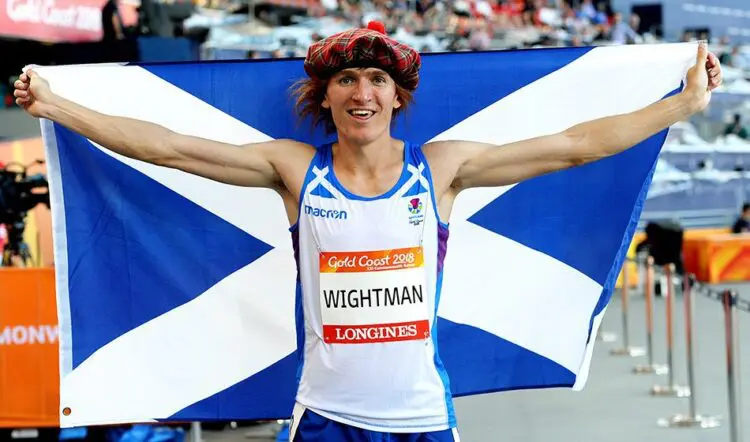
1 Jake Wightman
2 Elliot Giles
3 Kyle Langford

1500m - 1 mile
1 Jake Wightman
2 Charlie Da’Vall Grice
3 Chris O'Hare

5000m
1 Marc Scott
2 Chris Thompson
3 Ben Connor

10,000m
1 Andrew Vernon
2 Chris Thompson
3 Alexander Yee

10 miles - half-marathon
1 Mohamed Farah
2 Callum Hawkins
3 Chris Thompson

Photo by Bank of America Chicago Marathon

Marathon
1 Mohamed Farah
2 Jonathan Mellor
3 Robbie Simpson

3000m steeplechase
1 Zak Seddon
2 Ieuan Thomas
3 Jamaine Coleman

110m hurdles

1 Andrew Pozzi
2 David King
3 Khai Riley-LaBorde

400m hurdles

1 Jack Green
2 Dai Greene
3 Sebastian Rodger

Photo by Mark Shearman

High jump

1 Allan Smith
2 Chris Baker
3 Robbie Grabarz

Pole vault

1 Adam Hague
2 Charlie Myers
3 Luke Cutts

Long jump
1 Daniel Bramble
2 Timothy Duckworth
3 Feron Sayers

Triple jump
1 Nathan Douglas
2 Julian Reid
3 Jonathan Ilori

Shot
1 Scott Lincoln
2 Youcef Zatat
3 Scott Rider

Discus

1 Brett Morse
2 Gregory Thompson
3 Nicholas Percy

Hammer

1 Nick Miller
2 Chris Bennett
3 Jake Norris

Javelin
1 James Whiteaker
2 Joe Dunderdale
3 Joe Harris

Decathlon
1 Timothy Duckworth
2 Ben Gregory
3 John Lane

Photo by Mark Shearman

20km walk

1 Tom Bosworth
2 Callum Wilkinson
3 Guy Thomas

50km walk
1 Dominic King
2 Daniel King
3 Jonathan Hobbs

» For the full top-12 list for every event (except in those events where there were insufficient British athletes producing adequate performances), including the details of athletes' seasons, see the December 20 end-of-year review special issue of AW, which is available to buy and read digitally here or order in print here.

» Peter Matthews is the co-editor of Athletics International. For more information on receiving the Athletics International newsletter email [email protected]

Laura Muir: reflections on a standout year

The European 1500m champion, Diamond League winner, double world indoor medallist and veterinary graduate tells Jessica Whittington about a year to remember

It’s a bit surreal, really. This year has gone so quickly.

It was very hard. I look back on it now and think ‘how did I manage to do all of that?!’ I didn’t really know how things were going to go because my veterinary degree placement was so tough and demanding. I was trying to fit in the training and not knowing how well I’d be able to train and race at the big championships, feeling a bit tired.

Coming away from the season, having achieved everything I wanted to achieve and more – I’m really proud of myself.

Kicking things off with a Scottish 800m record

I had run a 3000m (8:37.21 to win the Scottish title in Glasgow) and I was reasonably happy with it but kind of wanted a bit extra. When I did the 800m (at the Emirates Arena) I thought I could hopefully get close to two minutes but to do sub-two (1:59.69) indoors was quite special and not very many people do that.

That gave me a bit of a confidence boost when I was in the middle of placement and not sure how things were going. I think that really helped me going into World Indoors, knowing I could at least do a sub-two 800m.

It was just a small competition – we had a little crowd there with friends and family. It was nice to deliver a world-class performance – I ran it gun-to-tape by myself in front of a little crowd. It showed me it doesn’t have to be a major championships to bring out a really good performance. I was glad I could do that for spectators at home.

The only thing that is really limiting you is yourself. If you work hard and you train hard there’s no reason why you can’t give an amazing performance at a league race, for example – you can go out there and do it. Obviously it’s much easier when you have pacemakers and things and it’s a bigger stage, but you can do it. You’ve just got to take the opportunity.

"It showed me it doesn’t have to be a major championships to bring out a really good performance ... The only thing that is really limiting you is yourself"

World indoor medal double

I think I was so busy with my veterinary placement and then getting to the event (in Birmingham in heavy snow) that it kept me really distracted. I did not have time to think about the competition at all. It was only afterwards that I thought ‘oh, that was a world indoor championships, that’s quite a big deal!’ I think that was good in a sense because it meant that I didn’t really have any time to get worried or nervous about it – I just rocked up, raced and it went really well (1500m silver and 3000m bronze).

I was really pleased with how I executed the races.

European 1500m gold

When did I know I had it (the gold)? When I crossed the line. I knew there were big kickers in the race so I couldn’t leave it. I needed to make it a hard, fast race. I didn’t actually realise what the time was until I saw it engraved in the medal at 4:02. 'No wonder that hurt', I thought. It was pretty fast!

I knew there were good girls behind me. Although I knew I was the favourite, 1500m is hard to judge and it can go many different ways and I was very respectful to the other girls, I knew how good they were.

I think before I had been one of the ones with potential to medal but this was the first time I was the favourite. I knew that going in – I knew there was pressure but I knew from past experience of championships that I race best when I am relaxed and I don’t get stressed about it, just to go in and enjoy it. The pressure is there because people are expecting you to do well and they are supporting you. I just saw it like that – as a positive rather than a negative.

Diamond League victory - the icing on the cake

We didn’t have a world or Olympics so the Diamond League was sort of the equivalent of that world final. To go out there and win against the girls who were running very well and execute the race – I think this year I have shown the ability is there but I can also execute races in terms of tactics. It’s another building block in getting all the bits and bobs together for the big championships next year.

It went off at a good pace. I knew before that the Ethiopians like to go out a bit hard so I thought 'no, I need to go at my own pace that suits me'. So me and Sifan (Hassan) did that, went through at a good pace, caught up with the other girl and then I remember it was slowing down a lot and I knew Shelby (Houlihan) had a really good kick so I thought ‘I cannot leave this to 100m or 200m to go’. When me and Sifan caught up with (Gudaf) Tsegay at the front, I thought 'I’ve got to go now'.

I kicked and kicked again. When Shelby came I was able to respond and keep going.

The 2018 standout

I think I’d have to say the highlight was graduating and then probably winning the European final because that was my first medal outdoors.

Winning the Diamond League was fantastic but I think getting that (European) medal and standing on top of the rostrum was something a little bit different.

» Laura Muir will be returning to the Müller Indoor Grand Prix Birmingham on February 16. Tickets are on sale now via www.britishathletics.org.uk

» For more on the latest athletics news, athletics events coverage and athletics updates, check out the AW homepage and our social media channels on TwitterFacebook and Instagram

Jessica Piasecki urges Brits to support Aarhus World Cross

The GB team for the Denmark event is set to feature some senior stars and the former European under-23 cross country champion hopes athletes grab the opportunity

Jessica Piasecki believes Britain should support next year’s IAAF World Cross Country Championships by sending the country’s strongest possible teams to Denmark in March.

The former European under-23 cross country champion, part of the side which took senior women’s team silver in Tilburg earlier this month, says the nation could do well at next year’s global showpiece, given that the Aarhus course will provide conditions much more akin to those traditionally found at cross country events in this country.

But the championships come only a few weeks after the European Indoors in Glasgow and Piasecki (pictured above, right) knows some athletes could prioritise track and road events in what will be another packed year.

The recently-announced British selection policy for the 2019 World Cross states that senior athletes who finish in the top two at the trials in Loughborough will secure selection, with additional athletes (up to a maximum of six per team) to be added to the squad where the selection panel “believe that there is realistic potential for the team to finish at least in the top six in Aarhus”.

Piasecki, who will be targeting a place on the team, said: “I think if we could get a strong women’s team out there then we could definitely get a medal as a team. It would be the same for the lads. If everyone that’s usually up there turned up and was fit and healthy then we could all do really well.

“If that’s what we want then we need to push (for it).

“It’s in Europe and we should support it. It’s going to be a proper cross country and it’s going to be good to see that on the world stage. I think, as a nation, we should support it and send full teams.

“Fingers crossed everyone feels the same and we can get a strong team out there.”

A four-strong senior women’s team was sent to Kampala for the 2017 World Cross but at the time British Athletics said that many of the senior men in contention for team places had declined the opportunity.

Piasecki added: “The World Cross has lost its glamour a little bit over the past few years, because people are prioritising track, when it’s fallen in the calendar, it’s been held in obscure countries where there is a lot of travel involved ... but for it now to be held in somewhere like Denmark and it’s now been well advertised that the course will be a lot like the National.

“I think because as a nation we have always tried to push for stuff like that, then we should try and support it.”

» For more on the latest athletics news, athletics events coverage and athletics updates, check out the AW homepage and our social media channels on TwitterFacebook and Instagram

Happy Christmas!

All the staff at AW would like to wish our readers a wonderful Christmas time and a happy and healthy 2019

Whatever your plans this Christmas Day, whether you're training or taking a well-earned day off, all the staff at AW hope you enjoy the festivities.

Click here to find out how some of Britain’s top track and field stars will be spending their day.

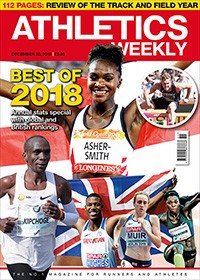
The latest edition of Athletics Weekly magazine is the bumper 112-page December 20 end-of-year review special. If you've not got a copy but are keen to have a read over the festive period, why not check out our digital edition? It's available here.

Otherwise, there's plenty on athleticsweekly.com to keep you going. News is here, events are here, our online performance section is here, while interviews are here.

The next edition of Athletics Weekly magazine is out on January 10.

Happy Christmas!

» For more on the latest athletics news, athletics events coverage and athletics updates, check out the AW homepage and our social media channels on TwitterFacebook and Instagram

British rankings analysis: Women's field events

Steve Smythe compares the latest athletics marks with standards from 2008, 1998, 1988 and 1978

In terms of rankings, Athletics Weekly has never published so many marks across all the age groups in one issue before (see our bumper December 20 magazine). Here we analyse senior 2018 performances and compare them with last year and 2008, 1998, 1988 and 1978 to see whether the standards are progressing as they should, though it is noticeable that the events open to women has greatly increased over the last 40 years.

Here are the marks for women's field events.

See also: Men's track events | Men's field events | Women's track events

High jump

There is a marginal improvement on last year but further back the rankings are no better than 30 and 40 years ago.

40 years ago the best was just 1.85m – compared to Morgan Lake's 1.97m – but it took a higher jump in 1978.

Wendy Laing, who was then an intermediate, jumped 1.69m and this year she jumped 1.55m to easily be Britain’s best at W55 (or indeed W50).

The top vet this year is W45 Julia Bennett, who though a junior, was in the top 10 in 1988 with 1.84m. Laing jumped 1.71m but missed the top 30 which was completed by future 400m Olympic medallist Katharine Merry with 1.74m, though only aged 13!

           10th       30th
1978     1.79      1.75
1988     1.84      1.74
1998     1.80      1.73
2008     1.80      1.71
2017     1.80      1.73
2018     1.81      1.74

Pole vault

This is another newish event but was down on last year at 10th but better at 30th.

There are seven juniors in the top 20 and a further five under-23s so the rankings should improve in coming years.

Back in 1998 the rankings were dominated by Janine Whitlock who was 40 centimetres better than anyone else and had the 26 best jumps of the year!

           10th       30th
1978     -
1988     -
1998     3.60      3.10
2008     3.92      3.60
2017     4.00      3.64
2018     3.90      3.70

Long jump

The standards were up on last year and 6.38m for 10th in 2018 was only bettered by 2012.

The depth at 30th is edging towards six metres (and better than 2012) but it is still very similar to 40 years ago.

Back then Commonwealth champion Sue Reeve topped the rankings ahead of future Olympic medallist Susan Hearnshaw, who is now in the top 10 W55s in 2018.

            10th       30th
1978     6.13      5.83
1988     6.13      5.87
1998     6.16      5.82
2008     6.18      5.84
2017     6.16      5.91
2018     6.38      5.95

Triple jump

Up front Naomi Ogbeta went over 14 metres and behind the depth was encouraging with 10th going over 13 metres for the first time and the depth behind impressive too in yet another newish women’s event.

However, it was in 1998 when Ashia Hansen leapt the still furthest ever by a Briton – an indoor 15.16m.

The depth is much better now as only three bettered 13 metres to 2018’s 10 and the 14th best this year surpasses 1998’s fourth.

           10th       30th
1978     -
1988     -
1998     12.44    11.46
2008     12.86    12.08
2017     12.96    12.05
2018     13.02    12.08

Shot

The depth is up on last year’s particularly poor levels but the encouraging aspect of 2018 was four easily bettered 17 metres.

Britain’s best ever shot exponent Judy Oakes was top in 1978 with a modest 16.74m, set indoors as a teenager, though 10th was comparable to this year.

Oakes threw an extraordinary 19.36m in 1988, which still stands as the British record, and she had 20 marks over 18 metres and Myrtle Augee bettered it three times. Oakes (18.83m) and Augee (17.69m) were still top in 1998.

            10th       30th
1978     14.23    12.28
1988     14.45    13.02
1998     14.68    13.07
2008     14.39    12.63
2017     14.08    12.65
2018     14.20    12.87

Discus

This is an event that while again dominated by Jade Lally, has not shown any significant improvement in 30 years in terms of depth. However, the top three this year threw further than Venissa Head did in 1988.

Oakes was not just good at the shot as she ranked in the top 30 in 1978, 1988 and 1998 even though she has just a single discus throw listed on Power of 10.

             10th       30th
1978     45.76    40.20
1988     49.34    43.24
1998     47.96    42.59
2008     45.39    41.65
2017     47.22    42.59
2018     47.19    42.03

Hammer

While Olympic medallist Sophie Hitchon is way out on her own – by almost 10 metres – the depth behind is good with 10 at 60 metres and three more on 59 and the 50th best at 48.89m is a new record even though 30th is slightly down on last year.

This is another newish event that has potential to grow further.

            10th       30th
1978     -
1988     -
1998     50.35    44.43
2008     55.45    47.56
2017     59.76    53.55
2018     60.24    53.51

Javelin

It is unfair to compare the first three below to now as the new specifications came in in 1999.

However, the 10th best mark at 45.03m is a new all-time low and it is not much better at 30th and the standards are worrying.

Back in 1978, Tessa Sanderson topped the lists with 64.00m from junior Fatima Whitbread (53.88m)

In 1988 with both global champions, Sanderson (71.70) had advanced but not as much as Whitbread (70.32m) who took Olympic silver as Sanderson failed to make the final in her Olympic defence.

             10th       30th
1978     50.20    42.10
1988     50.58    44.12
1998     50.34    43.87
2008     46.27    42.62
2017     47.68    42.00
2018     45.03    41.61

Heptathlon

There has not been a great advance but 10th at 5381 points is a best ever and there are 14 under-23s or under-20s in the top 19.

Up front Katarina Johnson-Thompson advanced to 6759 and her natural successor is surely world under-20 champion Niamh Emerson who was second with 6253.

The pentathlon was still the main multi event in 1978 and in 1988 no one bettered 6000 points.

By 1998, Denise Lewis was nearing her prime with 6559 and further back in the top 10 Julia Bennett (5604) and Diana Bennett (5555) are now all over the masters rankings in a number of events.

In 2008, Jessica Ennis was injured as Kelly Sotherton (6517) topped the rankings with under-17 Johnson-Thompson seventh (5343), one place up on European 400m hurdles medallist Meghan Beesley (5291), while world long jump leader this year Lorraine Ugen was 30th (4307).

            10th       30th
1978     4407     -
1988     5174     4310
1998     5358     4309
2008     5154     4307
2017     5344     4590
2018    5381    4421

» See the current 112-page double issue of AW for more end-of-year statistics

» For more on the latest athletics news, athletics events coverage and athletics updates, check out the AW homepage and our social media channels on TwitterFacebook and Instagram

British rankings analysis: Women's track events

Steve Smythe compares the latest athletics marks with standards from 2008, 1998, 1988 and 1978

In terms of rankings, Athletics Weekly has never published so many marks across all the age groups in one issue before (see our bumper December 20 magazine). Here we analyse senior 2018 performances and compare them with last year and 2008, 1998, 1988 and 1978 to see whether the standards are progressing as they should, though it is noticeable that the events open to women has greatly increased over the last 40 years.

Here are the marks for women's track events.

See also: Men's track events | Men's field events | Women's field events

100m

Apart from having the world’s fastest 100m runner, the UK can boast good depth with the top 10 equalling 2008 for the best year ever.

That year was an Olympic year and benefitted from optimum conditions at Loughborough where Montell Douglas surprisingly broke the British record with an 11.05.

This year the 30th and 50th marks are slightly down on last year but there is no doubt that British women’s sprinting is at a high level.

            10th       30th
1978     11.71    12.24
1988     11.72    12.06
1998     11.71    12.03
2008     11.41    11.90
2017     11.45    11.70
2018     11.41    11.76

200m

Again 10th was up on last year though 30th was down but again the standard was excellent and well in advance of our sample from the past and 50th was a record 24.36.

In 1998, it was a notable how many in the top 30 were from different events such as pole vaulter Janine Whitlock and long jumper Jade Johnson.

Ellena Ruddock, then aged 22 and ranked 11th at 23.94, is now Britain’s top W40 100m runner.

             10th       30th
1978     23.61    24.91
1988     23.91    24.43
1998     23.93    24.37
2008     23.42    24.27
2017     23.42    24.03
2018     23.37    24.06

400m

Though down on last year, which saw record depth, the overall strength is still well up on the more distant past though less impressive at the very top.

Back in 1978, Commonwealth champion Donna Hartley was top ranked at 51.2 which is very similar to this year’s top two Anyika Onuora (51.13) and Laviai Nielsen (51.21) though the top three from 1998 – Alison Curbishley (50.71), Donna Fraser (50.85) and Katharine Merry (51.02) – were all faster than this year.

           10th       30th
1978    54.0      55.7
1988     53.57    55.0
1998     53.79    55.32
2008     53.11    54.99
2017     52.60    54.03
2018     52.74    54.31

100m hurdles

With last year’s top two Tiffany Porter and Cindy Ofili absent for much of the year, the standard right up front was disappointing in 2018 and the depth a little down on last year’s record levels.

Sally Gunnell, by then more proficient at 400m hurdles, topped the rankings back in 1988 and the then second fastest Lesley-Ann Skeete’s 13.19 matched this year’s No.2.

             10th       30th
1978     13.99    14.93
1988     13.68    14.66
1998     13.73    14.42
2008     13.68    14.25
2017     13.47    13.94
2018     13.51    14.14

400m hurdles

While down at 10th best on last year, the 61.33 at 30th was more encouraging but surprisingly down on 1988 and almost identical at 10th on 30 years ago.

Just missing 30th with 61.04 in 1988 was the then Gowry Varadukumar who as Retchakan topped 1998 with her Commonwealth silver medal run of 55.25 which put her ahead of future Olympic medallist Natasha Danvers.

             10th       30th
1978     60.5      62.7
1988     58.60    60.9
1998     59.07    62.2
2008     58.84    62.4
2017     58.33    61.5
2018     58.59    61.33

800m

There was little change from last year but depth was again excellent and very similar to Olympic year 2008.

Back then Lynsey Sharp, who on the merit rankings has been British No.1 the last five years, was ranked 16th with 2:04.44 while another then junior Laura Weightman was 50th (2:08.20).

Five athletes broke two minutes this year compared to three last year and in 2008 when Marilyn Okoro was top on 1:58.45 and 1988 when Diane Modahl (1:59.66) was top. The latter was also top in 1998 (1:58.81).

             10th       30th
1978     2:03.7   2:07.9
1988     2:03.49  2:07.6
1998     2:04.98  2:08.58
2008     2:01.78  2:05.7
2017     2:02.09  2:05.81
2018     2:02.02  2:05.85

1500m

European medallists Laura Muir and Laura Weightman led unprecedented depth with a superb 4:07.69 only good enough for 10th.

At 30th and 50th it was down on last year’s heights.

Back in 1978 Penny Yule, who is now of Britain’s top W65 runners, was ranked fourth with 4:10.3 while AW publisher Wendy Sly was ninth with 4:13.4. The latter was 10th in 1988 where the rankings were headed by Olympic finalists Christina Cahill (4:00.64) and Shireen Bailey (4:02.32).

             10th       30th
1978     4:14.6   4:22.8
1988     4:12.72  4:22.9
1998     4:18.17  4:23.5
2008     4:11.29  4:20.83
2017     4:09.52  4:16.32
2018     4:07.69  4:17.51

5000m

Back in 1978, the 5000m was not available to women and even in 1988, there were not enough times within standard for a top 30.

Even so, 30 years ago the three inside 15:18 is marginally up on this year and the rankings were headed by Liz McColgan, whose daughter Eilish of course tops 2018.

This year the 10th and 30th are a little down on the heights of 2017 but the 50th best of 16:36.07 is an all-time record.

            10th       30th
1978      -           -
1988     16:19.93            -
1998     15:57.45            16:50.8
2008     16:04.65            16:40.1
2017     15:37.90            16:12.07
2018     15:41.11            16:17.35

10,000m

As per the 5000m, 25 laps was not a serious option 40 year ago and there was a lack of depth in 1988 and 1998.

The top two in 1988 though – Liz McColgan (31:06.99) and Sly (31:53.36) – were much faster than anyone this year while the third, Susan Tooby (32:20.95), is now better known as Jake Wightman’s mother!

While the depth again did not quite match the record levels of last year and was down at the very front, it was still very good thanks to the Highgate Night of the 10,000m PBs.

            10th       30th
1978      -           -
1988     34:52.5  -
1998     34:38.11            -
2008     34:55.84            39:36.77
2017     32:51.38            35:27.66
2018     32:52.85            35:42.01

3000m steeplechase

The standard is up on last year – and significantly so at 30th – but disappointing that only four broke 10 minutes compared to five in 2008 when the rankings were headed by Helen Clitheroe’s 9:29.14.

Lennie Waite ranked in the top 10 in both 2008 and 2018 while the then junior Eilish McColgan ranked 11th on 10:52.13.

This is an even newer track event than the 5000m and 10,000m and even in 2008, 30 were not inside the rankings limit.

           10th       30th
1978     -           -
1988     -           -
1998     -           -
2008     10:48.55            12:42.61 (27)
2017     10:25.03            12:20.38
2018     10:21.72            11:32.68

» See the current 112-page double issue of AW for more end-of-year statistics

» For more on the latest athletics news, athletics events coverage and athletics updates, check out the AW homepage and our social media channels on TwitterFacebook and Instagram

British rankings analysis: Men's field events

Steve Smythe compares the latest athletics marks with standards from 2008, 1998, 1988 and 1978

In terms of rankings, Athletics Weekly has never published so many marks across all the age groups in one issue before (see our bumper December 20 magazine) but here we analyse senior 2018 performances and compare them with last year and 2008, 1998, 1988 and 1978 to see whether the standards are progressing as they should.

Now it's the turn of the men’s field events.

See also: Men's track events | Women's track events | Women's field events

High jump

Robbie Grabarz retired after the Commonwealth Games but was still Britain’s best as standards picked up from last year, though were identical below to 2008 and down in terms of top 30 on even 30 years ago where the rankings were headed by Dalton Grant and Geoff Parsons.

One encouraging aspect though is the number of younger jumpers headed by European under-18 champion Dominic Ogbechie’s 2.22m world age-15 best indoors.

            10th       30th
1978     2.10      2.00
1988     2.15      2.06
1998     2.15      2.07
2008     2.20      2.05
2017     2.16      2.05
2018     2.20      2.05

Pole vault

After the relative heights of 2017 with 10th at 5.26m, it plummeted to 5.06m this year which is the worst since 2009 and standards are generally down on even 20 years ago.

The top two in 1978, Brian Hooper (5.42m) and Keith Stock (5.25m), were to jump higher with British records in future years while fifth-ranked Allan Williams is now Britain’s-top ranked M65 40 years on.

             10th   30th
1978     4.60      4.20
1988     4.80      4.50
1998     5.16      4.70
2008     5.10      4.60
2017     5.26      4.75
2018     5.06      4.70

Long jump

Even with Greg Rutherford well off his best in his final season, there was not too much difference from last year in the rankings and while it is an event at 10th and 30th that’s not notably deteriorating, there certainly is stagnation from 1988 with a few centimetres down in both comparisons between now and 30 years ago.

40 years ago Olympic decathlon champion to be Daley Thompson headed the rankings with a 7.93m and windy 8.11m.

             10th   30th
1978     7.34      7.21
1988     7.66      7.30
1998     7.47      7.13
2008     7.47      7.17
2017     7.65      7.32
2018     7.63      7.28

Triple jump

The standard is a little down on last year but overall close to the same level as usual as top ranked Nathan Douglas, who was third in 2008, is still going strong.

Further back the standard is disappointing with 30th only just up on 40 years ago.

While it is an event that Britain has excelled in, the depth has never been notable. Even when Jonathan Edwards jumped 18.01m in 1998, 15.79m still got you in the first 10 which was marginally bettered this year.

            10th   30th
1978    15.25    14.67
1988     15.90    15.02
1998     15.79    14.90
2008     15.39    14.63
2017     15.91    14.93
2018     15.82    14.72

Shot

The 10th best mark was marginally better than last year, which was just up on 2016 (the worst since 1963) but still the standard is worrying up front, in the middle and further down.

Scott Lincoln was a metre up on anyone else this year but well over a metre down on what Geoff Capes threw 40 years ago (20.68m) which was a metre down on his eventual PB in 1980.

             10th       30th
1978     16.53    14.86
1988     17.04    15.58
1998     16.71    14.73
2008     16.44    14.94
2017     15.75    14.56
2018     16.00    14.54

Discus

It was not a classic season though 10th at 56.06m courtesy of New Zealand-based Alex Parkinson (his only known throw) actually tops our sample though next was 53.74m which would have been the worst since 2007.

The 30th best of 46.31m is just down on 1978.

Three were over 60 metres this year which doesn’t compare with the seven in 1998 but then they were headed by Perris Wilkins’ 66.64m, who later had marks disqualified for being short weighted. He received a life ban in 2003 for two doping offences but still competes now and was the 10th ranked M50 this year.

             10th   30th
1978     53.16    46.32
1988     54.34    48.18
1998     54.20    46.68
2008     54.12    47.34
2017    55.29    45.74
2018     56.06    46.31

Hammer

Up front Nick Miller’s 80.26m broke new ground and there are three under-23s or under-20s in the top six and eight at 70m but otherwise the standard is a little down on last year at both 10th and 30th. The standard grew notably from 1978 to 1988 and 1998 but the depth further back has levelled off and now dropped and in the lower part of the ranking was the worst for 38 years.

Back in 1978, Warwick Dixon ranked in the top 100 and this year he ranks third in the M80 hammer but top of the discus.

             10th   30th
1978     58.26    51.08
1988     63.12    55.50
1998     64.64    57.99
2008     64.29    57.15
2017     68.86    57.85
2018     68.23    56.61

Javelin

The newer specifications (introduced in 1986) means comparisons aren’t fair anyway but there is doubt the quality was at a different level in the past. In 1988, the top five were at 79.50m or over including junior Steve Backley who was throwing 89.89m and was European champion in 1998 while two others were at 85.67m or better.

World junior champion David Parker ranked seventh with 75.21m which was a fraction below the top this year of 75.27m.

The 10th mark is at least marginally up on last year but the 30th is just 60.35m and the 50th best of 56.08m is the worst ever with the current javelin.

             10th       30th
1978     72.62    64.76
1988     72.58    64.38
1998     71.14    62.97
2008     70.80    63.05
2017     67.97    61.45
2018     68.69    60.35

Decathlon

The standards are up on last year’s low but well down on the 30th mark of 30 and 40 years ago.

Obviously Olympic and world champion and world record-holder Daley Thompson was top in both those years and this year his son Elliot is ranked ninth. Encouragingly, he is one of five under-23s in the top 10 and 16 of the top 30.

             10th   30th
1978     6990     6082
1988     6950     6206
1998     6696     5875
2008     7016     5735
2017     7065     5628
2018     7089     5825

» See the current 112-page double issue of AW for more end-of-year statistics

» For more on the latest athletics news, athletics events coverage and athletics updates, check out the AW homepage and our social media channels on TwitterFacebook and Instagram

British rankings analysis: Men's track events

Steve Smythe compares the latest athletics marks with standards from 2008, 1998, 1988 and 1978

In terms of rankings, Athletics Weekly has never published so many marks across all the age groups in one issue before (see our bumper December 20 magazine) but here we analyse senior 2018 performances and compare them with last year and 2008, 1998, 1988 and 1978 to see whether the standards are progressing as they should.

We start with the men’s track events.

See also: Men's field events | Women's track events | Women's field events

100m

The depth has dropped since last year but there is no doubt that 2018 stands up very well against its 10-year comparisons.

In 1978 Allan Wells was emerging (10.12) and in 1988 Linford Christie was Seoul runner-up (9.97) but the depth behind our two future Olympic champions was not that notable and you can see how much British sprinting has improved since the 70s.

At 10th there was less improvement on the last decade with interestingly James Dasaolu 10th best in 2008 with 10.26 but absent in 2018. This year Richard Kilty was 11th best with 10.26.

             10th    30th
1978     10.66    10.95
1988     10.44    10.69
1998     10.31    10.56
2008     10.26    10.58
2017     10.18    10.38
2018     10.25    10.43

200m

At 200m, despite the absence this year of quite a few big names such as Danny Talbot, the depth was up on last year even if No.1 Nethaneel Mitchell-Blake was exactly the same at 20.04.

What is encouraging this year is that two juniors make the top nine and they are followed by three under-23s in the top 12.

Back in 1978, Commonwealth champion Wells was a class apart and junior Mike McFarlane, who would famously tie with Wells in the next Commonwealths in 1982, was the only other runner to legally break 21 seconds with 20.97. This year 22 broke 21.

             10th    30th
1978     21.36    21.92
1988     21.02    21.53
1998     20.77    21.31
2008     20.97    21.37
2017     20.73    21.10
2018     20.59    21.06

400m

The depth is fractionally down on last year but it is disappointing in terms of the top 10 that this year is down on both 1988 and a lot down on 1998.

1988 was an Olympic year but it was 1998 that was exceptional with two at 44.38 or faster and five at 44.83 while this year 44.74 put Matt Hudson-Smith out on his own.

In 1978 two future Olympic champions ranked in the top 30 – Seb Coe (47.7) and Daley Thompson (47.8) – while another, Steve Ovett (48.4), was just outside.

             10th    30th
1978     47.1    48.2
1988     46.43    47.69
1998     46.12    47.49
2008     46.51    47.49
2017     46.49    47.31
2018     46.54    47.42

110m hurdles

British high hurdling was not at an all-time high in 2018 and the lack of international class is worrying. The 14.31 for 10th is the worst since 1985 after 1988, 2008 and 2017 were much the same in the 14.09/14.10 level.

World indoor champion Andrew Pozzi is out way on his own and he did not have a very good year outdoors.

             10th    30th
1978     14.86    15.75
1988     14.10    14.92
1998     14.22    14.77
2008     14.09    14.73
2017     14.09    14.78
2018     14.31    14.9

400m hurdles

This is a curious one in comparison terms. The top 10 at 50.94 is superb with two juniors in the top 10 but the 30 is poor and much worse than 30 years ago and the 50th (55.60) is the worst since 1973.

Back in 1988, Kriss Akabusi was out on his own and the only sub-50 runner despite the motivation of the Olympics and four went sub-50 this year. Top coach Lloyd Cowan was ranked 15th back in 1988. In 1978, there was only one sub-51.

             10th    30th
1978     52.4    54.1
1988     51.48    53.0
1998     51.2    53.39
2008     51.75    53.56
2017     51.71    54.25
2018     50.94    53.66

800m

The 10th at 1:47.12 compares well with recent years – the best for 26 years, and the 30th at 1:49.18 is good but down on last year.

The eighth at 1:45.73 is exceptional though – then a curious 1.31-second gap to ninth. Though good, it is not as good as 1988.

There were two sub-1:44s – Cram and Coe, who was inexplicably not selected – and European indoor champion David Sharpe was only ninth best at 1:45.70. Ovett was ranked 28th with 1:48.88 which would have got him 26th this year.

The 1978 depth was not impressive but did have Coe (1:44.0) and Ovett (1:44.1) on top.

             10th    30th
1978     1:48.8    1:50.5
1988     1:46.13    1:49.04
1998     1:48.31    1:49.71
2008     1:48.06    1:49.75
2017     1:47.29    1:48.92
2018     1:47.12    1:49.18

1500m

The standard is down on last year (especially notably at 10th) but at least there are a junior and three under-23s in the top 10.

Again it is surprising just how down it is on 30 years ago. Back then they had two in the top four at Seoul and the rankings are led by Cram’s 3:30.95, who was below his best in South Korea. Double Olympic champion Coe was only ranked sixth with 3:35.72 and Ovett seventh with 3:36.90, exactly the same as Jake Heyward’s time and ranking this year! Steeplechasers should note Mark Rowland’s 3:34.53 and Tom Hanlon’s 3:38.59.

1978 was notable for four between 3:35.5 and 3:35.7 – all from either the Commonwealth or European final.

             10th    30th
1978     3:41.79    3:45.7
1988     3:38.79    3:43.12
1998     3:41.9    3:45.69
2008     3:41.17    3:45.07
2017     3:38.35    3:43.64
2018     3:40.42    3:44.02

5000m

There is no 13-time ranked top Mo Farah this year and 10th is down compared to last year but 30th is up and back under 14 again and the depth is the best for almost 30 years.

It is still well below 1978 and 1988 though.

Just half a second covered the top four in 1978 headed by Mike McLeod’s 13:25.2 UK win ahead of Brendan Foster. It’s notable that quite a few in the top 30 back then – Andy Catton (13:45.2), Ray Smedley (13:46.0) and Nigel Gates (13:50.8) – are still competing well into their sixties 40 years later.

1988 was also incredibly competitive up top with less than three seconds covering the top eight headed by past Olympic steeplechaser Paul Davies-Hale’s 13:21.60. The past world record-holder Dave Moorcroft was 50th ranked then with 14:00.03 which would have ranked 33rd this year.

             10th    30th
1978     13:36.6    13:55.2
1988     13:31.66    13:53.48
1998     13:48.5    14:11.4
2008     13:57.88    14:11.87
2017     13:37.60    14:03.29
2018     13:43.75    13:58.52

10,000m

Standards are down on last year but there is no doubt that the Highgate Night of the 10,000m PBs has made a big difference to the lows around 2008 when 30th was a poor 31:31.8. In 2018, 13 of the fastest 16 achieved their run in the Highgate event.

In 1978, 29 of the 50 under 30 minutes were achieved at Crystal Palace. Only 28 broke 30 minutes this year.

Foster’s European record 27:30.3 headed the lists but only Dave Black (27:36.3) was also inside 28 and three did it this year.

Eamonn Martin’s UK record (and debut) 27:23.06 topped the rankings in 1988 where the previously mentioned Catton was 50th ranked at 30:04.4.

It is of course worth noting 40 years ago that the 10km on the road was never raced and now there is far more opportunity and 50 broke 30 on the road this year, so there is the potential to match the old numbers on the track.

             10th   30th
1978     28:37.1  29:31.0
1988     28:27.28    29:31.43
1998     29:24.15     30:52.87
2008     29:30.88    31:31.8
2017     29:01.76    29:48.41
2018     29:10.33    30:13.33

3000m steeplechase

The rankings seem encouraging up top with four sub 8:32 but it is well down on last year where the 10th was exceptional but further back the depth in steeplechasing is dire. 30th this year is 9:19.18, which would have placed 84th 40 years ago and 88th 30 years ago.

Back in 1988 Mark Rowland set his since unchallenged UK record of 8:07.96 in picking up Olympic bronze.

29th in the top 30 back then was the father of Britain’s fastest 800m runner this year, Geoff Wightman on 8:57.8.

The versatile elder Wightman also ranked in the top 100 at a number of events in 1988 including the 800m (1:51.9), mile (4:00.6), 5000m (13:42.80) and marathon (2:15:40)!

             10th   30th
1978     8:48.1    9:02.3
1988     8:42.52    8:58.11
1998     8:55.74    9:06.20
2008     8:58.74    9:21.5
2017     8:38.69    9:12.64
2018     8:47.88    9:19.18

» See the current 112-page double issue of AW for more end-of-year statistics

» For more on the latest athletics news, athletics events coverage and athletics updates, check out the AW homepage and our social media channels on TwitterFacebook and Instagram

Christmas Day, the athlete way

Some of Britain's athletics stars share their festive training plans

Whether you intend to run or rest this Christmas Day, you’ll be in good company! Here some of Britain's track and field stars share their festive training plans.

European 100m and 4x100m champion Zharnel Hughes

"On Christmas morning I’ll have a session and it will be a time trial over 500m. Couldn’t ask for a better Christmas gift!"

British pole vault record-holder and European bronze medallist Holly Bradshaw

"I won’t be training! I never do. My coach programmes my training on a weekly basis depending on how I’m feeling so Christmas week can be modified to allow Christmas Day to be spent enjoying my time with my family and not worried about having to fit a session in at some point."

Commonwealth 20km race walk silver medallist and British record-holder Tom Bosworth

"I’ll be following my training schedule and fitting as much in around it as possible, so that might well mean training on Christmas Day. But that’s just business as usual, no extra motivation for doing it - the work done on that day is the exact same as any other."

British indoor long jump record-holder Lorraine Ugen

"I probably won’t be training on Christmas Day. I think it’s okay as athletes to have a day to spend with family, enjoy the festivities and rest.

"Having one day off to enjoy your family will not kill you or hamper your season so I’ll more than likely be having family time!"

European 400m hurdles bronze medallist Meghan Beesley

"I’m not training on Christmas Day. My coach just plans the programme around that day being recovery."

British marathon champion Lily Partridge

"I'll do some easy miles dependant on what I did over the weekend but likely a longer easier run of around 10-15 miles on the trails."

European and Commonwealth shot put finalist Sophie Mckinna

"Unfortunately I will be training this year as Christmas Day doesn’t fall on my rest day so I will be in the gym as normal and then back home to my parents' for Christmas dinner!"

European and Commonwealth 1500m bronze medallist Jake Wightman

"I’m actually racing a road 5-mile race on Boxing Day, so will just be doing an easy 5-mile run on Christmas Day."

European 1500m and Commonwealth 5000m medallist Laura Weightman

"I love running on Christmas morning. After opening presents I normally escape from dinner preparation and run one of my favourite routes along the beach at Alnmouth where I started running aged 12!"

European 5000m silver medallist Eilish McColgan

"I will be training on Christmas Day but it will just be an easy run with my mum and my little brother. We will be out in Doha, Qatar, so it's not the most 'Christmassy' place to be and it's usually roasting but we enjoy going out for an easy run in the morning before relaxing for the rest of the day."

British 200m champion Beth Dobbin

"I won't be training on Christmas Day as I think athletes rarely get any time to switch off and spend time with family so it's important to do so.

"Rest is just as important as training and my coach always times it so that we're due a rest week by the time Christmas comes around where we would normally have an extra day off anyway!"

» For more on the latest athletics news, athletics events coverage and athletics updates, check out the AW homepage and our social media channels on Twitter, Facebook and Instagram
Risers and fallers in British athletics

The latest Athletics Weekly shows the event disciplines that are healthy – and not so healthy

Much of the content in the current 112-page double issue of AW is end-of-year statistics. They paint a picture of the year in names and numbers and also, in the case of the British merit rankings in particular, illustrate the fluctuating fortunes of various event disciplines.

As we reach the climax of 2018, this is the 51st successive year that statistician Peter Matthews has compiled the British merit rankings. You will not find them online, so they provide an exclusive insight into the health of the sport.

None of it is mere opinion either. The numbers do not lie, although they are naturally influenced by factors such as championship opportunities or weather conditions (for example domestic marathon marks in 2018 were affected by a particularly warm race in London in April).

Generally, sprints are thriving in British athletics although they have been good now for several years, but some of the field events – like javelin especially – are struggling, whereas women's standards across the board are good, possibly helped by several events like pole vault, hammer and steeplechase still being relatively new.

Here is a snapshot of some of the rising and falling events in British athletics…

Risers

Men’s 100m – with two Brits in the world top 10 and a one-two in the World Under-20 Championships, British sprinters are making an impact across the world.

Men’s 800m – eight Brits are in the world top 100 and the 10th best time by a British runner is the best since 1992.

Men’s 5000m – Mo Farah might have left the event after 13 years as No.1 but depth is good with the 50th ranked time of 14:07.81 being the best since 1991.

Women’s 200m –Dina Asher-Smith’s record-breaking performances inspired those behind her as the 50th best mark of 24.36 was a record.

Women’s 1500m – like Asher-Smith in the sprints, Laura Muir is leading a middle-distance surge in standards and 10th best of 4:07.69 was a record.

Women’s 5000m – 50th best mark of 16:36.07 was a record.

Women’s triple jump – 10 Brits broke 13 metres and the 50th best mark of 11.69m is a record.

Women’s hammer – led by the world-class Sophie Hitchon, the 50th best of 48.89m is a record.

Fallers

Men’s 110m hurdles – despite Andy Pozzi leading the way with a world indoor title at 60m hurdles, the 10th best mark at 110m hurdles is the worst since 1985 and the 50th is the worst since 2003.

Men’s 400m hurdles – the 50th best British mark of 55.6 is the worst since 1973.

Men’s 3000m steeplechase – only 30 athletes broke 9:20 in 2018 compared to more than 90 in every year from 1982-1991.

Men’s hammer – despite Britain having world-class athletes like Nick Miller and Jake Norris, behind the standards are poor with 76 throwers breaking 46 metres being the worst figure since 1980.

Men’s javelin – the 50th best mark of 56.05m is the lowest figure since the revised specification javelin was brought in 32 years ago.

Men’s 50km walk – five men broke five hours this year but 50 race walkers did it in 1980 and 1984.

Women’s pole vault – surprisingly, despite being led by Holly Bradshaw and the rising Molly Caudery, standards in depth fell.

Women’s javelin – the 10th best of 45.03m is the worst since the current specification javelin was introduced in 1999.

» This is not a definitive list of events. For the full picture, see the December 20 issue of AW

» For more on the latest athletics news, athletics events coverage and athletics updates, check out the AW homepage and our social media channels on Twitter, Facebook and Instagram
Secret Link