Merit rankings 2014 - International men

An international panel of experts assesses athletes' form in 2014 to create rankings based on merit

Athletics International has once again collaborated with Athletics Weekly to produce an annual review including 2014 world top-10 merit rankings.

The full annual review can be found in the 116-page December 18 special double issue of AW, but we have also included the top three in each international men's event below.

A panel led by statistician Peter Matthews and former AW editor Mel Watman assessed the year’s records of the leading contenders and the ranking order was determined by consensus.

Among the factors considered were athletes' placings in significant competitions. In 2014 there was no World Championships, and the Diamond League and World Challenge meetings were mixed in with continental championships.

As ever the panel was concerned with the quality of athletes' best marks, their consistency, and win-loss records against other ranked competitors. Marks made indoors were not considered (apart from when part of outdoor meetings, such as the Zürich shot or events moved indoors due to the weather), nor were any athletes who were suspended for two years during the year for drug-related offences.

Below are the top three in each men's event. The women's international rankings can be found here. The full top-10 list for every event, including the details of the athletes' seasons, appear in our double-issue December 18 stats special, which is available to buy and read digitally here.

100m
1 Justin Gatlin (USA)
2 Mike Rodgers (USA)
3 Kemar Bailey-Cole (JAM)

200m
1 Justin Gatlin (USA)
2 Alonso Edward (PAN)
3 Nickel Ashmeade (JAM)

400m
1 Kirani James (GRN)
2 LaShawn Merritt (USA)
3 Isaac Makwala (BOT)

800m
1 Nijel Amos (BOT)
2 Mohamed Aman (ETH)
3 David Rudisha (KEN)

1500m
1 Silas Kiplagat (KEN)
2 Ayanleh Souleiman (DJI)
3 Asbel Kiprop (KEN)

5000m
1 Caleb Ndiku (KEN)
2 Yenew Alamirew (ETH)
3 Muktar Edris (ETH)

10,000m
1 Galen Rupp (USA)
2 Paul Tanui (KEN)
3 Bidan Karoki (KEN)

Marathon
1 Dennis Kimetto (KEN)
2= Eliud Kipchoge (KEN)
2= Wilson Kipsang (KEN)

3000m steeplechase
1 Jarius Birech (KEN)
2 Mahiedine Mekhissi-Benabbad (FRA)
3 Evan Jager (USA)

110m hurdles
1 Pascal Martinot-Lagarde (FRA)
2 Sergey Shubenkov (RUS)
3 Orlando Ortega (CUB)

400m hurdles
1 Javier Culson (PUR)
2 Cornel Fredericks (RSA)
3 Michael Tinsley (USA)

High jump
1 Bohdan Bondarenko (UKR)
2 Mutaz Essa Barshim (QAT)
3 Ivan Ukhov (RUS)

Pole vault
1 Renaud Lavillenie (FRA)
2 Konstadinos Filippidis (GRE)
3 Mark Hollis (USA)

Long jump
1 Jeffrey henderson (USA)
2 Greg Rutherford (GBR)
3 Li Junzhe (CHN)

Triple jump
1 Benjamin Compaoré (FRA)
2 Will Claye (USA)
3 Christian Taylor (USA)

Shot
1 David Storl (GER)
2 Reese Hoffa (USA)
3 Joe Kovacs (USA)

Discus
1 Robert Harting (GER)
2 Piotr Malachowski (POL)
3 Gerd Kanter (EST)

Hammer
1 Krisztián Pars (HUN)
2 Pawel Fajdek (POL)
3 Dilshod Nazarov (TJK)

Javelin
1 Tero Pitkämäki (FIN)
2 Ihab Abdelrahman (EGY)
3 Thomas Röhler (GER)

Decathlon
1 Trey Hardee (USA)
2 Andrey Kravchenko (BLR)
3 Kevin Mayer (FRA)

20km walk
1 Ruslan Dmytrenko (UKR)
2 Yusuke Suzuki (JPN)
3 Miguel Ángel López (ESP)

50km walk
1 Yohann Diniz (FRA)
2 Matej Tóth (SVK)
3 Mikhail Ryzhov (RUS)

» For the full top-10 list for every event, including details of athletes' seasons, see the double-issue December 18 stats special Athletics Weekly, which is available to order here or read digitally here

» Peter Matthews and Mel Watman are Joint Editors of Athletics International. For more information on receiving the Athletics International newsletter email [email protected]

Merit rankings 2014 - International women

An international panel of experts assesses athletes' form in 2014 to create rankings based on merit

Athletics International has once again collaborated with Athletics Weekly to produce an annual review including 2014 world top-10 merit rankings.

The full annual review can be found in the 116-page December 18 special double issue of AW, but we have also included the top three in each international women's event below.

A panel led by statistician Peter Matthews and former AW editor Mel Watman assessed the year’s records of the leading contenders and the ranking order was determined by consensus.

Among the factors considered were athletes' placings in significant competitions. In 2014 there was no World Championships, and the Diamond League and World Challenge meetings were mixed in with continental championships.

As ever the panel was concerned with the quality of athletes' best marks, their consistency, and win-loss records against other ranked competitors. Marks made indoors were not considered (apart from when part of outdoor meetings, such as the Zürich shot or events moved indoors due to the weather), nor were any athletes who were suspended for two years during the year for drug-related offences.

Below are the top three in each women's event. The men's international rankings can be found here. The full top-10 list for every event, including the details of the athletes' seasons, appear in our double-issue December 18 stats special, which is available to buy and read digitally here.

100m
1 Veronica Campbell-Brown (JAM)
2 Blessing Okagbare (NGR)
3 Michelle Lee Ahye (TTO)

200m
1 Allyson Felix (USA)
2 Dafne Schippers (NED)
3 Blessing Okagbare (NGR)

400m
1 Francena McCorory (USA)
2 Sanya Richards-Ross (USA)
3 Novlene Williams-Mills (JAM)

800m
1 Eunice Sum (KEN)
2 Ajee' Wilson (USA)
3 Brenda Martinez (USA)

1500m
1 Jennifer Simpson (USA)
2 Sifan Hassan (NED)
3 Abebe Aregawi (SWE)

5000m
1 Genzebe Dibaba (ETH)
2 Almaz Ayana (ETH)
3 Viola Kibiwot (KEN)

10,000m
1 Joyce Chepkirui (KEN)
2 Florence Kiplagat (KEN)
3 Sally Kipyego (KEN)

Marathon
1 Tirfi Tsegaye (ETH)
2 Edna Kiplagat (KEN)
3 Florence Kiplagat (KEN)

3000m steeplechase
1 Hiwot Ayalew (ETH)
2 Emma Coburn (USA)
3 Sofia Assefa (ETH)

100m hurdles
1 Dawn Harper-Nelson (USA)
2 Queen Harrison (USA)
3 Sally Pearson (AUS)

400m hurdles
1 Kaliese Spencer (JAM)
2 Eilidh Child (GBR)
3 Kemi Adekoya (BRN)

High jump
1 Mariya Kuchina (RUS)
2 Ruth Beitia (ESP)
3 Blanka Vlasic (CRO)

Pole vault
1 Fabiana Murer (BRA)
2 Jenn Suhr (USA)
3 Ekateríni Stefanidi (GRE)

Long jump
1 Tianna Bartoletta (USA)
2 Éloyse Lesueur (FRA)
3 Ivana Spanović (SRB)

Triple jump
1 Caterine Ibargüen (COL)
2 Yekaterina Koneva (RUS)
3 Olga Saladuha (UKR)

Shot
1 Valerie Adams (NZL)
2 Christina Schwanitz (GER)
3 Michelle Carter (USA)

Discus
1 Sandra Perkovic (CRO)
2 Gia Lewis-Smallwood (USA)
3 Dani Samuels (AUS)

Hammer
1 Anita Wlodarczyk (POL)
2 Betty Heidler (GER)
3 Wang Zheng (CHN)

Javelin
1 Barbora Spotáková (CZE)
2 Kimberley Mickle (AUS)
3 Sunette Viljoen (RSA)

Heptathlon
1 Katarina Johnson-Thompson (GBR)
2 Brianne Theisen-Eaton (CAN)
3 Nadine Broersen (NED)

20km walk
1 Anisya Kirdyapkina (RUS)
2 Liu Hong (CHN)
3 Elmira Alembekova (RUS)

» For the full top-10 list for every event, including details of athletes' seasons, see the double-issue December 18 stats special Athletics Weekly, which is available to order here or read digitally here

» Peter Matthews and Mel Watman are Joint Editors of Athletics International. For more information on receiving the Athletics International newsletter email [email protected]

Happy Christmas!

All the staff at Athletics Weekly wish our readers a very happy Christmas

Whether you end up doing some training or are taking a well-earned day off, all the staff at Athletics Weekly wish you a very happy Christmas.

AW-Cover-Dec-18-2014-xmasIf you've got some spare time on your hands over the festive period why not make the most of it and grab a copy of the latest edition of AW?

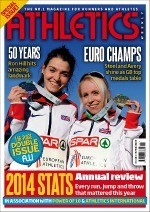
The 116-page double issue is a stat special and features our annual review with international and UK merit rankings, plus in-depth European Cross Country Championships coverage.

Remember there's also the option to read AW digitally – you can buy and read AW online right now here.

Buy online | Read online

If you do venture out on a run or to do some training, let us know! Why not send us a seasonal snap of you in action? Tweet us @AthleticsWeekly or get in touch on Facebook.

Happy Christmas!

Streets ahead of its time

The modern trend of street athletics had its beginnings in a small Welsh Valleys town half a century ago, writes Clive Williams

Street athletics has grown greatly in popularity in recent years and the expansion looks set to continue, especially with Seb Coe, in his recently-released IAAF presidency manifesto, mentioning it as something he’d like to see more of.

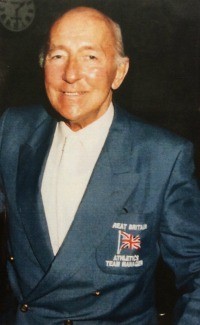
Bernard BaldwinYet you would be wrong in thinking that it all started on the streets of Manchester or Birmingham in recent years. In fact, “street” athletics was started more than 50 years ago by a man who was light years ahead of his contemporaries – Bernard Baldwin. And he did it virtually on his own, supported by a local committee of volunteers – there were no event-management companies then!

Baldwin, a school teacher from Mountain Ash in the valleys of South Wales, attracted all of the best British athletes of the day to his events, but it was the Nos Galan (New Year’s Eve) road races in 1958 that were to be the platform for a myriad of events to be held on the streets. The format of Nos Galan has changed over the years, but the festival is still held in the former mining town and is now part of the Run Wales series. In recent times Nos Galan has been rescheduled to embrace family entertainment, finishing at around 9pm. The changed format means that the day now starts with an afternoon of street entertainment and fun runs for children.

Just two events were held in that first year 56 years ago, a 100 yards on the main street of Mountain Ash followed by a midnight four miles race starting in one year and finishing in the next. The competitors in that first event read like a who’s who of British athletics. Peter Radford, just a year before his Olympic bronze 100m medal in Rome, won the 100 yards, with British team-mates Dave Segal and local star Ron Jones second and third.

"'Street' athletics was started more than 50 years ago by a man who was light years ahead of his contemporaries – Bernard Baldwin"

That first midnight race was won by Stan Eldon, then undoubtedly Britain’s leading distance star, with fellow British international Frank Salvat second and Mick Price third. Wales’ John Merriman, winner of the silver medal over 6 miles in the Empire Games held earlier in the year in Cardiff, finished fifth.

Incidentally, Radford and Segal were so taken by events in 1958 that they both started in the four miles, with Segal finishing 82nd. Bernard commented the following day that Radford was still out on the course somewhere! Only a man of Bernard’s charisma (and persuasion) could have enticed two Olympic sprinters to run in a four miles race during the depths of winter. In short, Baldwin is a remarkable man.

The idea for a race starting in one year and finishing in the next came from 1956 National crosscountry champion and TVH legend Ken Norris, who had won the iconic Sao Paulo midnight race in Brazil in 1956. Norris finished 10th in a field of more than 100 runners in that first Nos Galan. Baldwin and Norris developed a lifelong friendship after the pair first met at Merthyr AC’s annual dinner, where Ken had been the guest speaker, and it was this first meeting that sowed the seeds of Nos Galan.

A feature of the midnight race is the arrival of the mystery runner in Mountain Ash, who arrives from the graveside of the mythical Guto Nyth Bran in Llanwonno about four miles away. The first mystery runner was 1948 Olympic marathon silver medallist Tom Richards and he was followed in later years by many all-times greats of the sport, such as Derek Ibbotson, Lillian Board, Lynn Davies, Ann Packer, David Hemery, Dave Bedford, Steve Jones and Mary Rand.

 "It was the Nos Galan (New Year’s Eve) road races in 1958 that were to be the platform for a myriad of events to be held on the streets"

The fact that these greats of British athletics should travel to the valleys of South Wales for an event invariably staged in bitterly cold weather at midnight clearly underlined the esteem in which Baldwin was held. This is particularly the case with the late golden girl of British athletics Lillian Board and Olympic champion and world record-holder Mary Rand.

Who could imagine today that two female track athletes, winners of Olympic and European titles, more used to running in events no further than 400m would brave the elements at midnight in a South Wales mining town to run four miles carrying aloft a very heavy lighted torch. Only Baldwin could make that happen.

A mile event in nearby Penrhiwceiber was added in 1959 and was won by former world record-holder Derek Ibbotson. But the undoubted star of the event was the European indoor 1500m champion and double Olympic finalist John Whetton, who won for seven successive years between 1962 and 1968. Other events were added in subsequent years and the Lincoln twins, Rita and Iris, both British international athletes, won the women’s mile on several occasions. The marathon star Joyce Smith also won in a record time in 1965.

Former British sprint relay world record-holder Ron Jones, born only a mile or so from Mountain Ash, was always a supporter of Baldwin’s events. Jones said: “I have great admiration for Bernard – he brought athletics to people who would not normally watch our sport.”

However, tragedy struck in the 1967-68 event. Baldwin, forever the showman, who was travelling in the rear of his car leading the mystery runner down to Mountain Ash from Llanwonno, attempted to set-off fireworks to signal the arrival of the mystery runner. Just imagine that happening today. But to Baldwin it was a logical thing to do. Unfortunately, a stray spark landed in the box containing the fireworks and the car burst into flames and burned out. Baldwin suffered multiple burns and was out of action for a long time with his right-hand man Tom Lewis also suffering. But such was his organising ability, Nos Galan continued until he was able to fully take over the reins again when he recovered.

Almost every year there appeared to be some crisis in Nos Galan affairs – the foot and mouth disease threatened the end in 1967; there was a threat by striking miners to keep runners out of Deep Dyffryn Colliery baths where the runners changed; insufficient homes for runners to stay (600 was sometimes insufficient) and when a white South African team entered, the Anti-Apartheid Movement threatened to bring the proceedings to a standstill with a demonstration in the main street.

All these crises were probably fuelled by the well-meaning publicity-conscious Baldwin, but the organisation survived these and many other problems and with tremendous support and encouragement from the police succeeded in making Nos Galan a truly international event. By the time that eventual world 10,000m record-holder Bedford won the four miles race in 1969 it was safe to say that every runner of note in Britain, as well as stars from abroad, were taking part.

"I have great admiration for Bernard – he brought athletics to people who would not normally watch our sport" - Ron Jones

Nos Galan was Bernard Baldwin. He conceived it and ran it, it was his. Nowadays, advancing years have meant that he has handed over the baton to others and he now regales in the title of honorary patron.

However, Bernard didn’t restrict his energies to Nos Galan and their associated events. He went on to be the leading light in Welsh athletics becoming secretary of the then athletics governing body in Wales and a British team manager.

He has written or compiled numerous publications on Welsh athletics, and was Welsh correspondent to AW for 22 years. For many years he was a prolific contributor on Welsh athletics to the Western Mail, South Wales Echo, South Wales Argus and Sunday Express and a regular broadcaster on BBC Wales. As well as these activities, he also found time to undertake the public address duties at numerous athletics meetings in Wales and type and run off on his ancient machine the first Welsh best-performer lists I produced with Ken Bennett in 1963.

Among the numerous other events he organised – all Nos Galan spinoffs – were similar road meetings throughout the South Wales valleys, including Wattstown (commenced in 1961), the popular Easter Monday meeting at Pencoed (1963) and the Taff Street dash along what was reputed to be at the time Wales busiest road in Pontypridd on the evening of the Welsh Championships. Sadly, these events are no longer with us.

Recalling the Taff Street Dash, J.J. Williams, winner of four Welsh sprint titles and a Welsh rugby icon who won as a schoolboy in 1965 and also in 1971 said: “The atmosphere created was tremendous and all of the leading sprinters at the time wanted to take part.” But, he added: “If you got drawn in one of the outside lanes, you were in the gutter, and didn’t stand a chance of winning!”

Peter Radford won the first Taff Street dash over 250 yards in 1959 from Segal and Wynne Oliver. The after-race function at the New Inn Hotel also in Taff St, which also served as the annual dinner of the Road Runners Club of Wales, was Baldwin’s real showpiece, where his unique show business-style talent entertained the guests until the early hours with his anecdotes and comments on virtually every person in the room – up to 300 of them! As I wrote in The History of Welsh Athletics in 2001, Baldwin was a man ahead of his time.

To a certain extent some of the locals did not appreciate the quality of the athletes being paraded before them. Imagine a small terraced street in Wattstown, in the Rhondda Valley, with the Olympic 100m bronze medallist, and two other world record-holders about to run in a 100 yards event in the middle of the road.

"Bernard didn’t restrict his energies to Nos Galan and their associated events. He went on to be the leading light in Welsh athletics becoming secretary of the then athletics governing body in Wales and a British team manager"

I remember a local miner popping his head around the front door of his terraced house and asking Baldwin, as ever with megaphone in hand, “What the hell is going on here today then?” To be told that Radford, Ron and Berwyn Jones and several other of Britain’s top athletes were running in a 100 yards race just outside his front door completely bemused him. To him it was equivalent to a modernday prank by one of today’s TV shows. He muttered something unprintable and promptly closed the door and went in!

One of Bernard’s most popular events among distance runners was the Cardiff to Mountain Ash two-man relay. Almost unbelievably for today’s athletes, two runners shared a car, hopping in and out of the vehicle. The first event in 1964 was won by Gilwern Harriers (Adrian Aylett and Tom Edmunds). The record for the race was the 1:20:47 recorded by Tony Simmons and Tony Cox of Luton despite torrential rain in 1968. Unfortunately, this unique event is no longer with us as it fell foul of the many traffic restrictions which were coming into force.

His Road Runners Club (Wales) committee also organised a Cardiff to Swansea two-man relay over 51 miles. This survived for just three years between 1963 and 1965 and was the forerunner of the shorter Cardiff to Mountain Ash event. Welsh athletics stalwart and former Welsh CCA secretary John Collins was in the winning team each year. Collins recalls that one team used a hatchback for convenience while another used a van with the back doors removed!

Another event he organised was the 40 miles track race at Cardiff’s Maindy Stadium, where world best performances were set in two of the races by the late John Tarrant in 1966 and Lynn Hughes the following year. Alan Phillips, who was to set world best performance times for both 40 and 50 miles in Walton in 1966, took the 50 miles race in 1968.

The Nos Galan organisation ventured over the border to Bristol in 1973 when they promoted a 20 miles track race on the new track at Whitchurch, which saw the future 1974 Rome European marathon fourth-placer Bernie Plain set a UK allcomers’ best of 1:40:34.6.

Baldwin has just passed his 89th birthday but is not in good health and was recently awarded the Freedom of the County Borough of Rhondda Cynon Taf in a ceremony attended by, among others, Bedford, Olympic fourth-placer and European 10,000m silver medallist Tony Simmons and Plain, all of whom figured prominently in his events over the years.

Bernard was a good athlete himself in his younger days, winning the Welsh junior mile title in 1943 to emulate his brother Bramwell who won in 1937. He also gained a senior Welsh cross country vest running in the International Cross Country Championships (the forerunner of the IAAF World Cross Country Championships) in Paris in 1947.

He was awarded the MBE for his services to athletics in 1971.

I don’t think that we will ever see a man of his energy and vision again.

» Top featured image - Eddie Strong wins the four miles race at Nos Galan in 1961

» This feature was first published in the December 11, 2014, edition of AW magazine with that piece including many more images of street athletics events
Christmas training: Eat, drink and run!

The Christmas holidays are almost here and, although they are a time of excitement, they can also be a period of great temptation, writes Eleanor Jones

Christmas is like no other time of the year. However, for the athlete it is always filled with temptations – an extra 30 minutes or so on the sofa to watch television, lie-ins instead of training and enough food to feed a small army and that’s not to mention the alcoholic beverages!

For the dedicated athlete, it can be difficult to stick to your plan and achieve your goals and even more so when all those around you seem hell bent on helping you stray!

So here are four simple things to bear in mind to help you through the holidays and keep you running healthily.

Plan ahead

If you know that balancing your training with the demands of family is going to be difficult, then plan to make some compromises now. This might mean being flexible about what session you do, where you do it and for how long.

You can negotiate with family about when you need to do your key or breakthrough sessions, and they can make it clear when your presence is required at Aunt Myrtle’s mince pie party!

Look at where alternative sessions might be required – can you get away with a 6am jog before you travel to the in-laws? How about a cross-training session in the gym instead of the group intervals you had planned?

Stick to the plan

Once you have agreed and negotiated your plan, stick to it. Get up and dress in your work-out gear – it sends clear messages to all that you’re going out for a run, no matter what may happen. Similarly, you can’t expect your family to be flexible just because you fancy a lie-in, so keep your end of the bargain to avoid arguments.

Don’t panic

Kids, weather, bountiful food and illness can all wreak havoc – just let it go in one ear and out of the other. New research shows that a single (hard) interval session can offset the effects of a single blow-out meal. If that sounds like your Christmas Day, put it behind you and start again the next day. Don’t treat it as an excuse to get into a rut and have another bad day.

Alternative foods

If grazing is your weakness, consider removing the Christmas chocolates from the lounge and getting them out only when you intend to eat them – it’s all too easy to grab one (or two) when you walk past. You could also look at substituting sugary foods for more wholesome ones – dried fruit and nuts are great for snacking.

Enjoy your Christmas break, and if you look after yourself, your running will benefit greatly! Have a merry running Christmas!

» Eleanor Jones is senior sport scientist at the University of Birmingham and a BASES-accredited sport scientist with an IOC diploma in sports nutrition

Fartlek running: Playing with speed

Fartlek running has influenced some of the past greats and it's still as effective today

As many of us know, fartlek literally means “speed play”. This mode of training is not only used nationwide, but it’s also a worldwide phenomenon.

In a previous article in Athletics Weekly (December 6, 2012), we traced its foundations to Gösta Holmér of Sweden, who as an athlete was awarded a decathlon bronze medal at the 1912 Stockholm Olympics.

Why was fartlek developed?

Holmér developed the notion of playing with speed in order to assist Swedish athletes as a response to the dominance of the Finnish distance running contingent spearheaded by the ‘Flying Finn’ Paavo Johannes Nurmi. He set countless world records at distances between 1500m and 20km and in the period 1920-1928 he won nine gold and three silver medals at the Antwerp, Paris and Amsterdam Olympics.

Who used fartlek?

Two of Holmer’s most prolific pupils were Gunder Hägg and Arne Andersson. Hägg set multiple world records in races from 1500m and above. Andersson set a world 1500m record in 1943, clocking 3:45.0 in Gothenburg. Incredibly the two Swedes swapped the world mile record no less than five times between 1942 and 1945 with Hägg making it his own property between 1945 until 1954 (4:01.4) when a certain Roger Bannister rewrote the history books.

The legacy of Holmér

In the 1930s, Fartlek spread over the world inspired by Holmér’s response to the Finnish successes. Great coaches in later years such as Arthur Lydiard of New Zealand, who had Murray Halberg and Peter Snell in his stable of great runners, and Percy Cerutty of Australia, who had athletes of the calibre of Albie Thomas, Dave Power and Herb Elliott, used it as an integral part of their training schedules in the 1950s and 60s with the volume ranging from 4-12 miles.

British international athletes such as Ian Stewart, Andy Holden, Mike Kearns and Mary Stewart used the medium as part of their training programmes along with countless other athletes and coaches across the globe.

More recently many more coaches have adapted it to suit the needs of their athletes. Nevertheless, what remains is the basic Holmér training session, which is speed play and the use of all three energy systems, which also serves as an enjoyable and beneficial training aspect.

Fartlek principles

Although there are a variety of structured and less structured approaches to the fartlek method, all forms have certain similarities.
» The intensity of training is varied between higher and lower ends of the spectrum, including faster than race pace running and jogging or even walking
» Terrain underfoot may be varied – for example, road, trail and grass
» Fartlek typically incorporates undulating running

How to integrate fartlek

Bud Baldaro, the national coach mentor for endurance, is keen to emphasise the variability of intensity which fartlek can offer. The coach of around 60 GB internationals says: “On the one hand, the fartlek session can be the easiest thing you do all week but on the other hand, it can be the hardest.”

He points out that fartlek can be used in both rural and urban settings. “After making sure you are warmed up, simply pick a landmark such as a tree or lamp post and run to it hard and then slow to a jog until you’ve recovered,” he says. “You then select another landmark, run hard to that, recover and so on, continuously.

“Be creative and imaginative, above all else. Specificity is important in training, so short and fast bursts will help you for races such as 5km and 10km. Longer efforts within the fartlek session are more suited for 10-mile and half-marathon race preparation. In practice, it’s best to mix and match the length of the bursts.”

Former international runner David Lowes agrees with Baldaro, but gives some cautionary advice. He explains: “It didn’t work for me, and probably because I didn’t implement it correctly! Because of where I used to live, I had to do the majority of my training alone. Fartlek is great in a group of similar-ability runners where each individual can work off one another. Although there are many variations, a basic plan needs to be well thought out before commencing a session.

“Fartlek is sometimes referred to as ‘run as you feel’ and if you’re particularly tired beforehand, as I often was, then the session can disintegrate into a meaningless outing with a poor work ethic.

“There can be a cross-over between interval training and fartlek and, although both serve basically the same purpose, perhaps fartlek ideally should be done in an undulating parkland or wooded area where distance markers are non-existent and specific pace is irrelevant with the percentage of effort being the main criteria.

“Of course, it can also end up being too hard and too fast if a group becomes really competitive – that can have positive and negative outcomes. Fartlek can certainly be a welcome and beneficial break away from the mundaneness of urbanisation. Without the control from a coach’s start-stop whistle it can still be a tough workout if planned thoughtfully in a run-free environment where everyone in a group gets the chance to express themselves.”

Why does fartlek work?

lactate_system

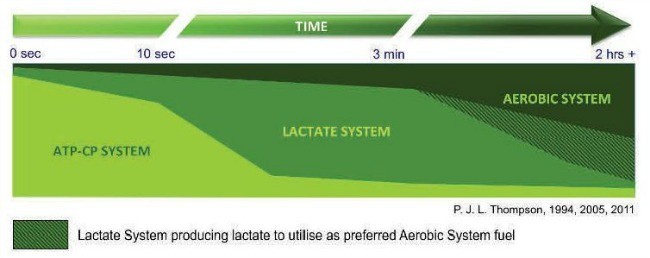
Internationally respected coach Peter Thompson demonstrates above the three energy systems, namely aerobic, lactate and alactic (ATP-CP). The aerobic system is the sustained energy system which uses oxygen and fuel stores. The lactate system is sometimes referred to as the linking energy system – it has a capability to operate without oxygen and uses fuel stores and produces both lactic and acid. The alactic
system is short in the duration of its use (maximum 10 seconds) and its high intensity makes it a stored start-up system. While it is capable of operating with no oxygen, critically no lactate or acid is produced.

As the diagram above indicates, the three energy systems are not mutually exclusive, but they have inter-dependency. At a British Milers’ Club residential weekend, athletes were encouraged to focus on three athletes in one of the many presentations, namely Mo Farah, Lynsey Sharp and Usain Bolt. At surface level most athletes present made the correct observation that being a 5000m-10,000m runner Farah’s predominant energy system was aerobic. They rightly agreed that 800m runner Sharp’s predominant system was that of lactate and they were quick to answer that Bolt’s predominant use was the alactic system.

A deeper probing however revealed that while the Jamaican’s 9.58 world record over 100m could indeed rely exclusively on his alactic system, over the longer 200m sprint he would inevitably have to utilise his lactate system for part of the 19-20 seconds in which he would be in motion.

In returning to the double Olympic and world champion Farah, although his aerobic system will predominate in his excursions over both his gold medal-winning distances, he will at various points of his races utilise the other two energy systems. His famed lightning quick last 400m on occasion will require utilisation of the lactate system, while his flat-out drive for the line, with a sprinting technique perfected under his coach Alberto Salazar’s meticulous attention to biomechanical detail, makes undoubted use of his alactic system over the final 70-80m.

Thompson maintains that fartlek is a form of what he terms “lactate dynamics training”. This can be achieved by a diversity of methods where, he explains, “lactate production is deliberately increased by the intensity of exercise and then alternated with periods of less intense activity.” This interplay of intensities teaches the muscle cells how to both use and clear the produced lactate during the less intense recoveries. If employed correctly, the alternating lower-intensity periods during fartlek can become a time when lactate usage for energy production and clearance rates can be accelerated.

The legacy of fartlek

It is worth remembering that “speed play” is an inherent principle of training for all endurance-based sports. The fartlek principles are often utilised in the training of cycling and swimming plus games-based sports such as football or hockey. It’s here to stay, so use it wisely!

» About the authors: David Lowes is AW coaching editor and BMC academy director. Matt Long and Geoff James served as his squad lead coaches at the recent BMC residential training weekend

My Run Happy story: Lisa Gaul

Lisa Gaul tells her Run Happy story as the latest winner in our Brooks competition series

I was a competitive teen runner for Shaftesbury Barnet Harriers many years ago. It was my life and I loved it, from racing on the track on a boiling hot day to running cross country in the rain, wind and snow.

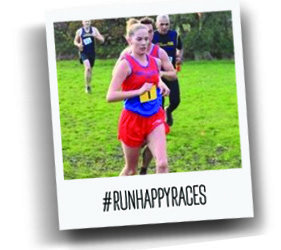
Angled Polaroid GaulI stopped competing and running altogether when I was 16 and it would be 13 years before I started again.

By this time I was going through a family tragedy and I was overweight. At first running was my way of escape, a way of getting my stress out plus losing the unwanted weight. A year and a half later (November 8, 2014) I found myself wearing a pair of spikes, lining up on the start line with a field of competitive women.

My first cross country race in 14 years. I was back to what I loved doing the most but this time for Barnet and District AC at the Metropolitan League at Stevenage. As soon as the gun went off and we got going the old feeling all came back. It was tough, but I felt the best I’ve felt in a long time and I loved every second of it.

Angled Polaroid 2 GaulI’m not anywhere near the standard I was back then but I’m determined to get there and if I don’t then it’s not the end of the world. I’m just so happy to be doing what I love again. Roll on the next race.
WHAT MAKES YOU RUN HAPPY?

Brooks believes in the transformative power of the run. The run can turn a day – or a life – completely around and can flat-out change the world.

That's why each month they're rewarding one AW reader for sharing what makes them Run Happy. We want to hear all about your Run Happy experience, whether it's a first race, a new PB or a moment that changed your race around. It can be anything.

Each month we will pick our favourite story. Not only will it appear in Athletics Weekly, but the owner of that story will receive Brooks kit including footwear, a jacket and a tee.

Click here for further details and to submit your story.

On Twitter? Why not get social?! We'd love for you to share your stories and pictures on Twitter too - just tweet @AthleticsWeekly and @Brooksrunninguk using the hashtag #RUNHAPPYRACES.

Baby boon

Childbirth could be a positive for Jessica Ennis-Hill rather than mean the beginning of the end of her career, writes Cameron Tucker

This is the winning article from those submitted by junior writers as part of a competition offering budding young journalists the chance to get their work in print. We selected our favourite five, with the overall winner also receiving a 12-month subscription to Athletics Weekly magazine.

Every athlete has a few bumps during their career. Few, however, will have a bump like Jessica Ennis-Hill. “Back in the gym ... building back into training,” Ennis-Hill wrote on Instagram a short while ago. It is not injury which has side-lined the poster-girl of the 2012 Games since January. Instead, it has been pregnancy which has kept the heptathlete out of competition.

The birth of Reggie Ennis-Hill was met with a torrent of good-wishes and congratulations on social media. Yet, there was a degree of uncertainty. Not regarding the pregnancy, fortunately, but instead with its aftermath. With the demands of motherhood, would Ennis-Hill ever compete again? And if she did, could she rekindle her golden streak?

As in any workplace, having a baby has come to be viewed as something of a taboo. Maternity leave and child-rearing are the curses of career advancement.

This sentiment is no different in athletics.

The physical and mental changes undergone through pregnancy are seen as a hindrance to the women of track and field. With a ballooning stomach, morning sickness and raging hormones, it is easy to see why having kids can be seen as one massive hurdle.

Ennis-Hill’s physio, Alison Rose, says such a hurdle actually has several benefits. “There is an increase in laxity which means you become more flexible, especially in your hips and ankles,” she says. “If you had tight feet before pregnancy, these are loosened up.” According to Rose, having a child alters the very make-up of an athlete’s physiology. She adds: “There are changes to the blood profile so when an athlete comes back they will be able to perform better and for longer.”

Rose, one of the directors at Coach House Sports Physiotherapy Clinic in Leeds, believes athletes should not worry about returning to the sport. “It’s just managing the whole process from the minute you get pregnant,” she says.

“You need to have a platform to work off once you’ve given birth. You need to make sure you get all your core muscles back.” Pilates-style exercises and pelvic floor work are ideal in achieving this, states Rose.

For Rose, it is athletes who push themselves too hard throughout pregnancy who are the ones who struggle. “You must stick to a plan,” she stresses. “Don’t run before you can walk.” She points out this is exactly what is being done with Ennis-Hill and Rio is very much within the reigning champion’s reach.

And yet, having kids is still seen as the career death knell. After competing in the 2014 USATF Championships eight months into her pregnancy, middle-distance runner Alysia Montano told the media there is definitely a stigma surrounding professional athletes-cum-mothers.

“People sometimes act like it’s a nine-month sentence,” she says.

There is no doubt pregnancy drastically changes a female athlete, regardless of age or athletic discipline. As the likes of Paula Radcliffe, Jo Pavey and (more than likely) Ennis-Hill have demonstrated, it is possible to return to the sport and train and compete at the highest level. For the woman tasked with getting Ennis-Hill back to such a level, there is no reason why a little tyke should push her off the track.

» Cameron Tucker, 21, used to compete for his school and region over middle and long distances in Hong Kong. He’s currently studying for a masters degree in broadcast journalism at the University of Sheffield

Learmonth and Bowie on Scotland team for Glasgow International Match

Duo among the nine Glasgow 2014 athletes so far named on Scotland's team for Sainsbury's International Match in January

A number of Glasgow 2014 Commonwealth Games athletes will form part of the Scotland team for the Sainsbury's Glasgow International Match on January 24.

Guy Learmonth, who won the 600m at this event earlier this year and finished sixth in the Commonwealth 800m, and Jamie Bowie, who was third over 400m at the 2014 International Match, are among those who will take on athletes from Great Britain & Northern Ireland, Germany and France at the Emirates Arena next month.

Kirsten McAslan, Sarah Warnock, Ray Bobrownicki, Diane Ramsay, Greg Louden, Grant Plenderleith and Zoey Clark are the other Glasgow 2014 athletes named on the Scotland team so far.

"Firstly, let me congratulate all the athletes, and their families and coaches, on Scotland selection for the Sainsbury's Glasgow International. It should always be an honour to wear the Scotland vest," commented Rodger Harkins, director of coaching at Scottish Athletics.

"There are one or two who missed out on the Commonwealth Games who will see what it took last summer to qualify and will be starting to think about Gold Coast 2018.

"It is chance for them, and indeed all the athletes, to push themselves forward. I am hoping that we will see some good signs of individual development."

Scotland team

Men

60m: TBC
400m: Jamie Bowie
800m: Guy Learmonth
1500m: Cameron Boyek
60mH: David Feeney
High jump: Ray Bobrownicki
Long jump: TBC
Pole vault: TBC
4x400m: Jamie Bowie, Grant Plenderleith, Greg Louden plus TBC

Women

60m: Kathryn Christie
400m: Kirsten McAslan
800m: Katy Brown
1500m: TBC
60mH: Hazel Ross
Long jump: Sarah Warnock
4x400m: Kirsten McAslan, Diane Ramsay, Zoey Clark plus TBC

Training this Christmas?

Decided to take a day off training for Christmas? Read this and you might change your mind!

This year, as we all know, Christmas falls on a Thursday. For many that may be a normal club night and an appropriate session with club-mates. Nevertheless, get planning now – you will be out running on Christmas Day morning, won’t you? If not, your rivals will, and that means advantage to them!

A steady run on the big day will not only boost your fitness, but it will also blow away the cobwebs and give you an appetite for the turkey and trimmings and if you’ve still got some room – the Christmas pudding.

"Train twice on Christmas Day! Your competitors may only train once"

By organising your week now, it might mean doing your club session on Monday and moving the Christmas Day session to Wednesday and then be back to normal for a big session on Saturday.

Being a runner is all about discipline and the more disciplined you are over the festive break the more you will benefit and have peace of mind that nobody has done more than you!

As Daley Thompson once said: “Train twice on Christmas Day! Your competitors may only train once.”

So enjoy your run(s), enjoy the day and fingers crossed you get what you asked for from Santa … athletics memorabilia, of course!

» David Lowes is Athletics Weekly's coaching editor

Weekly round-up

A round-up of results from the past week including a world youth indoor pole vault best by Adam Hague at the Sale Open, Lotto Cross Cup action and Saltwell 10km performances

Track and field

Sale Harriers Open, Manchester, December 21

Commonwealth silver medallist Luke Cutts won the pole vault with 5.51m though again the big news of the event came from Adam Hague, who cleared a world youth indoor best and improved his UK indoor junior record to 5.46m.

It was Hague's own British junior record he beat, the World Junior Championships finalist having cleared 5.41m at the end of last month. The 17-year-old will still be a junior in 2015 and 2016.

Former European Youth Olympic 400m winner Clovis Asong won the 600m in a PB 1:18.40, while 15-year-old English Schools champion Steve Jones equalled his PB in winning the high jump with 1.90m, which was an indoor best.

24 hores D'atletismede Corredors Catalonia, Barcelona, December 20-21

Karen Hathaway covered a distance of 221.560km (137miles 1181 yds) when placing first woman in the Barcelona 24 hour track race. The GB 24 hour international was fifth overall. Placing second in her first 24 hour event was Natasha Doyle with 217.409km (135miles 161 yards).

Hathaway's distance improves her 24 hour PB by almost 10km and betters the individual qualification mark set by British Athletics for next April's IAU World 24 hour Championships to be held in Turin. Doyle's distance surpasses the team qualification mark for the same event.

France's Stephane Ruel won overall with 252.271km (156ml 1326 yds).

» With thanks to Adrian Stott for information

Cross country

Iris Lotto Cross Cup, Brussels, December 21

It was a Kenyan double as Alex Kibet won from compatriot Abraham Kapsis Kipyatich and Sheila Chepngetich Keter claimed the women's title ahead of Commonwealth 1500m champion Faith Kipyegon. Ireland's two-time European Cross Country Champion Fionnuala Britton finished third.

Jonathan Taylor led the British men home, finishing 11th with Jack Martin 15th. Lauren Deadman was the top British women, finishing ninth and one place ahead of her compatriot, the triathlete and duathlete Katie Hewison.

Britain's juniors were more successful with Grace Baker winning the junior women's race from Harriet Knowles-Jones and Sabrinha Sinha (U17) and Kathleen Faes (U15) gaining age-group victories.

Cross Internacional de Venta de Banos, Spain, December 21

Uganda's Timothy Toroitich won the men's event from Spanish athletes Antonio Abadia and Roberto Alaiz. Mimi Belete beat Sifan Hassan of Netherlands in the women's race.

South Of Thames Cross Country Championships, Coulsdon, December 20

London champion Dean Lacy of Cambridge Harriers added another title as he was an easy winner of the men's event. Second place went to leading M40 Chris Greenwood as Tonbridge won the men's team title.

The women's race was won by Belgrave's Melanie Wilkins who led her team to victory.

» A full report and photographs of the event will appear in the next edition of Athletics Weekly magazine

Metropolitan League, Uxbridge, December 20

Michael Callegari won the men's race in 26:16 while Rachel Felton won the women's race in 21:41.

Serpentine won both the team events on the day.

» A full report and photographs of the event will appear in the next edition of Athletics Weekly magazine

Road

Saltwell 10km, December 20

Despite windy conditions, North East champion Rosie Smith won in a course record 35:06 as former record holder Alyson Dixon finished a distant second.

Philip Wylie won the men's race.

» A full report and photographs of the event will appear in the next edition of Athletics Weekly magazine

Brooks Serpentine Last Friday of the Month 5km, Hyde Park, December 19

Bradley Goater won the men's race in 15:20 while Clare Elms won the women's race in a W50 course record of 18:10.

Seven Brits make top five in their events in 2014 world merit rankings

Katarina Johnson-Thompson is Britain's sole top world-ranked athlete this year

A total of seven British athletes feature in the top five in their respective events in the 2014 world merit rankings.

According to statistics published in the latest edition of Athletics Weekly magazine, seven Britons were ranked in the top five on merit this year, compared to five in 2013, eight in 2011 and 10 in 2012.

Like last year, 13 British athletes feature in the top 10 in their events. Although this is down on the 17 athletes in 2012, the figure of the past two years is up considerably from 2006 when only six British athletes made the world top 10 in their event.

The December 18 edition of AW is a bumper 116-page double issue special featuring statistics which have been provided by British rankings website Power of 10 (UK rankings) and tilastopaja.org (world rankings).

It is the rankings based on "merit" which provide particularly interesting reading, though. Based on season's bests, championships and head-to-heads, these rankings are meticulously prepared by Peter Matthews and Mel Watman from Athletics International and vary considerably from the "normal" rankings.

Katarina Johnson-Thompson is Britain's sole top world-ranked athlete this year according to the merit lists. Despite having competed in only one heptathlon, with injury ruling her out of the Commonwealth Games and the European Championships, Johnson-Thompson scored 6682 points to win in Götzis and the panellists voted 5-3 for her against Canada's Commonwealth champion Brianne Theisen-Eaton for the top spot.

Johnson-Thompson is also in the top 10 for long jump at seventh, one spot ahead of Shara Proctor.

Two British athletes ranked second in the world in their events. Greg Rutherford, who won Commonwealth and European long jump gold to go with his Olympic title from 2012 and leapt a British record and world lead, features behind USA's Jeff Henderson. European 400m hurdles champion Eilidh Child, who also won Commonwealth silver, is ranked behind Jamaica's Kaliese Spencer.

European 100m champion James Dasaolu ranks fourth in that event, while there are fifth-place rankings for European and Commonwealth 200m silver medallist Jodie Williams, European and Commonwealth 800m runner-up Lynsey Sharp and European 100m hurdles champion Tiffany Porter.

Among the British athletes in the top 10 in their events is European 200m champion and Commonwealth 100m silver medallist Adam Gemili, who appears twice, placing seventh in the 200m and eighth in the 100m.

Top-ranked in both of those events is US sprinter Justin Gatlin following his unbeaten season. Topping the women's lists in those events is Jamaica's Veronica Campbell-Brown for the 100m and USA's Allyson Felix for 200m.

The latest edition of AW also includes UK merit rankings, compiled by Matthews. Mo Farah tops these rankings in the 5000m, 10,000m, 10 miles – half marathon and marathon, while Jo Pavey leads the women's for 5000m and 10,000m. Over in the sprints, Dwain Chambers extends his record span of ranking in the 100m to 18 years. This year he is fifth in an event list topped by James Dasaolu.

AW-Cover-Dec-18-2014-web-smallThis is just a selection of some of the stats included in the December 18 special edition of AW which is available to buy online here, or read digitally here.

» The world and UK merit rankings are prepared by Peter Matthews and Mel Watman from Athletics International, with the world rankings selection panel consisting of Matthews and Watman, along with Stan Greenberg and Stuart Mazdon (UK), Mirko Jalava (FIN), Alfons Juck (SVK), A Lennart Julin (SWE), Ed Gordon (USA) and for walks Elliott Denman (USA). Marks made indoors were not considered (apart from when part of outdoor meetings, such as the Zürich shot or events moved indoors due to the weather), nor were any athletes who were suspended for two years during the year for drug-related offences. For more information on receiving the Athletics International newsletter email [email protected]

Secret Link